
Bruce Lee’s 5 Habits For Success
Knowing is not enough, we must apply. Willing is not enough, we must do.
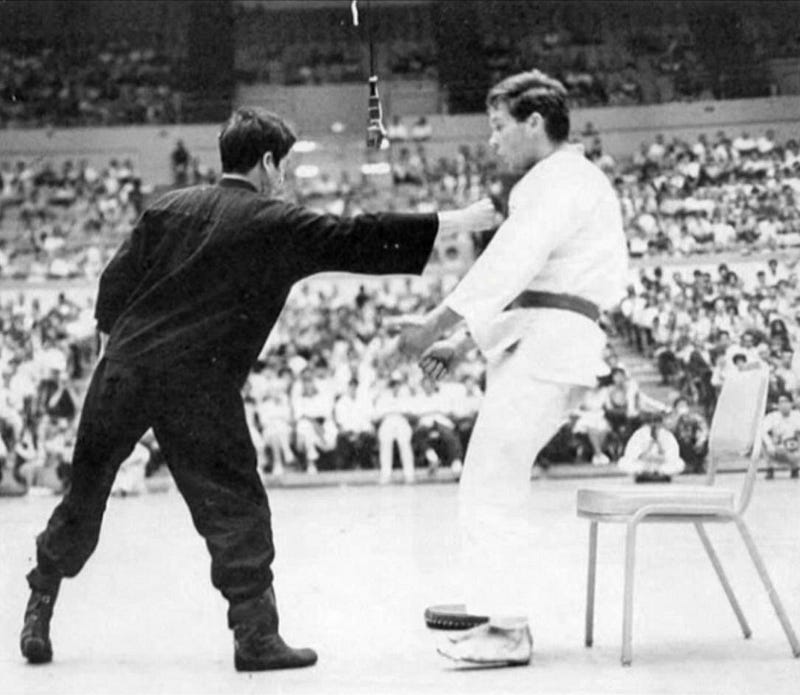
1958. Hong Kong. St. Francis Xavier School.
After much-anticipated waiting, a young eighteen-year-old Bruce Lee jumps into the boxing ring with Gary Elms, the current boxing champion. With only a few months of preparation, Lee feels nervous — having to modify his Wing Chun Kung Fu for boxing. This match would be Lee’s first and final sporting match.
Despite this, Lee never hesitates for a match and accepts any challenge. He shifts into a Kung Fu stance; Elms shifts into a classic Western boxing one. A visual clash between cultures: East vs. West. After the referee orders the instructions, the bell rings.
And the match begins.
With his lightning speed, Lee attacks Gary with short, quick punches. And Gary is immediately knocked down, surprising the British onlookers. Each time Gary gets up, he’s knocked back down. A total of several times throughout the match. And Lee easily wins the match.
But yet, he grumbles,
“Damn it, I couldn’t knock the guy out.”
Despite his victory, Lee swears he’ll redouble his training. Most people would just be satisfied winning the match — but not Lee. This mentality would appear again in his famous fight with Wong Jack Man. And this mentality would create his success in martial arts, filmmaking, writing, and philosophy — showing anyone could succeed with determination and discipline.
Here are Bruce Lee’s 5 Habits For Success.
1. Carry A Notebook Everywhere
Similar to entrepreneur Richard Branson, Lee carried a notebook wherever he went. In his notebook, Lee wrote everyday musings, philosophy, poetry, and his affirmations. And he would later combine all these thoughts to create his vision for success.
He would write in the back of a plain 3x5 yellow notecard whenever he came across a significant idea. Lee would then sign the notecard, as a contract to himself. And often, he would refine and copy his most important notes onto these notecards.
According to the University of Rochester Medical Center, journaling has the benefits of managing anxiety, reducing stress, and coping with depression. It can also help you prioritize your goals and problems.
In other words, get yourself a journal.
2. Repeat Your Goals To Yourself
Taken from Napoleon Hill’s Think and Grow Rich!, Lee began to write down his goals and recite them over and over again. And on January 7, 1969, Lee wrote down his life goal entitled “My Definite Chief Aim.” His goal stated,
I, Bruce Lee, will be the first highest paid Oriental super star in the United States. I return will give the most exciting performances and render the best of quality in the capacity of an actor. Starting 1970 I will achieve world fame and from the onward till the end of 1980 I will have in my possession $10,000,000. I will live the way I please and achieve inner harmony and happiness.
Uncannily, Lee’s goals would ring true. With the release of the film, Enter the Dragon, in 1973, Lee would become one of the world’s most recognizable film stars.
It’s not just hokey pokey self-help either. According University of Waterloo researchers Colin Macleod and Noah Forrin, reading words aloud makes them easier to remember than reading them silently. Doing so produces a memorable experience called the “production effect.” This effect is the active cognitive process of encoding words into long-term memory, and it works better when one’s voice produces the words.
Besides Bruce Lee, famous boxer Mike Tyson would also use the same visualization technique. Tyson’s trainer Cus D’Amato would have Tyson visualize himself as the boxing champion throughout the whole day. Over the years, Tyson began to believe himself as the chosen one. He would become the youngest Heavyweight Champion in the world at age 20.
Besides journaling, one can read his or her goal’s out loud to make them come true.
3. Practice Your Craft Constantly
Don’t expect Bruce Lee like results, unless you’re willing to put in Bruce Lee like hours to obtain them. -Ted Wong, Bruce Lee’s student
According to Ted Wong, Lee would constantly tell his students that he himself was nothing “special.” But instead, he was a very dedicated trainer. In 1963, Lee’s records showed he would practice three hours a day on the Wing Chun wooden dummy. Lee trained every single day for three hours a day. As such, famous martial artist Chuck Norris called Lee:
No other human being had ever trained the way Bruce trained-fanatically. He lived and breathed it from the time he got up at six o’clock in the morning until he went to bed at night.
According to the book Talent is Overrated by Geoff Colvin, deliberate practice is worth more than anything. Though people may have natural gifts for something, great performance is on our hands. High performers Mozart and Tiger Woods weren’t born geniuses, contrary to popular belief. They practiced daily. Mozart received musical training from his father, who was a composer. And Tiger Wood’s father Earl devoted his life to turning him into the best golf player in the world.
Like Lee, whatever our passion is, we should devote ourselves to it.
4. Constantly Read — All Different Subjects
Though a declining activity, reading has many physical and mental health benefits. Like many great thinkers, Lee mainly obtained his education through a style of self-learning. He was known to always carry a book with him, wherever he went. And in his free time, he would often visit bookstores. At the time of his death at the age of 32, Lee had over 2,500 books in his library. Besides martial arts books, Lee read Western & Eastern philosophy, exercise books, American self-help, and even Shakespeare.
Reading widely broadens your knowledge, allowing you to be creative. According to psychologist Robert Epstein, having more diverse knowledge allows for more interconnection, the basis of creative thought.
This proved the case with Lee’s reading. Reading widely allowed Lee to create his own fighting method, combining three martial art theories: boxing, fencing, and Wing Chun Kung Fu. And from his readings on Indian philosopher Jiddu Krishnamurti and Eastern philosophy, Lee developed “Jeet Kune Do,” a non-fixed way of thinking.
Read something outside your comfort zone.
5. Research and Adapt —Using Old & New Methods
Throughout Lee’s life, he constantly used new ways to improve his martial arts or fitness abilities. From the mid-1960s to the early 1970s, Lee read the various magazines on bodybuilding, cutting each article he liked and saving them.
Lee was the first martial artist to train like a modern athlete. With his research, he incorporated the then-little used methods of interval training, weightlifting, and nutritional eating with electric juicers. He also ran and stretched daily — uncommon for martial artists of his time.
In the 1960s, Lee used the then-new methods for exercising such as isometric training, leading to strengthened muscle. And Lee then combined them with old-school weightlifting to build muscular endurance. He created a new exercising system, using new and old school exercises.
In the martial arts, Lee began to add Western boxing and fencing tactics — sparring, broken rhythm, etc. — into his Wing Chun Kung Fu training. But at the same time, he kept many Wing Chun tactics: “sticky hand” training, low kicking, short punches, etc. In other words, Lee successfully combined the East’s structure and form and the West’s function and practicality in martial arts.
Mixing unusual influences is not uncommon in the arts. Artist Pablo Picasso combined European and African influences to find the art movement of Cubism . Japanese art — with its flat planes, bold colors, and dramatic stylization — mixed in with the European art movements, Impressionism, Art Nouveau, and the Aesthetic Movement.
Like Lee, you and I should find research old and new methods and combine them to create “original” thoughts and works.
In Conclusion
Despite dying almost over fifty years ago, Lee’s influence continues to this day. UFC founder Dana White considers him to be the “Godfather of MMA.” From rap music lyrics to Cinemax’s show Warrior, Lee has appeal to Eastern and Western audiences — showing what one can do with relentless perseverance, determination, and creativity.
Sources:
Polly, M. (2019). Bruce Lee: A life. London: Simon & Schuster.
Lee, B., & Little, J. R. (2015). The art of expressing the human body. United States: Tuttle Publishing.


