
Broken Culture Led to a $1,220 Glass Whiteboard at WeWork
The Smallest of Things Often Reveals the Biggest of Problems

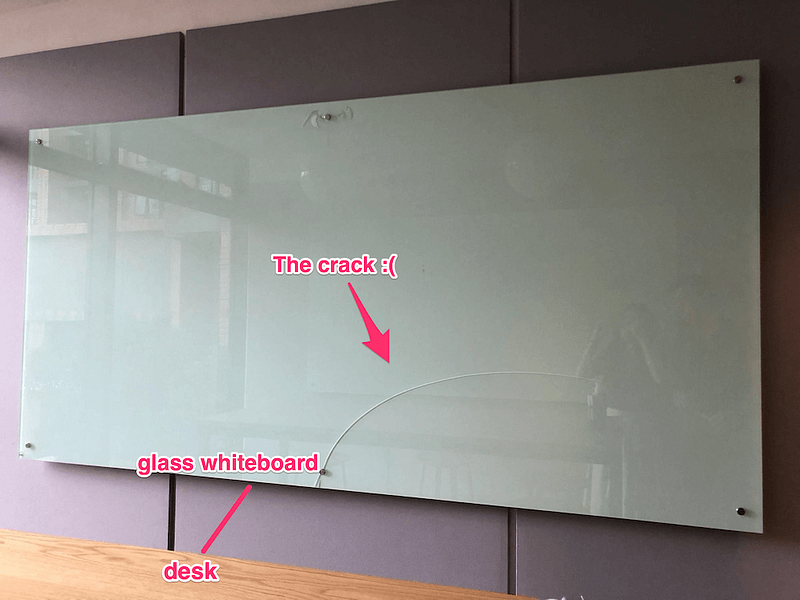
Most people wouldn’t have thought that a large glass whiteboard would cost about US$1,220—until you lean back and crack it in the WeWork Thailand meeting room. JP Zhang, the founder of SoftwareHow, hurriedly informed the community manager, who assured him that this will be solved swiftly. To Zhang, cooperating with WeWork to compensate and move on sounded like a good idea.
Not for WeWork, who only sent an invoice after a month.
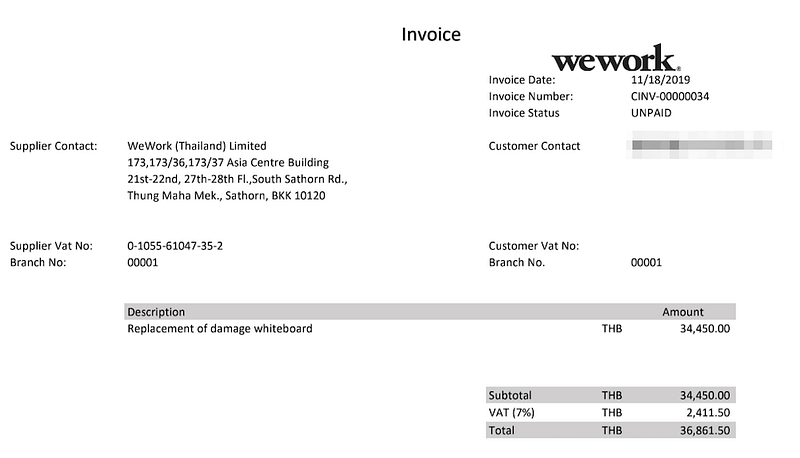
The cost of the whiteboard left Zhang and his friends flabbergasted: why did it cost so much? What does the cost entail? Does it also include transportation and removal?
It was clear that there were hidden costs and they were not going to let this slide. Fortunately, the vendor had their contact number and logo stamped at a corner of the whiteboard. They promptly called them afterward.
The actual cost? It was about US$675.
At this point, Zhang knew that the invoice could not be trusted. The conversation was also shifted to the operations manager, who refused to give them an itemized bill.
To the manager, it was a “question of confidentiality”.
However, to Zhang, they only wanted to know what the $1,220 entailed and whether it was reasonable. The manager gave them a few answers: it is an overseas import made from “ultra high-quality glass”.
Here’s the kicker: it was different from “the typical glass whiteboards used in most offices”.
The manager insisted that it was $1,220, going so far as to accuse Zhang and his friends of misleading the vendor to obtain a lower quote. It was a one-sided conversation until Zhang’s friend immediately called the vendor for the operations manager to verify herself.
“Yes, the whiteboard costs [about US$675],” came the reply from the phone.
Chastened and hushed, the operations manager then agreed to speak with the construction team.
Unfortunately, obtaining the actual cost did not do anything to change the quote that WeWork Thailand gave. Zhang received an itemized bill that still hid an additional charge.
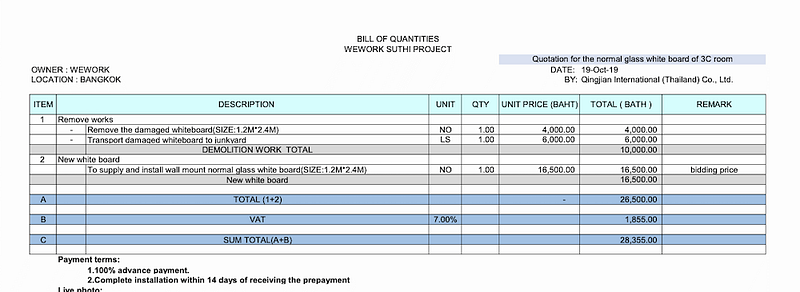
If you ignore the absurd cost for transportation and removal of a single glass whiteboard, the itemized bill only came to 28,355 baht, which is about US$940. Yet, WeWork quoted US$280 more: where is that in the bill?
The US$280 was in fact a management fee.
The initial refusal for a bill breakdown, dismissal by the operations manager of their concerns and even charging a management fee points towards a very obvious broken culture at WeWork Thailand.
That indicates a lack of alignment from the WeWork headquarters.
The smallest of issues often point to the biggest of ailments in a company and WeWork is a perfect example.
There’s No “We”—It’s just “I”
For a company that has the word ‘we’ in its name, WeWork has clearly shown that they are only focused on ‘I’ instead. Despite having customers that are willing to cooperate, compensate if needed and honest about the situation, the operations manager chose to alienate them and even accuse them of being crafty.
Lack of Empathy
From the community manager to operations manager, there was no empathy for their customers. Leaving the customers in limbo for a month before slapping them with an unreasonable invoice is a sign that these employees did not put their customers’ interests first.
What they should have done: Keep them updated by informing them about the length of time before they can get a quote.
Help the customers understand that WeWork respects their time, but they too have a backlog of issues that they need to address. Every customer knows of WeWork’s current situation and the lay-offs are stretching employees thin. As time goes by, WeWork should have kept them in the loop from time to time, updating them arbitrarily without them sending an email to follow-up. The key is to let them know you care, rather than just treating them as annualized revenue sources. For Zhang’s case, they are WeWork’s long-term customer with 18 months and going. WeWork’s low customer lifetime value should place Zhang on the pedestal.
Poor Work Ethics
The one-liner in the first invoice was revealed to be chock-full of other costs. If Zhang and his friends were not careful, WeWork could have overcharged them for an even higher price and profited from the situation.
What they should have done: All bills must be itemized unless the recipient specifically requests for it not to be (e.g. too many items in one bill) or if it is a simple cost. A simple cost would be something like “Product Cost of New Glass Whiteboard”. The word ‘replacement’, in reality, implies a lot more. WeWork should have kept their invoice descriptions simple and specific as well.
The management fee charge is absurd—WeWork should have waived it. Why does it cost WeWork US$280 to call up the vendor that they already bought things from, purchase a single whiteboard and arrange for transportation for the disposal of the old one? Logically, this whole process can be done over the phone and/or email, which should not take more than 30 minutes. Even the creation of the financial documents such as the bill of quantities and purchase agreements should also take a few minutes since the finance team should have all the templates. Slapping such a charge without naming it in the already broken down bill signals really poor work ethic.
Toxic Employee Behaviours
The operations manager accused Zhang and his friends of misleading the vendor to give them a lower quote—all this happened in the public area, where other companies were also sitting at their hot desks.
However, from the operations manager standpoint, this can seem understandable, only if she knew that the cost was accurate in the first place: if the glass whiteboard indeed cost $1,220, then the lower quote can also mean that the vendor was deliberately overcharging WeWork.
What they should have done: Rather than address the issue in public, keep the matter private and talk behind closed doors or in another meeting room. The operations manager should have listened to their concerns as well and explained why it cost $1,220 from WeWork’s perspective.
Companies and leaders should take this as an example of how to manage your customers. Regardless of how big a company is, no business can be complacent: without the customers, there is no company.