avatarShain E. Thomas

Free AI web copilot to create summaries, insights and extended knowledge, download it at here

4924

Abstract

the post. Florence, because of Herbert, was able to bring her nursing to the Crimea. Herbert and his wife, cutting through the red tape, facilitated Florence’s needs.</p><p id="6bf6">Florence, in return, was every bit as helpful to Herbert. She became one of the politician’s key advisers. Their mutual respect, throughout their respective careers, was readily apparent.</p><p id="0248">Interestingly, whilst there is no evidence proving accusations, some people believed Florence somehow hastened her friend’s death. Herbert, in 1861, died from Bright’s Disease. There could be something to what certain people suggested. Florence’s reform programme, more complex than anything previously proposed, was seemingly the catalist for Herbert’s death.</p><h1 id="5dce">Crimean War…</h1><p id="ba7c">Desperate Times Call for Desperate Measures. Florence’s contribution to the war effort, despite certain people having reservations regarding women and their involvement in the Crimean War, went a long way was exceptional. It didn’t take long, as reports trickled back to the British Isles, for Florence to make her mark. Conditions at the military hospital were horrific. Scores of wounded soldiers arrived at the facility each day.</p><figure id="19bd"><img src="https://cdn-images-1.readmedium.com/v2/resize:fit:800/1*t6w_G00NMFt4UWh3KHcyJA.jpeg"><figcaption>Eliza Roberts… <i>The Mission of Mercy: Florence Nightingale receiving the Wounded at Scutari</i> (Jerry Barrett, 1857)</figcaption></figure><p id="4921">Florence, on 21 Oct. 1856, with 38 volunteer nurses, quickly mobilised to meet the urgency. Chief amoungst the nursing staff, further to Uunt Mai Smith, was Eliza Roberts. The nursing campaign, authorised by Herbert, was added greatly by Clarkey. Clarkey, situated in Paris, asssisted Florence in every way possible.</p><p id="07d9">The volunteer nurses, with a facility approximately 339 miles away from the frontline, worked on incoming wounded soldiers.</p><p id="f783">Florence, after seeing the conditions she and her volunteers were facing, immediately dispatched a letter to <i>The Times</i> calling for the British government to prove a much needed solution. The government, possibly fearing significant backlash for not acting sooner, commissioned famed engineer Isambard Kingdom Brunel.</p><figure id="9f39"><img src="https://cdn-images-1.readmedium.com/v2/resize:fit:800/1*oUGW_UTl9_BMua67VAhpJg.jpeg"><figcaption>Isambard Kingdom Brunel… The launching chains of the SS <i>Great Eastern</i> (Robert Howlett, 1857)</figcaption></figure><p id="094d">Brunel, known for various bridges and tunnels located around the British Isles, set to work on designing a prefabricated hospital. The design was such, after being constructed in England, it could easily be shipped to the Dardanelles. Renkioi Hospital, an entirely civilian facility, came under Edmund Parkes’ management.</p><p id="801c">The death rate seen at the newly constructed hospital, compared to that seen at Scutari, was less than one tenth. Illustrating this point, during Florence’s first winter at Scutari, more than four thousand soldiers died there. The soldiers, despite being presented at the hospital with significant battle wounds, were more likely to die from typhus, typhoid, cholera, and dysentery.</p><p id="c16f">Overcrowding, coupled with an ineffective sewer system and a nonexistent ventilation system, made conditions almost unmanageable. The British government, in March 1855, dispatched to Scutari the Sanitary Commission. The commision, some six months after Florence and her volunteers had made their presence felt, managed to address the issues. The sewer system was flushed out and ventilation was improved. Florence, in May 1855, came down with a critical illness. Roberts, serving as head nurse, brought Florence back to health.</p><figure id="dc5e"><img src="https://cdn-images-1.readmedium.com/v2/resize:fit:800/1*MJesdpxTXkyMTCoAawfFOg.jpeg"><figcaption>Florence Nightingale… A<i>n Angel of Mercy</i>. Scutari Hospital 1855.</figcaption></figure><p id="1b0a">The death rate reduction, because of her approach to hygience practices, was attributed to Florence and her volunteers.</p><p id="48ff">Stephen Paget, a contributing writer to the <i>Dictionary of National Biography</i>, referenced Florence’s accomplishments. Curiously, possibly because of her upbringing, not once did Florence take credit for the improved death rate.</p><p id="feeb">Florence soon came to believe, despite the vast improvements implemented by the Sanitary Commission, deaths could be attributed to poor nutrition, insufficient supplies, stale air, and overwork.</p><p id="d639">After returning home to the British Isles, needing evidence to present to the Royal Commission on the Health of the Army, Florence set to work on proving her point. She collected all the evidence she needed to convince the most steadfast of opponents. Certain m

Options

en underestimated Florence at their own risk. Florence never suffered fools gladly.</p><p id="420f">Florence’s experiences in the Crimea greatly influenced her attitude towards the importance of sanitary living conditions. Consequently, because of how Florence approached her work, peacetime deaths within the British military were greatly reduced. Florence’s efforts, also encompassing hospital design and working-class homes, went far beyond her work with the army. Vastly improved sanitary conditions were implemented.</p><figure id="12ea"><img src="https://cdn-images-1.readmedium.com/v2/resize:fit:800/1*uLJqCVnbqgPJZeEg_mnXHA.jpeg"><figcaption>Mother Mary Clare Moore (1814–1874)</figcaption></figure><p id="c832">Interestingly, when two waves of Irish nuns arrived at Scutari, Florence’s response to each deffererd greatly.</p><p id="201b">Mary Clare Moore and Mary Francis Bridgeman, respectively heading the first and second waves, garnered vastly different reactions from Florence. Moore, unlike Bridgeman, was willing to place herself and the accompanying sisters under Florence’s authority.</p><figure id="d0ff"><img src="https://cdn-images-1.readmedium.com/v2/resize:fit:800/1*q6-G0ofWELP2BNbu6l7v8A.jpeg"><figcaption>Florence Nightingale (c.1860). She referred to Bridgeman as ‘Mrs. Bridgeman’ and ‘Reverend Mother Brickbat’</figcaption></figure><p id="97db">Bridgeman, considered by Florence ambitiously power hungry, refused to give Florence an inch of authority over her sisters. There was no trust found between Bridgeman and Florence. Florence and Moore developed a life long friendship.</p><p id="57fe">Curiously, in reference to secondary source material, there existed a frosty working relationship between Florence and Nurse Mary Seacole. Seacole, a historical figure personified by <a href="https://www.imdb.com/name/nm0694310/?ref_=ttfc_fc_cl_t5">Sara Powell</a> in a recent <a href="https://www.imdb.com/title/tt0436992/?ref_=ttep_ep_tt"><i>Doctor Who</i></a> episode, operated a hotel/hospital for officers.</p><figure id="91de"><img src="https://cdn-images-1.readmedium.com/v2/resize:fit:800/1*Q500Af53hZ_0nx5G9uUV4g.jpeg"><figcaption>Mary Jane Seacole (1805–1881)</figcaption></figure><p id="5a5d">Seacole, in her memoir, recalled only one time where she and Florence were on friendly terms. The nurse, scheduled to meet up with business partners in the Crimea, was in Scutari and needed a bed for the night. Florence apparently accommodated Seacole.</p><p id="b1fe">The nurse tried and failed to join Florence’s group. It seems one of Florence’s colleagues took an instant dislike to Seacole. Seacole, in her writing, suggests the rebuttal could have stemmed from a racist attitude.</p><h1 id="d874">The Lady with the Lamp…</h1><figure id="1050"><img src="https://cdn-images-1.readmedium.com/v2/resize:fit:800/1*0VREu_o-meoQOzDX-SisQw.jpeg"><figcaption>A lithograph reproduction of a painting by Henrietta Rae, 1891. Florence Nightingale, <i>The Lady with the Lamp</i></figcaption></figure><p id="a47f">Florence, because of her time in the Crimea, garnered the nickname “The Lady with the Lamp”. The phrase can be attributed to an article published in <i>The Times</i>. Edward Cook, in <i>The Life of Florence Nightingale</i> <i>Volume 1</i>, references the aricle:</p><blockquote id="258b"><p><i>She is a “ministering angel” without any exaggeration in these hospitals, and as her slender form glides quietly along each corridor, every poor fellow’s face softens with gratitude at the sight of her. When all the medical officers have retired for the night and silence and darkness have settled down upon those miles of prostrate sick, she may be observed alone, with a little lamp in her hand, making her solitary rounds.</i></p></blockquote><p id="a72e">The Lady with the Lamp, in the Henry Wadsworth Longfellow 1857 written poem <i>Santa Filomena</i>, is paraphrased:</p><blockquote id="b167"><p>Lo! in that house of misery A lady with a lamp I see Pass through the glimmering of gloom And flit from room to room.</p></blockquote><h1 id="4d36">Florence’s Death…</h1><figure id="b689"><img src="https://cdn-images-1.readmedium.com/v2/resize:fit:800/1*UgjoxlFynXGyd3ybemU7RQ.jpeg"><figcaption>Florence Nightingale grave is located in the churchyard of St Margaret’s Church, East Wellow, Hampshire</figcaption></figure><p id="543a">Florence, aged 90, died peacefully in her sleep at her London Mayfair residence on Saturday, 13 Aug. 1910.</p><p id="7b52">An offer for Florence be buried at Westminster Abbey was gracefully declined by her relatives. Florence’s grave can be found at East Wellow’s in St. Margaret’s Church churchyard. East Wellow, located in Hampshire, isn’t far from Embley Park.</p><p id="327b">A memorial monument of Florence Nightingale, created by Francis William Sargant, was placed in the cloister of the Basilica of Santa Croce, in Florence, Italy.</p></article></body>

British Historical Figures

Florence Nightingale The Lady with the Lamp

Nightingale, The Lady with the Lamp, was a Crimean War Heroine
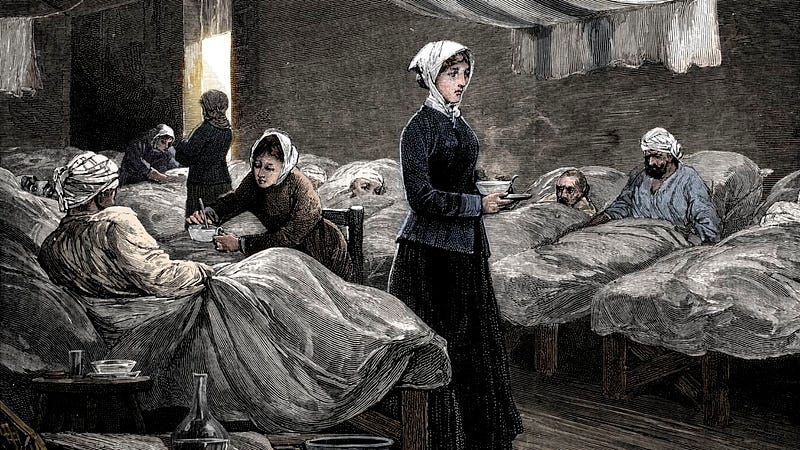
Image Credit: The Print Collector/Getty Images

Florence Nightingale, commonly referred to as The Lady with the Lamp, established modern nursing. Nightingale, further to being an influential reformer and statistician, was a well-known British nurse. The nurse, contributing heavily to her sanitation views, gained significant experience during the Crimean War (1853–1856). Numerous lives, because of Nightingale’s efforts, were saved.

St. Thomas’ Hospital and the Nightingale Training School for Nurses, established in 1860, were two of the nurse’s metaphorical babies. Nightingale’s influence on the nineteenth and twentith centuries, especially when it comes to healthcare reform, should not be underestimated.

Early Life…
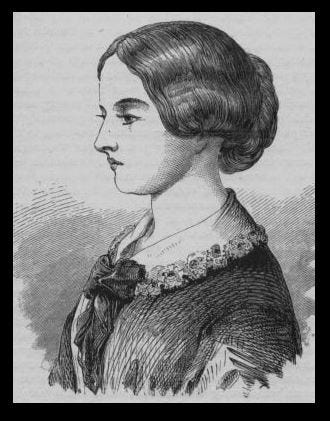
Young Florence Nightingale

The Nightingale family, fairly well-connected at Florence’s Villa Colombaia, enjoyed a social status their considerable wealth afforded. Florence Nightingale, born on Friday, 12 May 1820, was named for her birth city. Florence’s older sister, Frances Parthenope, had also been named for her birth city. The family owned property in Embley and Lea Hurst. Embley and Lea Hurst are respectively located in Hampshire and Derbyshire.

Florence, considering her family background, unsurprisingly established herself as a liberal-humanitarian. Her father, Willam, took the Nightingale surname shortly after inheriting his estate at Lea Hurst. Embley Park is now a school.
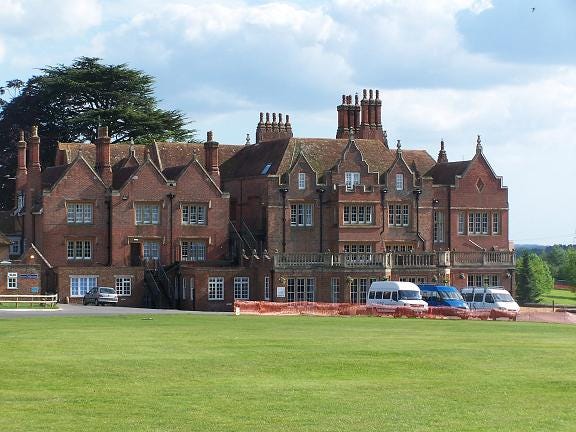
Embley Park in Hampshire, now a school, was one of the family homes of William Nightingale.

“Florence and her older sister Parthenope benefited from their father’s advanced ideas about women’s education,” revealed in a BBC documentary, “They studied history, mathematics, Italian, classical literature, and philosophy, and from an early age Florence, who was the more academic of the two girls, displayed an extraordinary ability for collecting and analysing data which she would use to great effect in later life.”
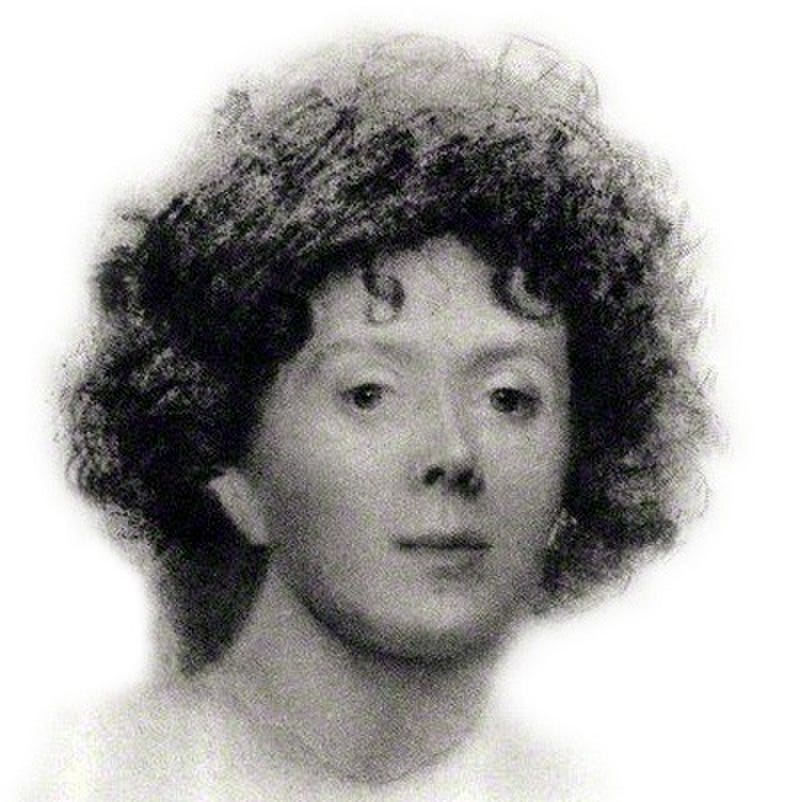
Mary Elizabeth Clarke (1793–1883)

Florence’s father, in 1838, took the family on a European tour. The young Florence, during this tour, crossed paths with Mary Clarke. Mary, an English-born Parisian, set herself apart from her contempories.

Mary, with her appearance being one of them, cared little for superficial attributes. Clearly, as Florence soon observed, there was nothing everyday or boring about “Clarkey”. Mary, despite her behaviour being a tad eccentric, was a captivating hostess.

Florence and Clarkey understandably became fast friends. Consequently, because of their commonalities, we can see why Florence felt so much at ease with Mary. It was curiously from Mary, not her mother, Florence came to believe women and men could be seen as equals.

Florence, as a young woman, was frequently described as being gracefully slender. Despite this description, from many quarters, her demeanour was unquestionably severe. Florence’s radiant smile, charmingly disarming, left many people wrapped around her little finger.

Curiously even though there was a nine year courtship, Florence ultimately rejected Richard M. Milnes. Milnes, a politician and poet, had been a persistent suitor. His efforts, because of Florence’s dedication to nursing, were for naught. Florence was convinced marriage would interfere with her calling.
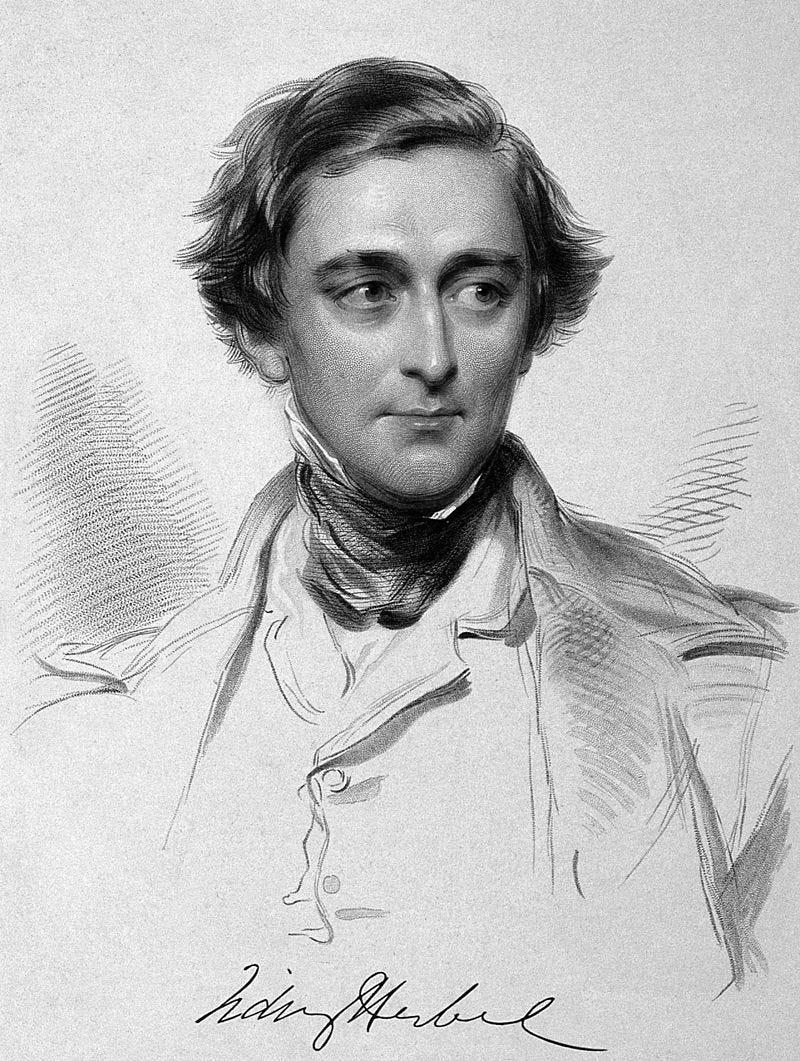
Sidney Herbert. Image Credit: Sir Francis Grant

Picture it: Rome. 1847. Sidney Herbert, an accomplished politician, had served as Secretary of War from 1845 to 1846. Herbert, following his stint as Secretary of War, spent his honeymoon in Rome. Florence and Herbert, because of their mutual interests, unsurprisingly became lifelong friends.

Herbert, during the Crimean War, was again appointed Secretary of War. There is a good chance his previous expereince influenced his appoint to the post. Florence, because of Herbert, was able to bring her nursing to the Crimea. Herbert and his wife, cutting through the red tape, facilitated Florence’s needs.

Florence, in return, was every bit as helpful to Herbert. She became one of the politician’s key advisers. Their mutual respect, throughout their respective careers, was readily apparent.

Interestingly, whilst there is no evidence proving accusations, some people believed Florence somehow hastened her friend’s death. Herbert, in 1861, died from Bright’s Disease. There could be something to what certain people suggested. Florence’s reform programme, more complex than anything previously proposed, was seemingly the catalist for Herbert’s death.

Crimean War…

Desperate Times Call for Desperate Measures. Florence’s contribution to the war effort, despite certain people having reservations regarding women and their involvement in the Crimean War, went a long way was exceptional. It didn’t take long, as reports trickled back to the British Isles, for Florence to make her mark. Conditions at the military hospital were horrific. Scores of wounded soldiers arrived at the facility each day.
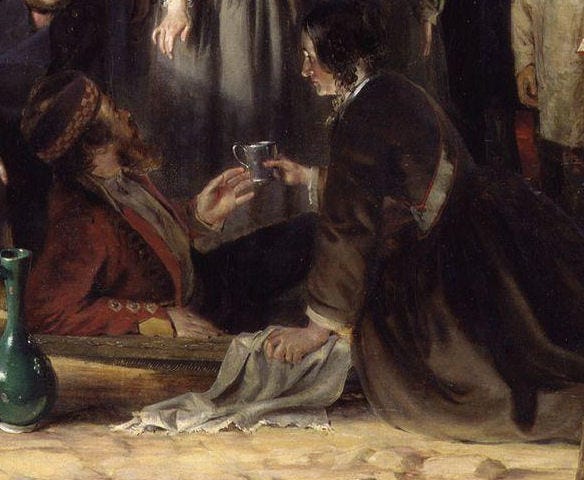
Eliza Roberts… The Mission of Mercy: Florence Nightingale receiving the Wounded at Scutari (Jerry Barrett, 1857)

Florence, on 21 Oct. 1856, with 38 volunteer nurses, quickly mobilised to meet the urgency. Chief amoungst the nursing staff, further to Uunt Mai Smith, was Eliza Roberts. The nursing campaign, authorised by Herbert, was added greatly by Clarkey. Clarkey, situated in Paris, asssisted Florence in every way possible.

The volunteer nurses, with a facility approximately 339 miles away from the frontline, worked on incoming wounded soldiers.

Florence, after seeing the conditions she and her volunteers were facing, immediately dispatched a letter to The Times calling for the British government to prove a much needed solution. The government, possibly fearing significant backlash for not acting sooner, commissioned famed engineer Isambard Kingdom Brunel.
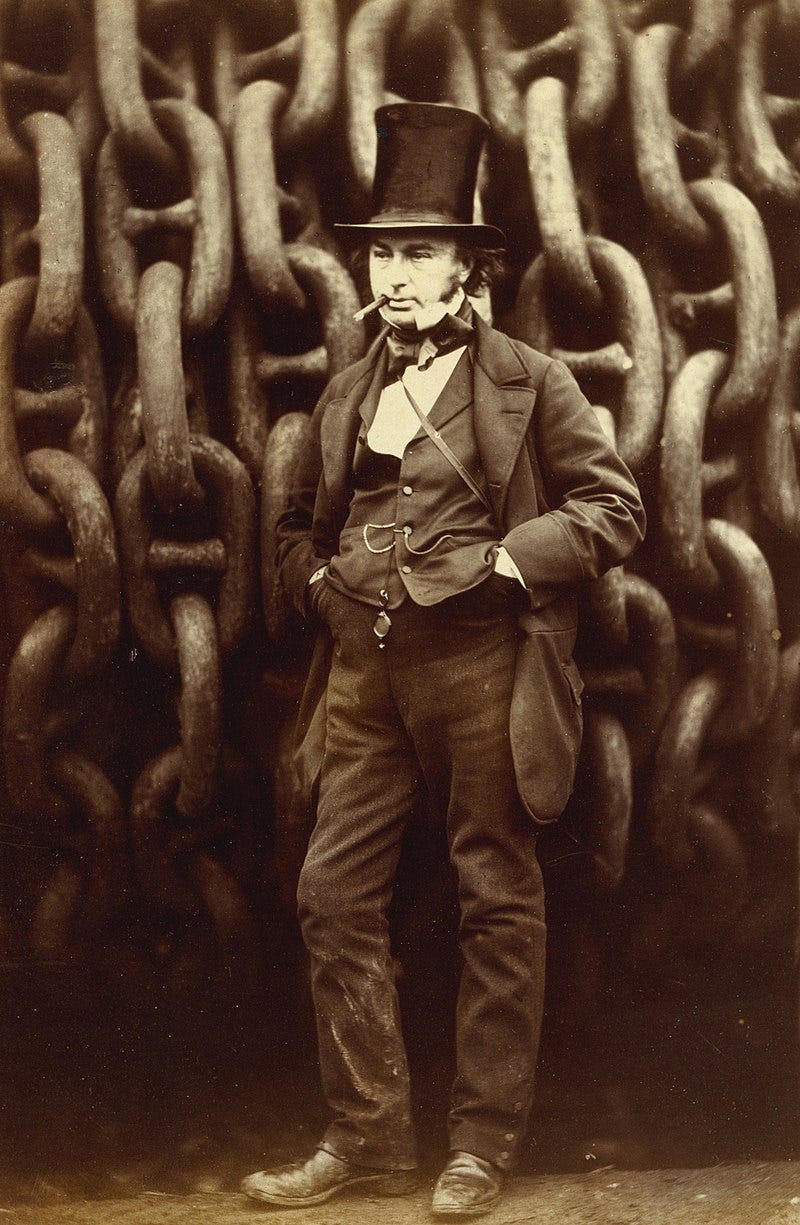
Isambard Kingdom Brunel… The launching chains of the SS Great Eastern (Robert Howlett, 1857)

Brunel, known for various bridges and tunnels located around the British Isles, set to work on designing a prefabricated hospital. The design was such, after being constructed in England, it could easily be shipped to the Dardanelles. Renkioi Hospital, an entirely civilian facility, came under Edmund Parkes’ management.

The death rate seen at the newly constructed hospital, compared to that seen at Scutari, was less than one tenth. Illustrating this point, during Florence’s first winter at Scutari, more than four thousand soldiers died there. The soldiers, despite being presented at the hospital with significant battle wounds, were more likely to die from typhus, typhoid, cholera, and dysentery.

Overcrowding, coupled with an ineffective sewer system and a nonexistent ventilation system, made conditions almost unmanageable. The British government, in March 1855, dispatched to Scutari the Sanitary Commission. The commision, some six months after Florence and her volunteers had made their presence felt, managed to address the issues. The sewer system was flushed out and ventilation was improved. Florence, in May 1855, came down with a critical illness. Roberts, serving as head nurse, brought Florence back to health.
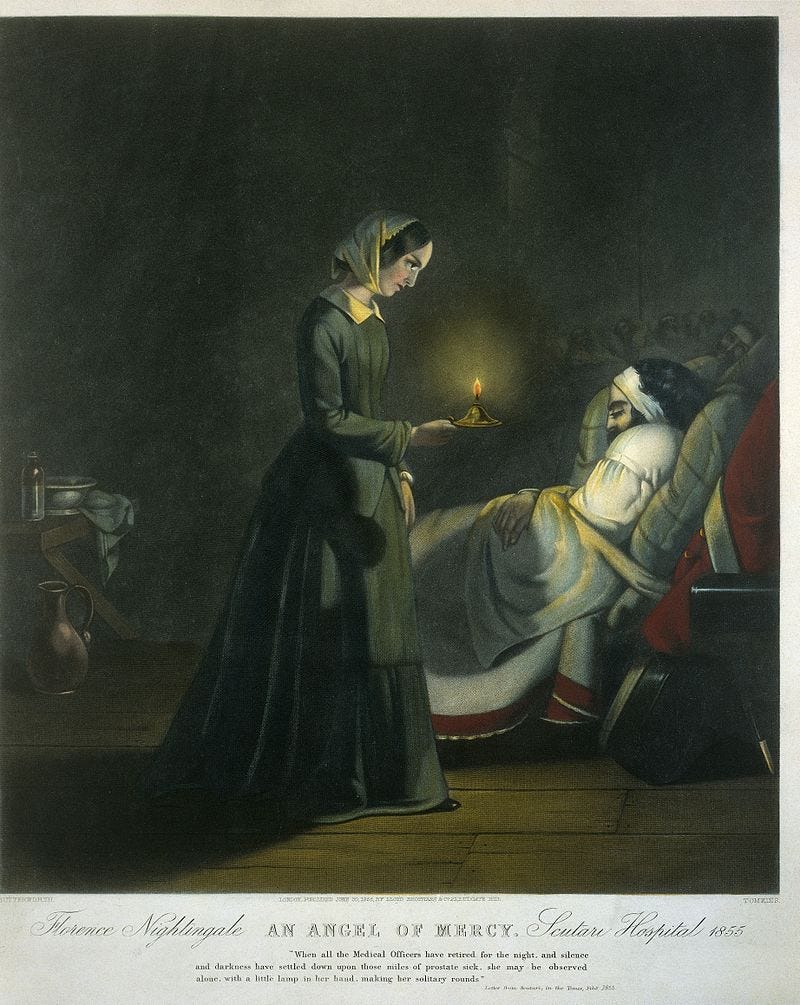
Florence Nightingale… An Angel of Mercy. Scutari Hospital 1855.

The death rate reduction, because of her approach to hygience practices, was attributed to Florence and her volunteers.

Stephen Paget, a contributing writer to the Dictionary of National Biography, referenced Florence’s accomplishments. Curiously, possibly because of her upbringing, not once did Florence take credit for the improved death rate.

Florence soon came to believe, despite the vast improvements implemented by the Sanitary Commission, deaths could be attributed to poor nutrition, insufficient supplies, stale air, and overwork.

After returning home to the British Isles, needing evidence to present to the Royal Commission on the Health of the Army, Florence set to work on proving her point. She collected all the evidence she needed to convince the most steadfast of opponents. Certain men underestimated Florence at their own risk. Florence never suffered fools gladly.

Florence’s experiences in the Crimea greatly influenced her attitude towards the importance of sanitary living conditions. Consequently, because of how Florence approached her work, peacetime deaths within the British military were greatly reduced. Florence’s efforts, also encompassing hospital design and working-class homes, went far beyond her work with the army. Vastly improved sanitary conditions were implemented.
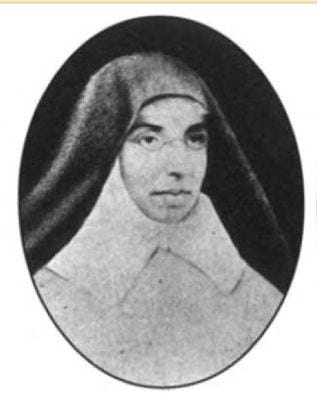
Mother Mary Clare Moore (1814–1874)

Interestingly, when two waves of Irish nuns arrived at Scutari, Florence’s response to each deffererd greatly.

Mary Clare Moore and Mary Francis Bridgeman, respectively heading the first and second waves, garnered vastly different reactions from Florence. Moore, unlike Bridgeman, was willing to place herself and the accompanying sisters under Florence’s authority.
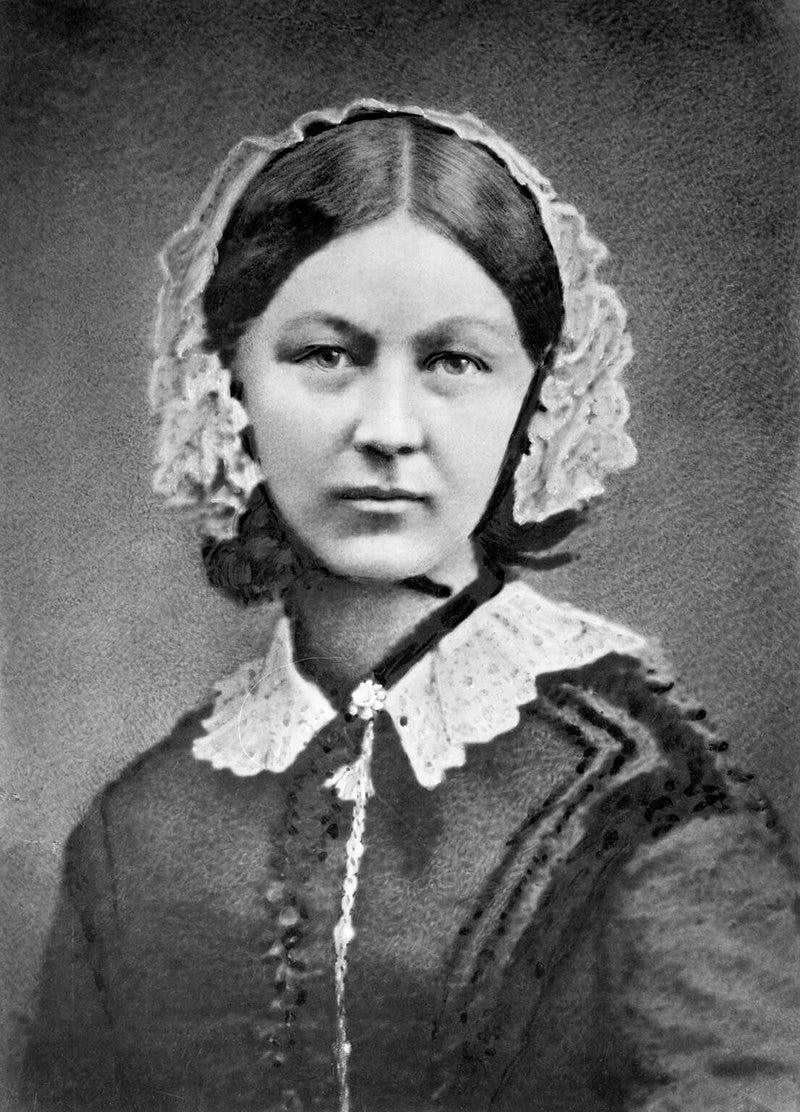
Florence Nightingale (c.1860). She referred to Bridgeman as ‘Mrs. Bridgeman’ and ‘Reverend Mother Brickbat’

Bridgeman, considered by Florence ambitiously power hungry, refused to give Florence an inch of authority over her sisters. There was no trust found between Bridgeman and Florence. Florence and Moore developed a life long friendship.

Curiously, in reference to secondary source material, there existed a frosty working relationship between Florence and Nurse Mary Seacole. Seacole, a historical figure personified by Sara Powell in a recent Doctor Who episode, operated a hotel/hospital for officers.
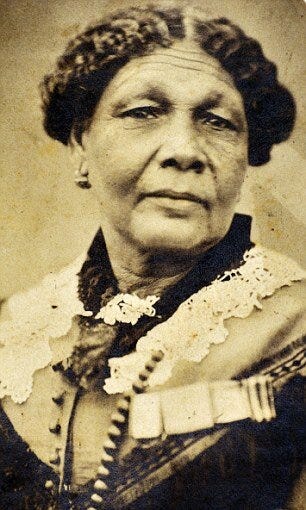
Mary Jane Seacole (1805–1881)

Seacole, in her memoir, recalled only one time where she and Florence were on friendly terms. The nurse, scheduled to meet up with business partners in the Crimea, was in Scutari and needed a bed for the night. Florence apparently accommodated Seacole.

The nurse tried and failed to join Florence’s group. It seems one of Florence’s colleagues took an instant dislike to Seacole. Seacole, in her writing, suggests the rebuttal could have stemmed from a racist attitude.

The Lady with the Lamp…
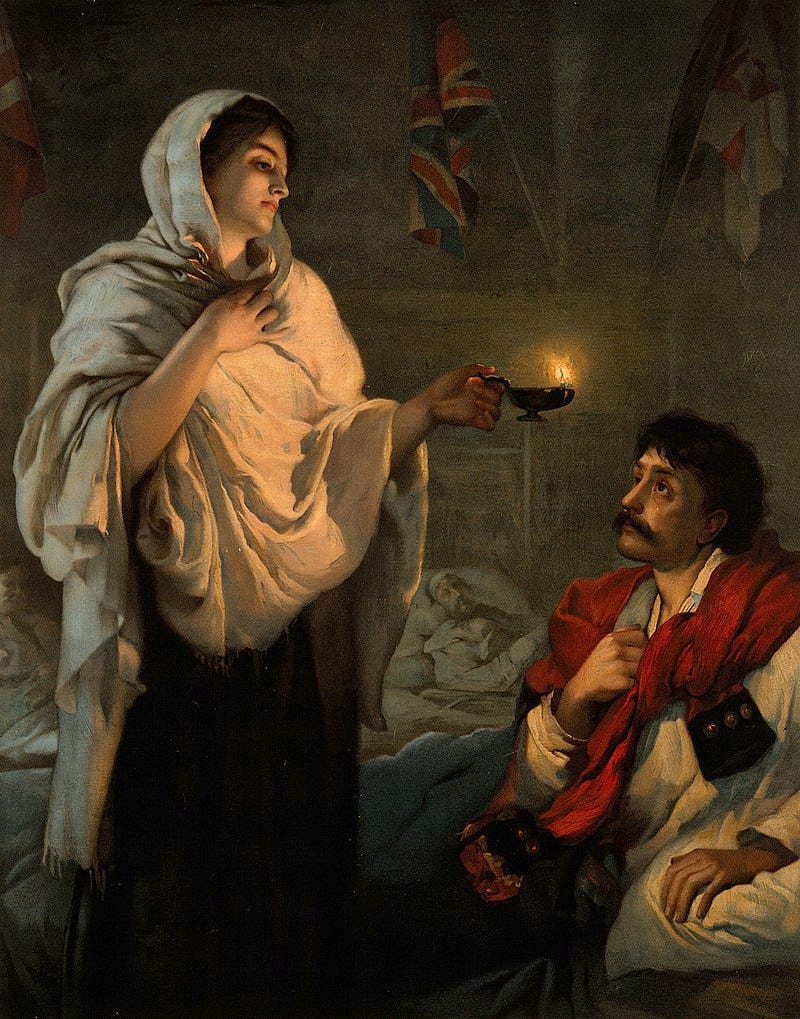
A lithograph reproduction of a painting by Henrietta Rae, 1891. Florence Nightingale, The Lady with the Lamp

Florence, because of her time in the Crimea, garnered the nickname “The Lady with the Lamp”. The phrase can be attributed to an article published in The Times. Edward Cook, in The Life of Florence Nightingale Volume 1, references the aricle:

She is a “ministering angel” without any exaggeration in these hospitals, and as her slender form glides quietly along each corridor, every poor fellow’s face softens with gratitude at the sight of her. When all the medical officers have retired for the night and silence and darkness have settled down upon those miles of prostrate sick, she may be observed alone, with a little lamp in her hand, making her solitary rounds.

The Lady with the Lamp, in the Henry Wadsworth Longfellow 1857 written poem Santa Filomena, is paraphrased:

Lo! in that house of misery A lady with a lamp I see Pass through the glimmering of gloom And flit from room to room.

Florence’s Death…
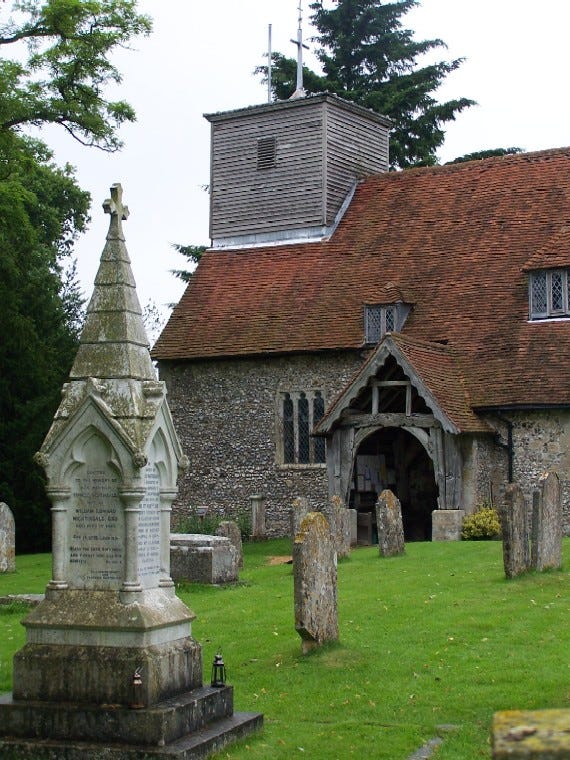
Florence Nightingale grave is located in the churchyard of St Margaret’s Church, East Wellow, Hampshire

Florence, aged 90, died peacefully in her sleep at her London Mayfair residence on Saturday, 13 Aug. 1910.

An offer for Florence be buried at Westminster Abbey was gracefully declined by her relatives. Florence’s grave can be found at East Wellow’s in St. Margaret’s Church churchyard. East Wellow, located in Hampshire, isn’t far from Embley Park.

A memorial monument of Florence Nightingale, created by Francis William Sargant, was placed in the cloister of the Basilica of Santa Croce, in Florence, Italy.

Florence Nightingale
History
Healthcare
Nursing
Reform
Recommended from ReadMedium