avatarTooth Truth Roopa Vikesh

Free AI web copilot to create summaries, insights and extended knowledge, download it at here

2761

Abstract

rta out to show to prospective buyers, parents of school-going children.</p><blockquote id="1803"><p>Looking back, I’m amused. The pitch for a home computer — all-fun for parents, all-work for the kids. Just like smartphones nowadays are…</p></blockquote><p id="b50a">Somewhere around the nineties, Wikipedia came up, and then suddenly Encarta all but disappeared.</p><h2 id="9e34">Then, the sleeping giant, Encyclopedia Britannica, re-entered the equation with an official statement.</h2><p id="473c">Their official compared pages upon the same topic from Britannica and Wikipedia and proved that the Wikipedia entry upon the topic was factually incorrect, while the Encyclopedia Britannica could always be trusted.</p><p id="2114">At this point in time, if shares of The Encyclopedia Britannica had been available, they would have gone up in price even as those of Wikipedia crashed. The market perception about Wikipedia tanked even as those who owned sets of the Britannica behemoth strutted around in pride.</p><p id="4ebe">Only, the Wikipedia guys didn’t give up. The same day the EB official quoted the Wikipedia page with the error, the person running Wikipedia edited the entry and corrected it.</p><figure id="bc20"><img src="https://cdn-images-1.readmedium.com/v2/resize:fit:800/1*[email protected]"><figcaption>Photo by <a href="https://unsplash.com/photos/D8QbsYyiFmw?utm_source=unsplash&amp;utm_medium=referral&amp;utm_content=view-photo-on-unsplash&amp;utm_campaign=unsplash-ios">Luke Chesser</a> on <a href="https://unsplash.com/photos/D8QbsYyiFmw?utm_source=unsplash&amp;utm_medium=referral&amp;utm_content=view-photo-on-unsplash&amp;utm_campaign=unsplash-ios">Unsplash</a>.</figcaption></figure><h2 id="399c">The Wikipedia guy reasoned that even if there was something wrong with a Wikipedia entry, it was easy to edit and fix it.</h2><p id="3fe0">Over time, it would become the go-to resource for everyone, he said. He even thanked the EB official for pointing out the error and contributing to the improvement of the Wikipedia entry on the topic in real-time.</p><p id="d903">Which is the great attraction of online platforms. They’re easy to fix in real-time.</p><p id="d37d" type="7">So why is it that Medium still has the same problem from six months ago?</p><h2 id="90a0">If I respond to a story from its middle, the story disappears as soon as I post my response.</h2><p id="b915">In the earlier version of the app, this wouldn’t happen. Even better, the app had a tiny article title just above my response, and I could click on it and see which story I had responded to from my published story responses.</p><p id="df43">Not any longer! If I respond to a story, off goes the story as soon as I respond to it.</p><p id="f8d

Options

c">If I look at my published stories, I can see my responses, but I have no idea which story of whose it was I responded to even if that person claps for my story and also responds back. The link to their original story is gone.</p><p id="f435">For example, I recently responded to <a href="https://link.medium.com/IhJlocaYTlb">You Can’t Venmo Hanukkah Gelt</a> by <a href="">Janie Emaus</a></p><p id="b45b">Here’s a screenshot of my response. The response has no connection to the original story. The only reason I can link the original story or tag <a href="undefined">Janie Emaus </a>is that all three words, which are exotic to my ordinary vocabulary, (Venmo, Hanukkah, and Gelt) are stuck in my memory.</p><figure id="6af3"><img src="https://cdn-images-1.readmedium.com/v2/resize:fit:800/1*[email protected]"><figcaption>Screenshot of my response to Jamie’s delightful story.</figcaption></figure><p id="4758">Now, here’s another about how to dress well. Yes, sometimes I click on stories that claim to be able to teach me how to dress well, and when they surprise me pleasantly, I respond!</p><figure id="76d7"><img src="https://cdn-images-1.readmedium.com/v2/resize:fit:800/1*[email protected]"><figcaption>Screenshot of my story response to <a href="undefined">Thea English</a>‘s story.</figcaption></figure><p id="4747">Now, I deliberately included the author’s name in my response, because I subconsciously knew that the story would receive claps other than from the author, and the only way I could identify the author after a day or two would be if I included the author’s name in my response.</p><p id="8157">So is that what the algorithm is trying to make us do? Write out the entire title and the name of the author in just about every story response? Doesn’t that increase the friction between the reader and his desire to respond?</p><p id="a662" type="7">It would be like Amazon showing a review but not the product itself, or Venmo telling you how much you’ve paid but not to who.</p><p id="4640">I would be perfectly willing to let this go if the earlier version of the app hadn’t supported it. Responding used to be fun and the app wasn’t set up to make stories disappear when you responded or to declutch the response from the original story.</p><p id="7761">I get it. Everyone is busy. There’s a thrust towards audio and video with Knowable and Projector. However, all Ev needs to do is take a step back and make us reinstall the older version of his own app! Just imagine how much <b><i>more</i></b> confusing it will be when we’re responding to audio and video articles and we haven’t the slightest idea which story it was we responded to.</p><p id="e244">It is way better to fix this now.</p></article></body>

Britannica Vs. Wiki

I wish Medium responses were fixed as easily as the Wiki page was in this story
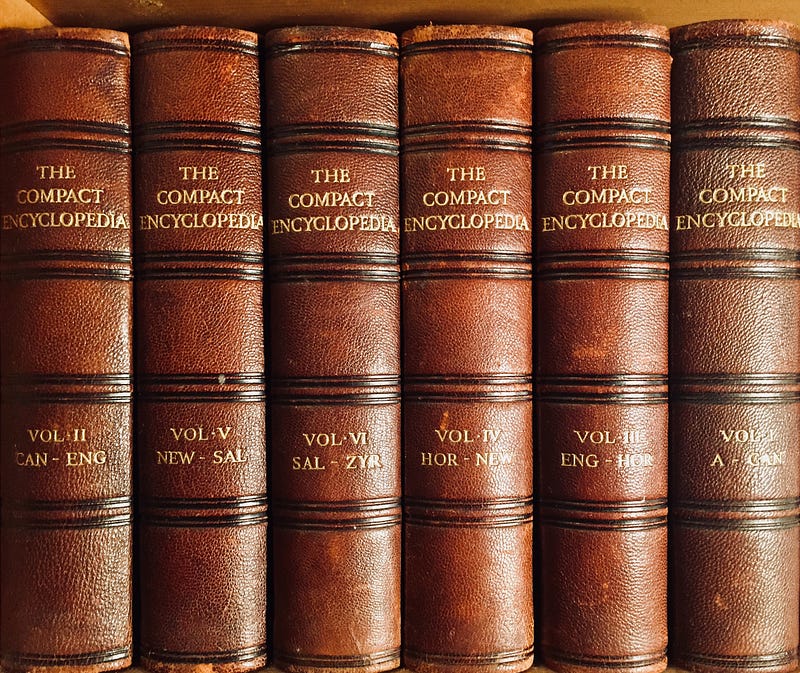
Photo by James on Unsplash.

When printed encyclopedias ruled

Back in the eighties, we visited a family friend for a dinner party.

On their bookshelf, instead of the usual books of different heights, colors, and spines printed with book names in different fonts, I saw for the first time, a set of books, all bound in the same covers and embossed with gold lettering.

It was a printed encyclopedia, called The Encyclopaedia Britannica. It had thirty-two volumes and weighed 58 kilograms, well over my weight as a twelve-year-old.

Then came Microsoft Encarta

We never did get around to buying one for our own home, but in the nineties, when we got a computer, Microsoft gave out a compact disc with an encyclopedia on it called Encarta. My brother and dad were pretty excited about having an entire encyclopedia in the palm of their hands.
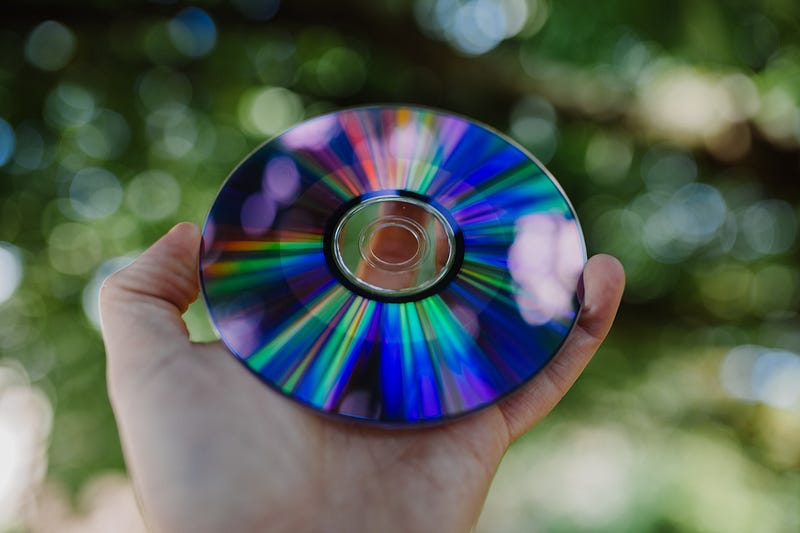
Photo by Phil Hearing on Unsplash.

Me? I would have preferred the entire Agatha Christie and PG Wodehouse instead. Blandings, Jeeves and Bertie, Poirot and Marple, and Tommy and Tuppence Beresford were what I would have loved to read, not a boring encyclopedia full of dry facts about how much a centimeter cube of spruce would weigh compared to one of teak.

“If you buy a computer, your kids will study on it while you can play Solitaire on it later!!”

A lot of people got sold onto buying a computer just because of Encarta, though. The entire computer costs as much as a set of Brittanica books, the salesman would argue, as he pulled up demo pages of Encarta out to show to prospective buyers, parents of school-going children.

Looking back, I’m amused. The pitch for a home computer — all-fun for parents, all-work for the kids. Just like smartphones nowadays are…

Somewhere around the nineties, Wikipedia came up, and then suddenly Encarta all but disappeared.

Then, the sleeping giant, Encyclopedia Britannica, re-entered the equation with an official statement.

Their official compared pages upon the same topic from Britannica and Wikipedia and proved that the Wikipedia entry upon the topic was factually incorrect, while the Encyclopedia Britannica could always be trusted.

At this point in time, if shares of The Encyclopedia Britannica had been available, they would have gone up in price even as those of Wikipedia crashed. The market perception about Wikipedia tanked even as those who owned sets of the Britannica behemoth strutted around in pride.

Only, the Wikipedia guys didn’t give up. The same day the EB official quoted the Wikipedia page with the error, the person running Wikipedia edited the entry and corrected it.
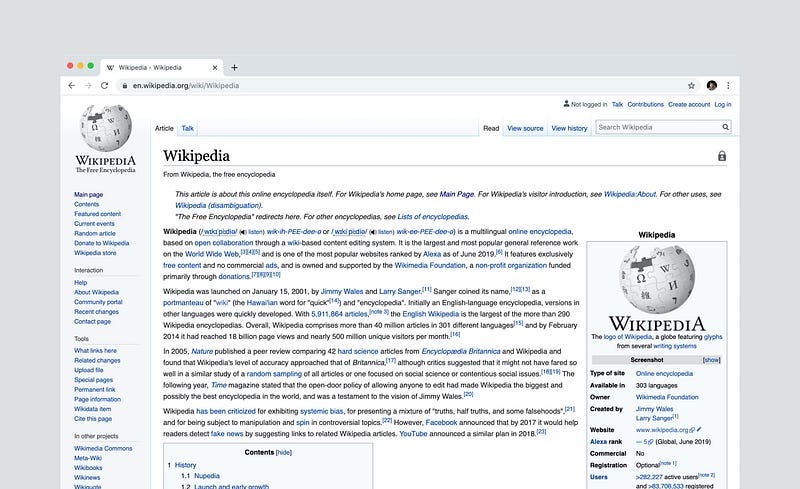
Photo by Luke Chesser on Unsplash.

The Wikipedia guy reasoned that even if there was something wrong with a Wikipedia entry, it was easy to edit and fix it.

Over time, it would become the go-to resource for everyone, he said. He even thanked the EB official for pointing out the error and contributing to the improvement of the Wikipedia entry on the topic in real-time.

Which is the great attraction of online platforms. They’re easy to fix in real-time.

So why is it that Medium still has the same problem from six months ago?

If I respond to a story from its middle, the story disappears as soon as I post my response.

In the earlier version of the app, this wouldn’t happen. Even better, the app had a tiny article title just above my response, and I could click on it and see which story I had responded to from my published story responses.

Not any longer! If I respond to a story, off goes the story as soon as I respond to it.

If I look at my published stories, I can see my responses, but I have no idea which story of whose it was I responded to even if that person claps for my story and also responds back. The link to their original story is gone.

For example, I recently responded to You Can’t Venmo Hanukkah Gelt by Janie Emaus

Here’s a screenshot of my response. The response has no connection to the original story. The only reason I can link the original story or tag Janie Emaus is that all three words, which are exotic to my ordinary vocabulary, (Venmo, Hanukkah, and Gelt) are stuck in my memory.
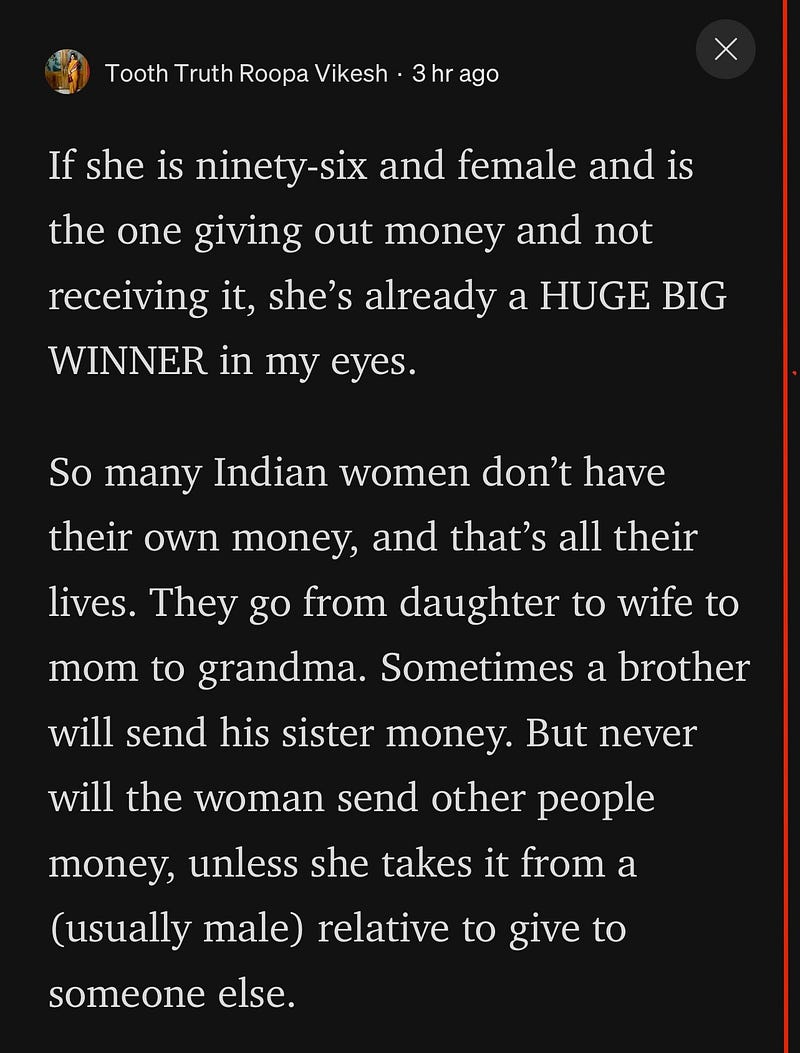
Screenshot of my response to Jamie’s delightful story.

Now, here’s another about how to dress well. Yes, sometimes I click on stories that claim to be able to teach me how to dress well, and when they surprise me pleasantly, I respond!
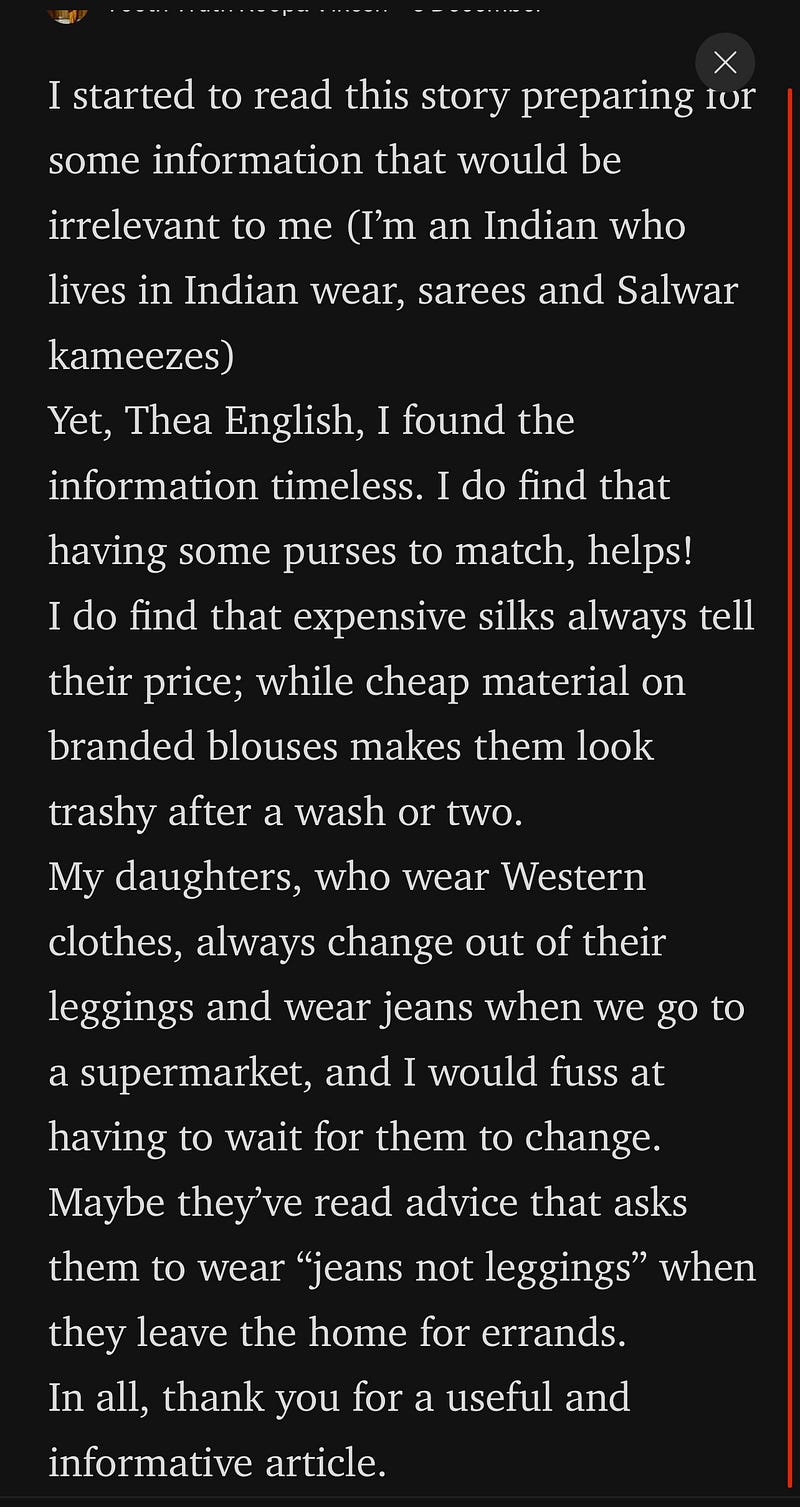
Screenshot of my story response to Thea English‘s story.

Now, I deliberately included the author’s name in my response, because I subconsciously knew that the story would receive claps other than from the author, and the only way I could identify the author after a day or two would be if I included the author’s name in my response.

So is that what the algorithm is trying to make us do? Write out the entire title and the name of the author in just about every story response? Doesn’t that increase the friction between the reader and his desire to respond?

It would be like Amazon showing a review but not the product itself, or Venmo telling you how much you’ve paid but not to who.

I would be perfectly willing to let this go if the earlier version of the app hadn’t supported it. Responding used to be fun and the app wasn’t set up to make stories disappear when you responded or to declutch the response from the original story.

I get it. Everyone is busy. There’s a thrust towards audio and video with Knowable and Projector. However, all Ev needs to do is take a step back and make us reinstall the older version of his own app! Just imagine how much more confusing it will be when we’re responding to audio and video articles and we haven’t the slightest idea which story it was we responded to.

It is way better to fix this now.

Writing
Responses
Medium
Online
Editing
Recommended from ReadMedium