
Britain’s Role in the Slave Trade Lasted Centuries
It started long before Europe colonised America
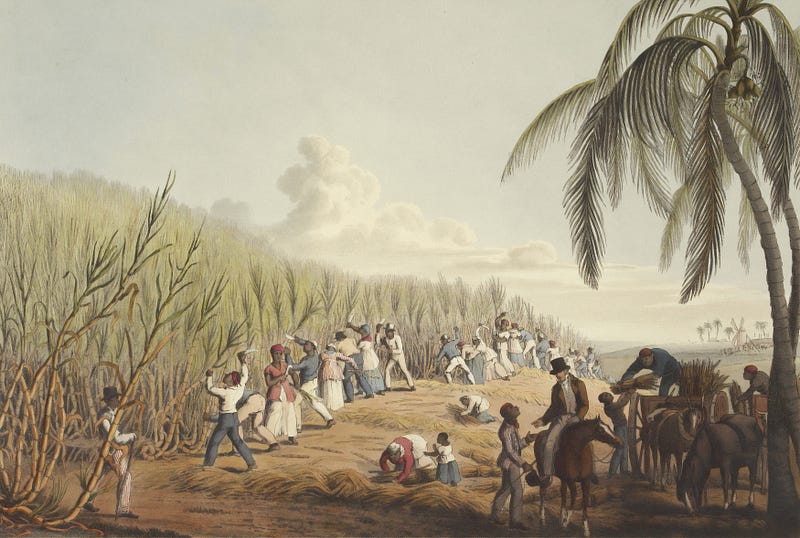
I was dismayed to read a story this week which intimated that the USA was more involved in the slave trade than Britain was. This is far from the truth; Britain was involved in the slave trade from around the sixteenth century before America was even colonised by Europe and the first slave brought there in the 1600s.
By the mid-eighteen century, London had the largest population of enslaved peoples in Europe — the figure is thought to have been around ten thousand people.
Many people don’t know but British slavers fought hard to retain the slave trade and slavery, and eventually, only gave it up because they demanded to be paid to do so. The debt to ‘repay’ those who ‘owned’ enslaved people was so large that the British taxpayer was still paying up until 2015.
The pioneer of the English slave trade was one John Hawkins, who in 1554–1555 created a coalition of slave traders. His first venture involved hijacking a slave ship and stealing the three hundred enslaved persons therein to sell on.
It proved to be an extremely lucrative trade down the centuries, which is why in 1835 British slave owners demanded payment for the ‘release’ of enslaved peoples. Under the Slave Compensation Act 1837, £20 million was paid out to around one thousand slave owners, which cost approximately 40% of Britain’s annual income, the remaining was borrowed from bankers such as Rothschild.
Not a single penny went to enslaved people.
Much of the so-called British aristocracies made huge amounts of money from slavery. This is how slaver Edward Colston — whose statue was rolled into the Bristol harbour by protesters last month — bought his seat in the House of Parliament.
Some slavers practised philanthropy with some of this money. For example, in Hackney, where I live in London, a nineteenth-century slave trader Robert Geffrye used his ill-gotten gains to build almshouses for the poor in Haggerston, Hackney.
These almshouses have since become a museum, showcasing the styles of homes down the ages. But more recently, the name has changed from The Geffrye Museum to The Museum of the Home, in recognition that Geffrye does not deserve to have a museum named after him.
There is also a campaign ongoing to have Geffrye’s statue removed from the front of the museum and relegated to the basement, where it will become an exhibit explaining how Geffrye made his money transporting stolen humans to the ‘new world’.
As Marvin Rees, Mayor of Bristol put it: “Whilst history shouldn’t be forgotten, these people who benefited from the enslavement of individuals do not deserve the honour of a statue. This should be reserved for those who bring about positive change and who fight for peace, equality, and social unity.”
There was a rash of articles a couple of days ago on Windrush Day which I chose not to take part in. Personally, I don’t celebrate ‘Windrush Day’ on June 22nd as to me, every day is Windrush Day.
Britain doesn’t have much to be proud of in terms of treatment down the years of the Windrush generation, most notably the recent scandal to remove black people and their descendants from Britain through the creation of Theresa May’s ‘hostile environment — a travesty she is yet to apologise for.
Even though some members of the establishment have recently come out with public thanks to the black community, much more needs to be done.
British Black history needs to be taught in our schools, and in a well-thought-out and sensitive way that avoids feeding into any racist sentiments. It was upsetting to hear from young black students at my teenagers’ secondary school that after the (single) lesson on slavery, some white students were overheard making racist remarks to their black peers.
Britain doesn’t have much to be proud of in terms of treatment down the years of the Windrush generation, most notably the recent scandal to remove black people and their descendants from Britain through the creation of Theresa May’s ‘hostile environment — a travesty she is yet to apologise for.
These are not easy times, granted. But with care and attention to the truth, we can do more to ensure the history of the transatlantic slave trade is taught and learned about not only in our schools but in public life in general.
This needs to start with the truth about Britain’s involvement in the transatlantic slave trade.
If you live in Britain, you may want to sign this petition:
Find out more about the legacies of British slave-ownership here
©️marla bishop 2020
Marla Bishop is a relationship coach and writer: On medium.com she is the creator of Lilith and an editor of The Bad Influence. She lives in London UK with her family. You can follow her here.


