Britain’s King Charles II: The Restored “Merry Monarch”
With a new King Charles on the British throne, here is a look at the previous holder of that title
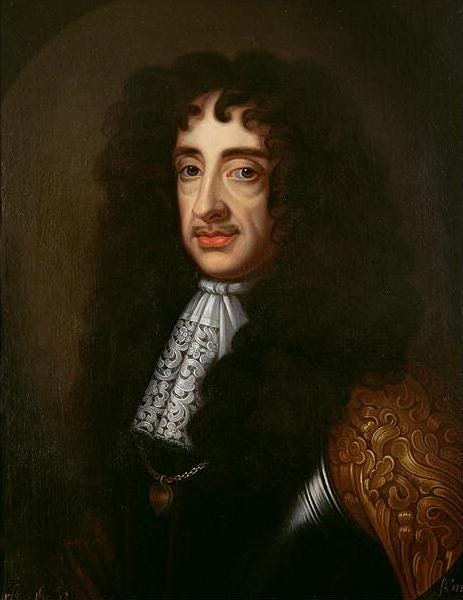
The career and character of Charles II have always been deeply controversial. To his harshest critics down the ages, his bad qualities read like a veritable checklist of possible kingly vices. He was devoid of principles, insincere in religion and patriotism, and a lazy, dissipated libertine, who, by his example, debauched the nation’s morals as readily as he debauched the countless women who fell within his wide-ranging view. His Court was corrupt and degenerate and his reign a triumph of vice and an affront to middle-class morality.
Yet despite these weighty indictments, for many years after his reign Englishmen commonly waxed nostalgic about “the golden days of Good King Charles”. For this complex monarch has never been short of supporters. To them, the King’s lack of firm principles could better be described as tolerance — a welcome change after the bitter years of civil war and the austere Protectorate of Oliver Cromwell.
Many Dangers
Charles II rode triumphantly into Whitehall on 29th May 1660 to reclaim the throne that his father had lost, along with his head, 11 years before. For longer even than that, the 30-year-old Charles had known little but fear, humiliation, poverty and exile. The year 1645 had seen the beginning of the end for the Royalist cause, and the beleaguered Charles I urged his eldest son to flee. The young prince sought sanctuary first in the West Country, then in the Scilly Isles and Jersey before finally joining his mother in Paris. There followed fruitless attempts to save his father’s life, and in 1650, Charles entered into a conspiracy with the Presbyterian Scots to bring down their mutual enemy, Cromwell.
This was a dreadful mis-judgment on Charles’s part, which badly damaged his reputation and nearly cost him his life. His motley force was defeated by Cromwell at Worcester on 3rd September 1651, and Charles was lucky to escape into the night — and into six weeks of hair-raising adventures that led him finally to the safety of France.
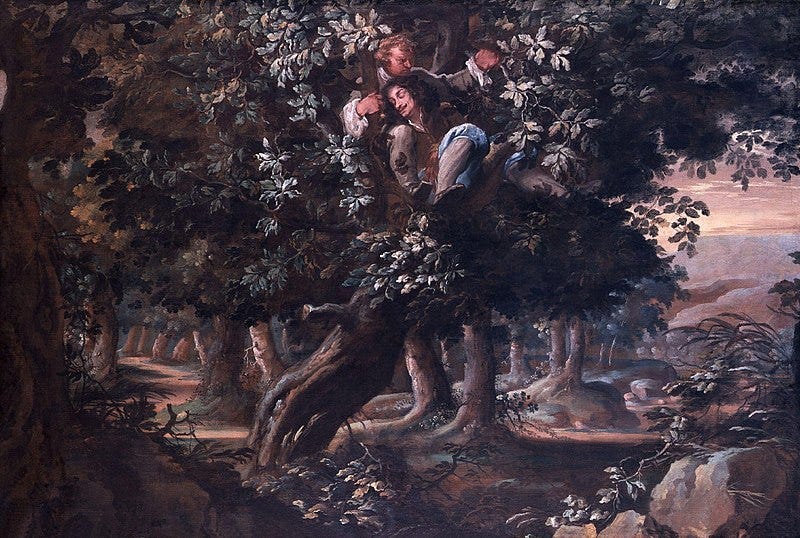
Romantic as Charles’s escape may have been, the whole enterprise was a fiasco, and the long years of waiting and hoping in poverty ground on. There seemed little realistic prospect of Charles ever claiming his throne, until in 1658 Oliver Cromwell died unexpectedly. His son Richard showed neither the talent nor the inclination to shoulder the burdens of governing the turbulent kingdom, and with anarchy threatening, powerful army factions came to the conclusion that the Stuart monarchy must be restored — provided that Charles would agree to an amnesty. He did so willingly. It was a small price to pay to gain the throne, and in any case Charles was not of a vengeful nature.
An Accomplished King
The man who now arrived on the throne of England after such a tortuous journey drew the admiration of all. He was tall, roguishly good-looking, very dark-complexioned with cascades of glossy black hair.
Charles’s good looks were complemented by a natural grace and athleticism. He was a polished dancer, an excellent sailor and horseman, keen to hunt and an avid racegoer. He possessed effortless good manners, a witty line in conversation and an air of easy familiarity quite at odds with his exalted station in life. He was well-read and generally cultured. He adored music, and was himself quite accomplished on the guitar. He took pleasure in the visual arts, and even more in the dramatic arts. He was intellectually curious, always taking an interest in new developments, whether they be the latest wonder of science or a grand architectural scheme in London.
A Welcome Restoration
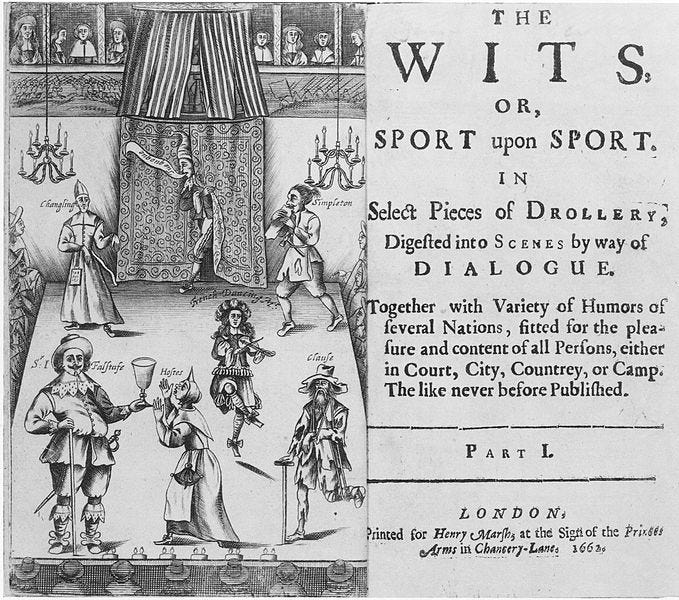
It is small wonder, then, that the Restoration was hailed with general enthusiasm and optimism. After years of drabness and caution, fashionable society flung itself into an orgy of parties and balls, under the approving eye of the King. The theatre flourished as it had not since the distant days of Shakespeare and Ben Jonson, and there was an outpouring of secular music. Even children had a more enjoyable time, discovering anew the delights of sports and games that had been frowned on by the Puritans.
Beneath the glitter and merriment, however, the reign of Charles 11 was in many ways to prove a disappointment. It was not simply that his morals did not match his manners, it was more a case of a genuine talent for the arts of ruling being undermined by deviousness and a Machiavellian instinct. He was a trimmer, a quality memorably expressed in an epitaph composed by one of his hell-raising cronies, the Earl of Rochester: “Here lies our Sovereign Lord the King, Whose word no man relies on, who never said a foolish thing, And never did a wise one.”
Foreign Affairs
Both at home and abroad, the difficulties that beset England at this time would have taxed the ingenuity and resolve of any monarch. Parliament may have welcomed the Restoration, but its fractious leaders had no intention of allowing the King to rule unfettered.
Money, or rather the lack of it, remained the bane of Charles’s life, and he was forever conniving at ways to prise it out of Parliament or secure it from his nephew, the young Louis XIV of France. Shortage of funds and sheer neglect had a crippling effect on the strength of the navy, and when commercial rivalry with the aggressive Dutch spilled over into war, England suffered humiliating setbacks, in 1667, the Dutch actually sailed up the Medway, laying waste to English ships.
Crises at Home
This crisis followed hard on the heels of two natural calamities: the Great Plague of 1665 and the Fire of London in 1666. The plague took a terrible toll. At its worst, corpses were mounting in London at the rate of 1000 a day; in all some 70,000 Londoners — nearly one in six — fell victim. If anything, the Great Fire was even more traumatic. It claimed only a handful of lives, but after raging for five days it left the City of London in ruins. Nearly 400 acres lay devastated; some 87 churches, 4000 streets and 13,000 houses were destroyed.
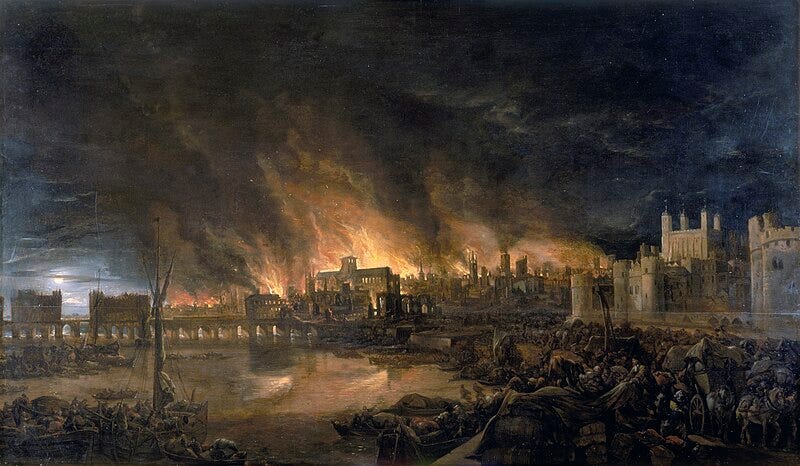
If the fire, and the subsequent reconstruction of London under the guiding genius of Christopher Wren was the physical watershed of Charles’s reign, the so-called Popish Plot was its political counterpart. The plot itself (to murder Charles and install his Catholic brother James in his place) was basically fictitious. But the fears, the rivalries and the intrigues surrounding it were real enough.
Succession and Religion
Despite fathering 14 illegitimate offspring by his endless string of mistresses, Charles never produced an heir by his long-suffering wife Catherine. He was therefore to be succeeded by James, which in the event was to prove a terminal disaster for the Stuart dynasty.
In the meantime, Charles himself had always been ambivalent about religion — openly Church of England and genuinely tolerant, he was secretly sympathetic to Catholicism and on at least one occasion party to a secret deal with the French which would have allowed that religion to regain the position it had lost during the Reformation. In an age when religion was of the greatest political as well as emotional concern, this was a grave matter. Charles did nothing to resolve it, and his reported deathbed conversion to Catholicism raised even more alarms about the nation’s religious future.
Charles died peacefully at Whitehall Palace on 6th February 1685. Characteristically, he was off-hand and even jocular to the end. “I am sorry gentlemen”, drawled the dying monarch to his attendants, “for being such an unconscionable time a-dying.” Then a little later, he managed to spare a thought for that most loyal and engaging of his mistresses, the actress Nell Gwynne: “And let not poor Nelly starve.”
Did you like this? Maybe not! Either way, your comment will be very welcome!
For other similar pieces, see my List: