avatarCharlie Brown

Free AI web copilot to create summaries, insights and extended knowledge, download it at here

3672

Abstract

much lie in the cost of food, but in the UK’s reliance on major chain supermarkets.</p><p id="4875">This is no more clearly demonstrated than looking at what happens when you choose to shop outside these big bastards…</p><h1 id="2adb">Local produce > Imported, out-of-season food</h1><p id="cb33"><b><i>Gaslighting Britain episode no.2</i></b><i> — Brits believe they deserve year-round sout of season produce. We’re entitled to cheap tomatoes in December, damnit!</i></p><p id="638e">You might think it wholly unfair that the likes of Croatians or Romanians have to spend so much money on supermarket food.</p><p id="c0d4">And it is.</p><p id="3e11">But often that’s not where people are really spending their food budget. Instead they use incredibly seasonal — and incredibly busy — local markets.</p><p id="7cc1">This is when everything changes. In Croatia, I bought locally produced feta cheese direct from a farmer’s wife for €6 a kilo — and I am not even party to local resident discounts. The supermarket equivalent? <a href="https://www.konzum.hr/web/products/president-sir-meki-feta-salakis-dop-150-grama">€26/kg.</a></p><p id="7467">Fresh apple juice bought directly from the farmer in a Romanian market? €1.15. From the supermarket? <a href="https://www.mega-image.ro/Apa-si-sucuri/Sucuri/Necarbogazoase/Suc-de-mere-1L/p/41524">€2.25</a> for a crappy processed bottle.</p><p id="a899">But these markets are seasonal. You might see cherries in May but unlike in a supermarket, you’re not going to see them in December.</p><p id="138e">In the UK, we lost our access to local markets when the supermarkets moved into every single street across the country. And with it, we lost much of our access to cheaper, better quality, local and seasonal produce.</p><p id="f7e8">Interestingly, when British local seasonal produce <i>is</i> available, it isn’t as susceptible to the same level of inflation. I just checked the price of the organic veg box I received every week until I left the UK in 2020. Then it was €12.40 per box. Now? €12.96.</p><p id="1f5e">That’s a 4% increase over 2.5 years. A far cry from the <a href="https://www.just-food.com/news/veg-shortages-blamed-as-uk-grocery-inflation-hits-46-year-high/">18%</a> increase seen in the last 12 months alone.</p><p id="09d9">The difference here is that that particular veg box only contains local produce. There are no Moroccan tomatoes or Peruvian asparagus, just a whole bevvy of Essex-based brassicas direct from the farm. Whilst I have no doubt the farm’s costs have increased in the last few years (and I’m sure they would like to charge more for their boxes), they will be less susceptible to the woes of importing to Britain.</p><p id="da7a">Local produce is where it’s at. But that would mean Britain stopping its out-of-season fresh produce. It would mean a completely different way of approaching cooking and eating.</p><p id="c516">And there is a very real argument that Britain is not set up to feed its nation and hasn’t been for years. As political writer Nick Cohen <a href="https://nickcohen.substack.com/p/the-coming-food-crisis?token=eyJ1c2VyX2lkIjoyODM2Mjc3LCJwb3N0X2lkIjoxMjMwNzU5ODgsImlhdCI6MTY4NTQ3MDc2NSwiZXhwIjoxNjg4MDYyNzY1LCJpc3MiOiJwdWItNzIxNzIwIiwic3ViIjoicG9zdC1yZWFjdGlvbiJ9.9Ll4EyPL-egwr_8fBt6ACd1eDDEK9wMORZQsxOUaixE&amp;utm_source=substack&amp;utm_medium=email">says</a>:</p><blockquote id="dc9a"><p>British farmers cannot fill the gaps on the shelves. They never could. We have been a net food importer for centuries. Now UK food suppliers are being <a href="https://substack.com/redirect/85fd0e48-83e8-4ffd-b5a0-7f8f6a4ea5da?j=eyJ1IjoiMW9zaGgifQ.9ZTGv9Eta1FMAoF-coPJnJuX

Options

eeOqAClv-AJjVQPCEcM">battered </a>by rising costs, labour shortages, bird flu and post-Brexit changes to support payments.</p></blockquote><p id="18b0">This is not an easy problem to solve. But it will never be solved by Britain doing the same thing over and over again when it comes to the way it approaches food, yet expecting different results.</p><p id="7aad">I believe that’s the definition of insanity.</p><h1 id="5d91">It’s not your fault you can’t afford an extra 20p on your onions</h1><p id="ccc1"><b><i>Gaslighting Britain episode no.3</i></b><i>— The problem is the increased cost of your food, not that you’ve not had a wage increase in 10 years.</i></p><p id="92e8">Yes, food inflation in the UK is in double figures. Sugar for instance is one of the worst affected foodstuffs, up <a href="https://www.theguardian.com/business/2023/apr/19/uk-inflation-which-goods-and-services-have-risen-most-in-price">42%</a> which is an obscene percentage.</p><p id="7ce4">A quick look online shows a 1kg bag of sugar is <a href="https://www.tesco.com/groceries/en-GB/products/252528422">£1.05</a>. If this sugar has indeed risen by 42%, that means it used to be 74p — a difference of 31p.</p><p id="95f4">Everyone should be able to cover an extra 31p per kilo of sugar. And yet in the UK, there will be people who can’t, which is the saddest part of all this.</p><p id="c310">The problem is less to do with the price of food (as I say, British food pricing is unsustainably cheap) and more to do with the fact that the UK has been systematically destroyed by those at the very top.</p><p id="807e">The wealth gap is <a href="https://equalitytrust.org.uk/scale-economic-inequality-uk">freaking huge</a>. Wages are <a href="https://www.yorkshireeveningpost.co.uk/read-this/cost-of-living-uk-wage-stagnation-costing-british-workers-ps11000-per-year-according-to-bbc-panorama-4070798">stagnant</a>. Housing markets have gone unchecked and unregulated since forever. Energy companies are posting <a href="https://www.reuters.com/business/energy/big-oil-doubles-profits-blockbuster-2022-2023-02-08/">record profits</a> whilst charging obscene amounts to their end users.</p><p id="7546"><i>This</i> is why people can’t afford extra on their food bills. It’s a systematic, deeply-entrenched problem that goes way beyond the extra cost of your onions.</p><p id="c8af">And it’s desperately upsetting that this is the position people are finding themselves in.</p><p id="30f2">When it comes to food, Britain could do better.</p><p id="a54c">It <i>should</i> do better.</p><p id="3999">But right now, it’s more interested in treating the symptoms, not the cause.</p><p id="2409">It’s all very well and good for our poor excuse of a government to <a href="https://www.bbc.com/news/uk-65736944">discuss capping</a> the cost of basic foods but that’s not a long-term solution. Suppliers will still be screwed. Families will still not be able to afford small food increases. Britain will still eat crappy (but cheap) out-of-season vegetables.</p><p id="3fa7">To alleviate Britain’s food crisis takes a monumental effort on the part of both the government and the general population to completely change the way they view food.</p><p id="d92d">For that to happen could take a generation. But I hope it does. Because everyone deserves to be able to afford and eat good quality, locally-produced food.</p><p id="08b0">Even Brits.</p><p id="bc1b"><i>Sign up for <a href="https://thecapsulepantry.substack.com/">The Capsule Pantry</a>, a Substack designed to have you eating incredibly well on a small number of ingredients whilst reducing food waste at the same time</i></p></article></body>

Britain’s Insane Rising Cost of Food Isn’t (Just) an Inflation Problem, It’s a Cultural One

A whole nation has been gaslighted
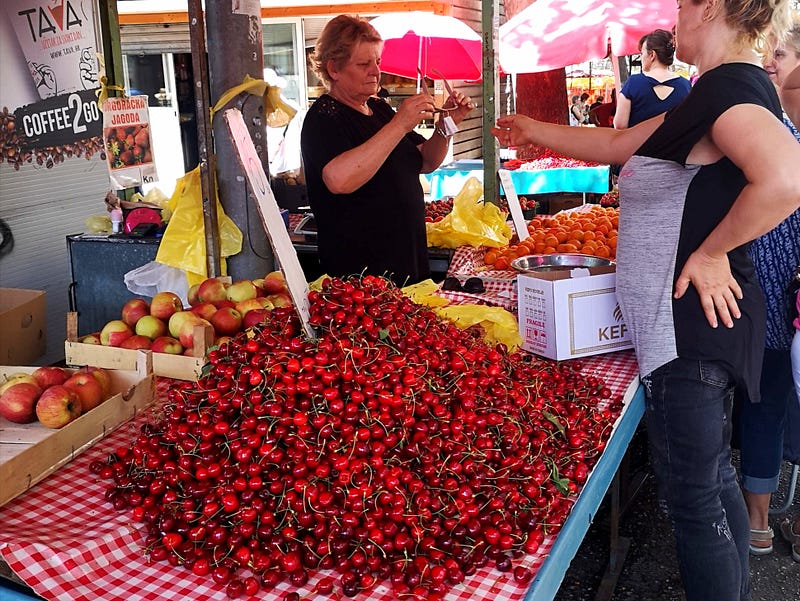
Markets like these don’t exist in the UK anymore. Image courtesy of author. Croatia, 2022

Every time I return to the UK from spending time in Europe, I’m shocked by the price of food.

I’m shocked at how cheap it is.

And every day I hear about how inflation is hitting British supermarket shoppers hard.

This is a difficult article to write but I think an important one. I was on the business end of British foodstuff logistics for nearly 8 years and I can tell you now — when it comes to the cost of food in the G7's quickest-declining economy, there is a hell of a lot of gaslighting going on.

Gaslighting that is keeping Britain’s focus on entirely the wrong things whilst simultaneously destroying its food quality, sustainability, and culture.

Poorer European countries pay more for supermarket food than Britain

Gaslighting Britain episode no.1 — My (British) auntie doesn’t believe me that food is cheaper in the UK than in the poorer countries I visit on my travels.

I know that food is cheaper in the UK than elsewhere — I notice it every time I step into a European supermarket.

So I decided to do a comparison.

Having just spent time in Romania and Croatia — the EU’s second and third poorest countries (GDP per capita), I chose these as a comparison to Britain.

The following prices are from major supermarket chains in the UK, Romania, and Croatia (Tesco, Mega Image and Konzum respectively). I chose some basic foodstuffs to compare as much of like for like as I could from prices on the supermarkets’ websites (translated to Euros for easy comparison):
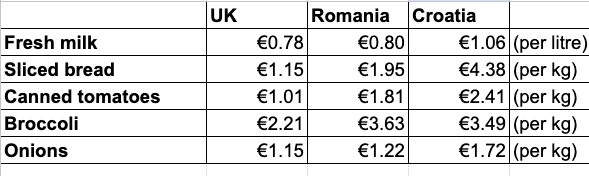
Image courtesy of author

The UK is cheaper in every single category.

This jives with my own experience. I’ll often stock up on essentials for travel in the UK because it’s cheaper than anywhere else. A pack of ibuprofen for instance is around €0.60 in the UK and I’ve been known to pay up to €7.50 for the equivalent strength and quantity elsewhere in Europe.

I know people aren’t going to like me for this, but IMO, supermarket food in the UK is too cheap. I was shocked to find a small head of broccoli for sale in a big British supermarket chain for just 20p ($0.25).

How can a head of broccoli be grown, packaged, shipped, and make a profit at 20p a pop?

It can’t.

Someone is getting screwed and it’s usually the supplier.

But the problem here doesn’t so much lie in the cost of food, but in the UK’s reliance on major chain supermarkets.

This is no more clearly demonstrated than looking at what happens when you choose to shop outside these big bastards…

Local produce > Imported, out-of-season food

Gaslighting Britain episode no.2 — Brits believe they deserve year-round sout of season produce. We’re entitled to cheap tomatoes in December, damnit!

You might think it wholly unfair that the likes of Croatians or Romanians have to spend so much money on supermarket food.

And it is.

But often that’s not where people are really spending their food budget. Instead they use incredibly seasonal — and incredibly busy — local markets.

This is when everything changes. In Croatia, I bought locally produced feta cheese direct from a farmer’s wife for €6 a kilo — and I am not even party to local resident discounts. The supermarket equivalent? €26/kg.

Fresh apple juice bought directly from the farmer in a Romanian market? €1.15. From the supermarket? €2.25 for a crappy processed bottle.

But these markets are seasonal. You might see cherries in May but unlike in a supermarket, you’re not going to see them in December.

In the UK, we lost our access to local markets when the supermarkets moved into every single street across the country. And with it, we lost much of our access to cheaper, better quality, local and seasonal produce.

Interestingly, when British local seasonal produce is available, it isn’t as susceptible to the same level of inflation. I just checked the price of the organic veg box I received every week until I left the UK in 2020. Then it was €12.40 per box. Now? €12.96.

That’s a 4% increase over 2.5 years. A far cry from the 18% increase seen in the last 12 months alone.

The difference here is that that particular veg box only contains local produce. There are no Moroccan tomatoes or Peruvian asparagus, just a whole bevvy of Essex-based brassicas direct from the farm. Whilst I have no doubt the farm’s costs have increased in the last few years (and I’m sure they would like to charge more for their boxes), they will be less susceptible to the woes of importing to Britain.

Local produce is where it’s at. But that would mean Britain stopping its out-of-season fresh produce. It would mean a completely different way of approaching cooking and eating.

And there is a very real argument that Britain is not set up to feed its nation and hasn’t been for years. As political writer Nick Cohen says:

British farmers cannot fill the gaps on the shelves. They never could. We have been a net food importer for centuries. Now UK food suppliers are being battered by rising costs, labour shortages, bird flu and post-Brexit changes to support payments.

This is not an easy problem to solve. But it will never be solved by Britain doing the same thing over and over again when it comes to the way it approaches food, yet expecting different results.

I believe that’s the definition of insanity.

It’s not your fault you can’t afford an extra 20p on your onions

Gaslighting Britain episode no.3— The problem is the increased cost of your food, not that you’ve not had a wage increase in 10 years.

Yes, food inflation in the UK is in double figures. Sugar for instance is one of the worst affected foodstuffs, up 42% which is an obscene percentage.

A quick look online shows a 1kg bag of sugar is £1.05. If this sugar has indeed risen by 42%, that means it used to be 74p — a difference of 31p.

Everyone should be able to cover an extra 31p per kilo of sugar. And yet in the UK, there will be people who can’t, which is the saddest part of all this.

The problem is less to do with the price of food (as I say, British food pricing is unsustainably cheap) and more to do with the fact that the UK has been systematically destroyed by those at the very top.

The wealth gap is freaking huge. Wages are stagnant. Housing markets have gone unchecked and unregulated since forever. Energy companies are posting record profits whilst charging obscene amounts to their end users.

This is why people can’t afford extra on their food bills. It’s a systematic, deeply-entrenched problem that goes way beyond the extra cost of your onions.

And it’s desperately upsetting that this is the position people are finding themselves in.

When it comes to food, Britain could do better.

It should do better.

But right now, it’s more interested in treating the symptoms, not the cause.

It’s all very well and good for our poor excuse of a government to discuss capping the cost of basic foods but that’s not a long-term solution. Suppliers will still be screwed. Families will still not be able to afford small food increases. Britain will still eat crappy (but cheap) out-of-season vegetables.

To alleviate Britain’s food crisis takes a monumental effort on the part of both the government and the general population to completely change the way they view food.

For that to happen could take a generation. But I hope it does. Because everyone deserves to be able to afford and eat good quality, locally-produced food.

Even Brits.

Sign up for The Capsule Pantry, a Substack designed to have you eating incredibly well on a small number of ingredients whilst reducing food waste at the same time

Politics
Food
Britain
Sustainability
Charlie Brown Wine
Recommended from ReadMedium