
Britain to Arm Ukraine with AI Drones Capable of Swarm Attacks!
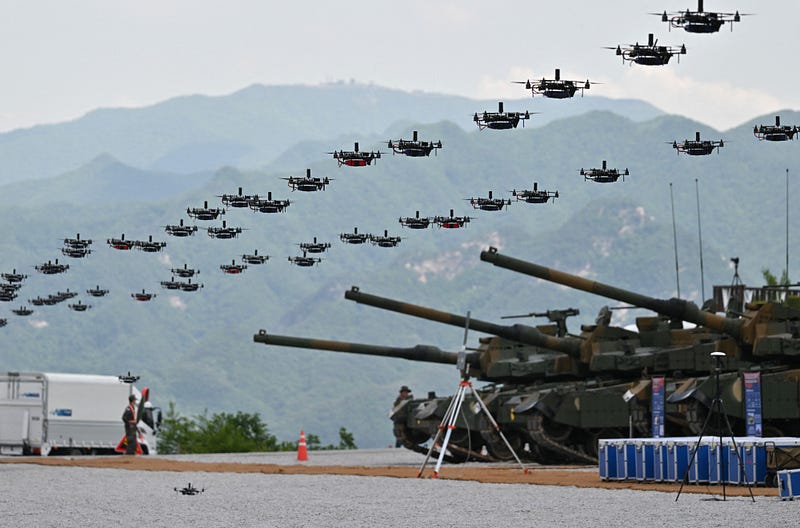
In a groundbreaking move signaling a paradigm shift in the dynamics of the Ukraine-Russia conflict, the United Kingdom, alongside NATO allies, has committed to a monumental project aimed at enhancing Ukraine’s Defense Forces with an unprecedented supply of one million drones within a year. This initiative, part of a broader strategy to counteract Russian aggression, is not just about numerical superiority; it’s about integrating cutting-edge artificial intelligence (AI) into the battlefield through the deployment of thousands of kamikaze drones.
The essence of this strategy lies in the drones’ AI capabilities, designed to execute coordinated attacks by communicating and operating as a cohesive fleet. Bloomberg’s insights reveal that Western military strategists are developing this technology with the objective of enabling Ukraine to specifically target and neutralize Russian positions with precision never before seen in warfare. The AI-enabled drones, by functioning in large swarms, can identify, target, and execute missions with such synchronization and efficiency that they promise to introduce a new dynamic to military operations.
While the immediate comparison might draw to traditional warfare’s reliance on ammunition and manpower, these drones represent a different kind of escalation – one that emphasizes smart technology over brute force. According to reports, these AI-driven kamikaze drones could significantly mitigate the shortfall in conventional arms, offering a strategic advantage that could shift the battlefield’s balance. However, this technological leap does not come without its complexities and challenges, particularly concerning the operational integration of AI into warfare.
The discussions around employing AI in combat, especially for autonomous target tracking and machine vision, are not novel. Initial deployments have been observed not just in Ukraine but also in adversarial territories like Russia, indicating a global race towards autonomous warfare capabilities. Defense Express notes that many loitering munitions within NATO’s arsenals already possess such functionalities, hinting at a maturation of AI technologies ready for more widespread and impactful use.
A quick heads-up: Medium’s been tweaking its algorithms and it’s getting trickier for my stories to land in your feed. So, if you enjoy my work, please make some noise! Hit that clap button, light up the highlights, or drop a comment. Every interaction helps keep the stories flowing. Thanks for your support!
Furthermore, the initiative’s timeline suggests an aggressive push towards rapid development and deployment, with drones potentially reaching the Ukrainian frontlines within months. This ambition underscores the advanced state of AI technology in military applications, ready to transition from experimental phases to active combat roles. However, the realization of such timelines remains subject to logistical and operational challenges that could delay delivery and deployment.
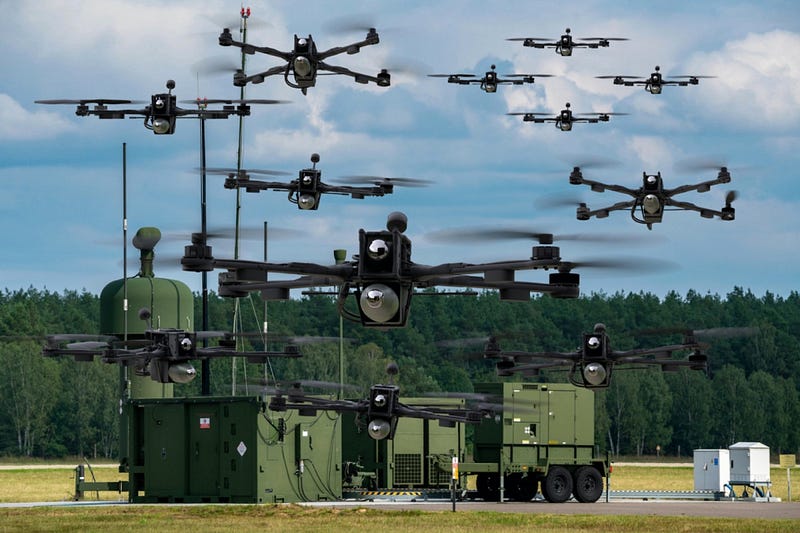
The strategic implications of deploying AI-enabled drones extend beyond immediate tactical advantages. The concept of a coordinated swarm attack, wherein drones autonomously share intelligence and allocate targets amongst themselves, represents a significant leap in warfare tactics. This methodology, requiring minimal human intervention, could redefine aerial combat and ground engagement strategies, making it harder for adversaries to predict and counteract moves.
The collaboration between the UK and the US, particularly in light of the Golden Horde project, highlights the transatlantic partnership’s commitment to advancing military technologies. The Golden Horde initiative exemplifies the potential of collaborative weapons systems, where precision-guided munitions can share data in-flight, adjusting to dynamic battlefield conditions and countering electronic jamming efforts by the enemy. This project, as detailed by Kris Osborn of Warrior Maven, not only showcases the technological ambition of the US Air Force but also sets a precedent for future warfare, where AI and autonomous systems play central roles in operational strategy.
The integration of AI-enabled drones into Ukraine’s military arsenal, as spearheaded by the United Kingdom and supported by NATO allies, is not merely a tactical evolution but a strategic revolution with profound implications for the future of warfare and global security dynamics. This leap into utilizing artificial intelligence on the battlefield raises several critical considerations that extend beyond the immediate military benefits, encompassing ethical, geopolitical, and technological ramifications that merit in-depth exploration.
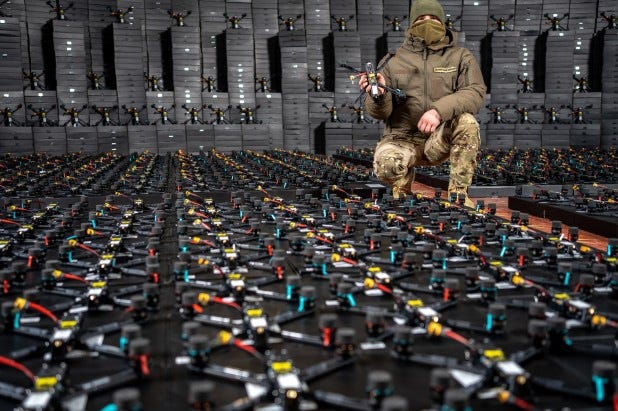
The deployment of AI-driven kamikaze drones introduces complex ethical questions regarding autonomous weapon systems’ use. The capability for drones to make targeting decisions autonomously, with minimal human oversight, challenges existing conventions and norms around the conduct of war. The principle of distinction, a cornerstone of international humanitarian law, mandates the differentiation between combatants and non-combatants. The reliance on AI to make such distinctions in real-time combat scenarios brings forth concerns about the technology’s current ability to accurately adhere to these legal and moral standards.
Moreover, the potential for AI-enabled drones to execute coordinated swarm attacks introduces a level of unpredictability and autonomy that raises concerns about accountability. In instances where autonomous systems may inadvertently cause civilian casualties or violate international law, determining responsibility becomes significantly complicated. These ethical dilemmas necessitate a reevaluation of existing frameworks governing armed conflict and a concerted effort to establish new guidelines that address the unique challenges posed by AI in warfare.
The strategic advantage conferred by AI-enabled drones could also alter the geopolitical landscape, particularly in conflict zones like Ukraine. The ability to conduct precise, efficient, and highly coordinated attacks without risking human lives directly could embolden nations to adopt more aggressive postures, potentially escalating conflicts. Furthermore, the proliferation of this technology may lead to an arms race in AI warfare capabilities, with states and non-state actors alike seeking to acquire or develop similar technologies to not fall behind strategically.
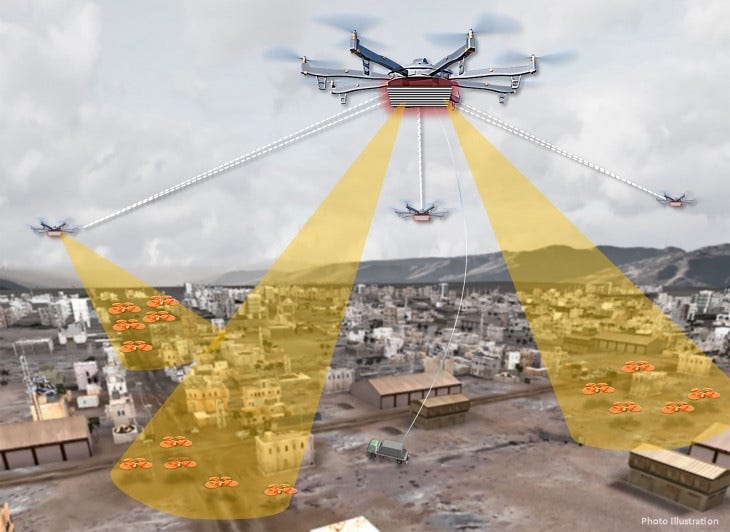
The collaboration between the UK and the US on projects like Golden Horde highlights a growing trend towards international partnerships in developing advanced military technologies. Such collaborations, while strengthening the capabilities of allied nations, may also shift the balance of power, prompting adversaries to seek countermeasures or forge their alliances, thereby influencing global security dynamics and diplomatic relations.
The rapid development and deployment of AI-enabled drones underscore the accelerating pace of military technology innovation. As AI technologies mature and their applications in warfare expand, we are likely to see a continued push towards more autonomous, intelligent systems across all domains of military operations. This trend will not only transform the tactics and strategies employed in conflicts but also necessitate advancements in defense technologies to counteract these new offensive capabilities.
The evolution of AI in warfare also presents opportunities for defense planning and strategy. The data collected and analyzed by AI systems can provide military commanders with unprecedented insights into enemy movements, potential vulnerabilities, and strategic opportunities, thereby enhancing decision-making processes. However, this reliance on AI also underscores the importance of cybersecurity measures to protect these systems from sabotage, hacking, or manipulation by adversaries.
In conclusion, the deployment of AI-enabled drones by the UK and NATO allies to Ukraine represents a pivotal moment in the evolution of modern warfare, heralding a new era of conflict where technology and intelligence play decisive roles. As we navigate this transition, it is imperative to address the ethical, geopolitical, and technological challenges that accompany the militarization of AI. The development and use of such technologies must be guided by a commitment to international law, ethical principles, and a vision for a secure and stable international order.
As readers, your engagement and thoughts on this complex and evolving issue are invaluable. I encourage you to share your perspectives, insights, and questions in the comments below. Let’s foster a constructive dialogue on the future of warfare and the role of AI in shaping our global security environment.