
Brinkmanship or Blueprint? Xi Jinping’s Words and the Inevitable March Toward Global Conflict
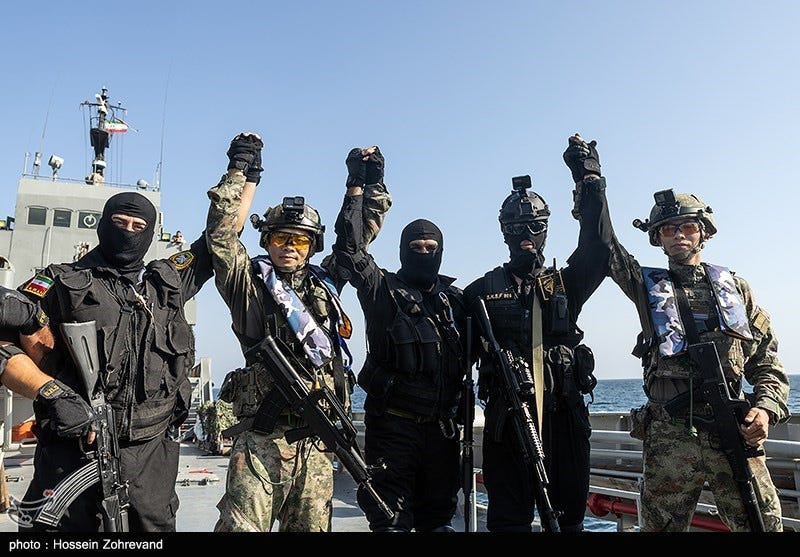
The situation in Israel, a brewing cauldron of tension in the Middle East, is undoubtedly nearing a boiling point. The confluence of interests between Iran and Russia, acting in tandem, gives rise to a geopolitical dance that is nothing short of volatile. If you’ve been watching closely, the picture couldn’t be clearer: Iran is the lynchpin. Iran’s actions, facilitated through its proxies like Hezbollah in Lebanon and Hamas in Gaza, speak to a larger game plan. These aren’t merely fringe organizations; they are calculated extensions of Iranian influence and capability. And let’s be unequivocal about this – Russia’s silent approval has been deafening.
Israel has been no slouch in its strategic thinking. Its diplomatic warming towards Iran’s regional rivals – Saudi Arabia and Turkey – was a cunning move, tipping the balance, however slightly, in their favor. Yet, the winds are changing and we may be on the brink of an open confrontation between Israel and Iran, a conflict that would inevitably draw in global powers like the U.S., Russia, and China.
Now, the American strategy under Democratic leadership has been questionable at best. Loosening sanctions on Iran, facilitating oil exports, and even discussing the dilution of the economic blockade – all in exchange for the hypothetical halt of Iran’s nuclear program. It was, to put it plainly, a strategic miscalculation. The Iranians perceived it not as a diplomatic olive branch but as a sign of weakness, emboldening them to pursue a more aggressive posture.
A quick heads-up: Medium’s been tweaking its algorithms and it’s getting trickier for my stories to land in your feed. So, if you enjoy my work, please make some noise! Hit that clap button, light up the highlights, or drop a comment. Every interaction helps keep the stories flowing. Thanks for your support!
And it’s not just Iran. This perception of American timidity extends to Russia’s calculations vis-à-vis Ukraine. Russia, along with Iran, interprets the unwillingness to fully arm Ukraine as symptomatic of an underlying frailty. Weakness begets aggression, and that aggression ripples across the geopolitical pond. The crucial mistake here, especially in the thinking of Western democracies, is the failure to project power when dealing with regimes that operate from a completely different playbook. The old adage of “speak softly and carry a big stick” seems to have been revised to just “speak softly.” In a world teeming with regimes willing to exploit any sign of hesitancy, this is an egregious error.
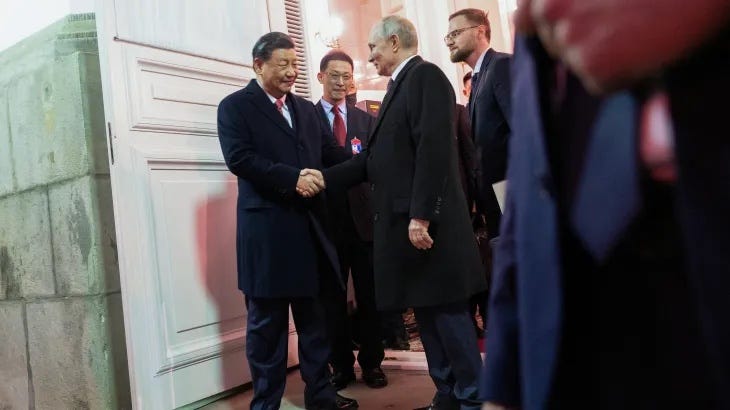
Let’s not gloss over a critical declaration by Chinese President Xi Jinping that illuminates the mindset driving these tectonic shifts. Standing at the Kremlin’s door, Xi emphatically noted, “Right now there are changes – the likes of which we haven’t seen for 100 years – and we are the ones driving these changes together.” Vladimir Putin’s agreement with this statement is nothing short of a confirmation of a new axis of power being forged. In the annals of history, words from leaders have often foreshadowed seismic events, and Xi’s comments are no exception. He’s virtually announcing a new era, one where the old order is dismantled and a new one, led by this emergent alliance, takes its place.
The audacity of this declaration cannot be understated. Xi isn’t just talking about localized influence or regional hegemony; he’s essentially discussing the redrawing of the world map, and not just in terms of territory, but in global power dynamics. This rhetoric echoes the grandiose ambitions of leaders past who sought to reshape the world according to their vision. A century ago, similar proclamations preceded periods of intense global conflict, and given the players involved now – each a titan of military and economic power – the stage seems set for a high-stakes showdown.
But what does this mean in the context of the Israel-Iran tension and the larger Middle Eastern theater? The Xi-Putin affirmation adds another layer of complexity. Russia and China have been vocal about their interests in the Middle East, often opposing Western policies. The idea that they’re now boldly advertising their intent to drive ‘changes’ places the Iran-Israel conflict in an even more precarious position. Iran, sensing not only its inherent strength but also the bolstering winds of Sino-Russian support, will undoubtedly feel empowered to push harder against Israel, and by extension, the West.
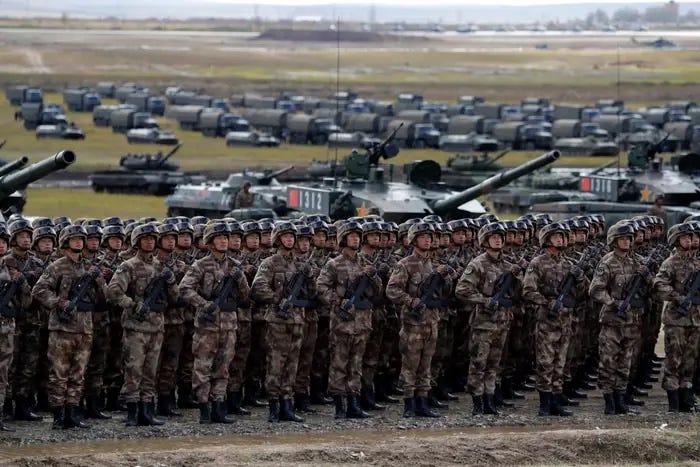
The risk of sliding into a World War scenario is not melodramatic fear-mongering; it’s a real concern supported by a concatenation of troubling signs. The conflict isn’t isolated to any one region; it has the potential to erupt into a multi-theater confrontation involving a host of nations, each with their own vested interests and old scores to settle. With Xi Jinping and Vladimir Putin ostensibly ringing the starting bell, the geopolitical stage has never been more volatile. Now, we’re staring down the barrel of an incredibly dangerous situation: a strategic alliance among Russia, Iran, North Korea, and China, keen to trigger proxy conflicts that fray the fabric of the Western-led world order. They’ve made their ambitions clear: the objective is nothing less than a tectonic shift in global balance. The stakes couldn’t be higher.
So, what does this mean for the interested reader? This is more than just another chapter in the age-old tale of East vs. West; it’s a watershed moment. Your attention and voice on this matter are not merely desirable; they’re imperative. Feel free to express your thoughts below because it’s time to talk openly about a rapidly evolving situation that will affect us all.