Bringing Justice Home
Repairing the damage in our small cities
Our family lives in an old fixer-upper in a small rust belt town, a town that’s been languishing ever since the industrial plants and mills started closing in the 1960s. We live in a historically integrated neighborhood, where some families have lived for generations. Affluent suburban homes and schools encircle our small city, population 13,663, like a donut, leaving a hole — our impoverished municipality and small city school district — in the middle.
Built around 1881, the year James Garfield was inaugurated, this old house ain’t playing. Every home improvement presents challenges. My husband, who grew up working on local farms, is updating our plumbing, electrical, and HVAC and teaching me to hang and finish drywall, paint, cut and install trim, and lay flooring. We’re doing this work with the hundreds of tools he’s acquired over the years, running back and forth between Lowe’s and Home Depot. Nothing about our process resembles the scripts of popular home improvement shows. It’s slow, tiring work. But the results are every bit as satisfying as the reveals on HGTV.
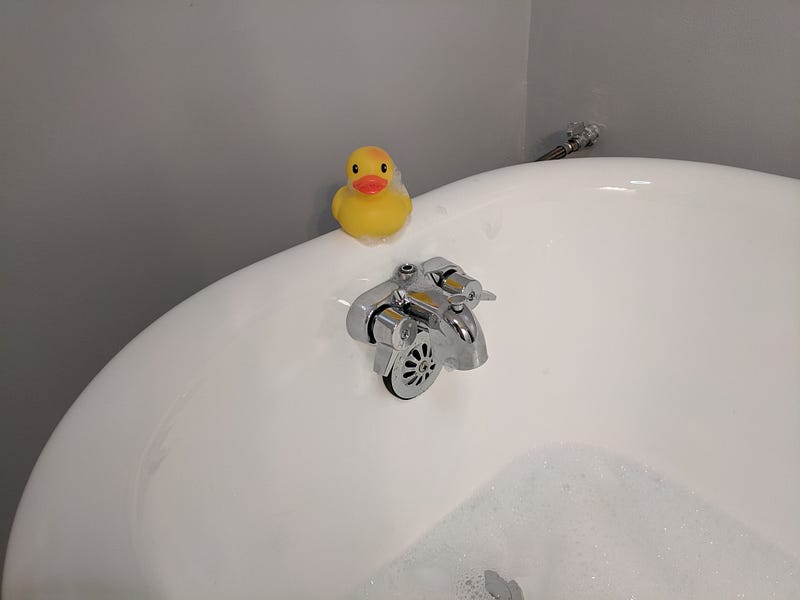
This month, we’re remodeling the upstairs bath. Our home was built before indoor plumbing, and since our only other bath is a powder room on the first floor, we turned the basement laundry sink into a makeshift shower for the duration of the project. We set up a shop saw in the adjoining bedroom, now filled with tools, materials, scaffolding, and a new vanity. We laid new flooring over the weekend, and I cut and installed freshly painted baseboards the other night. The clawfoot tub goes in next, but since nothing in this home is built to standard dimensions, it will be an interesting job to fit it through our narrow bathroom door.
Repairing older homes
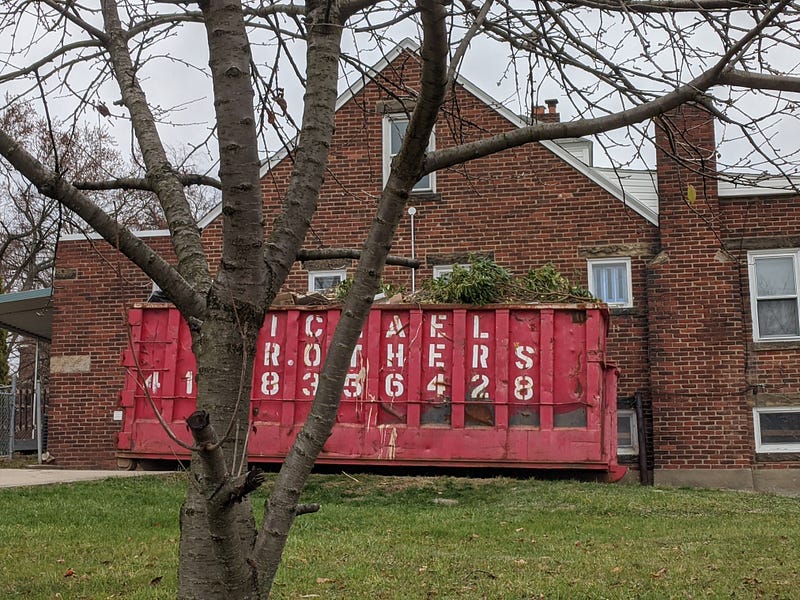
Most homes here, like ours, haven’t been updated for decades, so they sell for a steal. Listing agents wistfully offer them for about twice their market value at first, but after six months with no offers, they face reality and reduce the price. Then the seller, who has also faced reality by this time, agrees to an even further reduced price, often with a flipper, and then the remodeling crews start coming in. I rejoice when a construction dumpster is dropped off outside a neighbor’s home, because if these homes aren’t renovated, they’ll become dilapidated eyesores, without the funding even to demolish them.
I understand why property owners in small cities like ours neglect their old homes. Our renovations are costing a bit more than what our home would currently sell for, given the dilapidated condition of our neglected neighborhood, and there are few tax incentives for home improvement, even though it’s improving the tax base of the city. There are perhaps better tax benefits for landlords, who often extract value from a neighborhood like ours, line their pockets, let a rental home depreciate until it’s worthless, and then abandon it, reducing the surrounding home values.
Some homes have simply aged along with their owners. When we replaced our old roof with a metal roof last winter, our roofing crew showed us the large hole in our elderly neighbor’s roof. By the time her children try to sell her home, we may be compelled to buy it, just to prevent it from crumbling into a full-blown eyesore.
The thing is, our neighborhood has many of the makings of a desirable destination. We’re a few miles from Fortune 500 company headquarters. We’re two miles from major shopping centers, and on Main Street, entrepreneurs are opening pubs, breweries, restaurants, and coffee shops. Downtown shop owners have formed a business district to capture funding to restore their crumbling facades. We have a small-town revitalization in the making.
But we also have a decaying infrastructure of worn-down roads, buckled sidewalks, and tangled utility lines, all signs of disinvestment and deferred maintenance that has led to deterioration. There’s a condemned house or two on most nearby streets. After decades of disinvestment, our neighborhood lacks the public amenities that create a truly livable community. Our children need a place to play, and our residents need a place to relax, but city parks are a legal and maintenance liability for our cash-strapped city budget, so nearby vacant lots, bought cheaply at tax lien sales, sit and grow weeds. At least, thanks to a newly hired code compliance officer, these owners have stopped using their vacant lots for dumping.
Repairing the disinvestment
We’re remodeling our house for our own benefit, but as we make upgrades, I’m beginning to wonder how we could become part of repairing more than just our house, how we could be involved in a greater effort to repair the damage done by decades of suburban flight, disinvestment, and value extraction to improve the home values and quality of life here. Maybe we can help make this neighborhood a place to come home to.
Our history of community disinvestment wasn’t inevitable. When the G.I. Bill revived the post-Depression, post-war housing market in 1944, mortgage lenders withheld credit for homes in older city neighborhoods like ours. Developers built new homes where the credit flowed freely, in the surrounding suburbs.
Until 1968, the Federal Housing Administration often restricted its insurance to home purchases in new developments, drawing mostly white, middle-class residents away from the city. Black and other non-white residents weren’t welcome in these new suburbs. Banks limited their home improvement lending, while easing down-payment requirements for new homes, encouraging families to buy new homes, rather than remodel old ones.
Fannie Mae (FNMA), which began as a New Deal program to purchase FHA loans from lenders, encouraged investment in new home construction. For home builders, it was easier to build new homes than to retrofit old ones with the latest electrical, plumbing, heating, and cooling technology, interior details, and appliances. Families buying new homes were progressing in life, leaving less fortunate people behind.
It would have been possible to invest in both old and new construction, but an economic choice was made to let older, city neighborhoods deteriorate. In all likelihood, the small amounts of money, allocated by local government officials, over the years, to short-term thinking and self dealing, are all it would have taken to keep many small city neighborhoods from the kind of deterioration we see today.
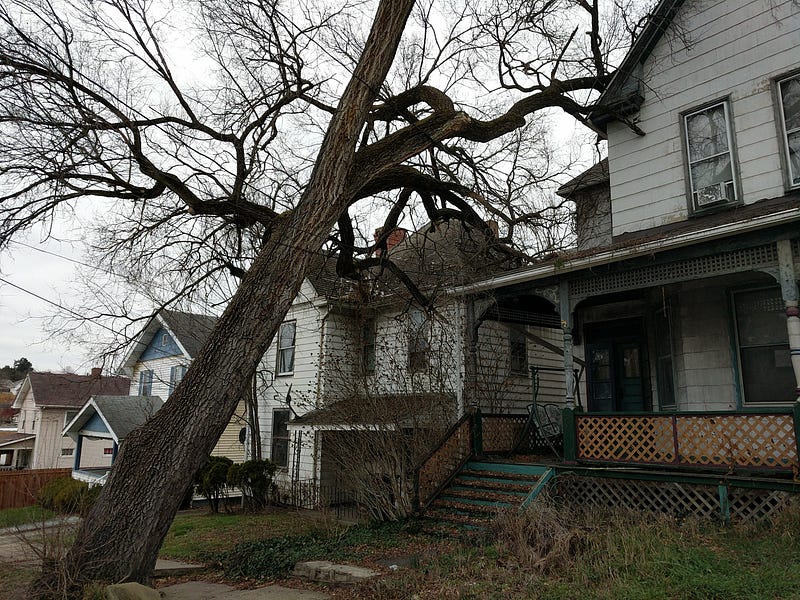
Before moving to this neighborhood, I didn’t understand what terms like “urban blight” meant. But now, when I take my daily walks, I pass by condemned houses and vacant lots, where brush, old tires, and straight-up trash have been dumped, and I dodge heaving sidewalks. There’s an abandoned home a few houses down from ours, where a tree on the sidewalk has grown into the roof. At this point, cutting the tree down would take days and further damage the house. It’s probably too late, now, to repair the damage that’s been done.
In my twenties, I worked for a mortgage company on the west coast and read the term “housing discrimination” on our paperwork many times, but now, I know firsthand what it means. I didn’t know why a mortgage company would have to tell people it didn’t discriminate. I was told it was governmental nonsense. I didn’t know the history of discrimination, but now, I see the results of it in the dilapidated eyesores and weedy sidewalks around us. And I wonder how we could encourage investment here to repair the damage that’s been done and make our neighborhood a real home.
What will we do now?
Our county redevelopment authority, which received $3.5 million for community development from HUD, plus an additional $2.1 million for community development from the CARES Act passed in March, offers deferred, zero-interest home rehabilitation loans for income-qualifying homeowners in our county, of which our small city is the county seat. These loans pay for contractors to make home improvements, and the loans are forgiven at the rate of 10% each year, going down to zero if the homeowner stays in the home for ten years. But most of our qualifying residents wouldn’t know about the home improvement money. While the information is online, most residents wouldn’t know about it.
Despite the disinvestment in our city, though, I see a number of hopeful signs:
- Local business owners are gathering residents to create green spaces and upgrade crumbling facades on our Main Street.
- A neighborhood redevelopment corporation is offering repairs for senior homeowners.
- Our county redevelopment authority is slowly buying up vacant lots and building new homes for income-qualified buyers.
In addition, here’s what our city and county could do to repair the damage:
- Mail residents information about available home improvement funds, and help qualifying residents to apply for them.
- Request and allocate funding to repave our roads, and subsidize new sidewalks.
- Purchase vacant lots, and develop small green spaces in our residential neighborhoods.
These are small beginnings, but I hope our collective efforts can grow into a larger movement to repair and revitalize our small city.
Dealing with history is hard work. We live in the world our ancestors made. While remodeling this old house, I confess I’ve been frustrated with my ancestors. But then, I remember that I’m an ancestor, and someday soon, our children, or their generational peers, will live here. What kind of home will I leave behind? What kind of community will I leave behind?
And I wonder, what will our street look like in five, or ten, years? Will we, as a community, invest in repairing the damage, or will we continue injustice? Will we, as a nation, repair the damage we’ve done, or let things keep falling apart?
Time will tell.
In the meantime, we have to get this clawfoot tub through the door.


