
Bringing Home the Bus Shelter
A drunken evening with my mom. No regrets.
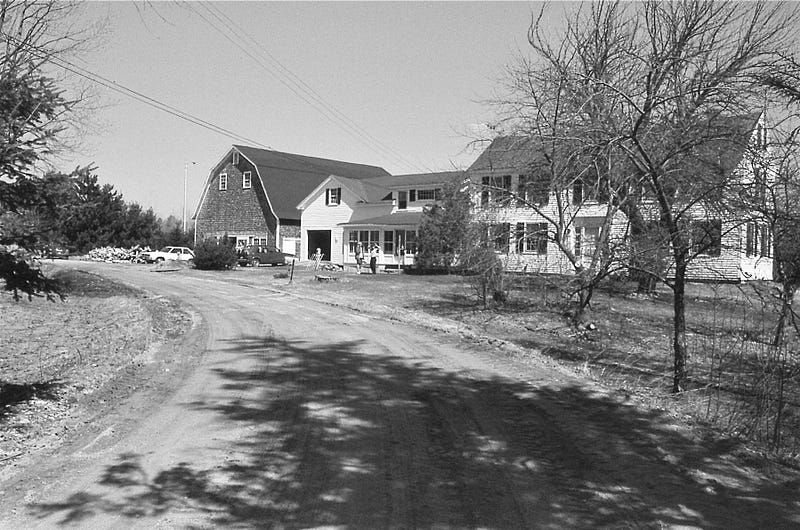
I grew up in an old farmhouse on the edge of a highway extension outside my Maine town. When I say “on the edge,” I mean the highway fence was attached to the corner of our barn.
The closest we came to having livestock was my dad’s crazy idea to put three geese in a backyard pond that he had dredged from a tiny swamp on the edge of a patch of forest. Initially the dredging was meant to create a little skating rink — which it did, when we shoveled off the snow — but later I think he just wanted to have geese.
The geese were a bad experiment, because they pooped green gunk all over the yard and they chased my little sister. They were just about as tall as my little sister and much louder.
I have no memory of the end of the geese. I‘m pretty sure that my father didn’t go out back with an axe and, you know — but I don’t know if he had someone haul them away or whatever one does with unwanted geese.
The farmhouse, with intact barn and a couple acres of land, cost my parents just under twenty thousand dollars. Yes, I wrote that out so you wouldn’t think I left out a zero or some other numbers. This was 1959.
I don’t know why my parents borrowed trouble, buying an old house like that. They were both busy. My dad was a doctor and my mom went back to work as a secretary as soon as we kids were in school and reliable daycare.
They not only bought this one, but a second one near a ski mountain, also with a barn. They weren’t flipping them. The second one was a vacation home. We weren’t rich. This was Maine in the early sixties. That’s a different set of stories.
Thus from first grade on, I rode a bus to school — one of those yellow ones, with torn green vinyl seats and no seatbelts. I don’t think they’ve changed much over the decades.
Maine in the winter was cold. Very cold. Cold and snowy. For years my sisters and I braved the cold to walk a few hundred yards to the place where our dirt lane met the paved road and the bus pulled over to let us on.
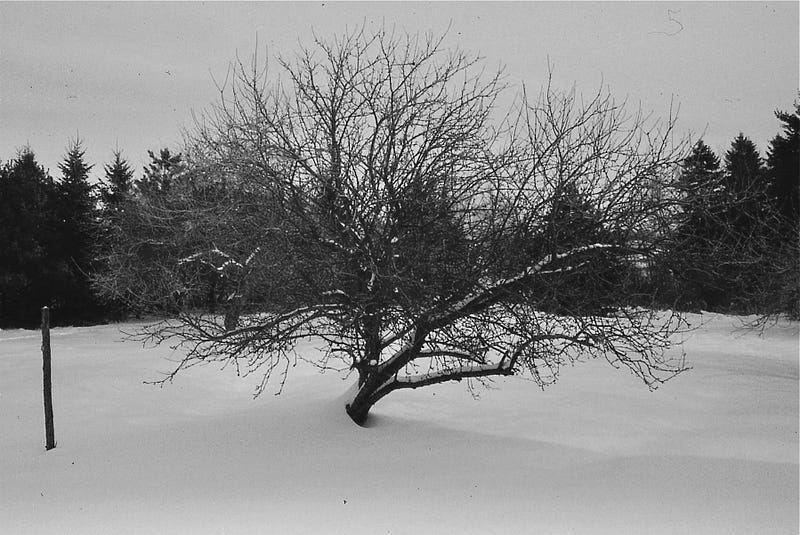
Snow in the winter. Cold rain in the fall and spring. Finally one year my parents took pity on us and cadged a little wooden shelter from somebody. It was the size of an old outhouse, and maybe was one in a former life — though I think we would have gotten wind of that, literally and figuratively, and protested.
As we kids got older — i.e., high school-ish— my parents often had dinner parties that we were fully part of. We’d have old family friends, or friends from the local college, or friends we brought home from school or university, or just interesting folks that my mom had encountered somewhere.
These were the quiche years. People who fancied themselves interesting (and sometimes were) gravitated from Julia Child to the Moosewood Cookbook and tried new dishes. We would drink, and eat, and talk, and often play cards: poker, hearts, whatever. With the right people, charades ended the evening.
There was a lot of drinking. No, this isn’t going to turn into a diatribe against drinking. All of us drank too much, yes. And maybe the parties would’ve been just as much fun with less drinking. But those buzzy nights are among my best memories from a pretty fortunate youth, all things considered. So, just being honest about the drinking, because that’s the next part of the story.
One summer night after one of those parties, my mother and I decided to walk down the lane to clear our heads and look at the stars. In the countryside there wasn’t a lot of ambient light, so you could actually see the stars when there was no cloud cover. It’s possible there was moonlight. That would have cast shadows on the otherwise dark landscape.
When we got to the end of the lane, we both looked at the bus shelter.
This is how I’d reconstruct the exchange.
“So, Sally’s not using that, right? I mean, isn’t she driving to school now?”
“Yeah. It’s kind of an eye sore, I guess.”
“Should we take it back to the house?”
“Why not?”
So now the two of us, both kind of unsteady on our feet, pushed over the badly anchored wooden booth (as I ponder that, it’s kind of a scary image), and dragged it over the meadow grass and onto the gravel lane.
The damage wasn’t close to done. Now we had to find handholds on the splintery plywood walls of the structure so we could pull/drag/carry it a quarter of a mile to — what, the barn? Were we going to burn it in the wood stove? Put it up as a squirrel refuge? A deer feeder? An outhouse, after all?
I have no idea. Thank heaven we did not have any close neighbors. Gasping with laughter and carry-dragging unwieldy structures don’t go well together, especially when you’re trying not to pee.
The thing started to fall apart.
We made it about a dozen yards and gave up. We rolled what was left of it into the shallow ditch and staggered back to the house.
I don’t remember the aftermath. I would guess that we continued the disassembly that had begun organically the night before. I would guess that we did not leave the splintered boards to rot by the side of the road.
We had our pride. I mean, the only rusty old car bodies in our yard were the ones we were still driving.
This is the kind of thing we girls remember about our mother. To be sure, there are memories of missed connections, of bursts of temper and frustration, of excessive caution toward the world and our smaller world’s conventions. She was the one who had to run the household. She insisted on it and resented it. It was years before she’d let us kids run the washing machine and dryer ourselves, for heaven’s sake. And you have to understand that this was the olden days, and the appliances were unbreakable.
But under the caution was a party girl and a rebel longing for release. And she could laugh — often at herself.
We teased her a lot, and more as we all got older. She put up with it. She laughed with us. We had family jokes that set us all off in a nanosecond, year after year. I’ll save them for another time. But it’s so lucky, to have family jokes — truly funny ones, not too mean. We were mostly not too mean.
She had to grow into being our mother: like all mothers. Two out of three of her daughters turned out to be lesbian and she had to grow into that. And she did. By the goddess, she did.
(A friend asked her once, “What’s it like to have two lesbian daughters?”
And she responded, cryptically, “Well, it’s the sheer numbers.”
That became another family joke.)
She would be furious that I’m writing this all now. Her willingness to laugh at herself did not extend to a willingness to be profiled in public. Never mind. She was a hell of a mom. She worked hard at being there for us.
She left us fifteen years ago, damn it. I mean, she died. I hate the “passed” phrases. Eighty-one, so not young young, but too soon, anyway.
She left my dad fifteen years before that. (Divorced him. All three of us kids were out of the house by then.) He stayed in the rambling old farm house while she bought her own little place in town.
Yet another set of stories.
When Dad died, suddenly, in the mid-1990s (at only seventy — my age now) my sisters and I sold the house for just under a hundred thousand. We were shocked that somebody wanted to buy it, frankly. Squeaky floorboards. Old kitchen. Peeling paint. The highway. The growing scrub pines never did block out the constant whine of the traffic, which had increased when the state put in an additional connector — right there in our backyard.
But a family did buy it: a family with three kids, as we had been.
That rural neighborhood has grown up over the decades. It’s not that far from town. The original L.L. Bean store is about seven miles in the other direction, and a whole retail fun-fair empire has swallowed that little town. Our old house still stands, as does the barn. It’s not alone on that lane any more. In fact, as I look at Google Earth, I see maybe three additional homes and a business, for heaven’s sake, along the no-longer dirt road.
If there is a bus shelter at the end of the lane, I can guarantee it’s not the one we put there these many years ago. We took that one down.


