
Bridging Governmental Obligations and Private Liberties: Interplay of State Action and the Incorporation Doctrine
How constitutional rights apply to government and private actions
Imagine a world where every word you say, every opinion you express, can get you in trouble with the government. It sounds like the screenplay for a bad dystopian novel, but it is just a reminder that your rights and freedoms, protected by the Constitution, really do matter. As we begin to discuss various topics in constitutional law this month, let us also look at the core of democratic values-the rights embodied in the Constitution and how they limit the power of government.
Did you know that the Constitution originally recognized only one explicit individual right: the right to trial by jury? It is in Criminal Trials clause.
“The Trial of all Crimes, except in Cases of Impeachment, shall be by Jury; and such Trial shall be held in the State where the said Crimes shall have been committed; but when not committed within any State, the Trial shall be at such Place or Places as the Congress may by Law have directed.|
But the modern constitutional law is rich in individual rights, especially those defined in the Bill of Rights and the transformative Thirteenth, Fourteenth, and Fifteenth Amendments. Let’s begin to analyze these rights by first understanding who the Constitution applies to — in other words, who the people are for whom these rights are intended.
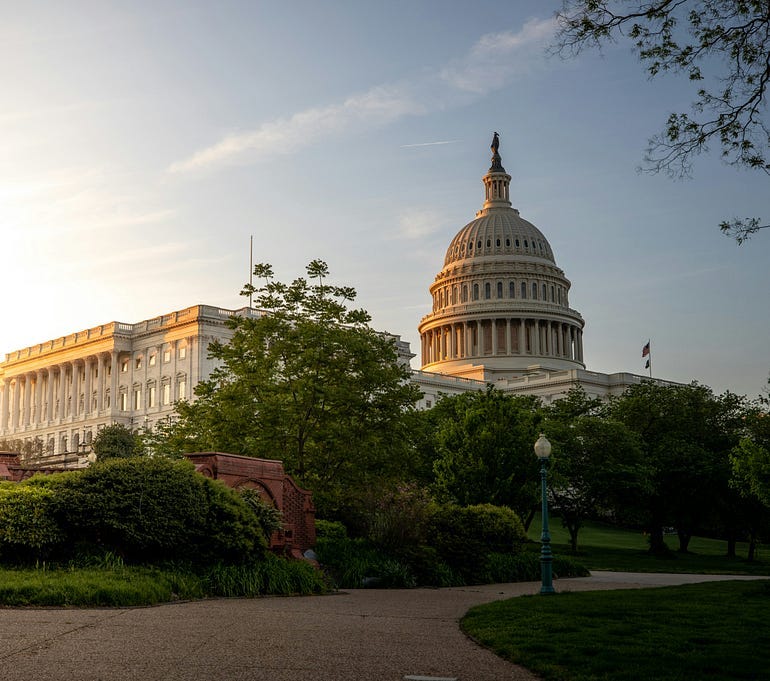
The Foundation of Individual Freedoms: The Bill of Rights
The birth of the United States had been punctuated also by a fierce debate over the form and substance of its government. The thirteen original states (the Thirteen Colonies) made the adoption of a bill of rights a condition for agreeing to the Constitution. The debates of those that had to ensure the Constitution made the point that specifying what rights were also had the danger of implying only those rights were in existence. The other side read in the document that without clear, explicit protections, the powers of the federal government were likely to be unlimited, or worse, tyrannical.
Eventually, the view of the critics was adopted. The ten amendments, now known as the Bill of Rights, were ratified relatively quickly, adding important guarantees to the structure of a newly born American law.
But the scope of these guarantees was narrow. So, the interpretation of the Bill of Rights was made to be applied to the federal government only, and the rest was determined to be under the jurisdiction of the state and local governments for the defining of the bill of rights in their relation to individual rights. Thus, although the Constitution itself set a few clear direct limits on the states by Article I, Section 10, it was the Supreme Court case of Barron v. City of Baltimore (1833) that really set it in stone. In that decision, Chief Justice John Marshall clearly stated that the primary purpose of the Bill of Rights was to limit the powers of the federal government, not to extend similar limitations to state and local governments.
This difference had significant consequences for the development of American civil liberties. It meant that, for a time, protections against government encroachment on individual liberties varied across the country, depending on whether the infringement came from the federal or state level. This situation laid the groundwork for future litigation and amendments to the Constitution aimed at expanding the scope of the Bill of Rights to protect against state action. This process, known as incorporation, gradually ensured that the fundamental rights outlined in the Bill of Rights were applied uniformly across the United States, influencing the nation’s ongoing pursuit of liberty and justice.

The Evolution of Rights: Extending the Bill to the States
The Bill of Rights was interpreted much differently in the years after the Civil War, and a substantial transformation occurred that leads to a consensus view that is widely held today; namely, that one of the primary purposes of the Fourteenth Amendment was to extend the protections of the Bill of Rights to the jurisdictions of state and local governments. In the Slaughterhouse Cases (1873), the Court narrowly interpreted the Fourteenth Amendment’s Privileges or Immunities Clause, and in so doing, it limited the clause’s protections to small number of fundamental rights.
Privileges and Immunities Clause (Article IV, Section 2, Clause 1)
“The Citizens of each State shall be entitled to all Privileges and Immunities of Citizens in the several States.”
The latter half of the 20th century, however, saw a change in the justices’ approach. They adopted a strategy called “selective incorporation”, in which they assessed each right in the Bill of Rights separately, and concluded whether it was fundamental to the American scheme of justice and, therefore, applied to the states through the Fourteenth Amendment’s Due Process Clause. This is demonstrated nowhere more clearly than in Palko v. Connecticut, 302 U.S. 319 (1937), in which the Court recognized that the Due Process Clause has a substantive component for the essence of the concept that “neither liberty nor justice would exist if they were sacrificed,” and the Bill of Rights were incorporated to state law.
“….nor shall any State deprive any person of life, liberty, or property, without due process of law….”
One of the most illustrative examples of selective incorporation was the Supreme Court’s opinion in Mapp v. Ohio (1961). There, the justices incorporated the Fourth Amendment’s protections against unreasonable searches and seizures to the states, and in so doing, declared that evidence seized in contravention of a defendant’s Fourth Amendment rights must be suppressed at trial. This strengthened the concept of substantive due process and the importance of the Bill of Rights at all levels of government.
Although advocates of total incorporation persist, the Court has adhered to a process of selective incorporation, applying each amendment separately to state governments. Through this process, the first ten amendments have all been incorporated against the states, with only a few exceptions. These include:
- the quartering of soldiers as proscribed by the Third Amendment,
- the requirement of indictment by a grand jury as delineated in the Fifth Amendment, and
- the right to a jury trial in civil cases as guaranteed by the Seventh Amendment.
Nonetheless, most of the key elements of the Bill of Rights are now enforceable against the states, with the settled doctrine providing that unenumerated rights recognized as “fundamental” are also incorporated against the states.
This approach has led to significant expansions of constitutional protections. For example, after the Supreme Court affirmed an individual’s right to bear arms in District of Columbia v. Heller (2008), it wasn’t long before it extended that right to the states in McDonald v. City of Chicago (2010). The last case demonstrated the Court’s commitment to selective incorporation of the Bill of Rights.
Originally, the Constitution was primarily about limiting the powers of the federal government, but thanks to incorporation, state and local governments are now held to the same standards in most respects. However, the reach of the Constitution has its limits, particularly because of the state action doctrine. This principle holds that the Constitution generally doesn’t apply to private individuals or corporations. There are exceptions, such as the Thirteenth Amendment’s prohibition of slavery, but as established in the Civil Rights Cases (1883), the Constitution does not directly regulate the actions of private businesses, even those operating under state licenses. This means that while Congress may act against discrimination by such entities, the Constitution itself does not provide such protection, underscoring a crucial distinction between public (government) action and private conduct under U.S. law.

The Constitution’s Reach in Private Matters
Although the Constitution is fundamentally concerned with government action, it is not limited to it. The Constitution itself does not regulate private arrangements, but when private arrangements call upon governmental power to make them or their enforcement valid, the resulting involvement of the courts as governmental agencies draws those arrangements into constitutional norms. Shelley v. Kraemer (1948) is the epitome. There, the Court concluded that state court enforcement of racially restrictive covenants in private housing contracts violated the Fourteenth Amendment. The practical result is that private agreements become subject to constitutional scrutiny once they reach the level of legal enforcement.
Moreover, the descriptive label “private” is not dispositive. A private organization may be a state actor under some circumstances. In Brentwood Academy v. Tennessee Secondary School Athletic Association (2001), the Court set forth those conditions. Private entities are state actors when:
- the state has provided strong encouragement,
- when the actions are traditional state functions,
- when the state is using its power, or
- when there is a close working relationship.
This provides a framework within which the actions of private entities may be subject to constitutional review if those actions are sufficiently connected to a state function or power.
Disclaimer
The information provided in this article is for informational and educational purposes only and is not intended to serve as legal advice or as a substitute for legal counsel. While efforts have been made to ensure the accuracy and completeness of the content herein, it is important to note that legal principles and regulations can vary significantly based on jurisdiction and specific circumstances. Therefore, this article should not be used as a definitive legal resource or as a basis for making legal decisions. Readers are strongly advised to consult with a qualified attorney for advice on legal issues or matters, as each individual case may require detailed and personalized legal analysis.
Reliance solely on the information provided in this article without seeking professional advice from an attorney may lead to unintended legal consequences or misinterpretation. The author or publisher of this article do not accept responsibility for any potential errors or omissions, nor will they be responsible for any losses, injuries, or damages arising from its display or use. The information provided here does not create an attorney-client relationship between the reader and the author or publisher.