avatarCorinne Nita

Free AI web copilot to create summaries, insights and extended knowledge, download it at here

4749

Abstract

and other countries contested the <a href="https://lawexplores.com/uruguay-round-negotiations-and-the-adoption-of-trips/">unfair rules</a> when they were introduced in the 1980s and intensified the battle when Western patent protections <a href="https://www.washingtonpost.com/archive/politics/2001/08/23/brazil-to-ignore-patent-on-aids-drug/8e3faa26-da20-40b7-bbac-105ce1da0452/">prohibited access</a> to inexpensive, lifesaving antiretroviral therapy at the onset of the HIV/AIDS crisis in the 1990s.</p><p id="fea1">Financially drained countries contained <a href="https://www.hsph.harvard.edu/wp-content/uploads/sites/480/2013/01/Reich_Bery_AIDS_drugs.pdf">95% of global infections</a>, and the Office of the <a href="https://oxfamilibrary.openrepository.com/bitstream/handle/10546/114469/bp-drug-companies-vs-brazil-010501-en.pdf;jsessionid=52A5D83AA7B050D9A6344590DDFFBE15?sequence=1">US Trade Representative (USTR)</a> pressured nations to adhere to stringent intellectual property (IP) rights by threatening to levy sanctions. President Reagan forced Brazil to accept regulations and a <a href="https://www.theglobalist.com/the-brazilian-model-to-fight-hivaids/">37.5% US stake</a> in its drug market, imposing harsh import tariffs in 1988 to force capitulation. <a href="https://www.theglobalist.com/the-brazilian-model-to-fight-hivaids/">President Clinton</a> continued the bullying, revealing bipartisan support for US imperialism and indifference toward human rights.</p><p id="aee5">The health crisis devastated countries, killing millions and offering no medical hope for those slowly dying because they couldn't afford the HIV cocktail that reduced <a href="https://www.hsph.harvard.edu/wp-content/uploads/sites/480/2013/01/Reich_Bery_AIDS_drugs.pdf">deaths</a> in the North. South African infection rates were the <a href="https://www.nytimes.com/2001/04/20/world/drug-makers-drop-south-africa-suit-over-aids-medicine.html">highest globally</a>, and <a href="https://www.theguardian.com/uk/1999/dec/19/theobserver.uknews6">leaked documents </a>revealed the nation's pleas to Vice President Al Gore. Yet, with <a href="https://www.ncbi.nlm.nih.gov/pmc/articles/PMC1119626/">the US government's backing</a>, European and American pharmaceuticals protected monetization, punishing South Africa, Brazil, and India for contesting the IP regime.</p><p id="77b3">They sued and threatened to sanction <a href="https://www.theguardian.com/uk/1999/dec/19/theobserver.uknews6">Nelson Mandela's South African government</a> and <a href="https://www.ncbi.nlm.nih.gov/pmc/articles/PMC1119626/">Brazil</a> for violating patents and undermining profits when they legislated access to inexpensive medications, which aligned with the World Trade Organization's (WTO) guidelines. The pharmaceutical industry <a href="https://www.theguardian.com/uk/1999/dec/19/theobserver.uknews6">discontinued supplying</a> and manufacturing medicines in South Africa, and the US government placed Brazil and South Africa on the "<a href="https://ustr.gov/sites/default/files/2001%20Special%20301%20Report.pdf">301 Watch List</a>," a trade barriers report that makes provisions for sanctions.</p><p id="e029">An <a href="https://www.nytimes.com/2001/02/07/world/indian-company-offers-to-supply-aids-drugs-at-low-cost-in-africa.html">Indian company</a>, exempted from patent limitations, offered to supply less costly AIDS medications, but Western protectionism prohibited Brazil and South Africa from <a href="https://www.nytimes.com/2001/04/20/world/drug-makers-drop-south-africa-suit-over-aids-medicine.html">importing generic drugs.</a> The pharmaceutical barons retaliated by accusing the Indian manufacturer of attempting to gain market share and threatened to sue when it negotiated shipments to Ghana, a region <a href="https://www.nytimes.com/2001/02/07/world/indian-company-offers-to-supply-aids-drugs-at-low-cost-in-africa.html">unrestricted by patents</a>. The company withdrew its proposals, realizing Western businesses serve profits, not humanity.</p><blockquote id="01f9"><p>“We won’t fight it. I don’t look at it as a fight. There’s room for everybody. This is a holocaust in Africa. It’s like the earthquake in India right now — everybody is helping out. I’m not looking to pick anybody’s business; there’s room for the multinationals at their price and room for us at our price, a partnership.’’ — <a href="https://www.nytimes.com/2001/02/07/world/indian-company-offers-to-supply-aids-drugs-at-low-cost-in-africa.html">Dr. Yusuf K. Hamied, chairman of Cipla</a></p></blockquote><p id="c249">Global backlash eventually coerced pharmaceutical companies and the US government to withdraw the <a href="https://www.nytimes.com/2001/04/20/world/drug-maker

Options

s-drop-south-africa-suit-over-aids-medicine.html">South African lawsuit</a> in 2001. However, the <a href="https://oxfamilibrary.openrepository.com/bitstream/handle/10546/114469/bp-drug-companies-vs-brazil-010501-en.pdf;jsessionid=52A5D83AA7B050D9A6344590DDFFBE15?sequence=1">international health assault</a> continued to pursue Brazil, which aggressively halved mortality rates by administering preventative policies and <a href="https://www.nejm.org/doi/full/10.1056/nejmp068069">passing a law</a> aligned with its constitutionalized universal health rights, guaranteeing free AIDS treatments.</p><p id="69ba">Most countries (other than the US) <a href="https://www.hsph.harvard.edu/wp-content/uploads/sites/480/2013/01/Reich_Bery_AIDS_drugs.pdf">enact price controls</a> and limit drug company profits, and Brazil's <a href="https://www.nejm.org/doi/full/10.1056/nejmp068069">state-operated pharmaceutical</a> expertise enabled low-cost production and leverage. Brazil <a href="https://www.theglobalist.com/the-brazilian-model-to-fight-hivaids/">mobilized </a>activists globally to restrict US trade policies from interfering with its national goals and presented a case to the United Nations Human Rights Commission. <a href="https://oxfamilibrary.openrepository.com/bitstream/handle/10546/114469/bp-drug-companies-vs-brazil-010501-en.pdf;jsessionid=52A5D83AA7B050D9A6344590DDFFBE15?sequence=1">Fifty-three nations</a> voted to determine if affordable drugs are a human right, and one, the United States, abstained.</p><p id="2f0f">Brazil persisted with <a href="https://www.theglobalist.com/the-brazilian-model-to-fight-hivaids/">the campaign</a>, proposing drug legislation to the WTO and negotiating a strategy with the United Nations General Assembly Special Session on HIV/AIDS. The dogged pressure and international support coerced the US government to <a href="https://www.theglobalist.com/the-brazilian-model-to-fight-hivaids/">back down</a>, influencing the WTO to reduce IP public health barriers in 2001. The relaxed laws allowed <a href="https://www.nejm.org/doi/full/10.1056/nejmp068069">Brazil to manufacture</a> medications and form partnerships to exchange technological information with China, Cuba, Russia, and other financially strained countries.</p><p id="638d">Emerging economies pulled their resources to develop <a href="https://www.un.org/africarenewal/magazine/january-2004/brazil-repaying-its-debt-africa">low-cost treatment models</a> for resource-poor regions, demonstrating universalism via international collaborations is achievable. Brazilian President Lula understood the revolutionary moment, launching international <a href="https://www.theglobalist.com/the-brazilian-model-to-fight-hivaids/">hunger and poverty</a> initiatives with 130 countries and representing governments at global events.</p><p id="673f">Imperial-ravaged nations founded blocs and treaties to survive and defend themselves against the colonial structures that sustain an <a href="https://www.sciencedirect.com/science/article/pii/S095937802200005X"><i>unequal exchange</i></a>. South Africa introduced an alliance in 2001, but September 11 delayed developments until 2004, when India, Brazil, and South Africa formed the <a href="https://pmg.org.za/committee-meeting/3992/">Trilateral Co-Operation</a> Forum (IBSA). The tight-knit partnership remains strong, funding impoverished countries' infrastructure projects and governing the <a href="https://www.gov.br/mre/en/contact-us/press-area/press-releases/beginning-of-the-brazilian-presidency-of-the-india-brazil-and-south-africa-dialogue-forum-ibsa">Group of 20 (G20) until 2025</a>.</p><p id="9ab6">The West's multiple global economic collapses hindered democracy and sovereignty, forcing the world to react to catastrophes beyond its control. US financial institutions caused the 2001 and 2008 crises, motivating BRICS nations, containing <a href="https://en.wikipedia.org/wiki/BRICS">42% of the world's population</a> and countless essential resources, to organize their first <a href="https://www.reuters.com/article/us-brazil-russia-idUSTRE4AP5H220081126">summit</a> in 2009 and the <a href="https://www.ndb.int/">New Development Bank</a> in 2014.</p><p id="1167">Western pharmaceutical companies and the US government could have redeemed themselves when they developed COVID-19 vaccines yet opted to continue their patent regimes instead. Their actions fortified the rise of economic blocs and de-dollarization by imposing centuries of ruthless, undemocratic foreign policies, threatening the world's survival. Yet, humanity relies on collaboration, and the West's cooperation is essential. How it chooses to respond to a multipolar system will impact everyone.</p></article></body>

BRICS Emerged to Survive, Not Challenge US Hegemony

The rise of economic blocs and an alternative global financial structure is a matter of survival.
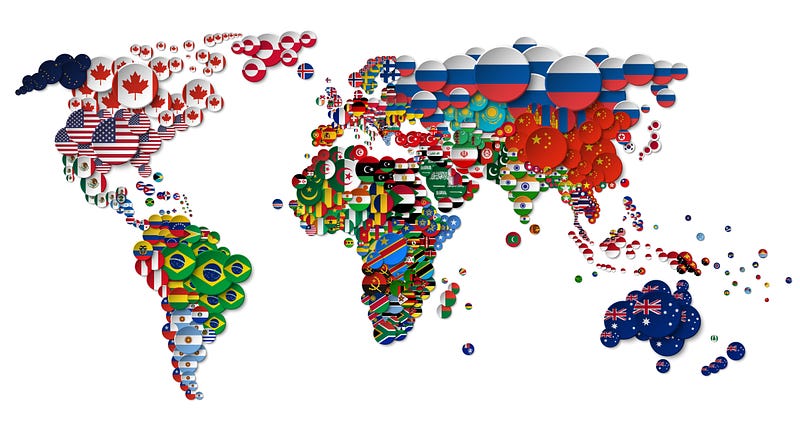
By stockdevil via Adobe Stock

Empires confiscated resource-rich countries' (the Global South) wealth and indebted them with unrepayable loans, holding them hostage and impoverishing them for centuries. Yet, discussions about BRICS (Brazil, Russia, India, China, and South Africa) contemplate its potential success or failure instead of considering that the most populous nations created an economic partnership to escape a financial dictatorship.

History is forgotten, rewritten, or unknown, but industrial powers colonized the world until WWII depleted their finances and militaries. Oppressed nations seized the moment, organizing the 1955 Bandung Conference to support decolonization and solidarity, but sovereignty never eventuated. The US overthrew independence movements and leftist governments, installing military dictatorships and the rules-based international order.

Countries borrowed from the colonizers' institution, the International Monetary Fund (IMF), to stabilize after colonization, Western-backed coups, and financial crises disempowered them. The loans strangled economies and impeded national policies by forcing governments to raise taxes, cut public investments, sell assets/resources, and suppress wages to pay for the exploitation and political upheaval that ransacked their nations.

Resource-rich countries are impoverished because the Global North (the West) robs, enslaves, corrupts, and bankrupts them, fleecing USD 10 trillion annually to serve capitalist interests and excessive consumption. Free trade's (globalization) unfair conditions modernized and disguised colonialism, contributing to persistent underdevelopment, income inequality, and environmental degradation by devaluing labor and natural resources.

The USSR provided financial aid and support for the decolonization movement, but when political disputes collapsed the government, there was no solid opposition to leverage or restrain Western supremacy. The lack of an alternative created an enormous power imbalance in the global economy, enabling the US to deploy unilateral trade policies and sanctions against nonconforming nations.

Free trade doctrines demanded emerging economies remove subsidies and tariffs, yet the West maintained intellectual property rights and industry protectionism. India, Brazil, and other countries contested the unfair rules when they were introduced in the 1980s and intensified the battle when Western patent protections prohibited access to inexpensive, lifesaving antiretroviral therapy at the onset of the HIV/AIDS crisis in the 1990s.

Financially drained countries contained 95% of global infections, and the Office of the US Trade Representative (USTR) pressured nations to adhere to stringent intellectual property (IP) rights by threatening to levy sanctions. President Reagan forced Brazil to accept regulations and a 37.5% US stake in its drug market, imposing harsh import tariffs in 1988 to force capitulation. President Clinton continued the bullying, revealing bipartisan support for US imperialism and indifference toward human rights.

The health crisis devastated countries, killing millions and offering no medical hope for those slowly dying because they couldn't afford the HIV cocktail that reduced deaths in the North. South African infection rates were the highest globally, and leaked documents revealed the nation's pleas to Vice President Al Gore. Yet, with the US government's backing, European and American pharmaceuticals protected monetization, punishing South Africa, Brazil, and India for contesting the IP regime.

They sued and threatened to sanction Nelson Mandela's South African government and Brazil for violating patents and undermining profits when they legislated access to inexpensive medications, which aligned with the World Trade Organization's (WTO) guidelines. The pharmaceutical industry discontinued supplying and manufacturing medicines in South Africa, and the US government placed Brazil and South Africa on the "301 Watch List," a trade barriers report that makes provisions for sanctions.

An Indian company, exempted from patent limitations, offered to supply less costly AIDS medications, but Western protectionism prohibited Brazil and South Africa from importing generic drugs. The pharmaceutical barons retaliated by accusing the Indian manufacturer of attempting to gain market share and threatened to sue when it negotiated shipments to Ghana, a region unrestricted by patents. The company withdrew its proposals, realizing Western businesses serve profits, not humanity.

“We won’t fight it. I don’t look at it as a fight. There’s room for everybody. This is a holocaust in Africa. It’s like the earthquake in India right now — everybody is helping out. I’m not looking to pick anybody’s business; there’s room for the multinationals at their price and room for us at our price, a partnership.’’ — Dr. Yusuf K. Hamied, chairman of Cipla

Global backlash eventually coerced pharmaceutical companies and the US government to withdraw the South African lawsuit in 2001. However, the international health assault continued to pursue Brazil, which aggressively halved mortality rates by administering preventative policies and passing a law aligned with its constitutionalized universal health rights, guaranteeing free AIDS treatments.

Most countries (other than the US) enact price controls and limit drug company profits, and Brazil's state-operated pharmaceutical expertise enabled low-cost production and leverage. Brazil mobilized activists globally to restrict US trade policies from interfering with its national goals and presented a case to the United Nations Human Rights Commission. Fifty-three nations voted to determine if affordable drugs are a human right, and one, the United States, abstained.

Brazil persisted with the campaign, proposing drug legislation to the WTO and negotiating a strategy with the United Nations General Assembly Special Session on HIV/AIDS. The dogged pressure and international support coerced the US government to back down, influencing the WTO to reduce IP public health barriers in 2001. The relaxed laws allowed Brazil to manufacture medications and form partnerships to exchange technological information with China, Cuba, Russia, and other financially strained countries.

Emerging economies pulled their resources to develop low-cost treatment models for resource-poor regions, demonstrating universalism via international collaborations is achievable. Brazilian President Lula understood the revolutionary moment, launching international hunger and poverty initiatives with 130 countries and representing governments at global events.

Imperial-ravaged nations founded blocs and treaties to survive and defend themselves against the colonial structures that sustain an unequal exchange. South Africa introduced an alliance in 2001, but September 11 delayed developments until 2004, when India, Brazil, and South Africa formed the Trilateral Co-Operation Forum (IBSA). The tight-knit partnership remains strong, funding impoverished countries' infrastructure projects and governing the Group of 20 (G20) until 2025.

The West's multiple global economic collapses hindered democracy and sovereignty, forcing the world to react to catastrophes beyond its control. US financial institutions caused the 2001 and 2008 crises, motivating BRICS nations, containing 42% of the world's population and countless essential resources, to organize their first summit in 2009 and the New Development Bank in 2014.

Western pharmaceutical companies and the US government could have redeemed themselves when they developed COVID-19 vaccines yet opted to continue their patent regimes instead. Their actions fortified the rise of economic blocs and de-dollarization by imposing centuries of ruthless, undemocratic foreign policies, threatening the world's survival. Yet, humanity relies on collaboration, and the West's cooperation is essential. How it chooses to respond to a multipolar system will impact everyone.

Brics
Patents
International Property
Free Trade
Decolonization
Recommended from ReadMedium