Brexit: An Ode to Compromise and Nuance
Politicians don’t believe the public can handle difficult discussions. They’re mistaken.
A wise man once said, “It’s all a question of degree.” The older I get the more convinced I am that he is right.
When you carefully examine any challenging issue, any ethical conundrum, what you find underpinning it are important values which have a deep, universal truth to them, but which, in the context of any given factual matrix, are in tension with each other.
Take, for example, the interminable debate about abortion. It is interminable because it finds in tension two fundamental values—that of the bodily sovereignty of the individual, and that of the dignity of human life — in a way which admits no single, obviously right answer. It is that very tension which renders it an ethical conundrum in the first place. So what we find in place of clear cut answers are a multitude of answers which, being good-faith attempts to strike a balance between the competing values, all have a certain validity to them but none an overriding claim to truth.
A similar tension can be seen in the interminable immigration debate in which the universal brotherhood of man is in tension with the more parochial level at which political community can function on a practical level.
So too the tension between the conservative value of individual responsibility and the liberal tenet that I am my brother’s keeper.
These tensions we find at the macro level also exist at the micro level whether within the family or within the life of the individual. The call to action is in tension with the need for rest and recuperation. The self development of the individual can be in tension with the well-being of the family.
It’s almost as if tension between competing values, and the inescapable need for best effort at balance, are somehow part of the fabric of our universe. (A related insight is Aristotle’s locating of virtue as the midpoint between two vices, or excesses.) And yet, a glance at our political discourse would suggest otherwise. It is so often approached in terms of absolutes, as if to compromise or to even admit of the tensions is somehow to lack integrity.
We find ourselves, therefore, approaching the most complex issues of the day, which necessarily involve compromise and nuance, as if they are binary choices.
Brexit has turned out to be a quintessential example of this. It began as the most simple of questions — Leave or Remain? Everybody knows whether they prefer cats to dogs, or wine to beer. It stands to reason that all would have known their own minds on whether to leave or to remain. And yet it turns out there was no simple binary choice to be had, regardless of Theresa May’s mantra that Brexit means Brexit.
The competing values underlying the Brexit debate are the democratic imperative of voters feeling connected to each other and to the people and institutions which wield power over them, and the practical need for political communities to be interconnected (even to the extent of pooling sovereignty) at levels far above the individual voter. It is a tension we see played out throughout the world. The perennial push for Scottish independence (coupled, somewhat ironically, with support for the EU), the longstanding push for Catalonian independence, the permanent tension in the U.S. between states’ rights and the power of the federal government are just three examples. There is no one right answer in any of those cases but there is a need, if we are to have an honest and adult debate about them, to recognize the importance of both underlying values and the inescapability of tension between them.
At the moment there are at least three options on the table — a hard “No-Deal” Brexit, Theresa May’s compromise deal, and staying in the European Union. There are, however, countless other potential variations on those themes that may or may not be on the table once May deigns to allow Parliament (or perhaps the people) to vote.
It is worth remembering, when considering the spectrum of different ways in which Brexit might be resolved, that no political community in the 21st century wields absolute sovereignty over its own affairs — save perhaps North Korea. That North Korea is arguably an exception points to the fact that no sane person should be seeking absolute sovereignty. Just as “No Man is an Island,” no Island is an Island. Even the United States — renowned for jealously guarding its sovereignty and traditionally suspicious of signing up to international laws which might affect its freedom domestically — is “a part of the main.” Consider this explanation of how trade drives unity from Timothy Garton Ash’s book Free Speech.
So important is the European market that it can have, across the world, what inside the United States is known as the “California Effect.” (When California sets exhaust emissions standards, American manufacturers usually build their cars to that standard for the whole U.S. market.) Thus, when Microsoft introduced its dot-NET passport to make navigation between password-protected websites easier, it ended up making it conform with EU privacy and data protection standards not just in Europe but across the globe.
Just as it makes no sense to advocate for absolute sovereignty it makes no sense to dismiss as irrelevant (or as racist) a yearning to prioritize politics at the parochial level.
It is well-established that it is human relationships — family, friends, and community — which undergird an individual’s mental well-being and mitigate his or her physical vulnerability. (There has to be a certain level of group solidarity to ground exercises in reciprocal altruism such as Britain’s National Health Service.) It is not obvious that any amount of technological development or globalization will change that fact. Those in favor of Remain have sometimes seemed to appear contemptuous of people who are not as outward looking as they. That represents a failure, in my opinion, to recognize the omnipresent tension between the local and the global.
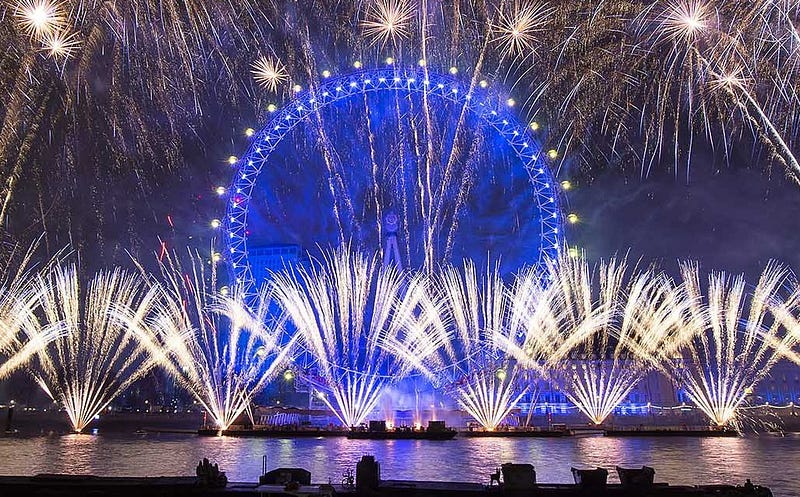
It was interesting that the recent New Year’s fireworks display in London was focused on countering what Mayor Sadiq Khan described as “the impression we’re insular, inward looking, not welcoming to Europeans.” The London Eye was lit up in the blue and gold of the European Union flag. As Khan noted, “I think diversity is a strength and I think what tonight is about is celebrating that diversity.”
Khan’s sentiments are valid but are only one side of the coin. There are those in Britain who feel grounded not by their European identity but by their British, or even their English, Scottish, Welsh, or Irish identity. There are rational as well as emotional reasons for that, and a politics which refuses to grapple with that fact is not one which is well placed to find a constructive and positive way out of the Brexit mess, particularly if the hope is that there will be a second referendum with many who originally voted to leave voting to remain.
The spectrum of ways in which Brexit might (or might not) be achieved underlines the fact that it was never obvious what exactly it ought to mean in the first place. For that reason the original 51.89 percent vote in favor of Leave does not, in my opinion, represent an electoral obligation for the government to pursue Leave at any or all costs. Even the queen was, reportedly, unsatisfied with May’s “Brexit means Brexit” mantra in August 2016 when May visited the queen’s Scottish estate Balmoral for the annual visit of the prime minister to the home of the monarch. The queen had expected, at least in the strict privacy of discussions between the monarch and her prime minister, that May would have been more forthcoming about what her vision of Brexit was.
That convention of strict confidence was broken by then-Prime Minister David Cameron when he was overheard explaining to former New York City Mayor Michael Bloomberg the queen’s reaction when he informed her that the outcome of the 2015 referendum on Scottish independence was that the United Kingdom would remain intact. Cameron explained to Bloomberg,
The definition of relief is being the Prime Minister of the United Kingdom and ringing the queen and saying “It’s alright, it’s okay.” That was something. She purred down the line.
Perhaps Cameron’s hubris about that independence referendum fed into his recklessness about the next. He put a simple “Leave or Remain” question to the electorate without first having done the groundwork to determine what Leave ought to mean. In fact he forbade the civil service from doing any preparatory work for the eventuality of a Leave result. As the head of the civil service at the time said:
He did not want us talking to the Leave campaigners and working out elaborate plans for what would happen in the event of a Leave.
That goes against the traditions and usual modus operandi of the British civil service which, being responsible for keeping steady the ship of state amidst the tempestuousness of democratic politics, makes preparations when elections are forthcoming for the possibility that the opposition will win.
Considered in the light of Cameron’s tenure as prime minister, it is not so much that Brexit means Brexit but that there was a deliberate decision not to even figure out what Brexit might mean. The reason, I would submit, was that Cameron knew that Brexit would necessarily involve compromise and nuance but having that conversation was not conducive to his immediate, personal political ends. He fully intended that the people would vote to Remain and the queen would once again purr down the line at him for the wonderful way in which he had preserved union.
However Brexit turns out—the House of Commons is set to vote on May’s proposal starting January 14—it would be nice to think that one thing many of us will take away from it is a far greater awareness of the dichotomy between the simplistic ways in which politicians court us for our votes, and the complexity of the underlying politics and realpolitik. It seems to me that many in the voting public are quite capable of grappling with that complexity, and that it is not they who are driving the overly simplistic (and sometimes downright dishonest) terms in which political discussion proceeds. The fact is that any Brexit will represent some balance between the local and the European—even the hardest of hard Brexits, or remaining in an EU utterly unchastened by the lessons of the whole Brexit palaver, will represent a blend of the underlying, competing values. There is no avoiding the imperatives of either the local or the global, the only question is how we balance them. It is not a binary choice and, therefore, not a winner-takes-all event.
A democracy seeking to engage the voters in a less simplistic manner, with an honest discussion about the inescapability of compromise and nuance when it comes to any challenging issue, would be a wonderfully positive outcome from Brexit. My personal view is that the way out of the thicket is a further referendum setting out various options for each voter to rank in order of preference, with instant runoff to determine the final outcome. I hear the objections to that plan already — it’s complicated, it doesn’t boil the issue down to two simple options, there are many complex variables, there won’t be an absolute majority for whichever outcome ends up winning.
YES, EXACTLY. THAT IS POLITICS.
Let the people engage with it as such.
