
Breaking White Silence
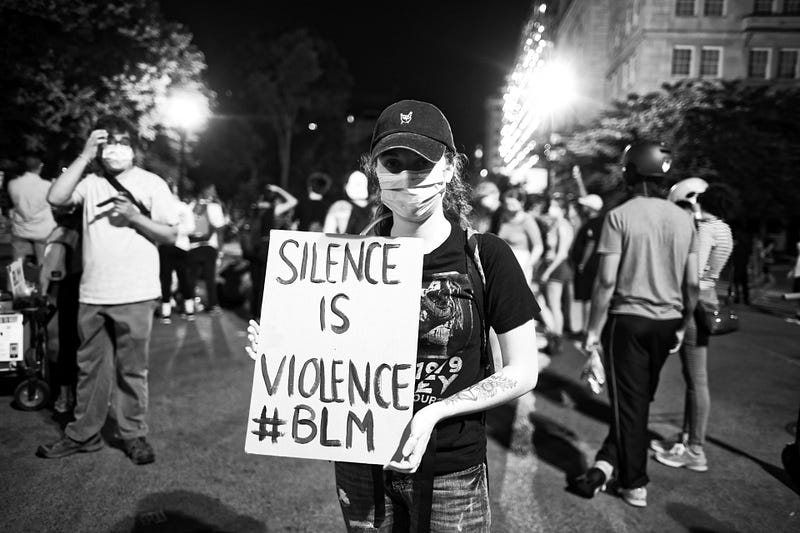
One of the things I’m seeing happen in the current climate of COVID + BLM + election season is a lot of white people breaking their silence on issues of race and racism for the first time on social media.
Maybe you’re sharing an article on race you found helpful, or expressing a desire to consider the most marginalized in the voting booth…either way, you’ve broken the norm of white silence.
White silence has been a long-standing, white cultural norm that is firmly embedded in American society. I actually saw an interesting historical example of this yesterday when someone was discussing an early American theologian who “didn’t ever comment on slavery so we don’t know what he really believed about it.”
In that statement we see the idea that one can remain silent on an issue of injustice, and still be considered opposed to it. This is a belief silence is acceptable; not a showing of complicity or an experience of violence for those suffering under the injustice.
Where Does White Silence Originate

This norm of white silence is so rooted in our culture that we socialize our children from a very young age by shushing them if they are to ever commit the faux pas of pointing out a person’s race or color in public, and only bringing up the topic of race at publicly sanctioned times such as on MLK Day, and then only in a way that celebrates the parts of the past that make us most comfortable. White America prefers its Black heroes to be buried lest we have to deal with the complicated and nuanced nature of their message instead of rewriting it in a way where we are clearly on their side, because they are on ours.
The purpose of white silence is the maintenance of the status quo, which in this case means a maintenance of white supremacy. If those with power who could change things will remain silent, then the white equilibrium of comfort and psychic freedom is supported and sustained.
Break White Silence
It will be hard and have no doubt there will be consequences. Dismantling hierarchies that benefit white people will not go over well with other white people. Eschewing norms makes people uncomfortable, angry, and defensive. You are shaking the walls of what is easier for them to believe than having to deal with being complicit or at fault in the oppression of others.
Prepare for that reality. Prepare with how you may respond to criticism, snark, or belittling. Be ready to say, “I’m not sure how to answer you, but I know I’m focused on listening to the voices of those most marginalized, and if you’d like to join me in that, I’d happily share what I’ve found helpful.”
Remember you have the option to fade back into silence and complicity. That’s an option many take. It’s not an option most BIPOC have. They don’t get to just dissolve into the comfort and protection of whiteness, but rather face the continual onslaught of its violence. Decide which side of that reality you want to find yourself on, gear up, and do what needs done.
I promise it’s worth it.
Originally published at https://bethebridge.com on August 22, 2020.


