
Breaking the Cycle: Strategies for Overcoming Bad Habits
Practical tips and techniques for making positive changes in your daily routine.
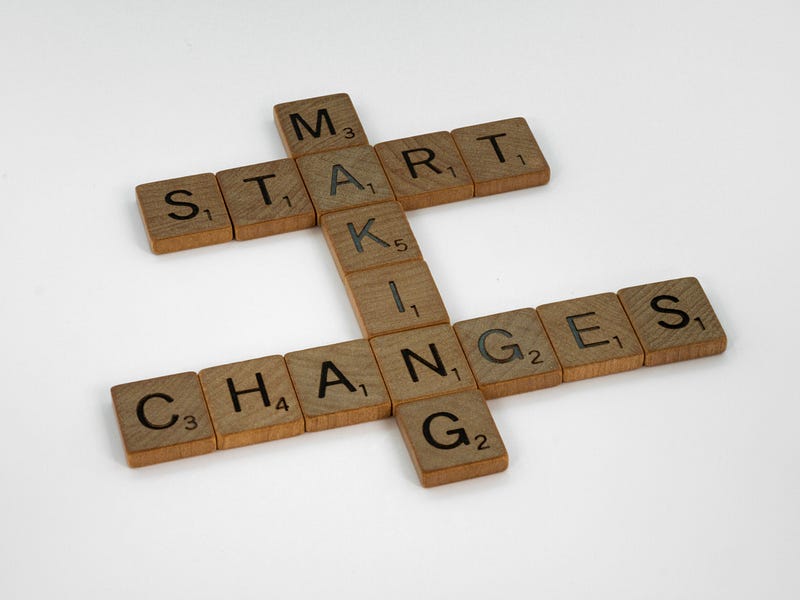
When we go to set goals for ourselves, we ask, “What do I want to improve?” and “What habits do I want to start?”
We always focus on starting good habits, but it is our bad habits that have more of an impact on our day-to-day successes, or lack thereof.
Breaking Bad Habits
If we first focus on breaking negative habits, we can have a more positive impact on our lives and daily routine. Once we get into the habit of not doing a bad habit, we can turn our focus to a positive habit we want to start. It is much easier to start positive habits when we are already in the habit of pausing before performing a bad habit.
Identifying bad habits is necessary to help us improve our lives.
We need to limit and then omit bad habits to see positive changes in our lives.
Often, it is easier to identify the consequences of our bad habits than it is to identify the habit itself.
For example, you might say, “I don’t have time to exercise,” but in reality, you can identify that you spend too much time watching TV. Your habit of curling up on the couch is in conflict with your desire to exercise.
Now we know what habit we want to break: going to the couch to relax at “X” time. You have also identified the positive habit you want to start. So now you can figure out the time that works best for you to exercise, and now you know when we need to focus our attention on breaking the bad habit cycle of curling up on the couch.
The next step is to create a plan to break the habit. Depending on how long you have been doing the bad habit, breaking it can be a challenge and a process. We just need to keep trying; don’t get discouraged, and use self-compassion when you fall off the wagon and back onto the couch.
Techniques To Break Habits
There are a few strategies we can employ in our plan. To break a habit, we need to disrupt our natural tendency to do the bad habit. So, if we are trying to break the habit of going to the couch, we need to decide what we will do instead.
Disruptions: Environmental Changes
Taking the example above, if we identify that after work we want to exercise, we can put our workout clothes right on the couch with our shoes and gym bag. You’re in the habit of going to the couch, so we're disrupting that habit with an environmental reminder right there on the couch. This way, you can grab the clothes, change, and go work out. Don’t even turn the TV on; get in the car and go! If you have a home gym, you can change and put on music to motivate you and start your workout—no TV!
Environmental changes are cues that we add to remind ourselves that we do or don’t want to do something. (The Nudge Theory goes into this a little further.)
This is why writing down your goals and posting them somewhere you will see them often is a recommendation. It is a small reminder in our environment that encourages us to limit and then omit negative habits in order to see positive results.
Disruptions: Changes to Our Routine
Continuing the example, you can also pack your clothes in the car and drive from work to the gym without going home first. This way, you are disrupting your routine to drive home, and you don’t even get tempted by seeing the couch.
All habits, good and bad, are ingrained in our unconscious routines, so by disrupting the natural routine, we can put a pause on performing the bad habit—to limit and eventually omit it.
Disruptions: A Restrictive Force
A restrictive force is something we change or add to our environment or routine that makes doing the bad habit harder.
For example, we could hide the remote somewhere, which would make us pause, giving us a moment to decide whether to exercise or go grab the remote. A restrictive force adds resistance between you and the negative habit you want to change.
Another example might be that if you are trying to focus on your work, you could not only put your phone on silent, but you could also go put it in another room or at the bottom of a dresser drawer. All of this is added resistance that makes you stop and actively choose to continue your work or actually get up to go grab it (you should continue to work).
Monitoring Techniques
There are a couple ways you can monitor your habits. They help you recognize patterns, see your progress, and note any setbacks you encounter.
You can use a pen and paper habit tracker, a journal, or an app.
It can be helpful to note your mood when you do and don’t do either the good or bad habit. You may see a pattern or notice that every time you exercised, you felt good, strong, and energized, which can help reinforce the habit in your routine and help you successfully omit spending too much time curled up on the couch.
Another example would be keeping a food diary if you want to start eating better. You will be able to look back and see patterns in when you ate better and worse, giving you an idea of where to put your disruption!
Self-Control
Many people rely on their self-control to resist temptation. In the examples above, it would be the couch, unhealthy food, and our phone. Self-control and willpower are helpful, but they can be unreliable resources. A willpower mindset is something we can work on, but it might be more helpful in creating positive habits instead of breaking habits.
Our habits will influence our behavior more than our ability to resist temptation will. We shouldn’t rely on self-control to guide every action we take; however, it can help us form good habits.
Self-control is best used when we want to initiate positive change: to put on workout clothes, drive straight to the gym, not grab the phone, and not have unhealthy food in the house in the first place.
Final Thoughts
Positive changes in life are a process. We have to identify the bad habits that are giving us negative results that we want to reverse.
Breaking the cycle of repeating bad habits is hard, but with these techniques, it is easier to pause and actively choose the good action that will lead to positive changes. Develop your willpower mindset and use your self-control to do the good habit.
Lastly, consistency is always the key, whether you are breaking up with a bad habit or starting a good one. A habit can take 21–254 days. The amount of time varies per person and with the type of habit it is, but one thing is certain: Repetition of a habit leads to automation. Automation is the goal because now it is something our unconscious controls—and we just do it!
Next Reads:
Make Behavior Change Easier With A Nudge
Need More Willpower? Change Your Mindset!
Follow me for more on productivity, habits, personal development, flow, writing, and mindset. And on Twitter @mj_jens0
Join my email list to receive a newsletter with tips, highlights, and extra content!