
Breaking Down What Good SEO Looks Like for a Medium Article
My top article earned $2,852 and is #1 on Google.
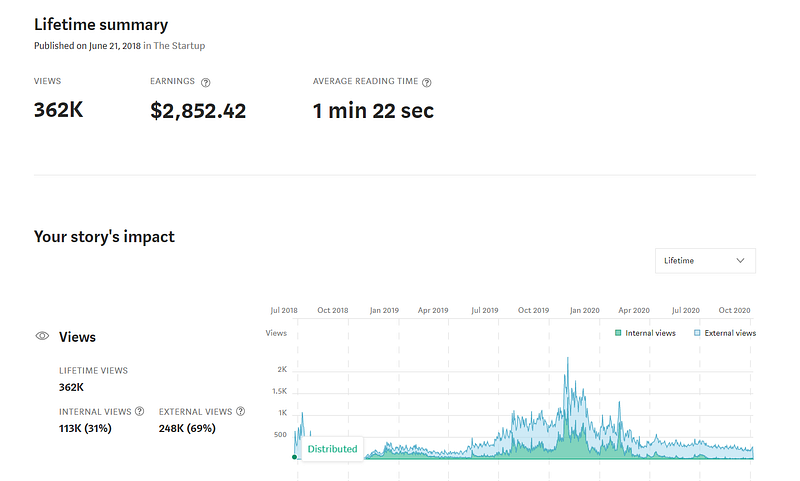
Winning the SEO game means that Google thinks the best answer to someone’s question is your article. But not just questions; problems. My top article addressed a reality for a lot of people, “I don’t know what I want.”
Broad and existential, yes, but something people wanted the answer to, something that applied to a career, life, education, or relationship choice. I didn’t plan to write it. It was just a question I struggled with and happened to find an answer that worked for me.
I wrote the first draft in 15 minutes, I edited it over a couple of hours and promoted it on Reddit. Initially, the numbers weren’t that interesting. It wasn’t until a year after the fact that the article started ranking on Google and driving mass clicks to my profile, and you can tell when that happens.
On your stats page, when the blue part of the graph looks 10+ times bigger than the green, that means you’re getting a lot of traffic that isn’t from Medium — that’s what good SEO looks like.
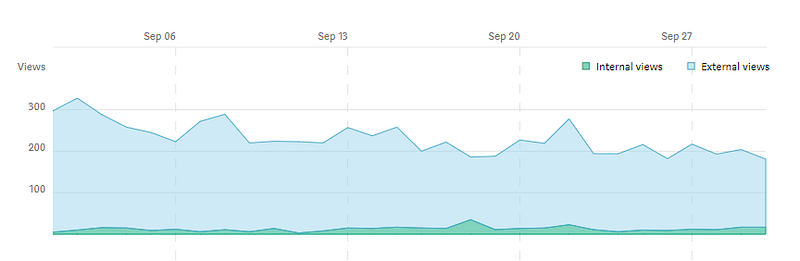
And this nearly always takes 2–6 months, and sometimes more; Google needs time to figure out if your answer is the go-to one. So publishing today might mean success in a year, don’t stress the immediate stats.
The Title Was a Call To Action
It wasn’t “15 Ways to do X” or “How to do Y,” and there’s nothing wrong with those, but this title was different. It was an invitation, a subtle call to action. It defined who it was for and left the door open at the discretion of the reader.
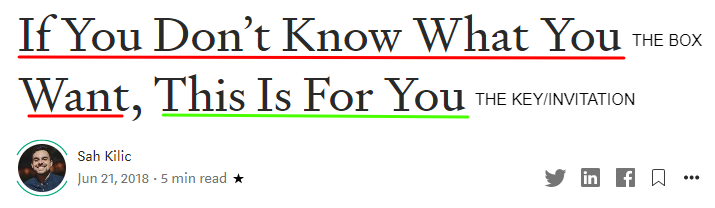
“If you don’t know what you want…”
This line could apply to anyone making some life choices, and that’s fantastic because it was meant to apply to all. The readers quickly understood if they were or weren’t in this box. You either know what you want or don’t. It gave the reader an “if” clause to satisfy.
“…this is for you.”
And if someone categorized themself as in the box, I told them that this article was for them. I didn’t say “why,” I didn’t get down to specifics; I left it hanging — I left the key in the lock.
Seth Godin calls this “tension.” To relieve that tension, one has to click and read. That’s the only way. The tension of not knowing what was waiting inside, the possibility of relief from such an existential question, that’s the reason this headline got attention — and it was pure luck that I wrote it.
But after the click, it had to deliver.
The Content Delivered
And this is the hard part. Everyone can make grand promises; it’s bloody difficult to deliver on them, though. When I had the initial realization, I frantically wrote it down. It was such an epiphany that I knew someone else would find it valuable.
I didn’t sit down and brainstorm. I didn’t plan or research my way into an argument I could prove with evidence. Instead, I told a story about my personal experience, and I told it in the simplest way I could.
Plain English is like a second language.
WordCounter put the article at a 9–10th Grade reading level — it was easy to read. The keyword density was high on the words like “know” and “certain,” meaning I used them a lot. You’d think that switching it up with a synonym would make my story less bland, but instead, it kept readers on track.
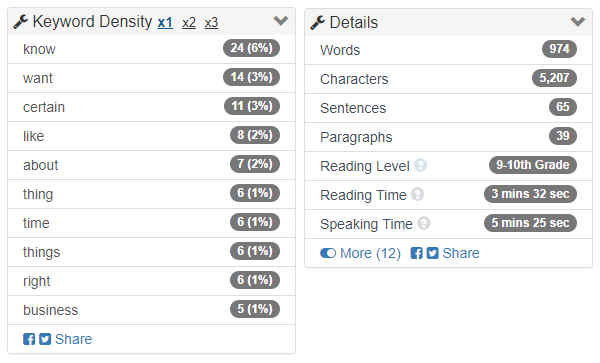
Not only the content, but the title, too, was straightforward to understand. It had a readability score of 100. 11-year-olds could understand it. Was that my target demographic? Absolutely not, but English isn’t everyone’s first language — and this was a realization I had after the fact.
The feedback confirmed everything.
I’ve consistently had people message me on LinkedIn and Instagram thanking me for the article, and a common compliment has always been, “it was easy to read.” Every time I’ve gotten this compliment, it’s been apparent that the person I’m talking to has broken English.
If it’s a simple idea that can be explained with basic vocabulary, it’s almost your duty to write it in that way. 10 cent words are more affordable for people worldwide that deserve to hear your idea — making it accessible is the only way it gains mass traction.
This is my theory on why many top writers on Medium have English as their second language. It’s a secret superpower for communication.
Communication is more important than “correct.”
When I revisited the article a year and a half after the fact, it was riddled with spelling and punctuation errors. Grammarly described it as “bland” and “off.” Which confirmed one fact for me, answering a question or solving someone’s problem is independent of what’s “correct.”
Communication is putting an idea you have into someone’s head as effectively as you can. If the contents do that, then it doesn’t matter if you’re writing in hieroglyphics — as soon as Google associates it with the question people are asking, then your article will drift to the top.
It Didn’t Conform To SEO Best Practice
Backlinko has a massive list of Google’s 200 ranking factors broken down. The correlations are from live data, and the conclusions have plenty of weight to them. I didn’t write my article according to these factors, though.
I completely neglected the article’s SEO settings. The sweet spot for a title to not be truncated (broken up) on search results is 55–60 characters, and for a description, it’s a maximum of 156.
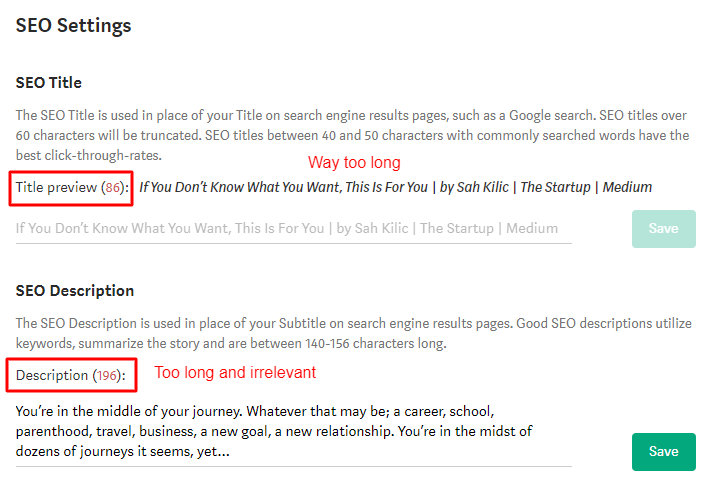
I hit publish instead with the default titling and descriptions from my article, but it didn’t matter; it still did well.
Medium has a domain authority of 96, a userbase of 100 million monthly actives, and a community of writers sharing unique stories every day. According to my logic, giving the best answer to someone’s question was the only way to compete.

I was already a part of an authority site; I just needed to make sure that my article kept the right people interested enough to read it through. That doesn’t mean a 100% read ratio or copy with so many “bread crumbs” that lead someone to an article's end but still frustrated.
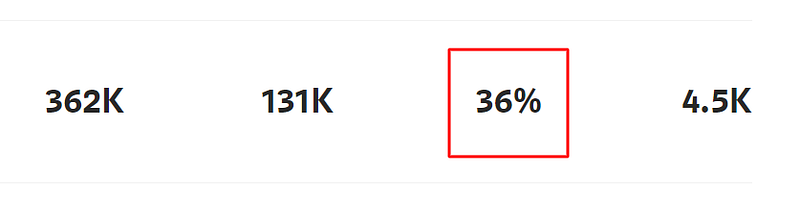
It means that my titling and content match my intended audience, answers their question, and makes sure they leave with something they didn’t have before. Everything else seems to fall into place when I get these right.
So What Does Good SEO Look Like on Medium?
Good SEO on Medium looks like high external traffic. It means people find what I’ve written because it answers a question, and hell, it might be the best answer out there.
It means that I know the answer to the question in such detail that I can write the first draft of a response in 15 minutes. I can walk someone through the topic, and I know exactly how to convey what I’m thinking. I can do it without masking it in “smart” words.
It means that I understand who I’m writing for and what I need to say to get their attention. I deeply understand their dilemma, their issue, and what they’re going through. Good SEO is empathy.
And that’s what it looks like.
— Sah


