
Break Out of the Cycle of Infinite Indecision
The key is determining where to flex (hint: use the Triangle of Constraints)

When I was a kid, we had this huge golden retriever named Chance. Even though he was a bear of a dog (he weighed over 90 pounds), he had a relatively small mouth. As such, one of my favorite things about Chance was watching him try and fit three tennis balls into it.
He could pick up the first two without any issues but try as he might, he was never quite able to get that third tennis ball in. As soon as he put his head down to get that third tennis ball, and open his mouth, inevitably at least one of the other two tennis balls in his mouth would fall out.
Round and round he would go, picking up two tennis balls, reaching for the third, and dropping one of the first two. Again and again and again. He would go at it for endless cycles, trying to get all three of those tennis balls in his mouth — but for whatever reason, he wasn’t able to do so.
Chance would get stuck in the proverbial cycle of “infinite indecision”. While I can’t imagine he thought about what he would do with three tennis balls in his mouth, I can’t imagine it would be much different than having two. But because he was so singularly focused on trying to optimize for all three tennis balls, he was never able to move beyond that goal. He was never able to make a decision for what happens next because he never actually got there.
Tennis balls in decision making
I’ve seen this exact same scenario play out in life time and time again, in both personal and professional scenarios. Except, instead of tennis balls, we’re talking about constraints when making a decision.
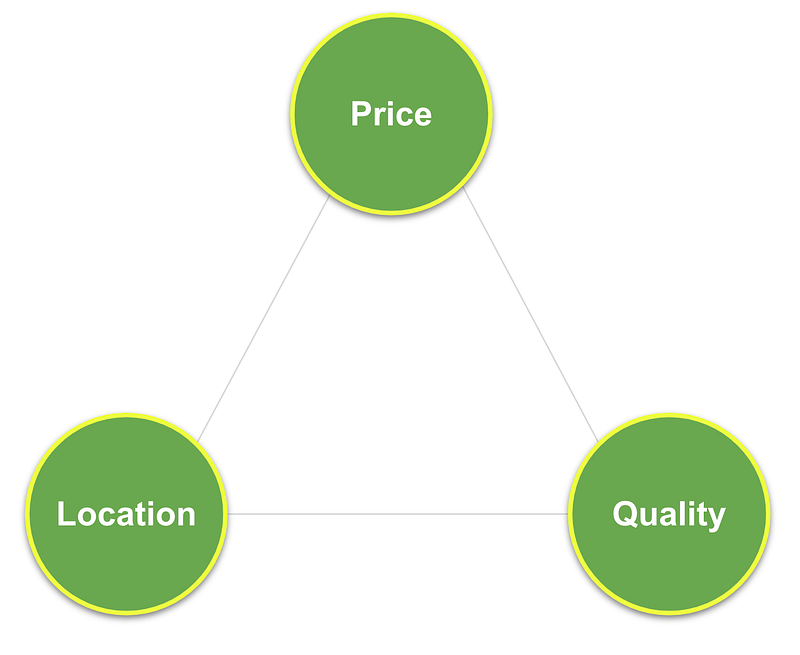
Consider a big life decision you need to make, like buying a house. Three of the biggest constraints are:
- Price
- Location
- Quality (which I realize is subjective)
In your search for the perfect place, you come across a super strong candidate. It’s close to the schools you want for your kids, it has the right number of bedrooms, the kitchen has great appliances, and the carpets were recently replaced. And then you get the asking price, and it’s way out of your budget.
So what do you do? You either (a) decide to forget the budget and put in an offer anyhow because you love it so much, or (b) you keep hunting.
And the search goes on and on. You find a place that’s in your budget, but the location is terrible. You find something in your budget with the right location, but it’s a dump and you’d fear for your health. You keep hunting, looking for that elusive perfect location that checks all of the boxes, but no matter what you find, like Chance, you’re never able to quite fit all three of the proverbial tennis balls in your mouth.
Triangle of Constraints to the rescue
In Project Management, there’s this idea of the “Triangle of Constraints” (ToC). You can read about it in the linked article, but it is succinctly articulated by
Good, fast, cheap. Choose two.
Chance could comfortably fit two tennis balls in his mouth. The problems came when he tried to get all three and he’d get stuck in indecision mode. Applying the Triangle of Constraints here, Chance would have been better off choosing which of the two tennis balls he had to have in his mouth, and then getting extremely flexible with what he did with the third tennis ball.
In our house hunt example above, the way to break the cycle of infinite indecision is to choose which two of the three constraints to optimize for, and then get really flexible with the third.
Perhaps price and location are most important. Focus on finding the perfect place that optimizes for these two constraints. Then when you find it and your partner starts to bring up the fact that it isn’t exactly the “look and feel” you’re going for, gently remind them that you’re optimizing for price and location. This place fits those two, and you can do home improvement projects over the next 15 years you live here to get to the right “look and feel”.
ToC in real life
I’d love to hear other examples of where the ToC applies, but I’ve recently had two scenarios where I’ve found it helpful (which prompted this article).
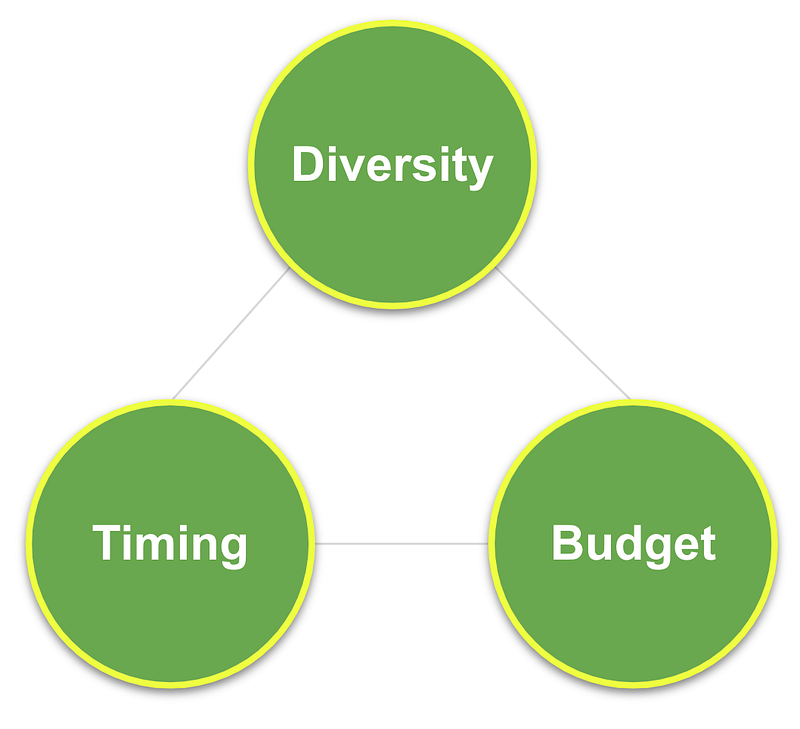
First has been with hiring. We take diversity very seriously on our teams with hiring, and are committed to running a thorough hiring process. Diversity doesn’t only mean racial or cultural background, but it comes in the forms of professional experience, gender, political, and religious backgrounds as well.
The biggest challenge we face in being committed to this process is it often is at odds with our two other main constraints of timing and budget.
We have found ourselves in hiring scenarios where we have lost out on good candidates because we didn’t go through this process of identifying which constraints we’re optimizing for.
For instance, we had an immediate role we needed to fill. Within hours of identifying the role, we had it posted and applicants pouring in. Early screening provided some amazing candidates, but we realized the candidates weren’t as diverse as we’d like them to be. So we expanded the search, pushed the role out to new channels, sought more referrals, and built a solidly diverse pool of candidates. However, this larger effort extended our search by over a month. In the end, we realized our best candidates were some of the earliest people we’d spoken to — but by the time we reached back out to them, they’d already moved on.
The lesson here is we need to have this conversation from the start — which of the main constraints are we optimizing for in a role — and then get really flexible on the third. Had we identified diversity and timing to be the main constraints, then we could have been much more flexible on budget. When we found the right candidates through our diverse search, then we could have pursued them aggressively from a budget perspective to make the hire happen as quickly as possible.
The second scenario is a personal one that has happened more recently. My wife and I are going to have a third child. In preparation, I’ve started to think about what we’re going to do for family transportation, as our current vehicle is well suited for two kids in carseats, but not three.
I’ve been stuck in the state of infinite indecision, trying to find the right vehicle that will fit our family needs, but also work within the constraints of the model we want to get, our budget, and have low enough mileage that it will last us for years to come.
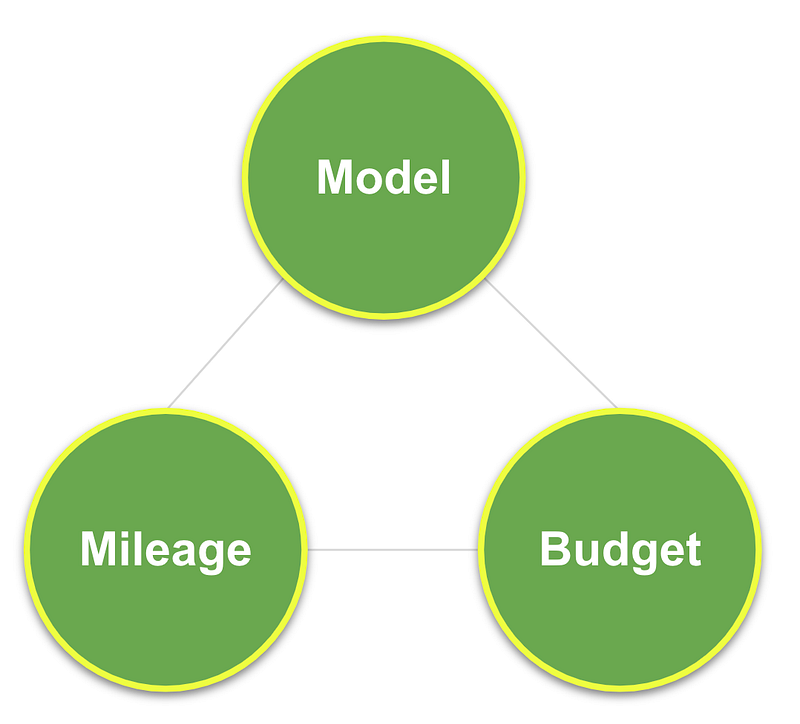
I’ll find a great vehicle that has the model and mileage we want, but be way out of our budget. I’ll find one that is the model we want and within the budget, but is pushing 120k miles. Back and forth I go —that third factor continually pulling me into a state of indecision.
Key Takeaway
From the get-go in your decision-making process, identify early the most important constraints your optimizing for, determine which three are most important, and of the three, which two you’re going to optimize for.
It’s not that in the end you completely disregard the third factor, but you just need to be a lot more willing to flex on it, and you’ll break out of that cycle of indecision in no time.


