
MARKETING
Branding in a Post-Pandemic World
Some brands will soon be on the edge of a cliff, standing on a burning platform.

Branding is everything. Brands connect with consumers, think about BMW, HP, Coca-Cola, Apple, UPS, Tesla, Lady Gaga, and you — yes, you!
A brand carries meaning, it reflects values with purposeful associations. A great brand goes further, it’s symbolic, an emblem of a product, or a service it provides and represents, conveying quality, innovation, or both.
This article will explore branding in a post-pandemic world.
Are brands important?
Yes. A brands’ value lies in assets like goodwill, customer loyalty and knowledge of people. Both important economic factors. A company’s brand is its signature, in some cases, it can be an organization's most valuable asset. Take Coca-Cola for example, it’s estimated that the Coca-Cola brand alone is worth over $1 billion, excluding all other assets.
Individuals and businesses work hard to build a brand. It takes vision, resilience, energy, and faith to create a brand to stand out. All of which are important traits for both brands and individuals.
Loyalty
One of the best indicators of a great brand is evident through customer loyalty, retention (repeat buyers and low churn), and consumer preference.
Take Apple for example, or even Harley Davidson, both great brands because Mac users rarely switch to Lenovo or HP; likewise, Harley motorcycle owners rarely switch to Honda or Suzuki.
Some argue that the aim of branding is no more than getting a higher price for a product or service more than its worth. This somewhat cynical view fails to consider consumers’ trust in a brand name, an ethos embedded in innovation, reliability, and quality like Apple or Tesla.
A well-established brand can capture a few dollars extra per sale.
Triggers
Great brands develop an unsaid emotional agreement, a psychological contract with customers. A contract that’s grounded in honesty and trust.
Lidl, for example, offers low prices and delivers. Simple.
In contrast, the Apple brand conveys a different message, a proposition best described by Simon Sinek:
“With everything we do, we aim to challenge the status quo. We aim to think differently. Our products are user-friendly, beautifully designed, and easy to use. We just happen to make great computers. Want to buy one?” — Simon Sinek
How to build a brand?
Advertising alone does not build a brand, it simply brings attention to a brands’ product or service. It stimulates brand interest and chatter.
Brands are built by strategic orchestration of marketing tools — Integrated marketing communication (IMC) — that include advertising, public relation (PR) efforts, partnerships, events, social channels, sponsorships, influencers, and social purpose, to name a few examples.
The trick is to get people and the media to talk about the brand.
Media publications are always on the lookout for something new, an innovative product or service, such as BusterBox, TikTok, AirBnB, GymShark, or Amazon’s Alexa.

Startup brands
New brands have to establish a niche, a new dimension, with a unique name and logo, a tagline, propped up by a captivating back story. If media channels pick up on it, people will listen and refer friends. Hearing about a brand from others in our social network elicits credibility far beyond paid campaigns, which can be dismissed due to the biased motivations.
Also, a brand is built by people — the employees behind it — those who deliver a positive experience for the consumer.
So don’t just advertise your brand, live it, breathe it across the culture. A brand experience must live up to the brand promise.
A strong brand is a route to sustained profitability. Great brands trigger emotional benefits alongside rational features. Too many marketers pivot campaigns on rational drivers, like price and functionality, which convert into sales but offer little to nurture customer advocacy.
The best brands sweat the emotional aspect of consumer engagement, like the environment, innovation, or social responsibility, conveying concern for the planet and humanity. Such brands are corporate citizens that truly care.
Definition
A company must define what its brand represents. What should Samsung mean, or what does McDonald's mean? Tesla means environmentally-friendly, luxurious transportation.
A brand must have a personality too, exhibiting traits that percolate across all of the business verticals, not just marketing.
Once defined, core attributes need to be expressed across channels, at every audience interaction. In fact, brand leaders and employees must live the brand ethos. A brands’ spirit is expressed in the belief of the people behind it.
If a company brands itself as creative, then it must hire and reward workers for being creative. If a company brands itself as innovative, then this must be defined in every role, including HR, sales, production, and finance.
A brands’ personality must extend to resellers and partners too. A company cannot allow channel-partners to compromise the brand's integrity by engaging in practices that contradict brand values. They must own and represent the brand ethically, meeting the proposed brand experience.
Brand extensions
Successful brands tend to associate the brand name with additional products or services. These include:
- Line extensions — products or services launched in the same category
- Brand extensions — products or services in a new category
- Brand stretch — an entirely new industry
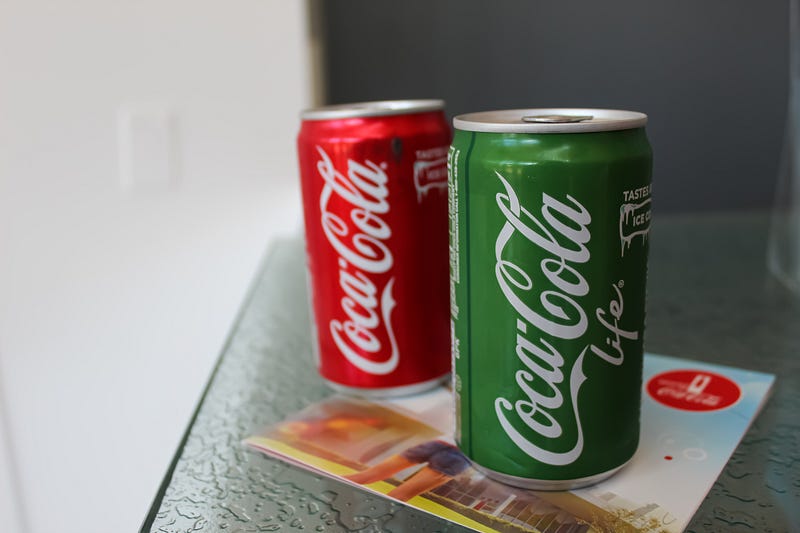
Line extensions make sense. They’re low risk. Plus a company can surf the coattails of goodwill in a specific category. It’s cost-effective too as little investment is required to initiate brand awareness.
As consumers we often see companies introducing product variations under its widely recognized label. That said, new product variations can cannibalize existing sales, acquiring little additional revenue.
There are some risks, like production and distribution costs. The biggest risk is consumer confusion, all of which impact profitability. Some extensions are a no-brainer, but overuse is not recommended.
Brand extensions are riskier. I buy Cadbury’s chocolate, but I’d be less interested in Cadbury’s Cola.
Brand stretch is even riskier. Would you buy a Cadbury’s car?
Blindspots
Well-known brands can be blinded by over-confidence. They assume that their household name can successfully traverse categories, leaping market boundaries at will.
Whatever happened to Dells’ Smart TVs? Or Xerox computers?
Company’s that introduce an ‘us-too’ version of a product or service, often struggle to compete with existing category leaders. Unless of course, their proposition is ground-breaking, like the iPhone, a product that catapulted Apple into the Telco industry.
Sub-brands
One solution to brand stretch is to develop a new name, a sub-brand for a new product, to unshackle the weight of the company’s name, brand-baggage. Brand names tend to create a sense of more of the same in the consumer's mind, rather than something radical, more compelling.
Great brands know this. Apple used Macintosh, for Toyota it was Lexus, Aldi use Specialty and for Sony it’s PlayStation. Establishing a new brand name, a sub-brand extension of sorts creates an opportunity to establish, circulate, and articulate rhetoric to entice a fresh audience to gain valuable media chatter.
New brands need credibility, as such PR is a much better channel, initially.
There are exceptions. Tesco expanded via Tesco-mobile and Tesco finance. Amazon evolved from books to food, data-warehousing, and more. Richard Branson used the Virgin name on dozens of ventures, including Virgin Atlantic, Virgin Hotels, Virgin Trains, Virgin Holidays to mention a few.
Great brands find categories that resonate with their audience, aware of how far a brand name can be stretched before its meaning is lost?
Final Thoughts
Some marketing thought leaders oppose brand extensions, they view it as nothing more than brand-dilution that exhausts credibility and loyalty over time. This observation is likely to be true in the future as brands jostle for audience exposure in the accelerated online world, a COVID-19 world.
Brand pricing will be a challenge as price premiums will shrink. During recessionary times, price loyalty trumps brand loyalty. Fact. Customer loyalty is a reflection of nothing more than deal-seeking consumers, converting due to a lack of something better, or the same but cheaper.
Nothing that a 25 percent discount won’t cure.
Some brands die, whereas others are murdered, but this doesn't have to be the case. That said, make no mistake about it, in the post-pandemic world brands will be attacked, eaten, beaten, bashed, and belittled, by excessive focus on discounts, price, and deals.
As such, established brands need a paradigm shift to solidify their position as the new economy emerges, one that will level the playing field for all.
- Companies must optimize their brands’ value proposition as the key driver to underpin the company’s strategy, innovation, service, marketing, operations, sales, and new product development.
- Brands should simplify and regularly express the company’s basic values so that their name on a new product or service infuses an image of quality, innovation, and value.
- Companies need to stay true to the essence of the brand across all channels and do so consistently.
- Companies should employ brand experts to undertake tactical work.
- Culture — A brand’s ultimate success will be dependent on every employee, believers who buy into and live the brand’s value proposition.
- Leadership — CEOs like Elon Musk and Jeff Bezos are playing a hands-on role in shaping brand strategies, brand vision, so follow their lead.
- A comprehensive brand-development plan is crucial to enhance customer experiences at every interaction.
Also, companies must reinvent how they measure their brand's effectiveness in the new economy. Not just by the old measures:
- Brand awareness
- Recognition, and
- Brand recall
These alone are no longer good enough. More comprehensive metrics and criteria need to be deployed and analyzed in 2020 and beyond, such as:
- Net promoter score
- Perceived value for the consumer
- Customer retention
- Customer churn
- Customer satisfaction, and
- Customer advocacy
Great brands are great for a reason, but the world is changing. And fast. Some brands are on the edge of a cliff. Standing on a burning platform. If there’s one takeaway from this article it’s this:
Consumers will give your brand permission to exist in the future, so embrace them, protect them, and nurture them as if they were your offspring.


