
Brain Plasticity and The Reason Why We Dream
The inner works of our brains
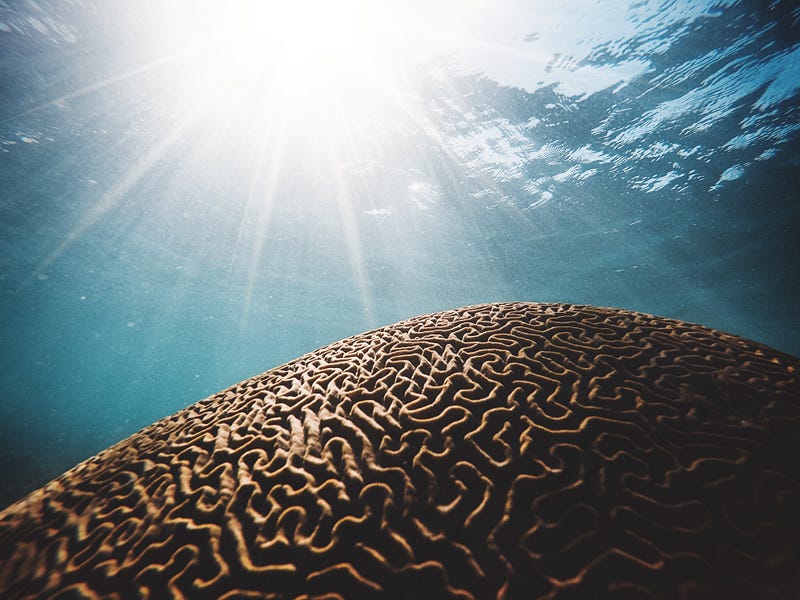
Brain plasticity is the brain’s ability to adapt and reorganize as we interact with the world. In the book Livewired: The Inside Story of the Ever-Changing Brain is a non-fiction book, the neuroscientist and author David Eagleman gives insight into what happens if someone has half a brain, why we dream and other mind-blowing explanations.
We are accustomed to thinking the areas in the brain are fixed in place, being each one responsible for a specific part of the body. However, it’s rather very dynamic. We are only born with rudimentary neurons, not fully preprogrammed. And as we start interacting with the environment and move our body, the brain’s circuitry rewires based on feedback from our senses and members.
Here’s an analogy from the book:
Imagine this: instead of sending a four-hundred-pound rover vehicle to Mars, we merely shoot over to the planet a single sphere, one that can fit on the end of a pin. Using energy from sources around it, the sphere divides itself into a diversified army of similar spheres. The spheres hang on to each other and sprout features: wheels, lenses, temperature sensors, and a full internal guidance system. You’d be gobsmacked to watch such a system discharge itself.
Wouldn’t it be amazing if we had the technology to do this? A technology that works just like our brains.
Half a brain
Imagine that at six years old, one loses one side of the brain. What do you think would happen? Sure, all the movements from the side respective to the brain’s empty half would be lost. Possibly speech as well. While that would occur initially, afterwards, magic would happen.
This was the case with a boy named Matthew. After multiple seizures that got more and more frequently during the course of three years, he was diagnosed with a chronic inflammatory disease: Rasmussen’s encephalitis. It affects not just a small part but the entire half. The only treatment is (or was at the time) a Hemispherectomy. The empty part is filled with fluid and appear as a black void.
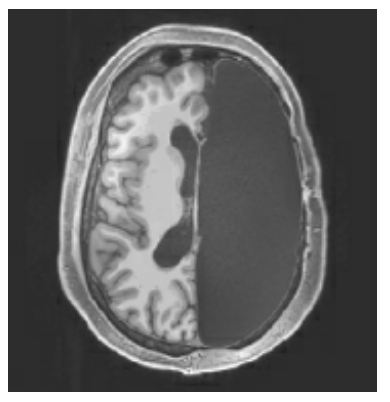
After just three months of physical and language therapy, Matthew was back to the same developmental stage before the surgery. Today, after many years, Matthew lives a normal life, with just a limp and not using the right hand properly. This happened because the brain rewired itself. The half divided into two: one responsible for the right part of the body and the other for the left. It took the form of a full, regular brain.
Another case is with the girl Alice. She was born with only the left half of the brain. But no one knew until she was three and a half years old! No abnormality was ever noticed. The parents only found out when she went for a brain scan due to having small seizures. The seizures were controlled by medication, and Alice had a normal childhood.
Here’s another analogy from the book. The brain works as the second possibility.

The countries of Haiti and the Dominican Republic share the Caribbean island of Hispaniola. Consider what would happen if a tsunami were to slam into the Dominican Republic and make it uninhabitable. One possibility is that the Dominicans would be erased from the map and Haiti would continue business as usual. But there’s a second possibility: What if the Haitians shifted their nation several hundred miles to the west, bigheartedly accommodating the Dominicans by shrinking their own territory and sharing what remained? In this case, thanks to neighboring generosity, the two nations would be harmoniously compressed onto a smaller, remaining bit of real estate.
The Reason Why We Dream
Ray Charles, Ronnie Milsap, Andrea Bocelli, Stevie Wonder. All of them lost their sight and are marvellous musicians — it’s not by coincidence. When a person becomes blind, the area of the brain responsible for the vision stops being excited. This results in other areas taking over the territory that was once occupied by the occipital cortex. Other areas, such as the ones responsible for sound and smell, expand and take up more real estate. Hence these senses become sharper. This process happens for other impairments as well. In the deaf, the auditory cortex ends up being used for vision.
After learning how the brain reorganizes upon losing a sense, you might ask — how long does it take for the brain to start changing and the areas to take over the sense lost?
It’s fast.
The researcher Alvaro Pascual-Leone experimented with measuring exactly that. He wanted to know the speed at which the brain applies such changes. He blindfolded sighted participants for five days and kept training them at braille. Day after day, the participants would show improvement. At the end of the five days, their brains were measured in the scanner, and it showed that their occipital cortex (vision) was activated when they were touching objects! After the blindfold was removed, the brain would come back to its previous state within a day. It was remarkable to see how quickly neural reorganization can happen.
But wait! That’s not all.
In another experiment, participants would have their brains scanned at the same time as being blindfolded. They would perform various touching tasks while having the brain mapped out. It was noticed that brain reorganization would happen as rapidly as in 40 to 60 minutes!
Considering how quickly the brain reorganizes, it’s suggested that dreams are a defence mechanism. When we go to sleep, our vision cortex finds itself at a disadvantage. If you think about it, it’s the only sense lost — we still hear, taste, feel and smell. It’s unfair.
The brain, to protect the visual cortex from being taken over, creates images and videos internally (the dreams), and we see with our eyes shut. This way, vision is safe.
Here’s a quote from the book:
We suggest that dreaming exists to keep the visual cortex from being taken over by neighboring areas.
Final Comments
Thanks for Reading. I hope you were impressed as I was to learn about brain plasticity. Our machinery is beautifully synchronized.
I was stunned to learn the reason why we dream. Not what we dream, but why we do when we sleep. I had never heard from such a perspective. It’s simple and compelling. Although it’s suggested / not proved, it’s got to be it.
Reference:
(affiliate link)


