
Boys Will be Boys Attitude Helps to Keep a Male-Dominated Society
Patriarchy and not science backs boys will be boys mindset
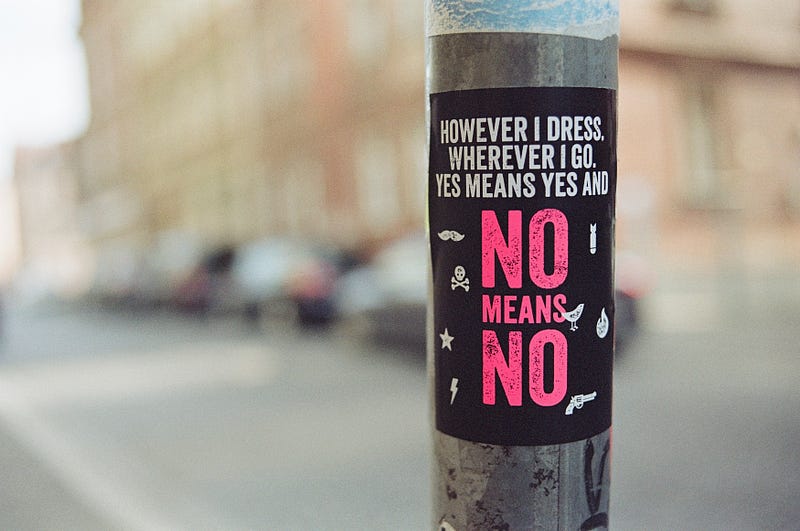
Katy joined an MNC as a site reliability engineer [SRE]. The SRE team was new, and she could choose whichever team she wanted to work with. Katy chose a team that worked in her area of expertise. On Katy’s first day, the team manager propositioned her. He used the company chat to convey that he wanted to have sex with Katy. Katy reported the incident to HR and what should have been the end of the matter turned out to be the beginning of an ordeal for Katy. The HR said, “even though what the team manager did was sexual harassment, it was the team manager’s first time. We will have a stern talk and warn the team manager, but the upper management sees him as a star performer, and they are hesitant to punish the manager. They see the incident as an innocent mistake.”
I am confused about what “innocent-mistake” means? Does the HR/upper management believe that the manager had no clue about the impropriety of his behaviour? Or do they view this incident from “boys will be boys lens”: Men by nature are short on impulse, nasty. It’s not the man’s fault, but nature has posited them to pursue a woman. They act inappropriately because nature has primed them for attracting a mate. It’s the woman who must be on guard.
What is risky behaviour?
When we colour everything that a man does with sex selection theory: men inappropriately behave because it’s an evolutionary imperative, we are encouraging men to harass women. We say men are more risk-taking because it increases their chances to mate, or as psychologists Michael Baker Jr. and Jon Maner explain:
Among men, risky behaviours have the potential for displaying to potential mates characteristics such as social dominance, confidence, ambition, skill, and mental acuity, all of which are highly desired by women seeking a romantic partner.
What is risky behaviour? Does it allow men to touch women inappropriately because risky behaviour attracts women: potential mate? Does it justify a man flashing a woman? Asking a stranger to join them in the shower is risky behaviour?
A study recruited people who were known risk takers in one domain (I.e., gambler, skydiver, bungy jumping); The study concluded that while a gambler may be willing to take more risk in betting, the gambler wasn’t more risk-taking in other domains like recreation or sports. Risk-taking in one domain doesn’t translate into risk-taking in other domains.
Phillippe Petit who walked on a piece of wire strung between twin towers and stunned the world by that walking act, during an interview said that “he is opposite of a daredevil,” adamantly declaring that “in no way, shape or form did he consider himself to be a taker of risks.”
Are men really more risk-taking?
So, is risk-taking a particular male feature? Studies have shown women to be as risky as men when the risk is related to a different domain. Further, when a person is willing to take risks in a particular domain, like gambling or bungy jumping, that person isn’t fond of more risks than the risk aversive. It’s just that the person perceives benefits to be greater than what they may lose when taking a risk in that domain.
Men and women risk-taking behaviour is akin, and where the risk-taking differs, the risk-taking differs because men and women view risk-taking differently. As the article puts it, “It’s just that when surveys measure risk-taking in terms of things like unprotected sex and motorcycles, women tend to demur, since those types of activities are either more dangerous for women (the unprotected sex) or less familiar to them (riding motorcycles).”
So, if risk-taking isn’t a male-oriented trait, why do we come up with absurd reasoning? Reasoning that men are bound to act risky, inappropriately because nature has implanted some features in men, and those features drive men to behave inappropriately, and men can’t do anything about it.
I guess it’s more about preserving a system where men can exploit women than men naturally inclined to behave inappropriately with women.
What are the traits of this male-dominated system?
Sexual objectification
We live in a world that normalizes the sexual objectification of women; women are seen as objects to gratify men’s sexual desire. The article describes sexual objectification; “ sexual objectification occurs when a woman’s body, body parts, or sexual functions are isolated from her whole and complex being and treated as objects simply to be looked at, coveted, or touched (Fredrickson & Roberts, 1997). Once sexually objectified, the worth of a woman’s body or body part is directly equated to its physical appearance or potential sexual function and is treated like it exists solely for others to use or consume.”
Movies, sitcoms portray women as objects, and we have got used to that idea. We think, “a woman is defined by her looks, what she wears, how she talks: basically anything outward.” We forget that women are human beings that have emotions, skills and are not just their looks.
Brit Marling shares her experience, “Once when I was standing in line for some open-call audition for a horror film, I remember catching my reflection in the mirror and realizing that I was dressed like a sex object. Every woman in line to audition for “Nurse” was, it seemed. We had all internalized on some level the idea that if we were going to be cast we’d better sell what was desired — not our artistry, not our imaginations — but our bodies.”
Power
Men who hold powerful posts have the getaway mindset. They harass women because they believe that they can get away with it. Further, men holding similar powerful posts choose to overlook the deviant behaviour of their colleagues. But they are more likely to punish any subordinate if they behave aberrantly.
“Power is enabling, and it is known to reduce empathy,” Peter Glick, a psychology professor at Lawrence University, stated. “It allows people to act on their impulses.”
Further, one will find more men than women holding key positions-gatekeepers of industries. They decide who should enter the industry, and even when one has entered, they still have to oblige requests of the gatekeeper. Harvey Weinstein was Hollywood’s gatekeeper: He could make or break an actress’s career. As Brit Marling puts it, “Weinstein was a gatekeeper who could give actresses a career that would sustain their lives and the livelihood of their families… They knew it. He knew it. Weinstein could also ensure that these women would never work again if they humiliated him. That’s not just artistic or emotional exile — that’s also economic exile.”
Aggressive
When society tells boys that they must be aggressive and ask girls out, society is setting up an unsafe environment for women. How many times we have heard that men shouldn’t cry or men are the tough ones. The male-dominated narrative does nothing but feeds the male ego. Along with feeding the male ego, the narrative nudges them towards harassing women.
Humans are much less controlled by their hormones than other species are. Not that man by nature is impulsive, risk-taking, and naturally inclined to chase women, but it’s the societal narrative, the patriarchal environment that encourages men to behave inappropriately with women. Unless we stop saying boys will be boys or condoning boys will be boys’ attitude, women will continue to find themselves at the receiving end.