
Boxes from Asia— Memories of Tears, Beauty, and Strengths
Asian Economic Crises and How Countries Survived and Rebounded
It was January 1998.
A few months before that, Thailand became the first country in Asia to collapse under the weight of its debt and a depreciating currency.
Thailand was not only the favourite destination for tourists but also for foreign capital. At that time, the country took in a lot of hot money, often in short-term bank loans. The country boomed but was overheated. As a result, the currency became uncompetitive as imports continued to grow faster than exports. As the Thai companies had borrowed a lot of money in U.S. Dollars, a falling Thai Baht meant the companies had to earn a lot more Thai Baht to repay one U.S. dollar.
Unfortunately, the woes of Thailand spread to other Asian countries — Indonesia was one of the victims in addition to South Korea and the Philippines. It was a domino effect, one falling after another. These countries needed rescuing by the International Monetary Fund (IMF).
Meeting with the “Royal Family”
Indonesia was in grave danger of collapsing when its exchange rate started to decline rapidly. Owing to its large U.S. dollar debt, the country ran out of foreign reserves, and the companies could not afford to repay their debt. The currency of Indonesia, the Rupiah, fell by 40% within a few months.
The rescue came in from the IMF in January 1998, but the country had to fulfill stringent conditions to strengthen its finances. The Rupiah kept falling.
I was working as a fund manager in a small firm, and because of a connection, we were invited to fly to Jakarta, Indonesia in January 1998 to consult the country on what to do with its currency.
I still remember being chauffeured “secretly” to the house of one of the President’s sons to have a meeting with him. I was thrilled because I could meet the “royal family” in their house!
As the currency was depreciating a few percentages and sometimes 10% a day against the US Dollar, everything in Rupiah became very cheap to us.
While sadly the Indonesians were suffering because of the country’s near-default situation and recession, we were enjoying meals and buying souvenirs like happy babies!
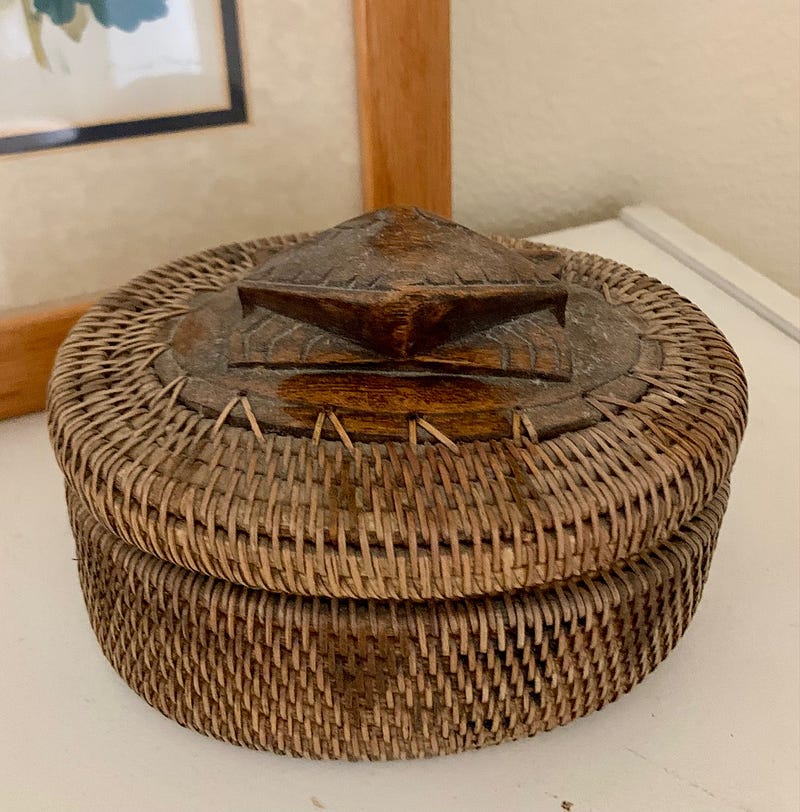
I must have bought the above hand-woven basket for about a couple of dollars. It is a famous Lombok Island specialty, and the basket was hand-made with reed grass, sourced locally. There is a wooden turtle on the lid, and you can see the basket is going to last and be useful for a long time.
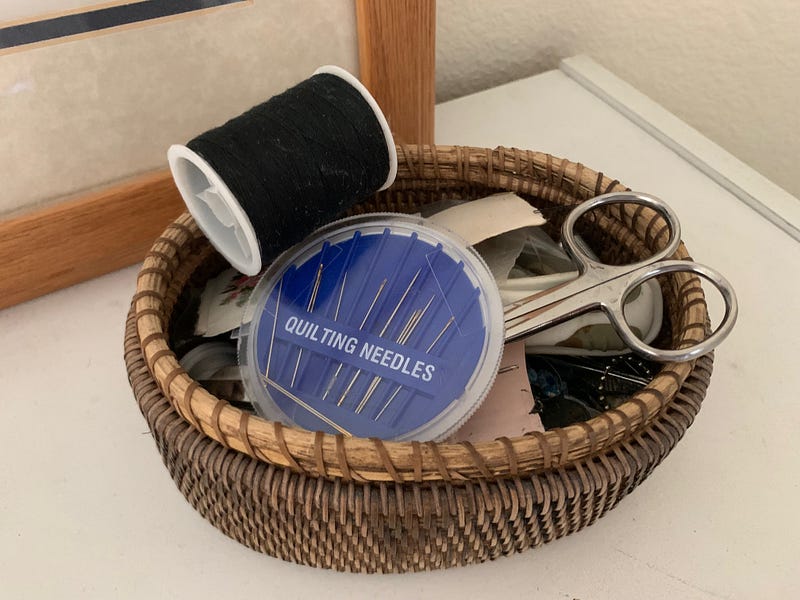
We kept waiting longer to exchange our US dollars as we could buy more local goods. Locally produced goods prices did not move as fast as the inflation rate. I bought more.
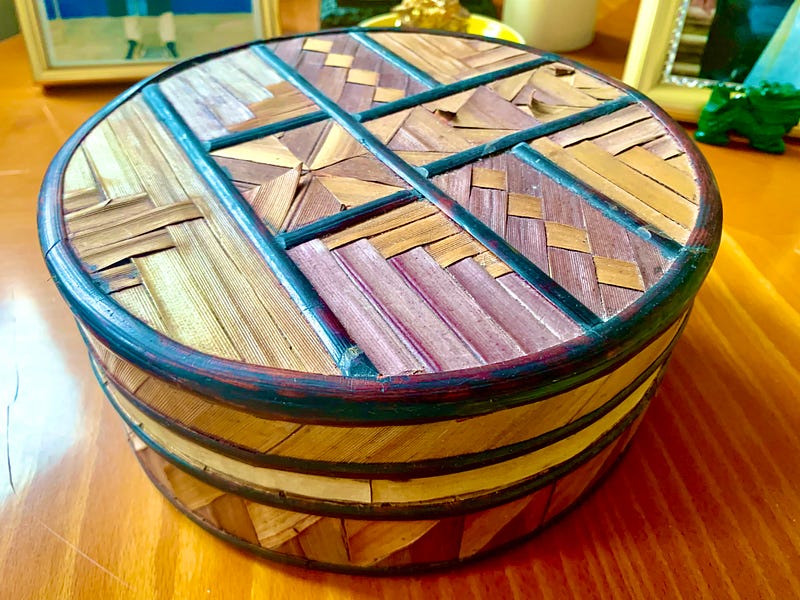
This was another hand-woven basket with a diamond pattern from Lontar Island, Indonesia.
I bought a few more locally made clothes and a pair of dressy Christian Dior shoes (which I have never worn, unfortunately).
Foreign tourists felt everything was a bargain, but the Indonesians were in tears. As tourists, we could help by spending and helping them earn more money.
A few months later, even the long-running government fell. People could not stand the corruption and pain any more.
A Different and Better Time in Seoul, South Korea
As mentioned, Korea suffered from similar problems as the other East Asian countries. The companies borrowed a lot of short-term debt and attracted a huge inflow of foreign money. Just as quickly as those money came in, they went out when foreigners panicked. The country used to grow 7 to 8% in real terms, but in 1998, the country contracted almost 7%.
Its recovery was just as dramatic. I finally visited Seoul for the first time in the early 2000s after the country returned to its growth. Seoul was a favourite destination for Asian people due to the Korean exports of drama, its delicious food, and its fashion and beauty products. It is also a technology powerhouse.
In my investing job, I spent time visiting companies we invested in. I went to visit the Korean Aluminum Corporation and learnt more about their business and financial situation.
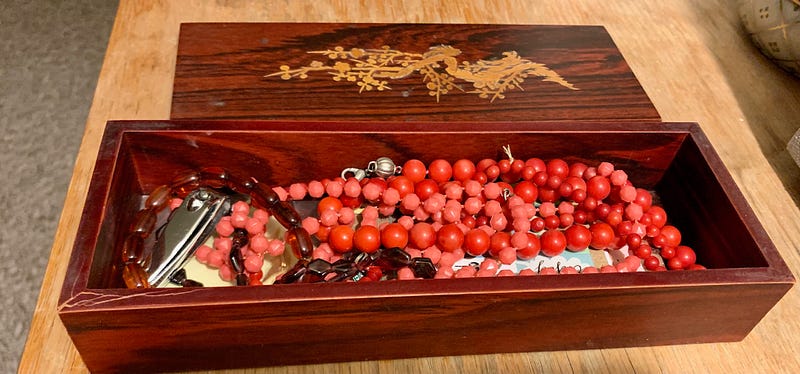
After the presentation finished, the Koreans presented me with a souvenir, which is the beautiful wooden jewellery box you see below.
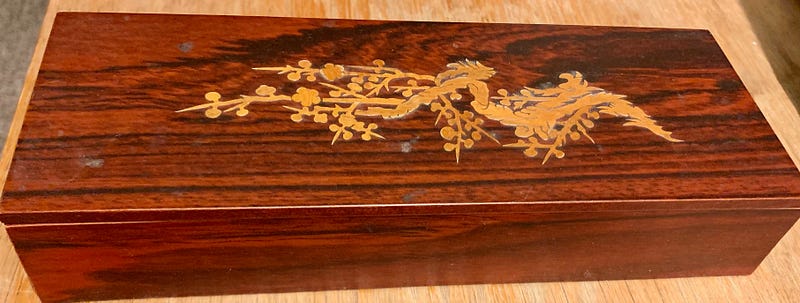
The box is perfect for storing necklaces and small utility items.
A couple of years later, another Korean company, the Korean Electric Power Corporation, came to San Francisco to visit American fund managers in a roadshow.
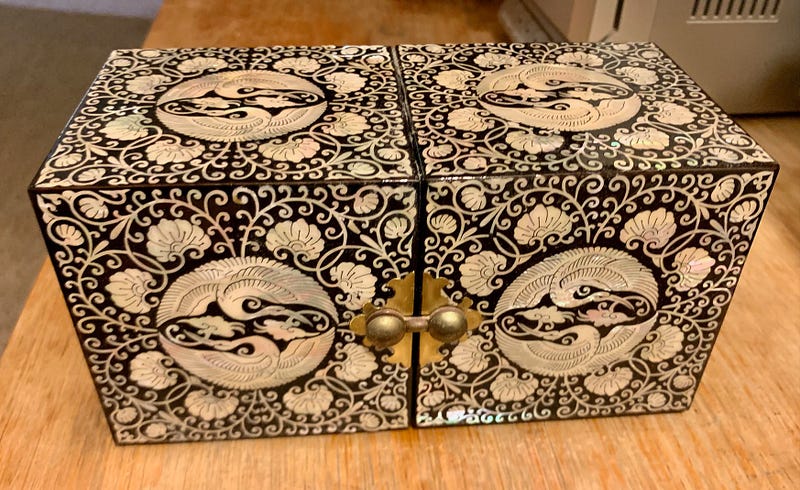
Before they left, the Koreans surprised me and took out a souvenir from their bag, and voilà, it was a most beautiful jewellery box.
I later found out the traditional Korean jewellery box is made by najeon-chilgi, a Korean technique that involves inlaying thin layers of mother-of-pearl onto lacquered surfaces.
Mother-of-pearl is the rainbow-like material found in the interior of the seashells of abalone, clams, etc.
A coat of lacquer was applied to the wood base. Then a hemp cloth covered the surface, adding more lacquer coating. The process was repeated several times before inlaying the mother-of-pearl. Finally, a top coat of lacquer was applied.
The resulting surface shimmers and is resistant to moisture and decay.
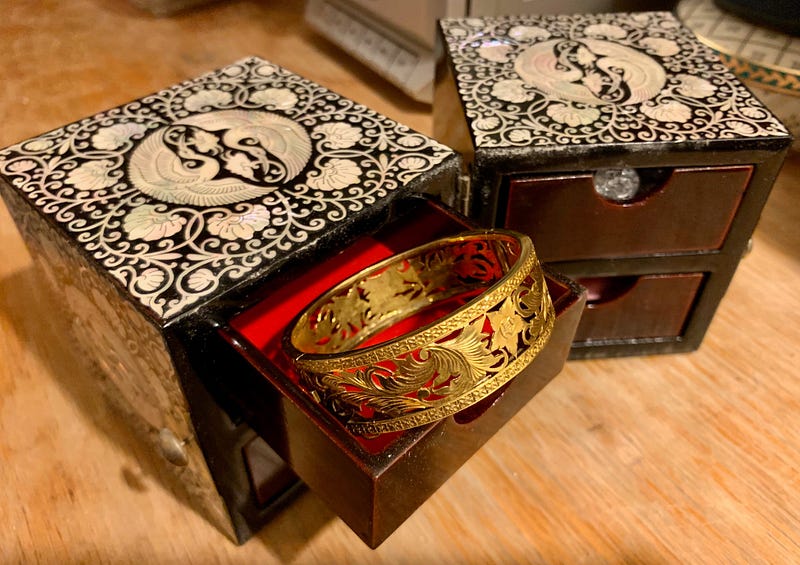
With gratitude, I stored my late Grandma’s jewellery gift, a golden bracelet given to me when she passed away.
These baskets and jewellery boxes have been my favourite items in my home for many years.
I found myself treasuring the boxes not only because they are beautiful but also because they represent the resilient and hard-working people, the creators behind them.
The local people suffered greatly under the Asian crises and likely did not deserve the harsh conditions imposed on them due to the imprudent behaviour of their governments and companies.
But the people persevered and the country came out much stronger. None of the above Asian countries cratered during the Pandemic.
I love this quote:
Do not judge me by my success, judge me by how many times I fell down and got back up again.~ Nelson Mandela
This article is a response to the October challenge created by Anne Bonfert in Globetrotters on souvenirs.
I also love these 2 fellow writers’ stories.
Michele Maize spooked us with her entertaining and interesting story of the souvenirs of “ghosts”.
Also, I enjoyed Mario López-Goicoechea’s collection of unique bookmarks. Like him, I am an avid bookmark collector albeit from my local library!
May you always find strength no matter what situation you are in. Thank you for reading!
If you like this story, please subscribe here to get them delivered to your inbox.


