
Bottled Light, Uncorking Happiness
GiaB prompt #15 illumination

When I first saw the GiaB prompt of the fortnight – Illumination – in this article where Victor Sarkin talks about fairy lights in a glass-conservatory-turned restaurant, in the UK, I thought,
Oh. There’s no way I could talk about anything as beautiful as that. This is India, there aren’t any such lighted restaurants here.
Then my mind turned to darker thoughts still. Nights in Chittaranjan, West Bengal, spent without electricity. The saying was that the first English word children in Chittaranjan learned was “load-shedding”.
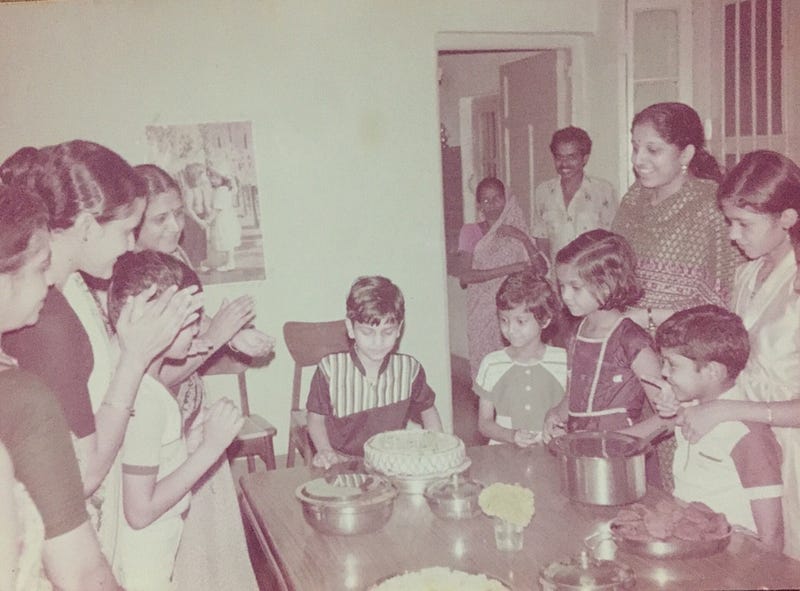
Chittaranjan is the Indian locomotive-making town where I attended nursery and junior school in the early ’80s. Even today, my brother and I are experts at preventing the patch that the melting wax from a candle makes when it is allowed to fall to the floor.
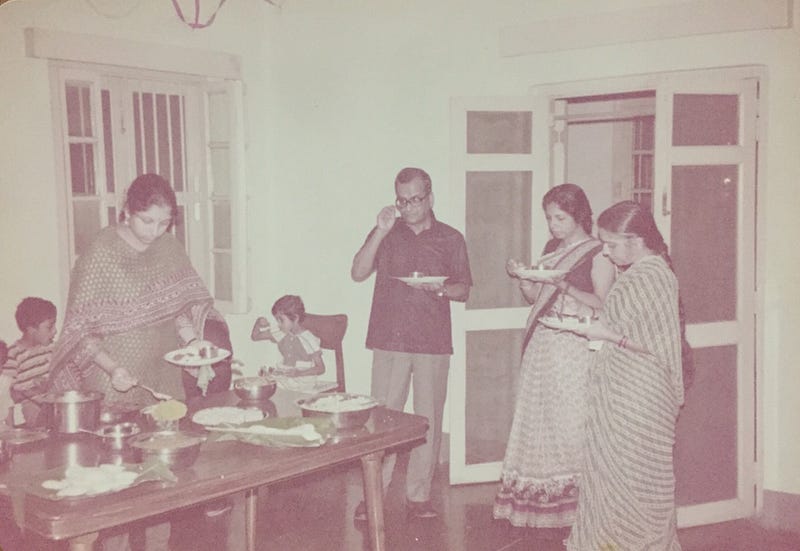
We’d have huge arguments about whether or not the melting wax had any fuel in it, and if it could be melted back into a candle with a wick. This argument is still unresolved.
My mind rebelled at the thought of illumination for decoration, when we’d spent six years of random nights in the dark. Not to mention the humidity without a ceiling fan.
Then I looked at my March calendar. The third of March is the day when my city Jamshedpur celebrates its Founder’s day.
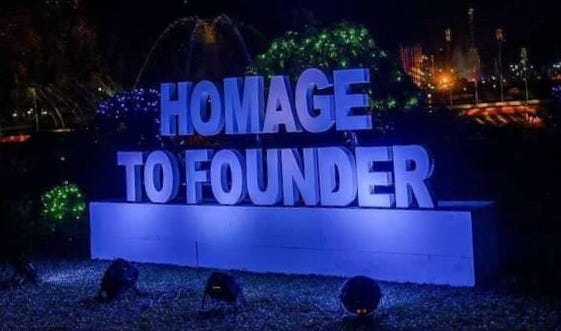
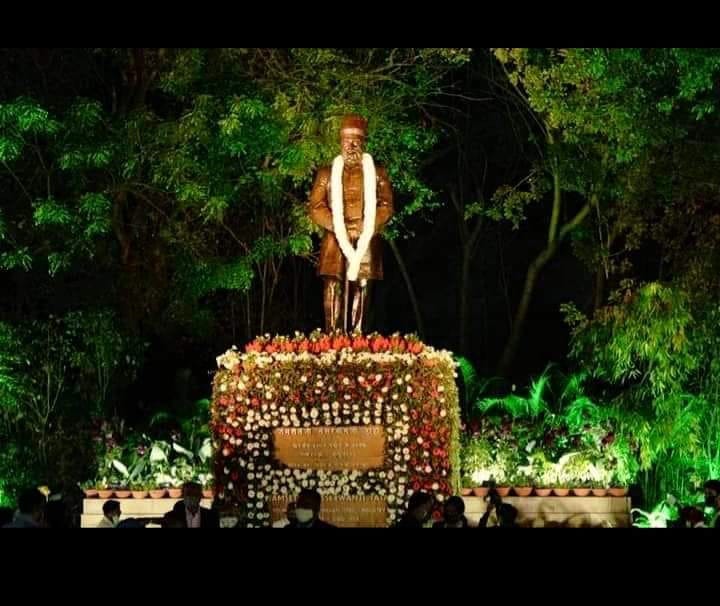
The founder is Jamsetji Nuserwanji Tata, and the city is named after him.
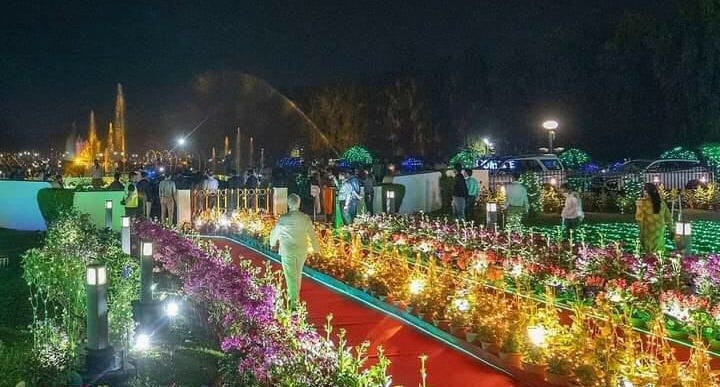
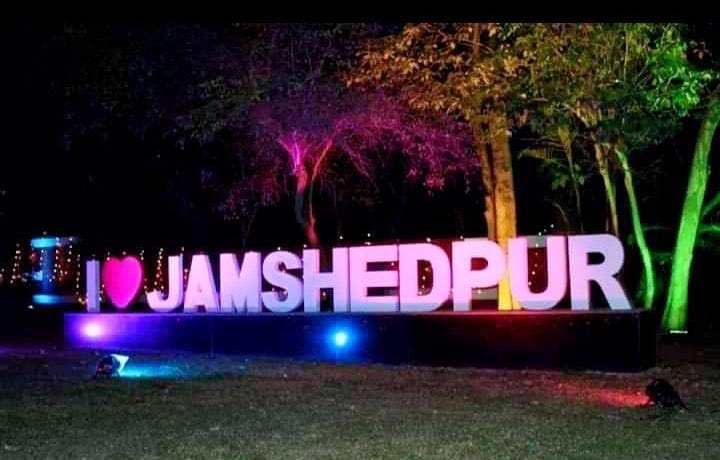
But rather than talking about instances of illumination for huge corporate and town celebrations like for 3 March in Jamshedpur, or even our Diwali festival of lights, let me take you to an Indian wedding. Here’s my Illumination story.
Illumination for the darkness within
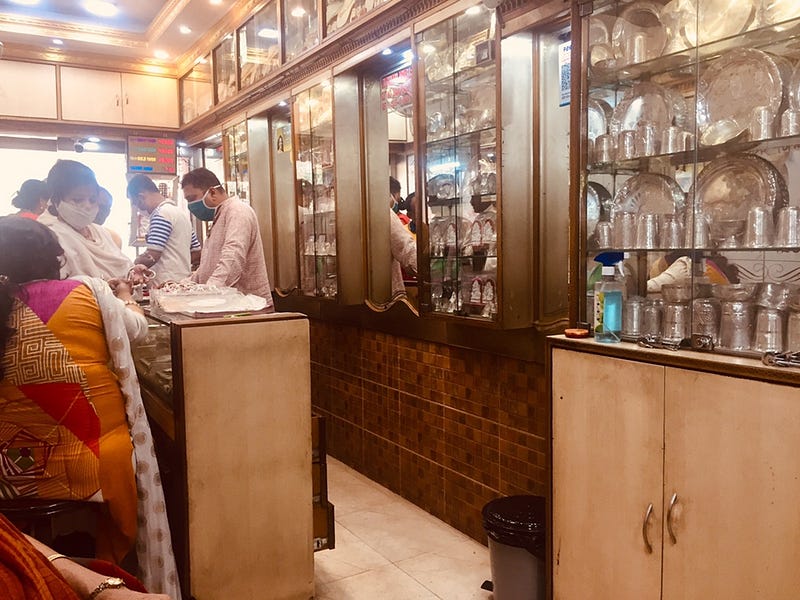
Here’s a crowded gold and silver smith’s shop. This isn’t even a posh part of town. The rush is because of the ongoing wedding season. Silver and gold are common wedding gifts for the bride and groom.
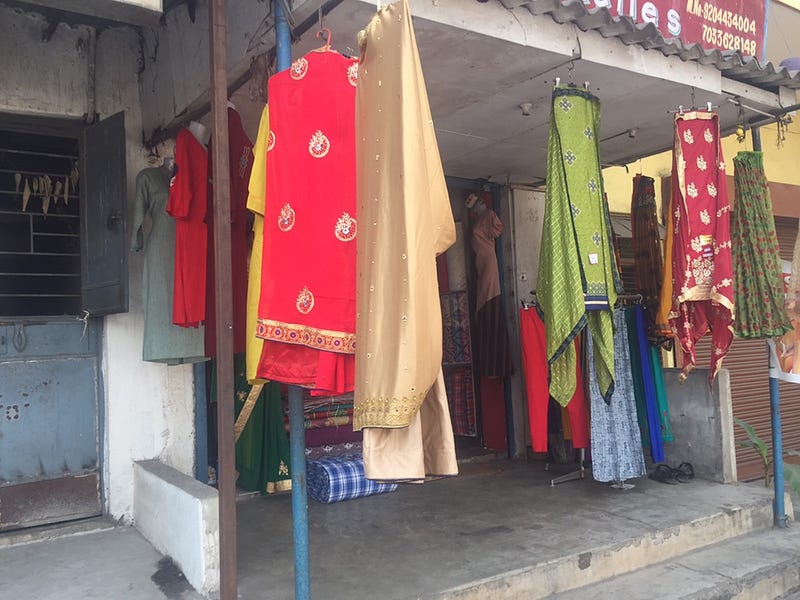
The reds hanging from this store also signal Indian bridal colors.
So? What’s that got to do with illumination?
Well, a prominent part of the wedding is when the groom comes to the bride’s house for the wedding. He comes on a white horse, and nowadays because of the lack of white horses, the groom comes in a white car.
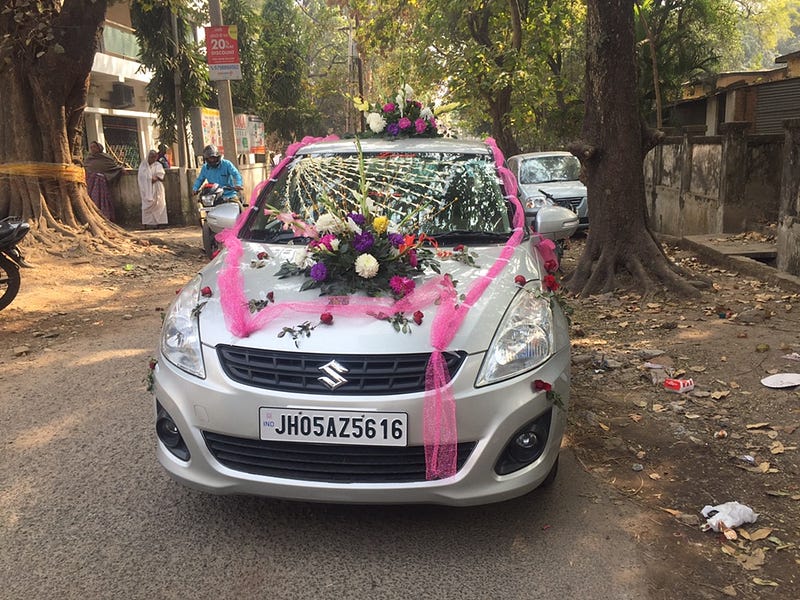
This is called the baraat. It is a procession of dancing people, who dance their way to the place where the wedding will be solemnized/celebrated.
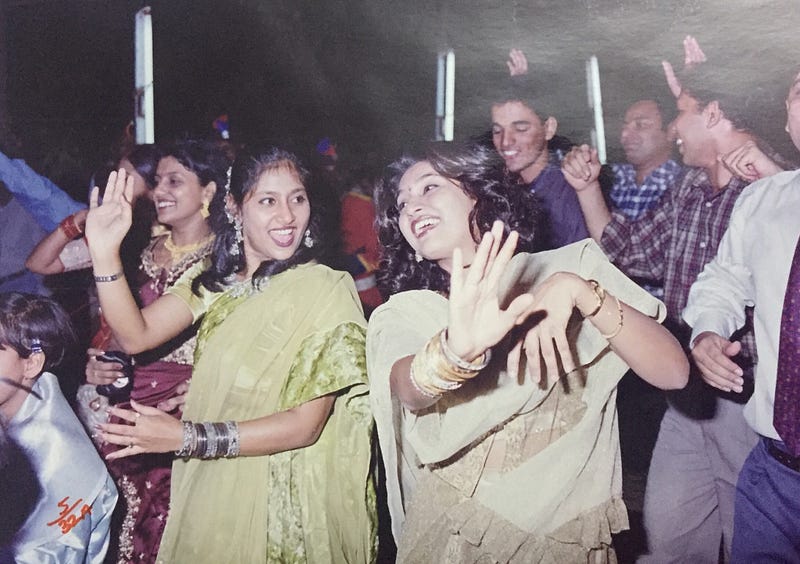
The crowd dances to music, played by a marching and drumming, pipe and trumpet playing band of musicians who play the songs commonly danced to at weddings.
The procession is lit up by women who carry lights on their heads. They provide illumination.
You can take your rich-poor divide and allegations of unfairness and go to town with them.
Fact is: There’s someone in India, who is right now going to work, to hold on her head, a pot of light, for somebody else’s wedding.
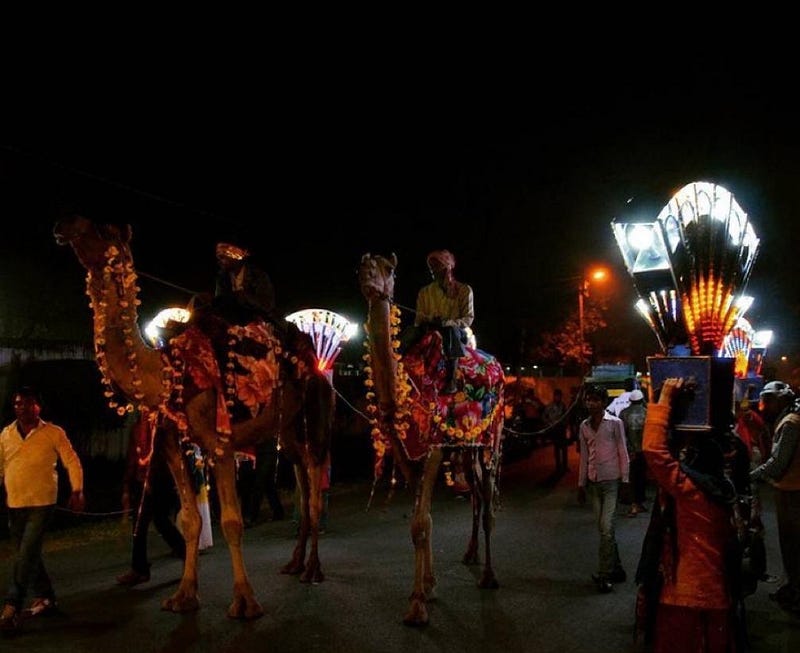
They don’t even go to therapy. They’re actually happy to be paid whatever they get, for the job of holding those lights.
Unlike other people at the wedding, the musicians and the women holding the light pots, aren’t invited to the wedding feast, which isn’t until much later. So they don’t even get to eat as well as the cooks do.
All they do is provide the light.
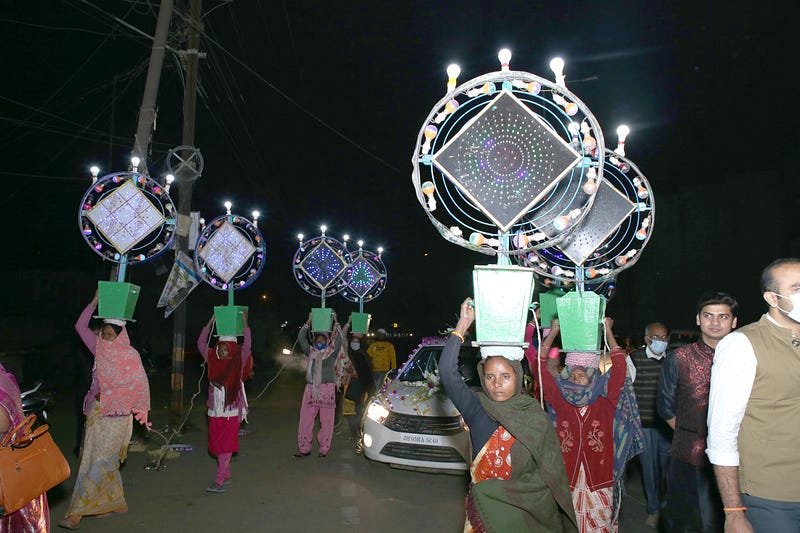
So next time you’re feeling discriminated against, remember this picture, of what you don’t do for a living.
It’s illuminating.
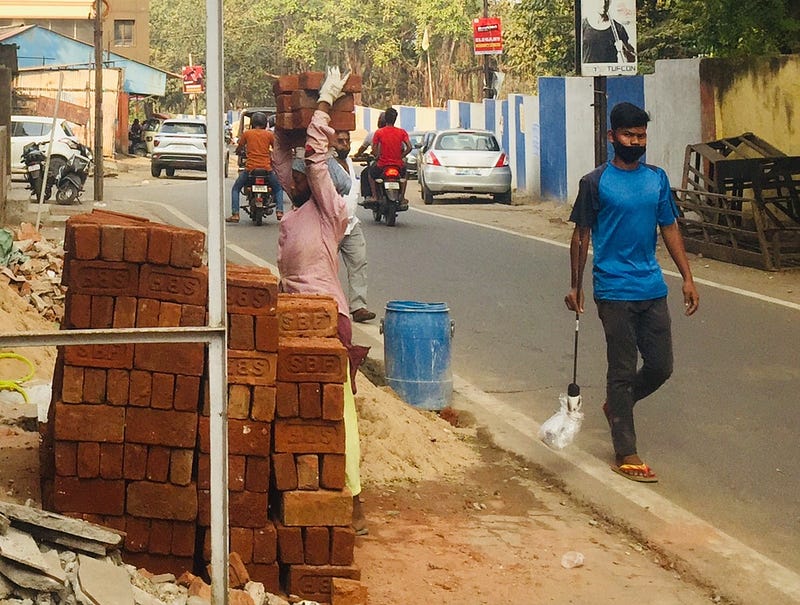
These women carry the lights as matter-of factly as their sisters carry bricks.
I tag Jehan Senai Worthy, Vinay Mahato, Bleeding Heart Liberal Marine, İpeksu Durmaz and R. Rangan PhD to write about Illumination as per the prompt guidelines below.


