
Boris Johnson’s ‘New Deal’ Falls Short of Expectations
As Britain’s economy falters, Boris looks to Roosevelt for inspiration
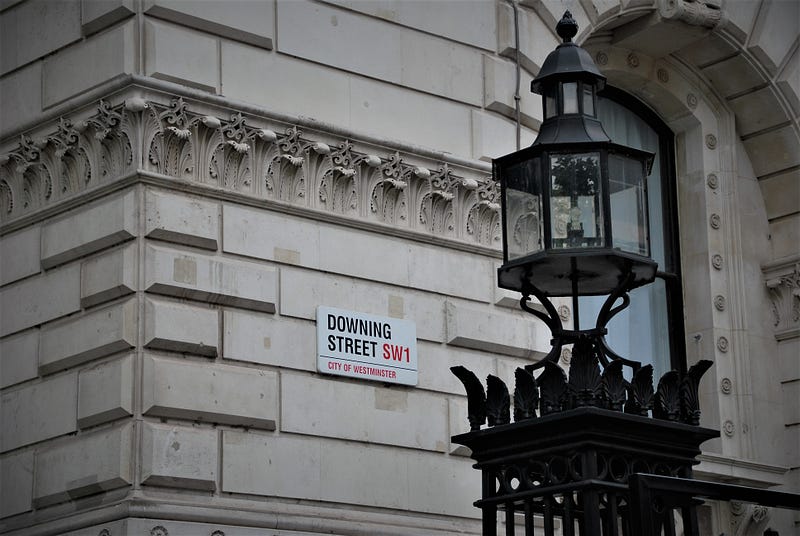
As Britain begins to slowly thaw out its post-Covid economy, Boris Johnson has taken inspiration from a perhaps unlikely hero to spur on the country’s economic recovery. Johnson, long known for being an avid admirer of Winston Churchill, has instead looked across the Atlantic for economic inspiration — invoking the memory of Franklin Delano Roosevelt and his New Deal program of the 1930s. Speaking in Dudley at the end of June, Johnson unveiled his “build, build, build” infrastructure plan, which he hopes will provide an economic boost to those areas of the UK hardest hit by the pandemic.
Both Johnson and his cabinet showed little hesitation when drawing parallels between the scheme and FDR’s own New Deal. Boris himself proudly proclaimed that “This is the moment for a Rooseveltian approach to the U.K”, with government minister Michael Gove praising FDR’s New Deal as being able to “save capitalism” in the United States and having “set his country on a course of increasing prosperity and equality of opportunity for decades.”
Without a doubt, the UK government undertaking a grand infrastructure project in the wake of a global crisis certainly draws similarities with FDR’s own efforts to combat the Great Depression of the 1930s. However, the willingness of a Conservative government with a long history of austerity to engage in vast public spending has been called into question — and on closer inspection, Johnson’s plans fall far short of his lofty rhetoric.
Boris and His New Deal
The decision to launch the scheme in Dudley, a market town in the West Midlands, was no coincidence. Dudley, like many areas of the Midlands and Northern England, had traditionally been a working-class Labour voting constituency — but was won by the Conservative party in their 2019 election landslide. Boris Johnson has pledged to ‘level up’ many of those areas outside of London that had found themselves left behind economically, with a particular focus on infrastructure and transport links in the northern parts of the country. As the economic fallout of the coronavirus pandemic becomes increasingly apparent, it was again these areas that Johnson hoped to target through his New Deal.
The plans themselves focus around a £5 billion investment into infrastructure projects and public works — with the funds used to refurbish hospitals and schools, expand prison capacities, increase broadband connectivity and rebuild the UK’s public transport networks. The scheme would also alter the planning system to make building new houses easier and reduce the amount of red tape put on businesses that wish to change their premises (such as shops converting into restaurants). Through a focus on infrastructure, Johnson aims to “fuel the animal spirits” of the economy and create new jobs in the aftermath of the UK’s Covid induced economic collapse. However, whilst on the face of it pouring money into schools and hospitals may sound like a quick economic boost, Johnson’s New Deal may well offer more bark than bite.
Too Little, Too Late?
Although this infrastructure package has been promoted by Johnson as a 21st century version of FDR’s New Deal, the plans fall far short of the scale and ambition shown by Roosevelt in the 1930s. Johnson’s commitment of £5 billion represents about 0.2% of the UK’s GDP — in contrast, Roosevelt’s New Deal reached 40% of pre-depression US national spending, emphasizing the gulf between the two measures. Furthermore, Roosevelt’s New Deal created 69 new government agencies to oversee the project, and looked to take on large scale public works — including the Hoover Dam and the Lincoln Tunnel in New York. By contrast, Johnson’s policy would target “shovel ready” builds, primarily focusing on minor refurbishments and small scale improvements to existing infrastructure.
As if to underline the modest nature of Johnson’s own scheme, the German government have themselves launched their own €130 billion coronavirus response plan — which would include €10 billion for public infrastructure and housing (almost double the amount pledged by the UK government). Far from being a New Deal for the British public, it would appear that the Prime Minister’s “Rooseveltian approach” is in reality little more than a drop in the bucket.
Additionally, after a decade of austerity under successive Conservative governments, the money itself is not necessarily even new. According to a report by the Institute for Fiscal Studies, British families today are still around £1600 worse off than in 2011 when it comes to out-of-work benefits — with Britain’s public sector still reeling from a decade of cuts under both David Cameron and Theresa May. With this in mind, Johnson’s flagship ‘investment’ is instead an attempt to plug the gap left by years of under investment in infrastructure by successive Conservative governments.
Ultimately, if FDR’s New Deal is to serve as the inspiration for the UK’s post-Covid recovery, Boris Johnson’s plans have fallen far wide of the mark. Little of the scale, ambition and energy seen in Roosevelt’s New Deal can be found in the scheme laid out by the Prime Minister this month — with the grand public works of 1930s America sitting in stark contrast to Johnson’s focus on school refurbishments and planning regulations.
However, one thing is for certain — austerity, at least for the time being, appears to be well and truly over in the UK. Boris Johnson’s decision to draw parallels between himself and Roosevelt may represent a push by the Prime Minister to move more to the left on economic matters, particularly at a time when the British economy faces its deepest threat in living memory. But to do so, any future policies must show far more ambition to truly represent a “Rooseveltian” approach to the UK’s economic recovery. Unfortunately for Boris, his ‘New Deal’ has offered much in the way of rhetoric, but little in terms of actual substance.


