
Travel Adventure
Boots, Hearts, Climbs and Summits: The Power of Active Travel in East Africa
Globetrotters July Writing Prompt
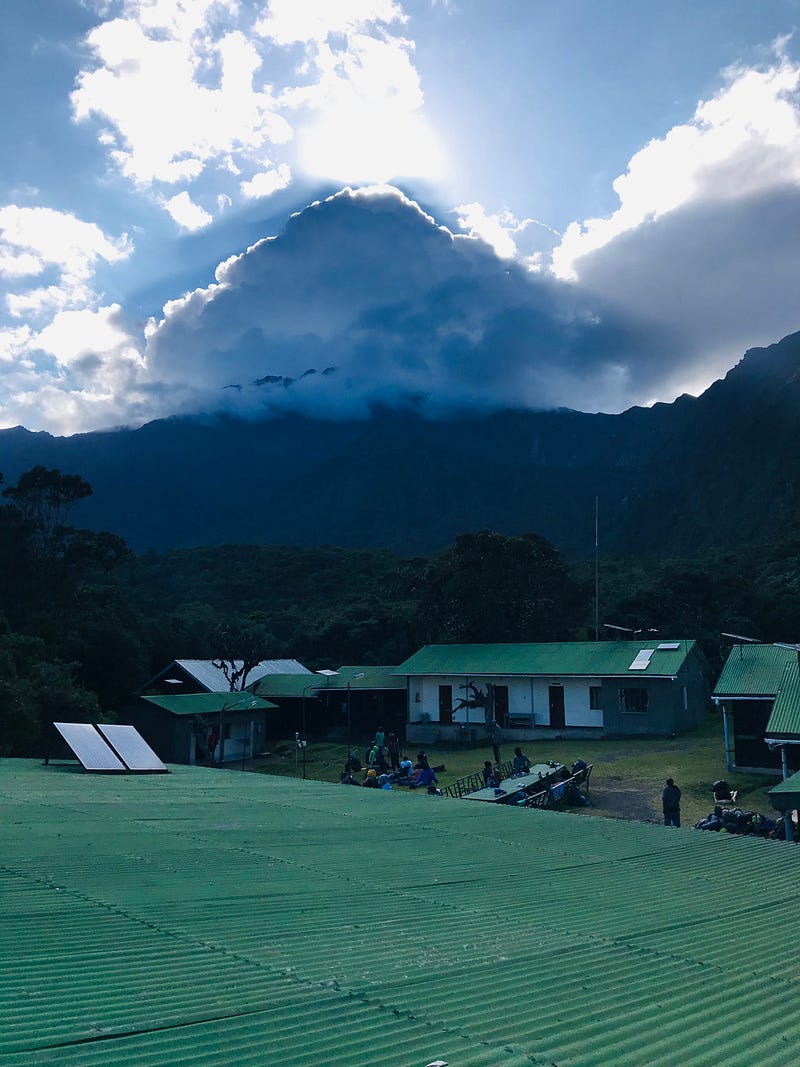
When you get a chance to climb a mountain in Africa, you take it.
Most people would automatically settle in for a story about Kilimanjaro at this point. I always harboured ambitions of climbing the Empress of Northern Tanzania, but as yet it’s just that.
The international school that I worked at for three years in Dar es Salaam provided outdoor education trips for all students in February of each year. Every second year a group of teachers would lead Grade 10 to 12 students up and down Africa’s highest and most fabled peak.
I say lead, but it was really the local porters and guides that do all the work.
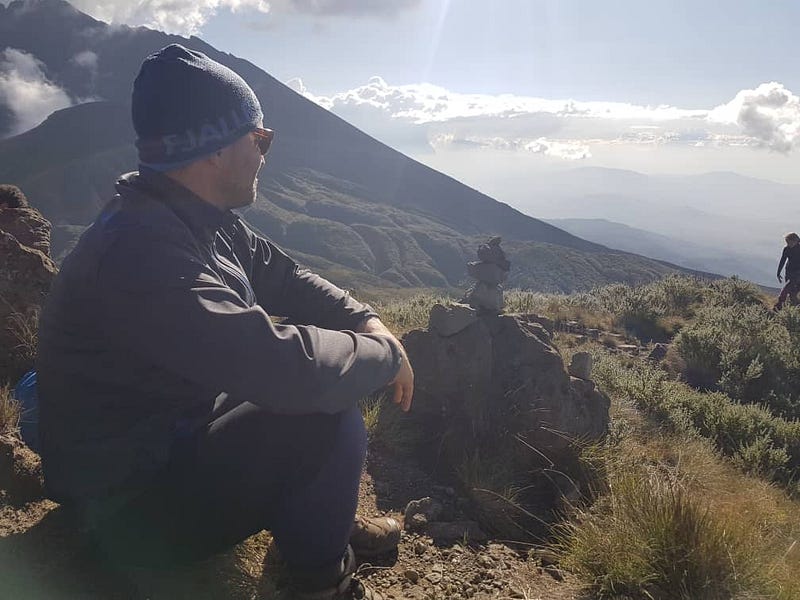
I’d like to think that if I had stayed there longer, eventually I would have gotten to Uhuru Peak. However, circumstances conspired to take me up Mount Meru — Tanzania’s third highest peak — and about 70 kilometres west of Kilimanjaro, instead. I did it twice, leading groups of Grade 7s and 8s up and down in one piece.
Again with the leading. None of it would have been remotely possible without the porters and guides — 36 of them in all for 20 students and 6 teachers — doing most of the carrying and all of the work. There was something distinctly colonial about that dynamic. I might come back to that later.
“Because it’s there”, said George Mallory when asked why he was about to climb Mount Everest in 1921.
That may have been a good enough answer, that few would have been able to comprehend. I think he was referring to the fact that it was a challenge that had to be met. Once presented, it couldn’t be shied away from.
Our group’s climb was not Everest and not even Kilimanjaro. But it was still meant to be a challenge. A way for young people to be pushed and to push themselves. A chance to be in the vast outdoors. An opportunity to train and prepare for something big, to organize themselves and be able to overcome fears and mental barriers. A time to see a different part of a country that most of them would only spend a few years of their lives in. A springboard for future outdoor adventures and possibly a summiting of Kilimanjaro one day.
The realization that, “if I can do this, then I can do….”, is a powerful weapon to have in one’s own arsenal of resiliency on the way through youth and into early adulthood and later on as well.
So yeah, we climbed it because it was there. But we did it for so many more reasons than that.
A morning gathering in the school parking lot. Restrained excitement between climbers and their teachers. Preparations, education, planning and training had been going on for months already. It was now go time. A smattering of parents, milling about and for some reason nervous about what was to come for their children.
A bus ride to Julius K. Nyerere Dar es Salaam International Airport to the east of the city. An hour-long flight to Kilimanjaro International Airport between Moshi and Arusha in Northern Tanzania. Another bus ride to the first and last night lodge, where the last fluffy sleep and last hot shower for a few days would be provided.
An early morning departure to the gates of Mount Meru National Park, checking in and meeting up with our ranger guides. Boots tightened, packs on, hiking poles sized correctly, water bottles full and pockets stuffed with trail mix, off we went through the grasslands, through a herd of water buffalo, the approaches to the climb ahead.
That first half an hour was a good way to get used to the packs, to the pace, to the generally positive vibe that everyone had a part in creating.
And then it was up. And up. And the up would continue for two days before there was any talk of down.
It was a solid six hours and a climb of 1000 meters to the Miriakamba Huts at 2500 meters. There were frequent enough stops along the way to refill our water bottles and drink in the view. Kilimanjaro did indeed loom silently in the distance, as if to say “do this first, then come to me next”.
The traffic was busy on the trail. Our porters dashed ahead, while others came the other way. Time is money to them and the more times they can go up and down, the more income they can generate. But they cannot push themselves too hard. One twisted ankle or broken leg and that is the end of their livelihood. It should be noted that many of them are doing this in running shoes and I saw some in flip-flops.
Did I mention the somewhat Stanley and Livingstone nature of our adventure? It was made most apparent to me when, about halfway through each day, a halt was called for lunch and everyone threw off their packs and flopped down where they were, already exhausted. Within five minutes, the porters who had earlier quickly moved ahead of us, appeared with plates of hot lunch that they served to us. Whoever needed more water, just had to ask and the men carrying huge jugs of it were there with it.
The students had to be made to recognize this and understand that yes, our presence there provided people with jobs and income. But at the same time, that same presence and ability to do this climb while someone else carried the food and water was one of privilege.
It was more of the same the next day, though far more out in the open under the hot African sun. Some had to deal with the altitude on the length switchbacks, while others were unfazed by it. It was another six hours that day to the Saddle Huts at 3500 metres, where we’d overnight as the jumping-off point for the summit the next morning.
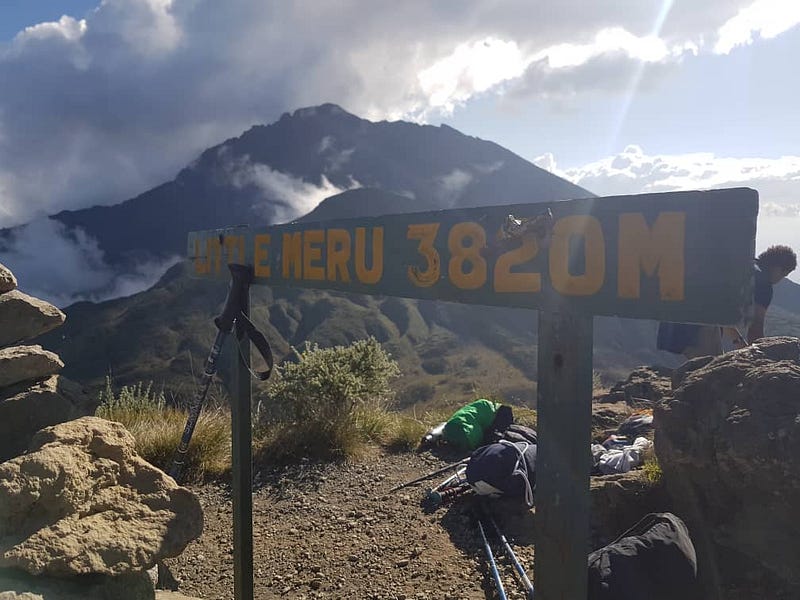
A lunch break and a chance to take the packs off, before a relatively easy late afternoon climb to Little Meru at 3820 metres, before coming back down for dinner and discussion of challenges we were facing, deal with a few emotional breakdowns from one or two and the importance of supporting each other for what still lay ahead.
A 2 am wake up, a gulp of hot chocolate and a 2:30 am departure for the long slog to Rhino Point, a plateau at 3850 metres. We were a silent trail of headlamps that were just putting one foot in front of the other. But we were a little too fast and reached the plateau about 30 minutes before sunrise and this meant waiting in a chilly morning glow, again with Kili clearly outlined in the distance and the sky grew lighter.
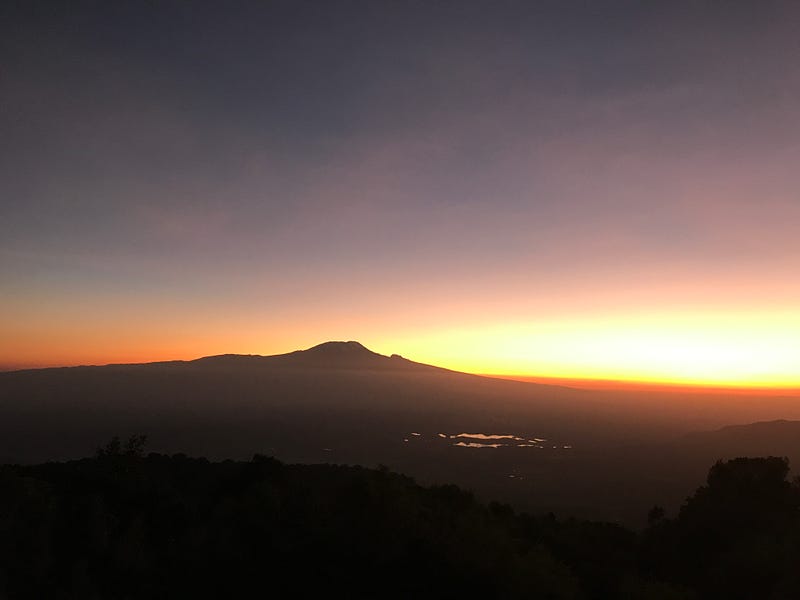
It is definitely true what they say about the last hour before sunrise being the coldest part of the night.
From Rhino Point, one can climb higher, to the top of Mount Meru at Socialist Peak at 4600m, but that would have to wait for another day. From here, it would be all downhill, and while that is difficult enough on the body, everyone knew the hard part was over and the journey could now be enjoyed more than just persevered.
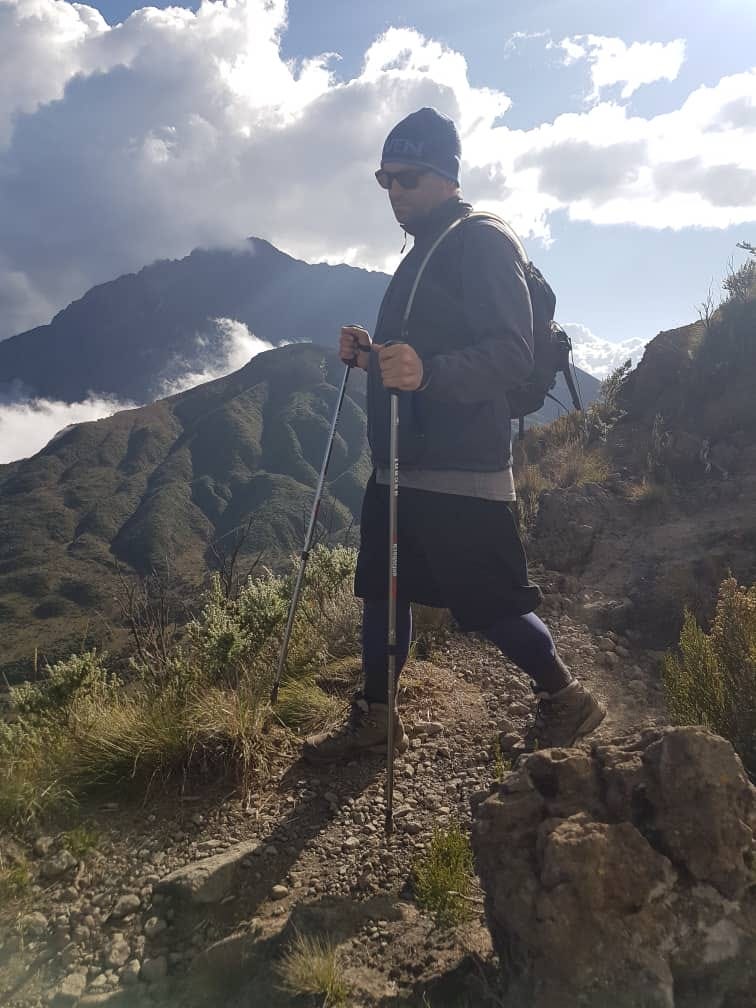
Back to the Saddle Huts for breakfast and to pick up the rest of our gear, and then back down to the Miriakamba Huts from whence we had come the day before. The excitement and exuberance at having accomplished their task and overcome the challenge was obvious in the kids. I wonder if they knew that it would serve them for the rest of their lives.
I wonder if they still think about that accomplishment when faced with a challenge now.
The rest was easy, the rest was fun. High fives all around for a job well done. I don’t live there anymore, and most of the students in the group probably don’t either. But outdoor adventures like this one will be one of my most enduring memories of the three years that I was fortunate to live in East Africa.
Ready for some more action and adventure from around the world? Well, here are two from my home province of British Columbia on the west coast of Canada.
Claire Elizabeth Levesque is in the trees in a forest near Vancouver
Rover Dave hikes in mountain wilderness north of Vancouver


