Life Lessons
Boomer Drags 5th Graders Into the Computer Age
Remember when Apple donated 9,000 Apple II computers to classrooms in California, that’s where I’ll begin
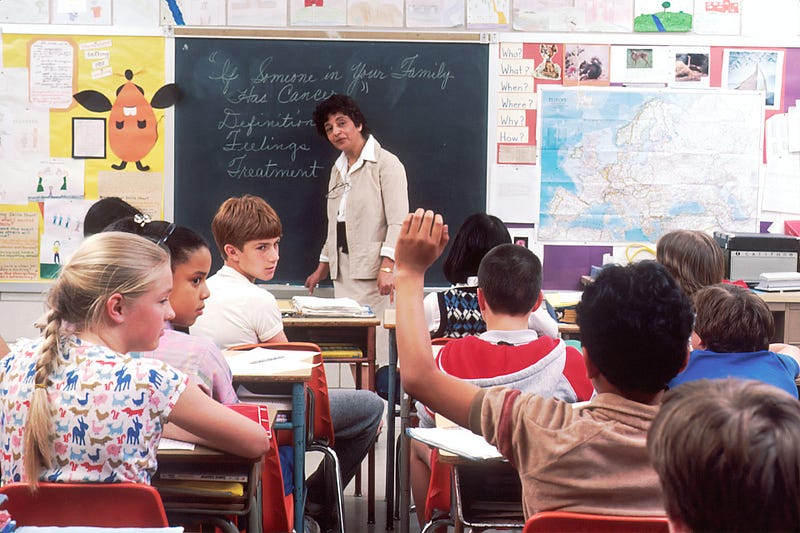
In 1982 Apple donated 9,000 AppleII computers to classrooms across California. Seven years later, I was assigned a position to teach a fifth-grade class.
One lone AppleII computer sat in the corner of my new classroom.
My first computer was just a couple of years old. It was a PC, no hard drive, just two floppy disks — one for the operating system, MS-DOS and one for the program. These were the original five and one-quarter-inch flimsy, floppy disks, not the three-and-a-half disks that came later. There was no mouse, no sound, just a grayscale monitor and a dot-matrix printer with tractor feed paper.
Does anyone remember those days?
The summer before my 5th-grade assignment, I sat in the classroom planning the year. I kept trying to come up with a use for a single computer in a classroom with thirty-two kids. Back then, the best school use for a computer was writing — very little educational software existed.
Before the computer, re-writing and revising meant retyping the entire piece. For me, retyping always introduced new errors and mistakes. Retyping was a huge deterrent to revising, yet I knew that revising was the key to better writing.
The more you revise, the better you write. Would you revise today if you had to retype your entire article over and over with each revision? But that was editing before word processing — drudgery.
My emerging plan was to rotate my students through a regular schedule of “Learn to Type,” the first typing tutor for kids. I could also use computer time as a reward with programs such as “Oregon Trail” and “Freddy, the Fish.”
Younger generations don’t realize the revolution in the writing process when the first mouse was mated to a word processor. When using a mouse, entire blocks of text could be rearranged, words exchanged, and sentences removed or replaced for clarity and impact.
This is what I wanted for my 5th-grade writers — liberation!
By chance, I met a university computer tech named Darryl. He told me about the AppleIIGS computer — GS stood for graphics and sound. This was Apple’s first color computer, and it came with a mouse, quite revolutionary at the time.
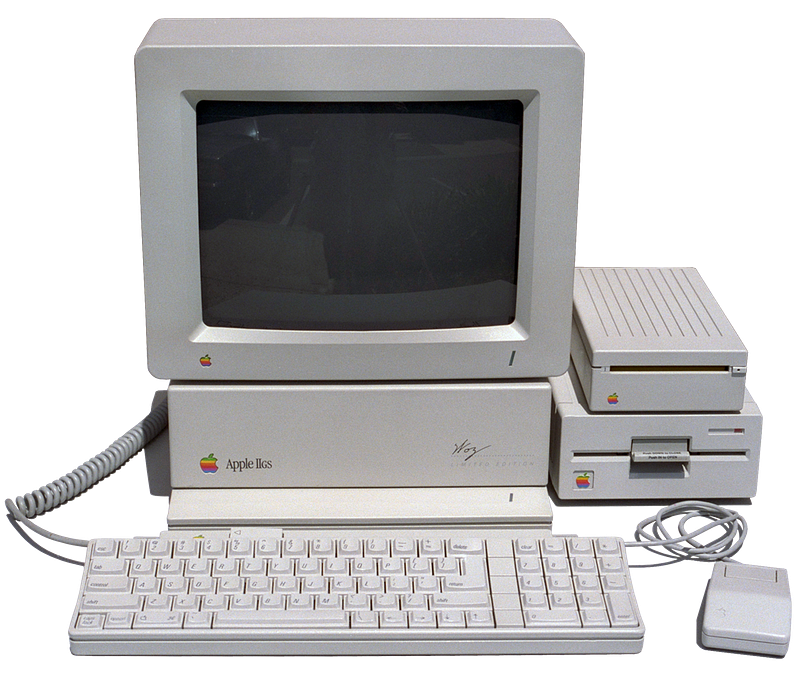
The best thing about this cool little computer was that it and the entire AppleII line had just been steamrolled by the Mac. The Mac was in; the AppleII was out.
I could snap up these nifty computers for less than $100 each.
Once I experienced the wonders of a mouse, and it’s usefulness in editing process, the hunt was on! I wanted fifteen AppleIIGS writing machines for my classroom.
Of course, there were no school funds to purchase computers for my classroom. There was never money for anything — even supplies were rationed. No matter, early on, my wife, a life-long kindergarten teacher, and I decided that money spent on our classrooms was money invested in our careers.
We refused to have our ideas ALWAYS restricted by miserly school budgets.
Most of the AppleIIGS computers I got for less than $50. Often, when I presented myself as a teacher acquiring computers for a classroom, I got them for free. People were flocking to the Mac. Suddenly the AppleIIGS was outdated surplus.
The next summer, I built five computer desks that held three computers at student desk height. I build them on big casters so I could move them about to rearrange the classroom. The three-sided desks camouflaged the messy wiring and bordered the student desks on two sides of the room. Each had a headboard to reduce the distractions for those working in the center of the classroom.
Now the stage was set for a real writing project — a classroom newspaper.
I set up the newspaper on a two-week cycle. I launched a new paper every other Friday afternoon. Then, right before the weekend, I reminded the class that their hand-written first drafts were due Monday morning. Students could source their articles from TV news, newspaper, magazines or choose a topic of their own as long as it was non-fiction.
Monday morning, reluctant writers were given a selection of newspapers for inspiration. But, unfortunately, they had to write their piece during recess and lunch — not a popular option.
I selected a new team of editors for each publication. On Monday, the editors made a list of the week’s stories and divided them into sections. These sections varied from week to week, depending on the content chosen by the writers. Tuesday morning, we broke into groups for peer editing — with an editor in charge of each group. Each story was read aloud by the author. Each group’s goal was to try to understand what the author was attempting to say. Often this was quite challenging. With enough questions and suggestions, a story would emerge.
Sections with fewer stories finished the editing process first and went to the computers to type the second draft of their stories. Each student had a three-and-a-half-inch floppy to save their work. Once finished, they’d walk their disk to the computer with the printer attached and print their second draft for their editor.
Wednesday was set aside for a second peer-editing session using the printed copy. This session focused on spelling, punctuation, and clarity, but content improvements could also be suggested. Then the young writers went back to the computers to make corrections — no more recopying or retyping the entire piece, just editing. I wanted to make that connection crystal clear — learning to type and then editing on the computer made the writing process enjoyable and far less time-consuming. All the rewriting emphasis was on improvement, not recopying. They got it.
The floppies worked OK, but networking was the new frontier. Networking was the future, and I wanted my kids prepared to use it.
One of the coolest gadgets Apple ever developed were phone-net connectors. The simplicity of phone-net connectors compared to early PC networking cards was beyond words. Phone-net connectors used a simple four-wire telephone line to connect computers into a network. The software was built-in to the operating system, and like most things Apple, it was an easy plug-and-play process to set up a network. For example, the phone net connector plugged into the printer port, and Apple Share did the rest to facilitate printer and file sharing.
The biggest bottleneck in the classroom was sneaker-net — walk your floppy over to the computer with the printer attached. Sneaker-net was the only way to access the printer before networking.
Sometimes a floppy disc would be misplaced, defeating the entire process.
I set up student folders on the GS computer with an external hard drive to eliminate the floppy disc headaches. In return, I got “remember to save your work” headaches.
Each week, I set up a new folder to organize the current week’s newspaper sections inside. These section folders held the finished copy.
The GS was a little sluggish when used as a server — rendering it unusable for other student work. Before long, I purchased my first used Mac and set it up as the classroom’s file and print server.
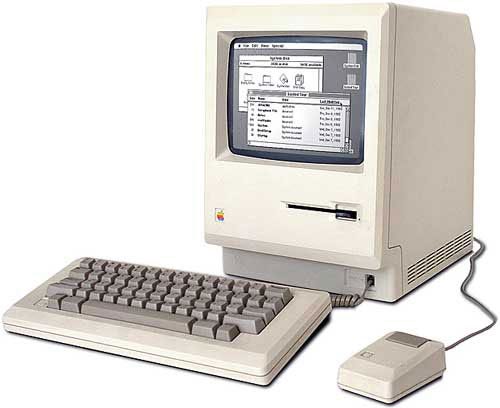
The newspaper writing project settled into a comfortable two-week cycle, the first week for writing and editing, the second week for layout and distribution. The editors for each session were responsible for the layout and formatting of the newspaper. Every two weeks, students got a copy to take home.
I wanted parents to be aware of their student’s writing progress or lack of it, so they received a sample of all students writing every two weeks in the newspaper. I included a sign-off sheet to be returned to me to ensure all parents were receiving their copy. The principal got a copy as well, so he knew why I was always exceeding my photo-copy allotment.
I continued this program for three years until I moved on to a full-time computer science position at a junior high. After that, I was satisfied with the newspaper process as a means of giving my students regular practice writing and editing.
Young people today don’t even know what a word-processor is — to them. It’s simply an app, the way we write.
Only boomers lived through the amazing transformation of the writing process.
An exceptionally bright student named Melissa wrote a terrific editorial about the stark contrast between Red Ribbon Week and the adult horror show on Halloween night downtown. Red Ribbon Week was the annual campaign warning kids about the dangers of drugs and alcohol. Halloween night downtown was the wild and the out-of-control adult celebration of drugs and alcohol that required the city to import law enforcement from outside jurisdictions to have a force large enough to maintain order.
The Halloween event grew so entirely out of control the city eventually canceled the adult aspect of the celebration — shuttering downtown early-evening and closing all the bars at 4 pm on October 31.
I sent Melissa’s editorial to the local newspaper. The editors were impressed. They ran the 5th grader’s opinion piece as a feature article.
Melissa’s article was the capstone of the newspaper writing project. I‘d moved my class out of the dark ages of writing. Now they had the tools to revise without the tedious process of recopying their entire piece. Once the barriers were removed, editing and revision became an integral part of their writing process. These editing skills would serve them well as they moved up through the grades.
Now my students enjoyed writing — an activity I hated with a passion as a kid.