
Books: Stack maintenance
You’re shelving your books wrong wrong wrong!
Here’s what most booklovers don’t know.
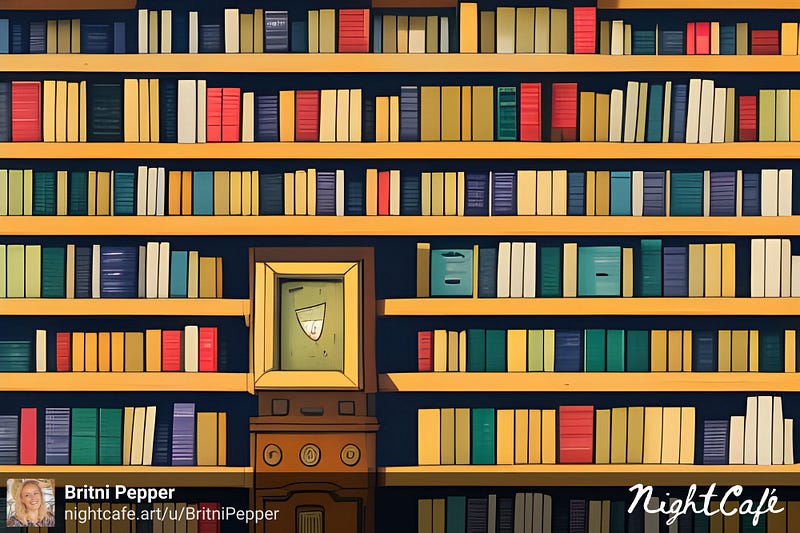
I see it in almost every house I visit, and every smug background on Zoom.
Book lovers proudly showing off their bookshelves, cram-packed in as tightly as possible.
Good books, fine literature, expensive hardbacks, leather-bound first editions; all lined up like soldiers on parade with never a millimetre of open space at the end of the shelf.
Don’t! Here’s why
- There is no growth space. The instant you buy another book — and you will! — there is no room to put it. The temptation is to jam it in tighter or worse, lay it flat along the top of the existing books. Don’t do this; you are just making things worse.
- Books need room for air to circulate. No circulation, you’re just asking for mould to grow. The air in your house fluctuates in temperature and humidity without the sort of expensive climate control used by archives and libraries. In humid conditions — a summer thunderstorm moving through, maybe — the pages may begin to grow faint rust-coloured stains known as “foxing”. Unchecked, these stains will grow and literally eat your books.
- With full shelves, how do you clean them? There will be some space in front or behind the books where dust can gather and insects — and the spiders that prey on them — can frolic. If the books are wedged in, it will be difficult to fully clean the shelf in front and impossible to attend to that behind.
- Books crammed in tightly have no room for swelling and expansion caused by humidity. In humid conditions, the pages will expand slightly and if they have no room left, they will press on each other, eventually damaging the books. Illustrations may “bleed” onto facing pages.
- Without adequate airflow, acids in the papers (unless your books are printed on expensive archival acid-free paper) will be unable to outgas and the paper will become ever more acidic, eating them up from the inside over the years.
- With books swelling and contracting and having no room to move, the chance of damage to bindings and spines increases. You may buy a book, display it unread for years, and pull it out one day wondering why it is subtly bent and warped.

Do this instead
Leave some space at the end of each shelf. 10–15% is fine. Invest in some thin metal bookends to support the end book. They are simply right-angles of metal, painted and ground to remove any sharp edges, that slip under the last few books and the upright holds the final book vertical.
Having the books resting at an angle is — like people — very bad for their spines, so keep them standing up.
Align the books to the front of the shelf. If there is any room in front inevitably little objects will accumulate — keys, pens, library cards, knick-knacks of all descriptions — and eventually you will have a clutter that never gets dusted.
Clean the shelves behind. Once a week is great, once a month is fine. Either move the “gap” along and dust the exposed space, or remove the whole row temporarily and give the surface a good clean. This is a good spot to keep those little dehumidifier packets you get now and then.
Maintain the shelves as new books are acquired. Move the books along so that each shelf has a consistent amount of empty space.
Once you get to the point where you cannot reasonably put any new books on your shelves, think about moving some to storage or better yet, sell or give some away. If you have thousands of books, sure it looks impressive, but you don’t read or consult them regularly, do you?

Love your books
There are always some books that you cherish. Heirlooms, gifts from loved ones, great works of literature, reference works you can’t live without. Look after them. They have your heart.
Britni


