
Book Summary: Secrets of the Baby Whisperer
“Book’s Resume” series — Book n°2
Hey, book readers and lovers … and also curious ones, in this article I share with you my notes, summary, and lessons learned from reading the “Secrets of the Baby Whisperer” book written by Tracy Hogg, who was herself a “baby whisperer,” with a natural talent for soothing and calming infants. She began her career as a maternity nurse in England and quickly gained a reputation for her ability to calm even the fussiest of babies. She later moved to the United States, where she continued to work with families as a newborn care specialist and parenting coach.

✍️ Introduction
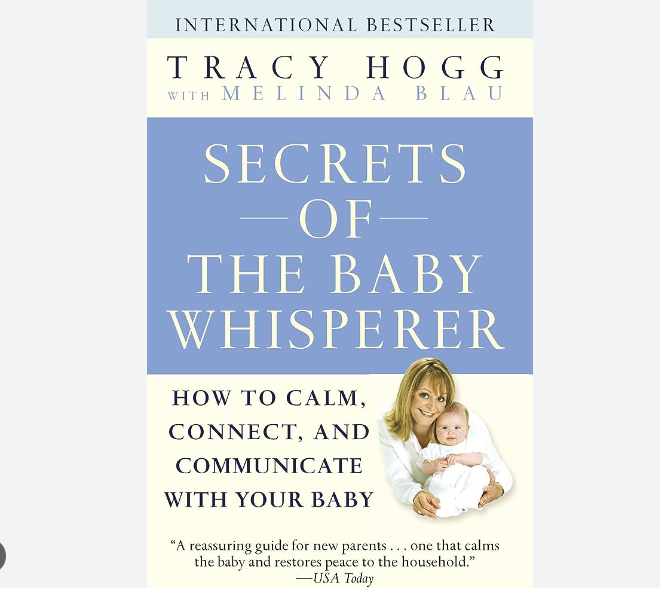
“The Secrets of the Baby Whisperer” is a parenting book written by Tracy Hogg and Melinda Blau. It was published in 2000 and has since become a popular resource for parents looking for guidance on how to effectively care for their newborns.
In the book, Hogg and Blau offer practical pieces of advice on a wide range of topics related to parenting, including feeding, sleeping, and bonding with your baby. They also discuss the importance of developing a strong parent-child relationship and provide tips on how to create a peaceful and nurturing home environment.

One of the key themes of the book is the “idea that every baby is unique and has their own individual needs and preferences”. Hogg and Blau suggest that parents should pay attention to their babies and understand their signals, instead of sticking to a strict schedule or having preconceived ideas about how babies should act.
The authors emphasized also on the fact that establishing a consistent routine for your baby is crucial for their sense of security and comfort. And to achieve this, the authors suggest implementing several strategies, such as creating a bedtime ritual and dedicating specific times for feeding and play.
🚀 The Book in 3 Sentences
- “To be ready for the new family member and to prepare the environment”
- “The good habits to teach your baby and how to do it”
- “How to understand your baby and communicate with him”
and just for joking old and current parents will understand it, future parents you will have to wait but get ready ;)

One of the things that sets “The Secrets of the Baby Whisperer” apart from other parenting books is its focus on the emotional needs of both babies and parents. Hogg and Blau recognize that parenting is a challenging and emotional journey, and they offer support and encouragement to parents as they navigate the ups and downs of raising a child.
🎨 Impressions
This book helped us (my wife and I) when we were expecting our first child. At that time we were scared and stressed about having a new family member at home with us.
The book gave us a quite good clear explanation about what is going to happen, and what to expect and gave advice on how to deal with the problems we will be facing and that you already probably had to deal with also or will be dealing with ;).
How I Discovered It
When expecting our first baby a colleague of mine gave me the title and told me it is worth reading to prepare myself and my wife for the new family member.
Who Should Read It?
In my opinion, every new parent (mother AND father) because both of them will learn a lot from it, things like: “How to prepare for the big day? how to solve issues? and teach the baby the good habits he/she needs. and much more …” and not only just read it but rather study it and keep it at their bedside. and I think that experienced parents will find the book a valuable resource if they are looking for new ideas or approaches to parenting.
✍️ My Top 5 Quotes
Here are five quotes from the book that particularly resonated with me:
- “The best way to make children good is to make them happy” — Oscar Wilde
- “Eat when you are hungry. Drink when you are thirsty. Sleep when you are tired.” Buddhist saying
- “Remember that your baby is not really yours but a separate person a gift that you have been given to care of”
- “The true joy of parenting comes when we are empowered and can follow our own inner voice of guidance. Keep your eyes open, become informed; consider all options and all styles of parenting. Then make decisions about what’s right for you and your family.”
- “Restrain yourself; remember that less is more and that many of the things you’ll want to buy your baby won’t amuse him.”
and you will find more that I am sure will resonate with you as they did with me and my wife, like the following extra ones, (if you have read the book and thinking of another quote feel free to share it in the comments section):
1. “Every baby is different, but every baby is the same in that they need to be loved and nurtured.”
2. “Babies don’t come with instruction manuals, but they do come with instincts. Trust yourself and your baby.”
3. “You are your baby’s most important teacher. Be patient, be consistent, and be loving.”
☘️ How the Book Changed Me
Reading “The Secrets of the Baby Whisperer” changed the way I see parenting in a number of ways.
- The book has changed my view in general about children and babies, how we should treat them, and how to teach them good habits;
- My relationship with my wife because it gave me some insight into how mothers are in general before/during and after giving birth to a baby,
💡Practical Lessons
There are many practical lessons that parents can take away from “The Secrets of the Baby Whisperer.” Here are a few that I found particularly useful:
- Always trust your instincts and listen to your baby. Every child is different, and paying attention to their needs and preferences is important.
- Create a consistent routine for your child. This can help them feel secure and comfortable, and make it easier for you to meet their needs.
- Bond with your baby. Take the time to cuddle, hold, and talk to them, as this can help to strengthen the parent-child relationship.
- Pay attention to your baby’s cries. They are trying to communicate their needs, and it’s important to listen and respond.
- Remember to take care of yourself. Parenting is a demanding and emotional journey, and it’s important to take care of your own physical and emotional needs as well.

📒Conclusion
In conclusion, “The Secrets of the Baby Whisperer” is a must-read for any parent or caregiver looking for practical advice and guidance on how to effectively care for a newborn or young child. Its focus is on the unique needs and preferences of every baby, and on the importance of building a strong and loving parent-child relationship, which makes the book a valuable resource for parents at any stage of their parenting journey.
Many parents have found Hogg’s approach to be a refreshing and empowering alternative to traditional parenting methods, and have reported great success in implementing her strategies with their own children. Hogg’s approach to parenting is centered on the belief that every baby is unique and that it is important for parents to listen to their babies and respond to their individual needs and preferences. She encourages parents to trust their instincts and to develop a strong and loving relationship with their babies and provides practical tips and techniques for creating a peaceful and nurturing home environment.
Thank you for reading till the end, I hope you enjoyed it and learned from the article something or two and to end it here is a quote from “Cleo Wade” who is an American artist, poet, activist, and author.
“Breathe. Take care. Stand still for a minute. What you are looking for might just be looking for you too.”

Cheers
Merwansky
📒 My Extra Notes
- Every baby is a person who has language, feelings, and a unique personality … and therefore, deserves respect. Know your baby as a unique individual
- If you take the time to observe your baby and to learn what she’s trying to say to you, you’re going to have a baby who’s content and a family that isn’t dominated by a distressed baby.
- What Makes a Good Parent? We don’t become good parents in the first weeks of a baby’s life. Good parenting develops over the years, as your children grow and you get to know them as individuals, which later encourages them to come to you for advice and support.
- Talk with not at your baby; Listen and when asked meet your baby’s needs Let your baby know what’s coming next by providing a daily dose of dependability structure and predictability
CHAPTER 1: LOVING THE BABY YOU GAVE BIRTH TO
- “I just can’t get over how much babies cry. I really had no idea what I was getting into. To tell you the truth, I thought it would be more like getting a cat” — Anne Lamott in Operating instructions
- Limit Visitors: Convince all but a few very close relatives and friends to stay away for the first few days. If parents are in from out of town, the greatest thing they can do for you is cook, clean, and run errands. Let them know in a kind way that you will ask for their help with the baby if you need it, but that you would like to use this time to get to know your little one on your own.
- Take Small Bites: You’ve got a lot on your plate; don’t heap on any additional pressures. Rather than being angry at yourself because you haven’t gotten the announcements addressed or sent thank-you notes, give yourself a manageable daily goal — say, five instead of forty a day. Prioritize your tasks by creating piles marked “urgent” “do later” and “can wait till I feel better”. If you’re calm and honest when you assess each chore, you’ll be surprised at how much goes in that last pile.
- A Word About Pets: Animals can get jealous of new babies — after all, it’s like bringing another child home. (DOGS, CATS)
- When you rock any type of baby, sway back and forward not side to side or up and down. Before your baby was born she sloshed around front to back inside you as you walked, so she is used to and comforted by that kind of movement.
- Love at First Sight? Eyes meet across the room and you’re instantly in love or at least that’s how it happens in Hollywood. But it’s not like this for many real couples. It’s the same way with mothers and their babies. Some mums are instantly live, but for many, it takes a while. You’re exhausted, shocked, and frightened, and perhaps most difficult of all, you want it to be perfect. It rarely is. So don’t get down on yourself. Loving your baby takes time. Just as it happens with adults, true life comes as you get to know the person.
- Mum, it helps to talk to anyone who can remind you that the ups and downs are normal — good friends who have been through it sisters, and your own mother if you have a good relationship with her. Dad, talking to your guy friends might not be as helpful. Men in my “Daddy-and me” groups tell me that new fathers tend to compete with one another, especially over lack of sleep and sex.
- Think of your baby as the bearer of a wonderful life challenge. After all, each of us has a host of lessons to learn in life, and we never know who or what is going to be the teacher. In this case, it’s your baby.
CHAPTER 2: E.A.S.Y. Does It
- “Eat when you are hungry. Drink when you are thirsty. Sleep when you are tired.” Buddhist saying
- “I had a sense that she’d be happier if she had a structured beginning. Besides, I saw how it worked for my friend’s baby.” Mother of a Textbook Baby
- An EASY Timetable: Eating (25min — 40min) Activity (45min) Sleep (15min to fall asleep + naps of half an hour to an hour) and You (an hour or more)
- When you come home from work, you should always change out of your work clothes, even if you are in an office all day. Clothing retains smells of the outside that can upset Baby’s delicate senses (and you don’t have to worry about getting them messed up).
- If you are a single parent, friends are a lifeline. For those who can’t or don’t want to help with child care, enlist their support to help with the housework or do grocery shopping and other errands. Remember that you have to ask. Don’t expect others to read your mind and then become resentful when they don’t.
- … but the problem is that parents often don’t realize they are making the choice — they get into what I call “accidental parenting” …
- Your newborn is no different, except that he can’t set his own routine. You have to do it for him.
- Try to make yourself more conscious of habits you might be setting up.
- … Don’t you think it would be nice to have some time for yourself? If so, you need to take steps now to support his independence.
- You have to have good habits yourself before you can transmit them to a child
- … she has let a helpless infant take charge and now wonders why she can’t find time to take a shower.
- But the problem is that parents often don’t realize they’re making the choice they get into what I call “accidental parenting” They don’t think past the first few weeks to decide whether that’s what they really want, or they may not be conscious of how their behavior and their attitudes affect the way they relate to their baby.
- … or if she’s a winger who has gone the route of following her baby, she’s let a helpless infant take charge and now wonders why she can’t find time to take a shower get dressed to even breathe!
- Remember that your baby is not really yours but a separate person a gift that you have been given to care of
CHAPTER 3: S.L.O.W. Down (and Appreciate Your Baby’s Language)
- “We think that a mother who can read her baby’s cues, who can understand what the baby is trying to communicate to her, is most likely to be providing the kind of child-rearing environment that will enrich development and facilitate cognition later on” — Dr Barry Lester (The Crying Game)
- SLOW: — > STOP: Remember that crying is your baby’s language — > LISTEN: What does this particular cry mean? — > OBSERVE: What is your baby doing? What else is going on? — > WHAT’S UP?: Based on what you hear and see, evaluate and respond
- … In other words, when a baby is not responded to at all or if every cry is “answered” with food, the Baby learns that it doesn’t matter how she cries — it always results in the same outcome. Eventually, she gives up and all her cries will sound the same.
- The Proven Benefits of Tuning In … Babies whose mums scored matches had higher mental scores at eighteen months of age than babies whose mothers made fewer matches and they had learned two and half times as many words.
- To calm a baby, you must be calm yourself. Take three deep breaths. Feel your own emotion, try to understand its source, and, most important, let whatever anxiety or anger you feel drop away.
- Become aware of the “should” you harbor and know that you don’t have to be them. They might be right for someone else’s baby, or someone else’s family, but not for you.
- The true joy of parenting comes when we are empowered and can follow our own inner voice of guidance. Keep your eyes open, become informed; consider all options and all styles of parenting. Then make decisions about what’s right for you and your family.
- A Healthy Baby’s Cries
- What They Can Mean? — I’m hungry, I’m tired, I’m overstimulated, I need a change of scene, My tummy hurts, I’m uncomfortable, I’m too hot, I’m too cold, I’ve had enough, I need a cuddle or a pat
- What They Don’t Mean? I’m angry at you, I’m sad, I’m lonely, I’m bored, I want to get back at you, I want to disrupt your life, I feel abandoned, I’m scared of the dark, I hate my crib, I’d rather be someone else’s baby!
- Always take a moment to ask yourself, “Am I really tuning in to what my baby needs, or am I reacting to my own emotions”
- If you are particularly sensitive to noise, you might need to work on acceptance: This is your life right now you have a baby, and babies cry. It won’t last forever. The faster you learn his language, the less he will cry, but he will still cry. In the meantime don’t put a negative spin on it. Also, get yourself a pair of earplugs or wear your Walkman neither will prevent you from hearing your baby, but they will mute the sound a bit. As a friend in England observed “I’d much rather listen to Mozart than to the sound of crying”
- When out of the house. It is a good idea to take a stroller or bassinet with you so that you have a handy and safe place for a tired baby to sleep
- A crying baby does not equal a bad parent. Also, remember that you and your child are two separate people — don’t take his or her crying personally. It has nothing to do with you.
- I’ve learned a foreign language that’s composed of sounds and movement. “She even started advising other mothers’ Your baby doesn’t just cry because he is hungry,” She told a mother in our newborn group: “You have to hang back a moment and wait to see what he is saying”
CHAPTER 4: The E-Whose Mouth Is It Anyway?
- In fact, most mums regardless of how they feed their babies want their partners to be involved and they should be. Involvement is more a matter of motivation and interest than a feeding method
- A word to dad: you may want your wife to breastfeed because your mother or sister did, or because you think it’s best. Or you may not want her to. Either way, your wife is an individual; she has choices in life, and this is one of them. She doesn’t love you any the less if she wants to breastfeed; she’s not a bad mum if she doesn’t. I’m not saying you both shouldn’t discuss your concerns, but ultimately, this is her decision to make.
- When your baby dozes off during a feed to jump-start his sucking reflex any of these strategies: With your thumb, gently run in a circular motion the palm of his hand; run his back or underarm; or “walk” your fingers up and down his spine — a technique I call “walking the plank” Never put a wet washcloth on a baby’s forehead to keep him awake or tickle his feet as some suggest. That’s like me coming under the table and saying “You haven’t eaten all your chicken, so let me just tickle your feet to get you going again.” If none of these strategies works, I would leave the baby for half an hour and just let him sleep. If your baby constantly falls asleep while feeding and it’s difficult to rouse him, ask your pediatrician’s advice.
- Hiccups. All babies get hiccups, sometimes after feeding, sometimes after a nap. They are thought to be caused by a full tummy or eating fast, which is exactly what happens to adults who bolt down their food. The diaphragm gets out of rhythm. There is not much you can do except bear in mind that hiccups go as quickly as they start.
- If you use disposable diapers, they will absorb the urine so well that it’s hard to tell when your baby pees or what color it is. During the first ten days especially, place a tissue in your baby’s diaper to determine if he is urinating and how often
- After breastfeeding always wipe off your nipples with a clean washcloth. The residue of milk can be a breeding ground for bacteria and cause thrush on your breast and in your baby’s mouth. Never use soap, because it dries out your nipples.
- How Much Formula? With formula feeding, the composition never changes, as it does with mother’s milk, but the baby — understandably — needs to eat more
- Be gentle when you first feed … Don’t compare your feeding regimen to a breastfeeding mother’s
- Fatigue is a working mother’s worst enemy regardless of how she chooses to feed her baby. One of the ways to minimize exhaustion in the first few weeks back is to start on Thursday rather than a Monday.
- At around four months, babies' hands start to wander and they turn their heads and twist their bodies. While nursing, they will fiddle with your clothing or jewelry and they will poke your chin nose, or eyes if they can reach. As they get older they can develop other bad habits that, once they begin are hard to change. So start now to teach your baby what I call “breast manners”. In each case, the trick is to be firm but gentle reminding her of your boundaries. Also, try breastfeeding in a quiet environment to cut down on distractions.
- When purchasing a pacifier, apply the same principle as when buying nipples: Get a shape to which the baby is accustomed.
- Pacifiers have been around for centuries and for good reason. Just about the only part of his body that a newborn can control is his mouth. He suckles in order to have the oral stimulation he needs. In the olden days, mums would use a rag or even put a porcelain stopper in an infant’s mouth for oral soothing.
- Within the first three weeks, babies easily switch back and forth from breast to bottle. If you wait though you will probably have a tougher time. A breastfed baby will initially balk at a bottle because human flesh is all that his mouth knows and expects.
- Always introduce a new food in the morning. This gives you all day to see if your baby is having an adverse reaction to the food, such as a rash, vomiting, or diarrhea.
- Never mix foods together. That way there’s no question about allergic reactions to a particular food.
CHAPTER 5: Wake Up and Smell the Nappy
- Cloth Versus Paper: Although cloth has made a comeback, an overwhelming majority of parents still prefer disposable diapers. It’s a matter of choice, but I like cloth diapers because they are cheaper, softer on the Baby’s bottom, and ecologically conscious.
- When your baby is naked rest your hand gently on her chest or lay a Beanie Baby or other lightweight stuffed animal there. That little bit of extra weight helps her feel less exposed and vulnerable.
- Myth: “Get Them Used to Sounds of the Household” Parents are often told it’s a good idea to accustom their babies to loud noises. I ask you, would you like it if I came into your room in the middle of the night while you were sleeping and played loud music? That’s not respectful. Should you be any less considerate of your baby?
- When your baby has a toy, observe rather than jump in. Restrain yourself; remember that less is more and that many of the things you’ll want to buy your baby won’t amuse him.
- She can move, when your baby really starts to crawl, usually between, eight and ten months, it’s time to childproof your house if you haven’t already.
- The best playthings are toys that encourage her to put things in and take things out.
- Make sure everything your baby plays with is washable, sturdy, and has no sharp edges or strings that can come loose and be swallowed. An object is too small to play with if it can fit inside a cardboard toilet paper roll; it could get stuck in Baby’s throat or pushed into an ear or nose … So instead of waiting for her to grab one, I showed it to her, saying, “This is Mummy’s. You can hold it now, while I’m here with you. But it’s not a toy.”
CHAPTER 6: The S — To Sleep Perchance to Cry
- Now, that all might seem pretty obvious. But what a good many people don’t realize is that babies need their parents’ direction to establish proper sleep habits. In fact, the reason so-called sleep problems are common is because so many parents don’t realize that they, not their babies must control bedtime.
- His theory holds that bad sleep habits are learned and therefore can be unlearned (I couldn’t agree more).
- A typical scenario is that one of the parents is initially attracted to the family-bed idea and “sells” the concept to his or her partner.
- Develop bedtime and naptime rituals. Bedtimes and nap times must be done the same way each time. As I’ve stressed throughout, babies are creatures of habit. They like to know what’s coming next and research has proven that even very young infants who have been conditioned to expect a particular stimulus are able to predict when it’s coming.
- Because babies thrive on predictability and learn from repetition we must always do and say the same things before naps or bedtime, so that in their baby minds they think, “Oh this means I’m going to sleep”.
- I don’t generally introduce books until around six months when babies are better able to focus and sit up.
- Don’t invite guests to your house when you’re putting your baby to bed. That’s not fair. Your baby wants to be part of the action. He sees your company and knows they’ve come to see him: “Mmm … new faces to look at, new faces to smile back at me. What? Do Mum and Dad think I’m going to miss this by sleeping? I don’t think so”
- Swaddling, one of the oldest techniques for helping a baby get to sleep, may seem dated, but even modern research confirms its benefits.
- This Bears Repeating: Independence is not neglect!
- I never leave a screaming baby. On the contrary, I consider myself that baby’s voice. If I don’t help him, who will translate his needs? At the same time, I don’t advocate holding or comforting a baby once you have met his need. The minute he’s calm put him down. Thus, you give him the gift of independence.
- During the day, never let a baby sleep more than a feed cycle — in other words, no longer than three hours — because otherwise, it will rob his nighttime sleep hours.
- … when an infant is six weeks old, I suggest two practices: cluster feeding — that is, feed her every two hours before bedtime — and giving what I call a dream feed right before you retire for bed.
- … the night feed, because they have enough calories to keep them going for five or six hours.
- Some infants do pretty much the same thing. You might hear them make grumpy little noises — which I call “phantom baby” sounds. And as long as no one disturbs them, they’re off to dreamland again.
- A baby whose parents respond becomes a secure child who’s not afraid to venture forth. A baby whose parents continually rescue them begins to doubt his own capabilities and never develops the strength and skills he needs to explore his world or to feel comfortable in it.
- Whenever your baby wakes in the middle of the night, for whatever reason, never be too playful or friendly. Be loving, take care of the problem, but be careful not to give your baby the wrong idea. Otherwise, she might wake up the next night wanting to play.
CHAPTER 7: The Y — It’s Your Turn
- Excuses, excuses, excuses …
- From the day your baby is born, every day, ask yourself “What did I do for me today?” here are rationalizations of women who don’t take time for themselves and what I say to their excuses: — (A1) “I can’t leave the baby alone” → Get a relative or friend to come over for an hour > — (A2) “None of my friends are familiar with the baby” → Invite them over and show them what to do — (A3) “I don’t have time” → If you follow my suggestions, you will make time. You are probably not prioritizing. Put the answering machine on instead of taking phone calls. — (A4) “No one takes care of my baby as I do” → Rubbish — You are being controlled. Besides, when you have run yourself ragged, someone will have to step in. > — (A5) “What if I am not here?” → Women who tend to be controlling are shocked to find their households do not fall apart without them. — (A6) “I will take time when the baby is a little older” → If you don’t take time for yourself now, you won’t feel important. You will lose your own (nonmother) identity.
- Recovery Reminders: — Eat, — Sleep, — Exercise, — Find a few moments for yourself. — Don’t make promises you can’t keep. — Prioritize, — Plan, — Know your own limitations. — Ask for help, — Spend time with your partner or a good friend. — Pamper yourself.
- Most don’t realize that parenting is a learned art.
- If your baby is crying, you’re alone with him, and you feel like you can’t deal or, worse, you feel anger rising, put him in the crib and leave the room. A baby never died of crying. Take three deep breaths and then come back. If you are still agitated, phone a relative a friend or a neighbor and ask for help.
- To achieve the life you want after your baby is born, you’ve got to plan for it.
- Couple Care 101, Schedule time together — a walk, date night, a trip to the ice cream parlor. Plan a childless vacation, even if you can’t actually take one for a while. Hide surprise messages for your mate. Give an unexpected present. Send a love letter to the office, telling her/him all that you adore and appreciate. Always be kind and respectful to one another
- Post-baby Calisthenics: “I said no exercise for six weeks, but there’s one you can do as early as three weeks postpartum, and it goes like this: Squeeze and hold, one, two, three!”
- Mum, when you and Dad take an evening out, don’t talk about the baby. You’ve physically left your little bundle of joy at home, where she should be. Unless you want subconscious resentment to build on Dad’s part, leave her home emotionally as well.
- Say this mantra to yourself when you are feeling guilty “Having time for me is not hurting my baby”
- Maintaining your circle of support: Here’s how to make the most of unpaid help: Don’t expect people to read your mind → ask for help.
- Especially in the first weeks, ask people to shop, cook, bring in food, clean, and do laundry — so that you have time to be with and get to know your baby
- Be realistic. Ask people only what they can actually do don’t send a forgetful dad to the grocery store without a list; don’t ask your mum to babysit at the time when you know she has a regular tennis game
- Write down your baby’s schedule so that others understand what the day is like and can work around it
- Respond to unsolicited advice by saying “Wow that’s really interesting — it sounds like it really worked for your family” even though in your head you may be saying “I’m going to do it my way”
- Write a job description of everything you want your nanny to do. That way, you will be clear on what you want, and when prospective nannies come to call, you can share every detail — not only duties related to the baby and to your household, but also salary, days off, restrictions, vacations, bonuses, and overtime.
CHAPTER 8: Great Expectations, Special Circumstances, and Unforeseen Events
- After all, being a parent is an action, not a word
- It’s not what happens to you in life that matters but how you deal with it that matters.
CHAPTER 9: Final Chapter
- Change the consequence by changing what you do.
- The ABCs of Change: Remember: — Whatever bad habit you’re trying to break is a consequence (C) — of what you’ve done — the antecedent (A) — which has inadvertently caused the behavior (B) you now want to eliminate. Only by doing something different — by changing what you do can you break the habit.
- Remember, too, that raising a child is a lifelong commitment — something you must take more seriously than any mission you’ve ever accomplished. You are responsible for helping to guide and shape another human being, and there is no greater, higher assignment.