
Book Review
Animal Farm through the Lens of an Apolitical, Common Reader
“All animals are equal, but some are more equal than others.”
Warning: Spoilers ahead!
My first experience with the Orwellian classic was in 2018. At the time, I was only looking to expand my library from Goosebumps and Diary of a Wimpy Kid to actual novels (it was a transitory stage, don’t blame the little youth).
I wasn’t aware of its political or satirical nature. I didn’t make the connection between Old Major and Karl Marxx, Napoleon and Stalin, or Snowball and Leon Trotsky, ’cause frankly, I didn’t care.
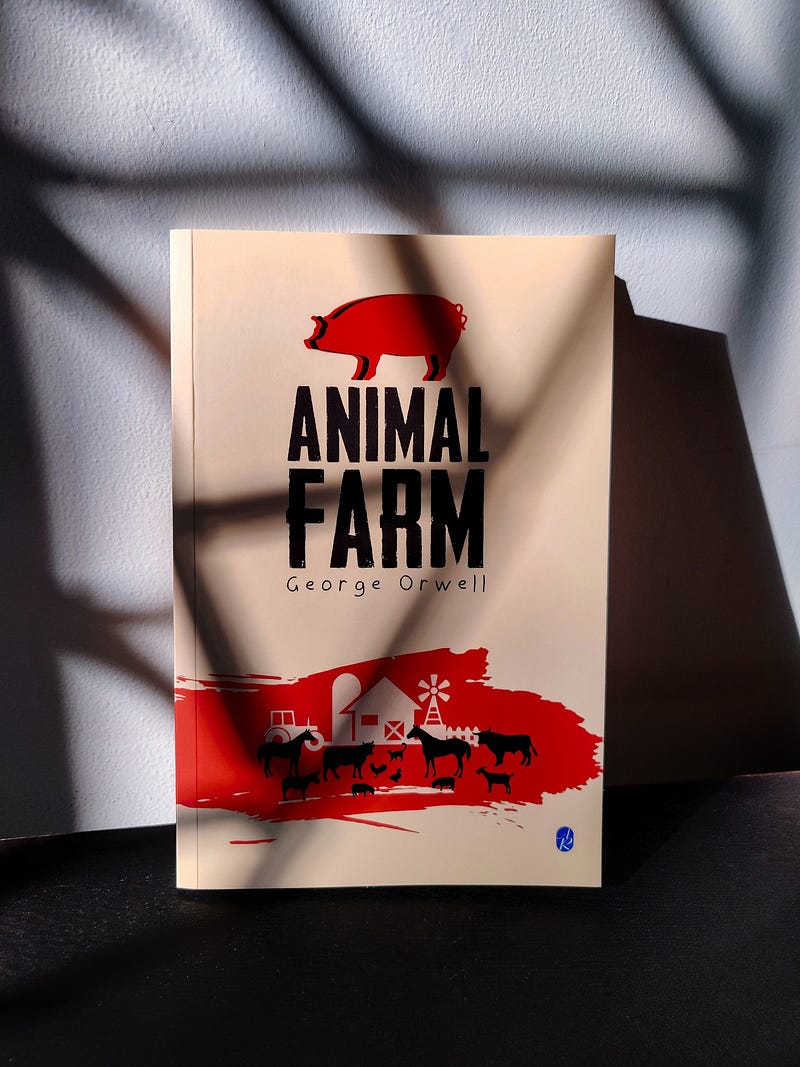
I was always a history buff, so I had a general understanding of recent chronological events, but I picked up Animal Farm because the cover looked cool, and its short length was viable since I could use it as a stepping stone to larger reads.
Five years later, I decided to revisit it with a newer understanding of its allegorical nature. Mind you, I still don’t care about its references; the resentment against communism that George Orwell channeled to drive his work is simply not relevant in our times, but it may still have repercussions that have trickled down.
Let’s explore Animal Farm.
(If you’re deeply aware of the book’s story, just skip to the “Nature of the Book” header)
Key Takeaways
- The book highlights the nature of tyranny when you replace one oppressor with another.
- It is one of the few instances where evil triumphs over good.
- It does a great job of presenting how propaganda seeps into collective memory when correctly executed.
- Enjoy the book for what it is because there is no grand lesson here, and the few characters you like will end up dead or alienated.
Plot Summary
Whatever goes upon two legs is an enemy.
Whatever goes upon four legs, or has wings, is a friend.
No animal shall wear clothes.
No animal shall sleep in a bed.
No animal shall drink alcohol.
No animal shall kill any other animal.
All animals are equal.
One eventful evening, Old Major, a wise and long-lived boar, gathers all the farm animals and foretells a vision of the future before informing them of his impending death.
In his description, he relays a song to them, “The Beasts of England,” which becomes a unifying anthem for the animals. He describes a future where animals are rulers of England, free from labor and subjugation by the humans, before passing on the responsibility of overthrowing them to the onlookers.
Within a few days of this address, Old Major dies. What follows is a bloody revolution under a new regime, the Animal Regime.
The Setting of the Book
“Then Snowball (for it was Snowball who was best at writing) took a brush between the two knuckles of his trotter, painted out MANOR FARM from the top bar of the gate and in its place painted ANIMAL FARM.”
The book is set on the fictional Manor Farm owned by the dreadful Mr. Jones and his wife. The backdrop is picturesque of the typical English County farms, with pastures, knolls, and farm fields creating the substance of the locations described within the book.
The outside human world is uncharted and unexplored by the animals, with only small windows into their affairs described when the plot requires it.
It contains a variety of farm animals, such as pigs, cows, hens, ducks, horses, an old donkey, and a singular cat who typifies the neutral, apolitical observers of shifting political landscapes (just like me!).
The book primarily focuses on the pigs using their superior intellect (relative to the other animals) and creating a slave-labor society of other animals with the promise of a better future.
The Foxwood and Pinchfield Farms neighbor Animal Farm, and there are occasional conflicts and treaties with them depending on the present needs of Animal Farm, reminiscent of the tenuous alliances formed during World War II.
Nature of the Book
“Beasts of England, beasts of Ireland, Beasts of every land and clime, Hearken well and spread my tidings Of the golden future time.”
George Orwell had participated in the Spanish Civil Wars caused by Stalinist-backed forces. This led him to create an allegorical work that could act as a conduit for his hatred of communism and convey its evils to the common public.
If you know history, you will see many real-life counterparts described within the book. The main cast of pigs — Snowball, Napoleon, and Squealer — are personifications of historical personalities prominent during the World Wars and the events building up to it. Almost every animal can be assigned to a historical persona with striking similarities.
While the pigs have distinct historicity assigned to them, some animal groups have generalities. The sheep, known for randomly bleating into a rhythm of “FOUR LEGS GOOD, TWO LEGS BAD!” shadow the general populace who, in willful ignorance, play along with the more popular trends and give power to the undeserving.
Boxer, the strong stallion, is the ideal citizen of such a regime. He believes in his leader with unmatched veracity, works harder than anyone else to bring forth the promised utopia, and dies unrewarded and forgotten with all his labors lost.
Similarly, every animal is a token of reality.
Themes of Animal Farm
“These three had elaborated old Major’s teachings into a complete system of thought, to which they gave the name of Animalism.”
It is a commentary on the nature of communism, a recollection of the bloody revolutions engendered by anarchy that resulted in the replacing of one tyrant oppressor with another who was far worse.
The nature of leadership is an integral thematic component of Animal Farm. George Orwell juxtaposes the just ruler and the unjust despot archetypes through Snowball and Napoleon.
While every move, speech, and resolution Snowball makes is transparent for the people and done for their welfare, Napoleon manipulates and deceives through backdoor chicanery, rumors, and propaganda.
But tyrannical powers cannot rise without martial support, which Napoleon sets up by rearing the nine puppies at the start for his selfish means, albeit disguised as a welfare maneuver.
I would say Animal Farm also does a great job of spotlighting the responsibility one bears in authority.
If Mr. Jones had been humane in his methods and cared for the animals with gentleness and compassion (excusing the slaughter nature of farming), the discontent among the animals would not have grown to such an extreme.
The book begins with the hope of an equal society but ends with a natural regression back to hierarchies, with two elite classes (pigs as the rulers, dogs as the armed power) subduing the others under their thumb.
But the rest of the animals allow themselves to be subjugated, trusting the fake promises of a deceptive politician and never deciding for themselves what is right.
Final Thoughts
“Years Passed. The Seasons came and went, the short animal lives fled by.”
Animal Farm is a simple book. For a casual reader, it is an enjoyable dystopian novella that plunges into a world of revolution and desecration of virtuous ideals.
For political scientists, it can be approached with a historical eye. For literature enthusiasts, it’s an introduction to a significant landscape that defined our present global leadership infrastructure.
In between its pages, it has something to offer everyone, and I would recommend it as a definite classical read.