
Book Club Review: Ocean Vuong — Time is a Mother
Speaking on my introduction to Vuong, grief, Kendrick Lamar and hope.
I read Time is a Mother in less than ideal circumstances. Usually with poetry, I read it in bed in short chunks as I often get the feeling that I stop taking it in properly after around 10–15 pages. This wasn’t the case at all with Time is a Mother, which was my introduction to Ocean Vuong having heard a lot about his debut novel On Earth We’re Briefly Gorgeous but not having read it yet. Instead, I read Time is a Mother on one of my twelve hour travelling days which I have to do, at the moment, six times per year. I have anxiety and panic disorder already, which appears to be gradually morphing into agoraphobia, so being stuck in a seat for 12 hours straight (especially with the high likeliness of unexpected delays, which I can’t prepare for) is a complete nightmare. This time in particular, it was made worse by someone being sick a few rows behind me for the last three hours.
Needless to say, far from ideal circumstances for absorbing the very carefully planned words of a writer like Ocean Vuong, the Vietnamese American writer who is able to really make his words count in terms of emotional impact.
Upon seeing this book on the CounterArts book club for this year, and having heard of the hype around Vuong, I said to Sadie that I simply had to join in with this month (also thanks to the smaller page count — time is a commodity lately), and I’m glad I did even if I did feel that Vuong could be too abstract for my liking at times, with stanzas occasionally lacking the flow I typically most enjoy about poetry.
This book is bleak. But, it is also crucially hopeful. This isn’t Kinnell’s The Book of Nightmares or Anne Sexton’s Live or Die kind of bleak — it is bleak as a means to eventually become hopeful. Bleakness as an opposition to hope, essentially, easily noticed when reading the book in its entirety over a shorter span of time. The opening few poems here feel much like being submerged in mud face first, and Vuong does a great job of slowly digging us out again before the book’s grand finale, Dear Rose, bathes the world in sunlight with its ending.
Vuong’s control over language is brilliant, even if he turns to the same few tricks quite often. His use of colours especially stood out to me, using his red bathtubs, green blood, black oil and black mud to bring to life his vivid metaphors and stories. One description in particular sticks with me as I write this — that of a man Vuong saw from a bus standing in a field. Vuong explains that the man’s stillness, at the time, made him weep and that a woman next to him comforted him with religious hope and kindness, a sharp contrast point to the plethora of historical atrocities which Vuong also mentions throughout his book.
In fact, it is just that which makes Time is a Mother impressive — the way which Vuong is able to weave together personal struggle with historical pain, and not in the typical way which he briefly mentions wherein people speak of their ancestry and the pain of their past generations rather than speaking of their own pain. Vuong speaks to both simultaneously, recognising that his pain is the same even if the causes and the extent of that pain are different.
Written in reflection on his late mother’s death to cancer (in similar ways as the recent experimental hip-hop record, Mother by Killah Priest, if you want some mood music), Vuong’s bleakness makes sense, but it is his hope within that bleakness which elevates Time is a Mother. Whilst he proves himself clearly as a great writer of pain, even utilising his mother’s Amazon account purchase history as found poetry in one of my favourite moments in the book — one of subtlety and patience — Vuong’s most emotive words are written in hope such as this moment in Not Even:
I caved and decided it will be joy from now on. Then everything opened. The lights blazed around me into a white weather / and I was lifted, wet and bloody, out of my mother, into the world, screaming / and enough.
These few lines describe the book as a whole quite beautifully. Despite all of our troubled histories, on both personal and inter-generational levels, we can be okay.
I was pleasantly reminded of a few lines from Kendrick Lamar’s recent album Mr Morale and the Big Steppers by Vuong’s book, which also makes reference to Lil Peep’s music (not that the two are overly connected, I just found it interesting) when Lamar mentions past life regressions a few times and mentions how trauma can spread between people, between generations. As his album builds to its finale, it shifts away from his saying that ‘past life regressions keep me in question — where did I come from?’ to the more brutal ‘past life regressions to know my conditions / are based off experience’ when discussing the trauma he carries as a black man. In the same lines, he discusses Oprah, R. Kelly, Tyler Perry and all of their encounters with violence either as perpetrator or as victim.
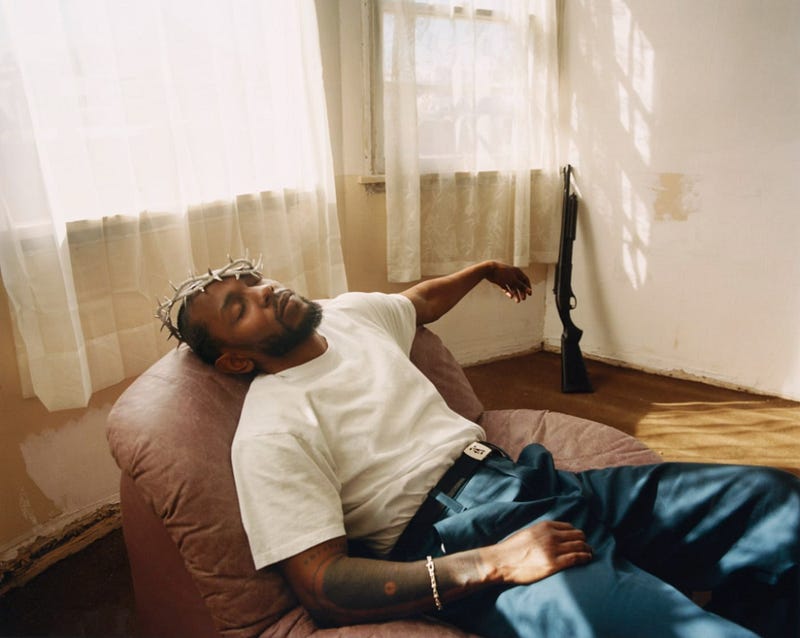
Fascinatingly, Lamar’s album also climaxes with a longer song partially directed towards his mother just as Vuong does with Mother I Sober. This song also discusses some of Vuong’s themes such as some alluded to sexual abuse and the death of loved ones, but culminates in an equal hope as Lamar’s monotone, spoken delivery makes way for triumphant screaming, shouting
So I set free myself from all the guilt that I thought I made So I set free my mother all the hurt that she titled shame So I set free my cousin, chaotic for my mother’s pain I hope Hykeem made you proud, ’cause you ain’t die in vain, So I set free the power of Whitney, may she heal us all, So I set free our children, may good karma keep them with God, So I set free all hearts filled with hatred, Keep our bodies sacred, As I set free all you abusers — this is transformation.
Both Vuong and Lamar have hurt on levels of extreme pain. You can tell this from their words quite clearly. Vuong casually mentions ‘another country burning on TV’ in Snow Theory and even opens Time is a Mother with a quote from Cesar Vallejo which says ‘Forgive me, Lord: I’ve died so little!’. Vuong discusses the isolation he can feel and some of the brutality of his romantic encounters, he mentions addiction issues (in Dear Sara, he says ‘I’m / trying to stay clean but / my hands are monsters.’) and more through Time is a Mother, but it is the hints of hope scattered throughout which suggest an overcoming of pain and a move towards trying to continue despite it all.
So, overall, Time is a Mother got to me in ways I wouldn’t have expected. It is a great balance of grief and of hope, which allows the pain to be felt in a truer way than if the book was brutally sad and nihilistic (‘I am starting to root for him, on his way to dust’) from start to finish. Vuong’s control over language is a joy to experience, with his intelligent wordplay and shifting of typical sayings (Not Even again — ‘I made it out by the skin of my griefs), but at times his vagueness and abstraction can be more frustrating than intriguing, and those moments forced me out of the tone being set. It’s a great book, a brief and emotional read, that I would certainly recommend. And from this point forward, I will be on the lookout for a copy of On Earth We’re Briefly Gorgeous, which I know is greatly beloved and sounds quite interesting again with that mix of historical pain and the present troubles.
I did also enjoy this review, and found it very interesting.
Thank you for reading, and thanks to Sadie Seroxcat for the efforts that have been put in not only to the CA book club, but also to CounterArts in general.
For more from me on literature, see the list below:
Alternatively, if you want to support my writing, you can donate using Ko-fi.


