
Book: Atomic Habits
Key takeaways from the book
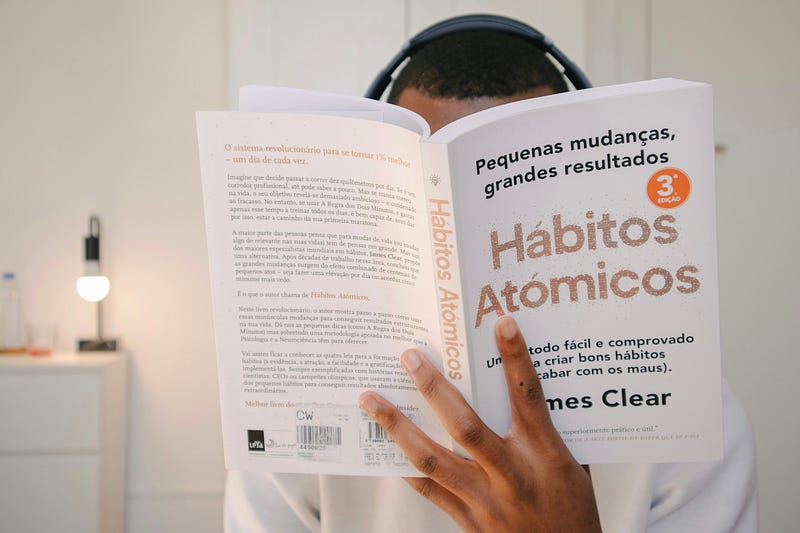
The System
“Goals are about the results you want to achieve. Systems are about the processes that lead to those results”
If you’re an entrepreneur, your goal might be to build a million-dollar business. Your system is how you test product ideas, hire employees, and run marketing campaigns.”
“What we really need to change are the systems that cause those results. When you solve problems at the results level, you only solve them temporarily. In order to improve for good, you need to solve problems at the systems level. Fix the inputs and the outputs will fix themselves.”
Identity
“With this approach, we start by focusing on who we wish to become.”
“It’s one thing to say I’m the type of person who wants this. It’s something very different to say I’m the type of person who is this”
“True behavior change is identity change. You might start a habit because of motivation, but the only reason you’ll stick with one is that it becomes part of your identity.”
Your behaviors are usually a reflection of your identity. What you do is an indication of the type of person you believe that you are — either consciously or nonconsciously. Research has shown that once a person believes in a particular aspect of their identity, they are more likely to act in alignment with that belief.
“The biggest barrier to positive change at any level — individual, team, society — is identity conflict.”
“Whatever your identity is right now, you only believe it because you have proof of it.”
“Progress requires unlearning. Becoming the best version of yourself requires you to continuously edit your beliefs, and to upgrade and expand your identity.”
“The more you repeat a behavior, the more you reinforce the identity associated with that behavior. In fact, the word identity was originally derived from the Latin words essentitas, which means being, and identidem, which means repeatedly. Your identity is literally your “repeated beingness.”
“Every action you take is a vote for the type of person you wish to become. No single instance will transform your beliefs, but as the votes build up, w ce was so does the evidence of your new identity.”
Awareness
“You can notice an opportunity and take action without dedicating conscious attention to it. This is what makes habits useful.”
As the psychologist Carl Jung said, “Until you make the unconscious conscious, it will direct your life and you will call it fate.”
“The process of behavior change always starts with awareness. Strategies like Pointing-and-Calling and the Habits Scorecard are focused on getting you to recognize your habits and acknowledge the cues that trigger them, which makes it possible to respond in a way that benefits you.”
“Many people think they lack motivation when what they really lack is clarity”
How to apply
The 1st law (Cue): Make it obvious.
The 2nd law (Craving): Make it attractive.
The 3rd law (Response): Make it easy.
The 4th law (Reward): Make it satisfying.
“Broadly speaking, the format for creating an implementation intention is: “When situation X arises, I will perform response Y.””
“People who make a specific plan for when and where they will perform a new habit are more likely to follow through.”
“The simple way to apply this strategy to your habits is to fill out this sentence:
I will [BEHAVIOR] at [TIME] in [LOCATION].
=> Studying. I will study Spanish for twenty minutes at 6 p.m. in my bedroom.”
“After [CURRENT HABIT], I will [NEW HABIT].”
For example:
Meditation. After I pour my cup of coffee each morning, I will meditate for one minute.”


