
Body-Shaming and The Judge’s Chamber
Words have weight, so let’s weigh in.
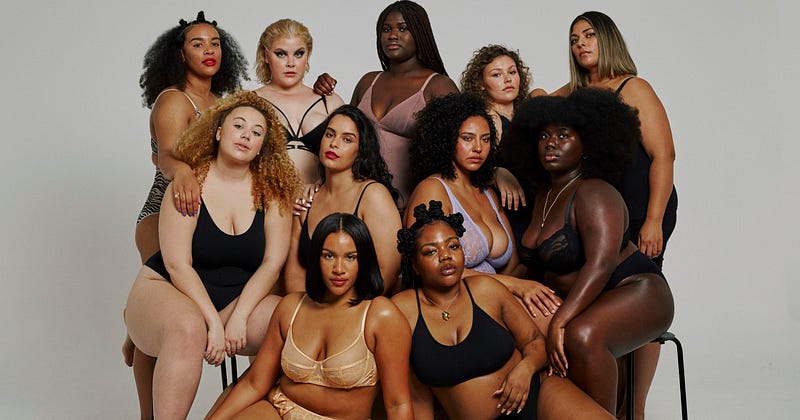
“My body is not yours to critique and discuss. My body is not yours for consumption. My body is my vessel. An archive of experiences. A weapon that has fought battles only I understand. A library of love, pain, struggle, victory, and mystery. Your eyes cannot define all it has endured. Do not place value upon my body, place it upon my being”. — Sophie Lewis
Body-shaming: a form of bullying that involves derogatory statements to terrorize those who are being body-shamed.
“I have been teased all my life because of my weight,” says Crystal. Now a mother of two, Crystal still hears comments about her being too skinny. She says she does not believe anyone in her circle realized how much the phases uses to describe her weight offended her, “skinny minnie”, “flatbread”, “tiny bop” or “when are you going to put some meat on those bones”? Knowing that it is normalized to taunt and fat-shame big girls she thought it would make her appear selfish if she defended herself against the weight comments. After all, she’s lucky right? To not have to worry about shedding weight. It hit me like a ton of bricks when Crystal disclosed she struggled with hyperthyroidism (overactive thyroid). Hyperthyroidism accelerates the body’s metabolism, causing unintentional weight loss and a rapid or irregular heartbeat. As a friend, I was no participant in her weight insecurities. However, I learned to be sensitive in regards to running off at the mouth with remarks about another woman’s body weight.
Via the rise and takeover of social media, we live in an image-driven society like never before. With that said, women feeling ashamed of their body image has become more prevalent. I’m sure most adults have fallen victim to being body-shamed. In reverse, we’ve equally had our day of slandering another woman’s body image. The act of body-shaming can take place up close and personal and over the internet by way of social media platforms.
For centuries the entertainment industry marketed and pedestalized one standard of beauty. The media has always had unrealistic images of women’s bodies. Old white men made up the vast majority of Hollywood’s executives, chairmen, and directors. Setting a capitalistic, misogynist, chauvinist, and male-driven industry, thin women were the love interest in television, movies, braced the front cover of magazines, and the chosen ones for modeling agencies. Size 0–2 for the win. The feminine standards for beauty where thinner women were presumed more beautiful than heavier women began to turn around in the early 1960s.
Although body-shaming has always been synonymous with fat shaming this, is not the only form of body-shaming. There are stigmas around being fat, skinny, thick, slim thick, and all other body types in between. As women, we tend to be our own worst enemy. We body-shame ourselves when we don’t fit the portrayals shoved down our throats on social media.
“Ashamed of being too fat or too thin. Ashamed of our muffin tops, bingo wings, love handles, pancake chests, or flat bums. Ashamed of our bumpy, big, fat, and pointy noses. Ashamed of our armpit hair, leg fuzz, and bikini line. Ashamed of our cellulite, large pores, wrinkles, freckles, birthmarks, age spots, or pimples” (Widdows Ph.D.). Not to mention, the sense of online anonymity provides internet trolls a home to boldly swallow up others’ self-esteem.
Celebrities are easy targets of body-shaming. STAR magazine posts the best beach bodies vs. the worst beach bodies every year. Covers with such titles and images force-feed us how we should look vs. how we should not look. As a society, we model behaviors displayed to us in the media daily. Seeing these images long enough will cause you to believe something is wrong with you if your body type is not one of the ideal bodies that are receiving praise.
Psychological problems from Body-Shaming
- High blood pressure
- Chronic stress
- Increase in social anxiety: Isolation due to disgust for image
- Low self-worth
- Eating disorder: anorexia- the act of refusing to eat
- Bulimia- an emotional disorder involving distortion of body image and an obsessive desire to lose weight, in which bouts of extreme overeating are followed by depression and self-induced vomiting, purging, or fasting.
How to combat body-shaming and promote positive self-image
In conclusion, social media has become a dangerous blueprint for driving superficial standards for women. The notion that women are only deemed as beautiful if they meet specific beauty requirements only tarnishes their self-worth. Social media platforms are a paradox for beauty. The truth is even they don’t live up to the hype. Why should they even have to? Aesthetically, holding women to a standard that men are not is unfair and another form of misogyny. Though some take issue with the Body Positivity Movement, it is a positive movement that highlights every body shape, giving a more inclusive and realistic outlook on women’s bodies.
Some ways that we could be good to our bodies:
- Positive body affirmations (basically speak the positive changes you desire to see over your body daily). It takes some practice and getting use to but don’t count this one out.
- Give grace to your body as you are trying to achieve body goals
- Have a healthy relationship with your reality vs. social media
- Knowing your body type and how to work with what you got is extremely important.
- Appreciate all the different body types, including your own
- DO NOT DO ANYTHING FOR THE APPROVAL OF MEN
- Stop comparing yourself to others. Have you ever heard the phrase, “Comparison is the thief of joy” by Theodore Roosevelt? This is very true and we are all guilty of comparing ourselves to others. How do we get over this hurdle? I think it's accepting your differences and loving on them.