
Body Disposition Decisions Are Harder Than You Think
So better start planning for after you die!
I remember the old days, back in Venezuela (where I grew up), when everyone had a wake, a coffin, a funeral and a burial. That’s how things were. Period. I had a friend whose father was in the coffin making business and she used to joke that he’d never had a misunderstanding with an end customer.
As I grew older, now and again I would hear comments about some acquaintance of my parents having been cremated. The overheard adult always sounded disapproving or horrified.
Massimo, a friend of my husband’s side of the family, was the first person I actually knew who was cremated. I thought it exceptional, and practical. That was 22 years ago.
Nowadays, there are all kinds of options when it comes to the disposition of a body. Will there be a traditional burial and final resting place underground? Will the body be cremated? When? With or without a viewing? Where will the ashes (or “cremains” as they’re called by some providers) go? For how long? Who keeps them? In what? Who must be there when the ashes are scattered?
It’s a decision with as many options as there are cereals at the grocery store. The reason that cereals come to mind is that the proliferation of disposition options reminds me of the growth in cereal choices over my lifetime, and I’m not that old.
My first memory of a US supermarket has to do with the cereal aisle. In Venezuela, we used to call cereal “conflei” (as in Kellogg’s Corn Flakes) because that was the one and only type available long after numerous cereals were sold in the US.
Today, the US consumer can select among hundreds of cereal brands. Some have proposed that this level of choice may be counterproductive. Choice explosion, it’s been suggested, makes it hard to decide and to be satisfied with your decision, regardless of what it is and how you made it. (If you’re interested in the topic of choice overload, read Barry Shwartz’s The Paradox of Choice or listen to his TED Talk. Both great.)
Although not to the same extent, the body disposition options have also expanded to the point that making a decision can be complicated - daunting really. This, however, is where the similarities between shopping for cereal and planning for a final resting place end, especially when it comes to evaluating the soundness of the decision once it’s executed.
For one, if you’ve had the foresight and opportunity to plan your body’s destiny, you’ll never get to be satisfied with, nor regret, how it all went. And, obviously, you can’t get feedback from the dead about how pleased they were with their plan’s outcome.
Plus it’s a choice for all eternity.
Furthermore, even if you expressed your general wishes to your loved ones, there will likely be loose ends. They may still inherit the decisions about all the details surrounding your general directions. At that point though, the number of alternatives may be amplified if several people are involved in sorting out the details. This is exactly what happened in Mary’s case.
Mary, mother of seven grown children, died of cancer three years ago. Mary asked that her body be donated to science, and that, whatever science could not use of her precious gift to be cremated. She also designated a sibling to be in charge of collecting the ashes.
And that’s as far as the details in Mary’s plan went, which, to my mind, is quite far. Yet, three years after Mary’s passing, her family needed to decide what to do with the ashes, which turned out to be harder than you’d think.
I guess one can’t plan for everything.
What did the family do with Mary’s ashes? With there being so many options nowadays, and owing to the fact that Mary had nine children, the family inevitably had much difficulty coming to an agreement. A sister floated the idea of making Christmas ornaments (because Mary loved Christmas decorations); another suggested making necklaces.
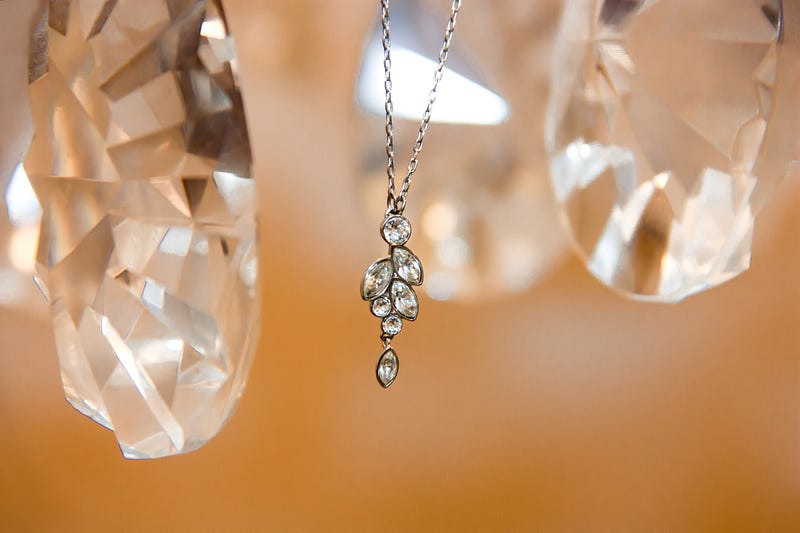
Perhaps I’m just lucky that I haven’t had close family members pass away, but I had no idea that all manner of jewelry and ornaments are made for, and from, cremains. You can opt for a miniature urn pendant to carry a bit of ash with you; you can blend the ash into glass pendants -or anything glass really. I’ve learned that you can also incorporate cremains into synthetic diamonds.
Mary’s ashes were, in the end, kept in an urn and placed in a lovely cemetery.
Over the weeks I pondered the topic of body disposition and drafted this story, I asked several people about their wishes. Some have clearly given it much thought. Others have an immediate emotional response. A few answers are quite funny.
My sister Rosanna, for example, has forbidden her daughters to place her body in a coffin. She’s claustrophobic.
My friend Christina has devised an elaborate plot. Cremate her body. Save the ashes. Then, every year or so, her three children are to meet at a different place in the world and scatter a bit of ash. One pinch of ash scattered over the years will ensure that her children will get together with some regularity.
My dad says he doesn’t want to think about it, that he won’t care what we decide, since he’ll be dead already. Being the nudge he is, his plan -I know- is having no plan: he wants to see, from the afterlife beyond, how his seven children deal with it all.
- * The Honest Ponderer helps deep thinkers achieve personal growth by examining the human experience with unapologetic honesty. Monthly or so emails.*