
Blue Spaces Are A Secret To Happiness
Walking near the water boosts mood and wellbeing, according to science.
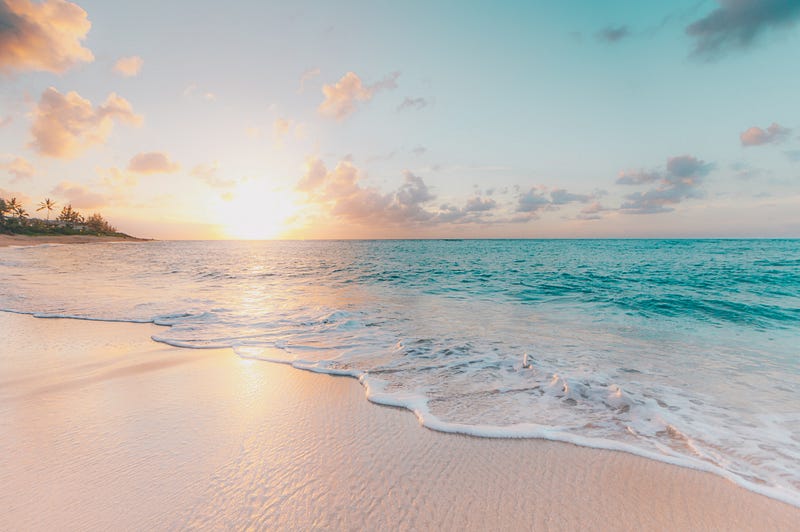
I've been thinking a lot about happiness lately. After all, as we continue to face the coronavirus pandemic, access to many of the things I find fun is limited. And like many of us, I've turned to open air spaces more than usual this summer.
That's why new research out of the Barcelona Institute for Global Health is such good news for those looking to boost their mood. And it may also explain why we've had such a hard time keeping people from crowding beaches and lakes. Bodies of water make us happy.
You've heard of green spaces, but did you know about blue ones? Blue spaces are areas where water is a prominent feature of the landscape. They include beaches, lakes, rivers or even fountains. This may explain a great deal about my kids love of the sprinkler.
A Walk on the Beach in Barcelona
The study looked at a group of 59 adults who each spent 20 minutes a day for one week walking in a blue space along the beach in Barcelona. Then in a different week they spent 20 minutes each day walking the urban streets of Barcelona. Finally on the third week they spent that 20 minutes a day resting indoors.
Walking along the beach was associated with immediate improvement in mood and measures of well-being. The participants even reported better mental health right after the walk.
These findings echo prior findings which have identified health benefits from green spaces. In fact, it's pretty well-established in the research that exercising outdoors improves your health more than exercising indoors. But this study specifically looked at blue spaces.
Can we Create Blue Spaces?
I couldn't help but notice that this is done in Barcelona. I've only visited Barcelona once, but I fell in love. It's amazing. So I couldn't help but wonder if it was the effect of Barcelona, as opposed to all blue spaces.
Still, as a parent I noticed an immediate effect of water on children. My own children can be in the grumpiest mood and be violently opposed to going to the pool, but after a few minutes they become very happy. I recently improved the mental health of my own and my friends children by holding a social distancing water gun and water balloon party in the backyard.
During this summer of coronavirus and social distancing, I've heard endless stories of people buying inflatable pools for the backyard. The researchers didn't identify pools in this study, but they did mention fountains. So it stands to reason that we may be able to create our own blue spaces if we don't have access to a nearby river or lake.
We are as humans what is called biophilic — we love nature and we need it. We can choose to neglect that need, but if we spend time in green or blue spaces, we end up happier. Maybe it's time to install that fountain you've always dreamed about having in your backyard. Or for those in urban environments, consider walking by the lake. Just don't forget your mask.
For some help with life as a parent, grab a copy of The Ultimate Parenting Checklist. These five bits of uncommon wisdom will make your life as a parent much easier.