avatarShamar M

Free AI web copilot to create summaries, insights and extended knowledge, download it at here

1949

Abstract

ble (HEV) light.</p><p id="ae09">This form of light can <a href="https://www.allaboutvision.com/en-gb/digital-eye-strain/blue-light/">penetrate down to the retina in my human eye</a> (can be found at the back of the eye) and can also damage light-sensitive cells in the retina which can cause permanent vision loss in the long-run. However, this is no way for us to measure how much blue light the human eye takes in and how much we can take until it’s too late.</p><figure id="afa3"><img src="https://cdn-images-1.readmedium.com/v2/resize:fit:800/0*oMbpYpIpfujbT8-9.jpeg"><figcaption>Image from <a href="https://www.vmrinstitute.com/what-is-the-retina/">VMR Institute.</a></figcaption></figure><p id="e126">Furthermore, as blue light scatters easier than other HEV light, looking at digital devices is more likely to cause <a href="https://preventblindness.org/blue-light-and-your-eyes/">digital eye strain</a>. Symptoms of this include sore, tired, and irritated eyes and difficulty focusing. I don’t know for sure if this was the cause of my headaches, but it does sound like it.</p><p id="876c">However, it’s not just our eyes blue light can damage. It’s our skin too. <a href="https://selfhacked.com/blog/blue-light-therapy-benefits/">Blue light activates proteins that contain light-sensitive molecules</a> which can cause oxidative stress. Our skin cells respond by releasing molecules that control skin growth.</p><p id="a9e6">Despite all this bad news regarding blue light, it can also be beneficial for you.</p><ol><li>It can help treat those with SAD (Seasonal Affective Disorder). In <a href="https://pubmed.ncbi.nlm.nih.gov/21911257/">a study with 52 adults</a> who had SAD, they receiving blue light morning therapy for 10 days. Results showed that this therapy reduced depressive symptoms.</li><li><a href="https://pubmed.ncbi.nlm.nih.gov/24213962/">Blue light can reduce fatigue and daytime sleepiness</a>.</li><li><a href="https://p

Options

reventblindness.org/blue-light-and-your-eyes/">Can boost memory, cognitive function and improve mood.</a></li></ol><p id="d665">There is not a lot of scientific evidence around that suggests that blue light glasses do actually work.</p><blockquote id="642c"><p>‘The best scientific evidence currently available does not support the use of blue-blocking spectacle lenses in the general population to improve visual performance, alleviate the symptoms of eye fatigue or visual discomfort, improve sleep quality or conserve macula health.’ — <a href="https://www.college-optometrists.org/the-college/policy/position-statements/blue-blocking-spectacle-lenses.html">The College of Optometrists</a></p></blockquote><p id="999e">Have the glasses worked for me? Indeed they have! I bought two pairs of <a href="https://www.quayaustralia.co.uk/?geo=1&amp;&amp;utm_source=MT&amp;utm_medium=paidsearch&amp;gclid=Cj0KCQiA34OBBhCcARIsAG32uvPauEWJDIzcQwWyauX1IFcTgtinbtdXCe-mwprSDfIjlrElVODUvWEaAp7iEALw_wcB">Quay Australia glasses</a> as they were doing a promotion, two for £60. I wear them whenever I am at work or writing which is actually most of the day.</p><p id="e867">The second I put on my glasses, it’s like my eyes get instant relief. Everything because easier to look at and it doesn’t feel so hard on my eyes. This is hard to explain unless you try them yourself and I highly recommend you do.</p><p id="d41f">It doesn’t look as if many glasses brands/shops are selling blue light glasses currently which is a real shame. <a href="https://www.forbes.com/sites/forbes-personal-shopper/2020/05/01/how-and-where-to-buy-blue-light-glasses/">The ones that I have found</a> are priced fairly high, but glasses are priced high these days anyway.</p><p id="86d0">I do hope they start because if my generation has to stare at screens for the rest of their days (and this is likely) then we will all have eye problems before the age of 40.</p></article></body>

Blue Light Glasses Are A Must- Have Product

What is blue light, how can it damage you, and how blue light glasses helped my headaches

Photo by Susan Duran on Unsplash

Last week I was beginning to get horrid headaches and kept dabbling in ibuprofen snacks. This is not usual for my body to get persistent headaches at all! Suddenly, I had an epiphany that it was probably down to my eyes being strained.

Like most people who write, I write using my laptop. I also work as an administrator which means I am usually looking at two screens a day. In addition to this, I have a mobile phone attached to my hand so that’s another screen that I’ll look at it in a day. Not good, too much digital time!

So, I decided to buy blue light blocking glasses to help with my headaches. You do not need a prescription, an eye-test to buy blue light sunglasses and they are suitable for any age (although I am yet to see kid’s blue light glasses).

Nearly all the digital technology (e.g. computer screens, smartphones, tablets) includes blue light and too much of it really isn’t good for our eyes. Blue light comes from the sun and LED lights. It suppresses our body’s release of melatonin and messes with our sleep circadian rhythm causing us to stay awake.

Blue light is one of the several colors on the electromagnetic light spectrum, having a wavelength of 400 and 525 nanometre and is also known as being a form of high-energy visible (HEV) light.

This form of light can penetrate down to the retina in my human eye (can be found at the back of the eye) and can also damage light-sensitive cells in the retina which can cause permanent vision loss in the long-run. However, this is no way for us to measure how much blue light the human eye takes in and how much we can take until it’s too late.
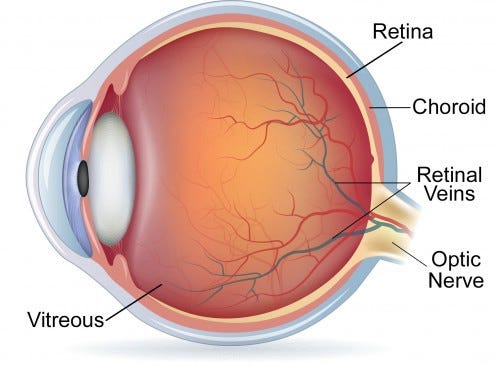
Image from VMR Institute.

Furthermore, as blue light scatters easier than other HEV light, looking at digital devices is more likely to cause digital eye strain. Symptoms of this include sore, tired, and irritated eyes and difficulty focusing. I don’t know for sure if this was the cause of my headaches, but it does sound like it.

However, it’s not just our eyes blue light can damage. It’s our skin too. Blue light activates proteins that contain light-sensitive molecules which can cause oxidative stress. Our skin cells respond by releasing molecules that control skin growth.

Despite all this bad news regarding blue light, it can also be beneficial for you.

  1. It can help treat those with SAD (Seasonal Affective Disorder). In a study with 52 adults who had SAD, they receiving blue light morning therapy for 10 days. Results showed that this therapy reduced depressive symptoms.
  2. Blue light can reduce fatigue and daytime sleepiness.
  3. Can boost memory, cognitive function and improve mood.

There is not a lot of scientific evidence around that suggests that blue light glasses do actually work.

‘The best scientific evidence currently available does not support the use of blue-blocking spectacle lenses in the general population to improve visual performance, alleviate the symptoms of eye fatigue or visual discomfort, improve sleep quality or conserve macula health.’ — The College of Optometrists

Have the glasses worked for me? Indeed they have! I bought two pairs of Quay Australia glasses as they were doing a promotion, two for £60. I wear them whenever I am at work or writing which is actually most of the day.

The second I put on my glasses, it’s like my eyes get instant relief. Everything because easier to look at and it doesn’t feel so hard on my eyes. This is hard to explain unless you try them yourself and I highly recommend you do.

It doesn’t look as if many glasses brands/shops are selling blue light glasses currently which is a real shame. The ones that I have found are priced fairly high, but glasses are priced high these days anyway.

I do hope they start because if my generation has to stare at screens for the rest of their days (and this is likely) then we will all have eye problems before the age of 40.

Medical
Science
Self
Advice
Eyecare
Recommended from ReadMedium