
NATURE. PHOTO ESSAY.
Blooming Beauties High Above the Tree Line
Wildflowers found in the high alpine terrain of the Dolomites
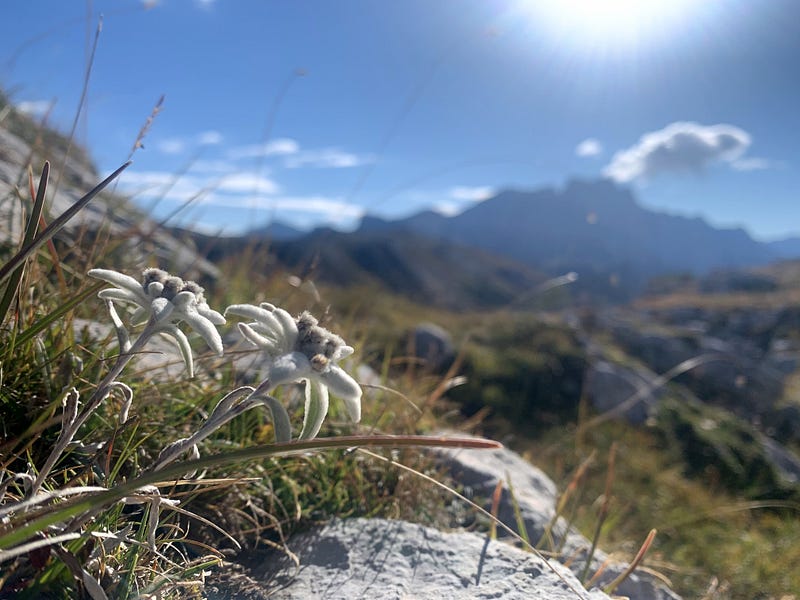
They are just like wonders on earth. Flowers that are blooming at altitudes at and above 3000 meters. Growing in between and out of cliffs. Blooming in rocky terrain while hanging off the mountain.
The Alps, and in specific the Dolomites, are just magnificent due to their rocky terrain and spectacular mountain slopes. It’s the views, the landscape feature, and of course all the fauna and flora that make the area so special.
I just came back from a trip to South Tyrol and I’m still daydreaming about it. As a passionate photographer, I didn’t know where to look and what to capture. I wanted to stop every few meters to take a panoramic shot, capture a blooming beauty or just get a close-up shot of those magnificent peaks.
It wasn’t easy. And surely isn’t easier now, going through hundreds if not thousands of photographs. But to spread out the images and be able to share them I categorized collections and decided to pick out the flowers for this post.
So here we go, some blooming beauties from the Dolomites. South Tyrolean magnificence. I’m sharing with you the English, German and Latin names of those plants. My mom helped me to identify and name them but I’m not 100 percent sure about all of them.
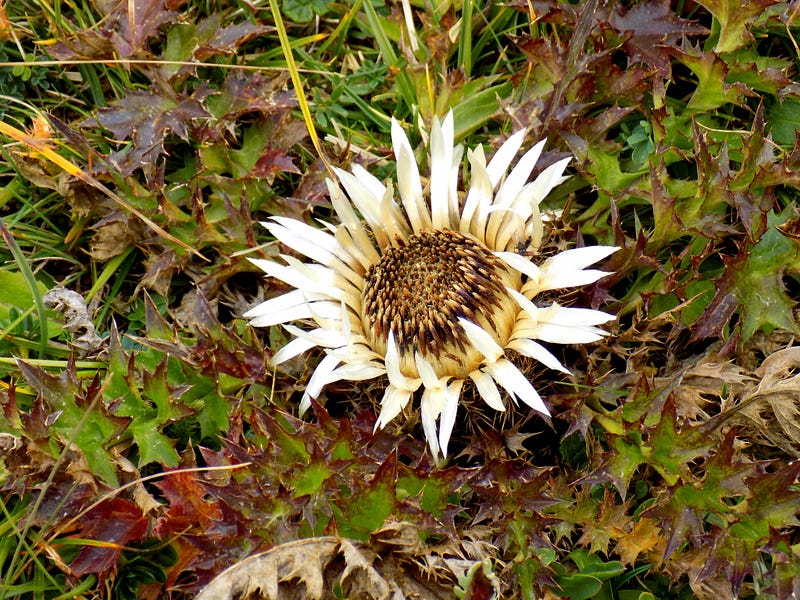
Silver thistle — Silberdistel (Carlina acaulis)
This one is rather common in the Alps but is still a pretty-looking plant in the flowering season. Its leaves are spiky and not nice to step on (when barefoot) but the white petals are always great for a lovely shot.
Silver thistles are native to the alpine regions of central and southern Europe.
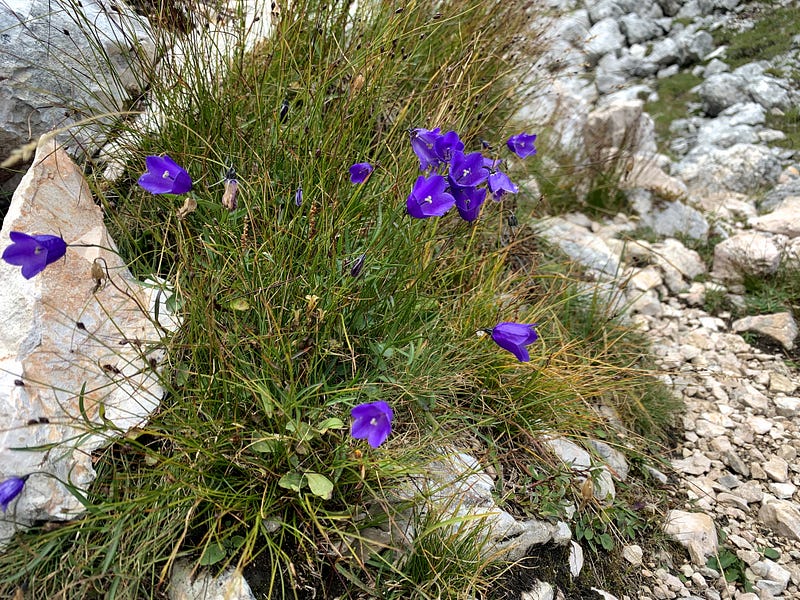
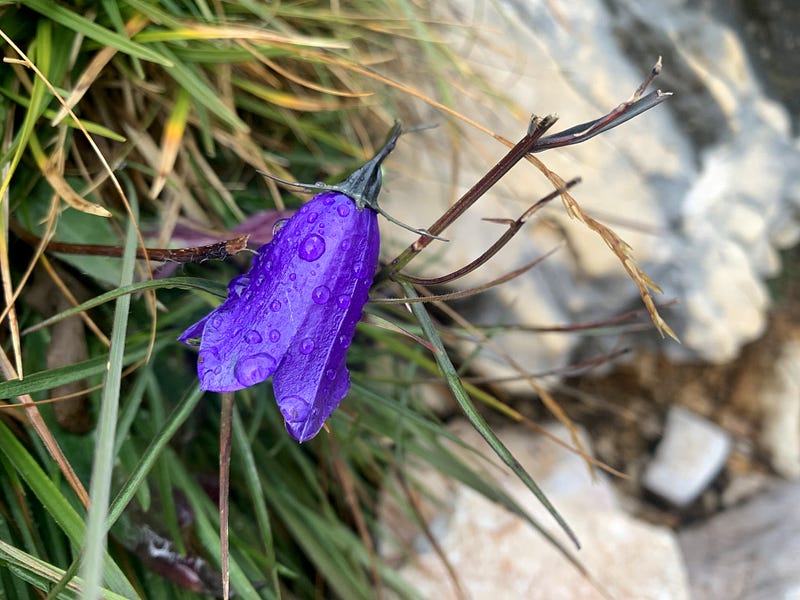
Alpine bellflower — Alpen-Glockenblume (Campanula alpina)
The purple shining flowers are often found in meadows but also in between rocks in high alpine terrain. They seem so common but are still pretty in their own way.
This is a species of perennial bellflower found in the Eastern Alps, Carpathian Mountains, and the Balkans.
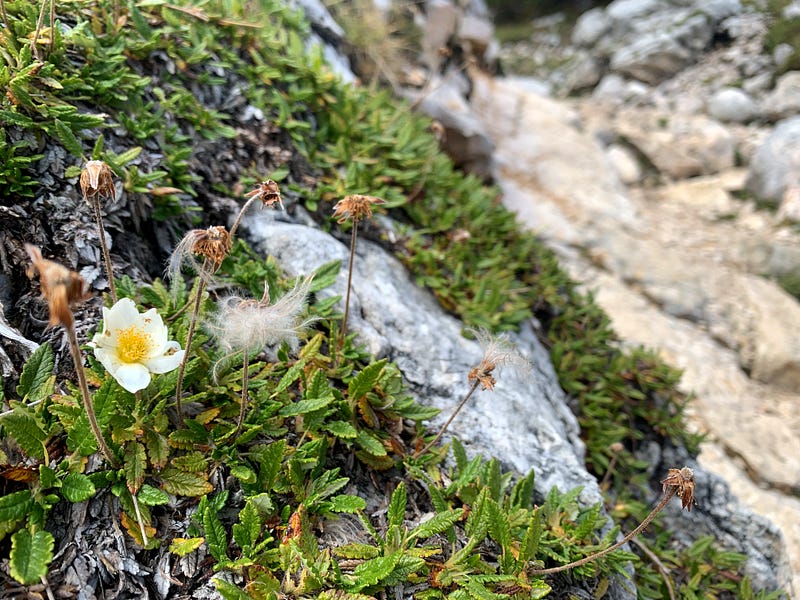
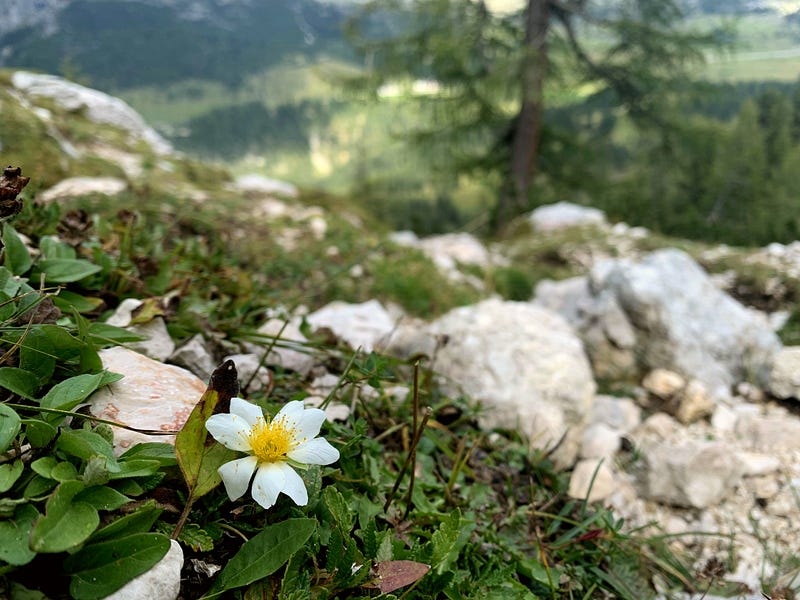
Eightpetal mountain-avens — Silberwurz (Dryas octopetala)
I’m not even sure if the two images below are of the same flower but they just appeared very similar to me. The first one I spotted was just underneath the summit of one of the peaks we climbed.
The Eightpetal Mountain-Avens is an artic-alpine flowering plant. As an evergreen subshrub, it is forming large colonies.
The specific epithet octopetala derives from the Greek octo (eight) and petalon (petal), referring to the eight petals of the flower. However, flowers with up to 16 petals also occur naturally.
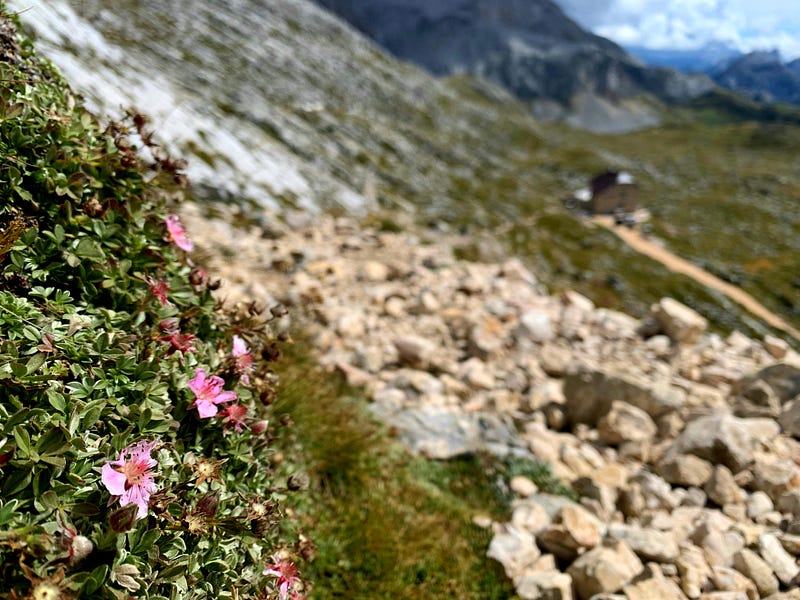
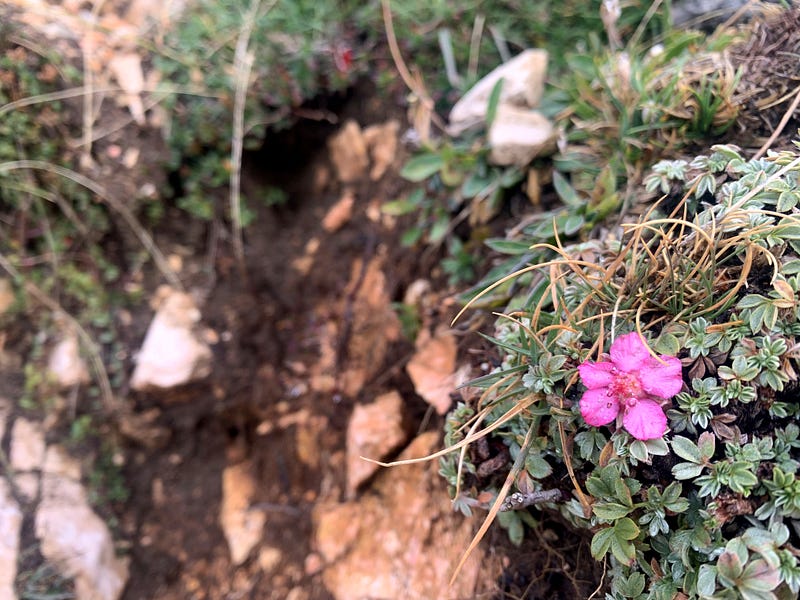
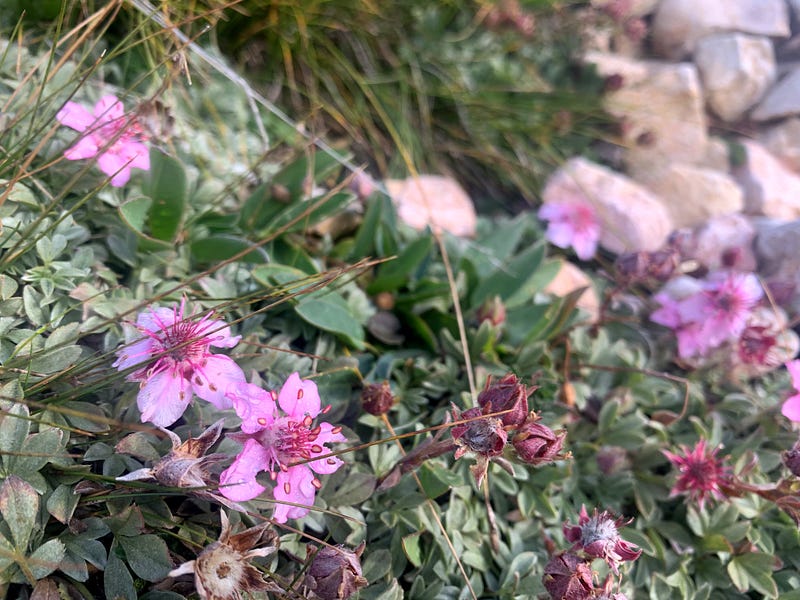
Pink cinquefoil —Dolomiten Fingerkraut (Potentilla nitida)
Another seemingly unobtrusive plant is covering boulders and rocky fields high above the tree line. This ground-covering plant only jumps into your eye when it’s flowering.
In pretty pink.
Endemic to the Alps, the pink cinquefoil grows at an elevation of 3200 m (10500ft).
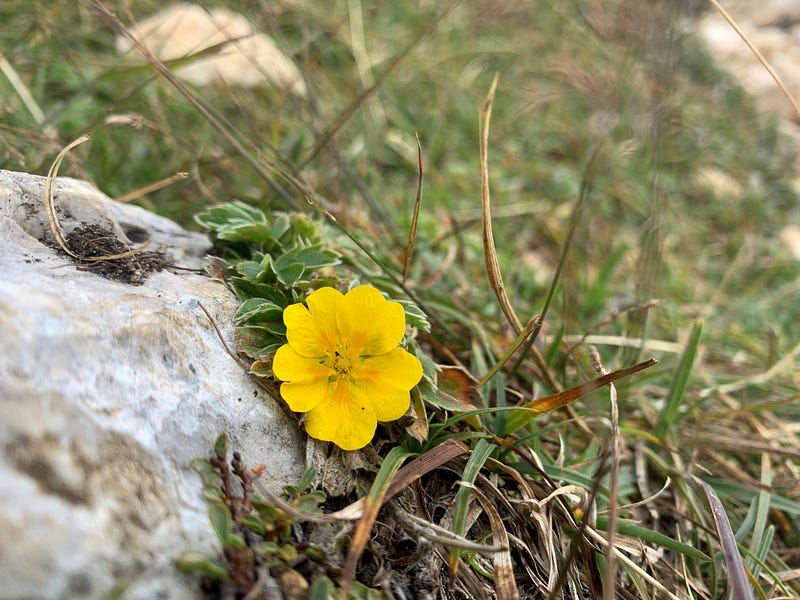
Golden cinquefoil— Gold-Fingerkraut (Potentilla aurea)
The name says it all. This yellow shining beauty is from the same species. Just its blossoms have a different color.
Golden.
The golden cinquefoil is native to the mountains of mainland Europe and has been introduced to Turkey. It mainly grows in sunny locations.
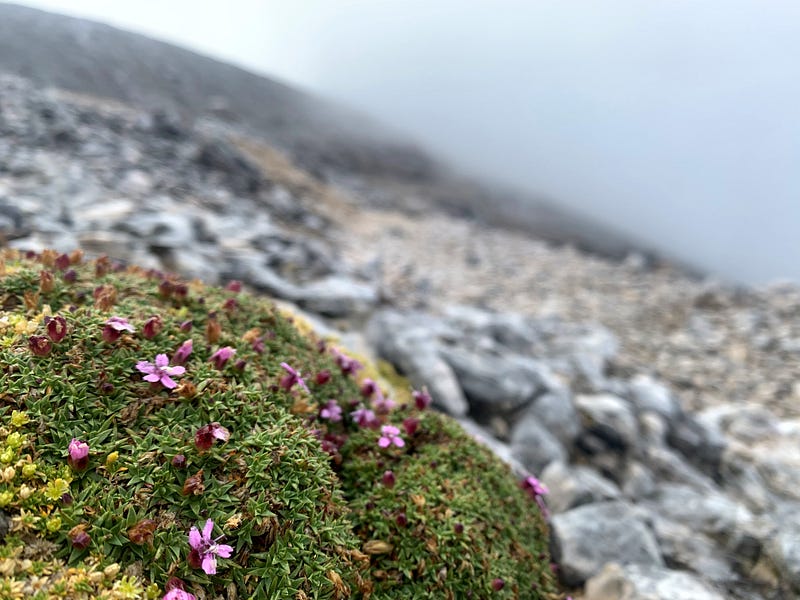
Moss campion — Stängelloses Leimkraut (Silene acaulis)
Another ground-covering plant but this one prefers it a little moister. It also has tiny pink blossoms that stand out from the white and gray rocks and its green bed of leaves.
This small mountain-dwelling wildflower is an evergreen perennial flowering plant and is also known under the name cushion pink. The moss campion is common in the high arctic and tundra and is to be found in the higher mountains of North America and Eurasia.
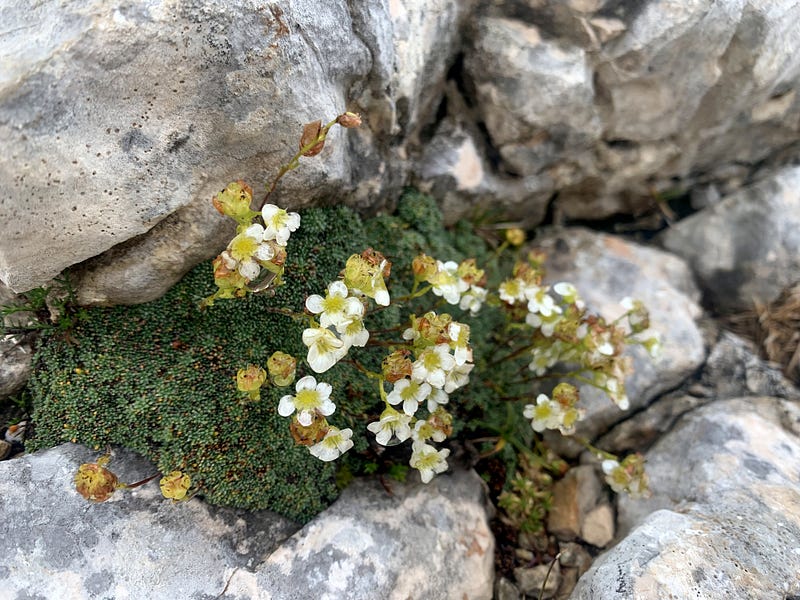
Tufted saxifrage —Blaugrüne Steinbrech (Saxifraga caesia)
This one is surely a specialist in rock fields and wherever you think plants can’t grow in or on. Another example of beauty in tiny pieces. It’s not a tall flower, at all. It has very short stems with withered, dead leaves at the base. The tufted saxifrage lives on limestone screes and rocks, and will do best if grown in tufa, but if in the open garden, it is best kept out of the full sun.
In English, it is also known as the tufted alpine saxifrage. The plant appears further south in mountainous areas of the Alps, Norway, Scotland, Wales, Iceland, Siberia, western North America, and Greenland.
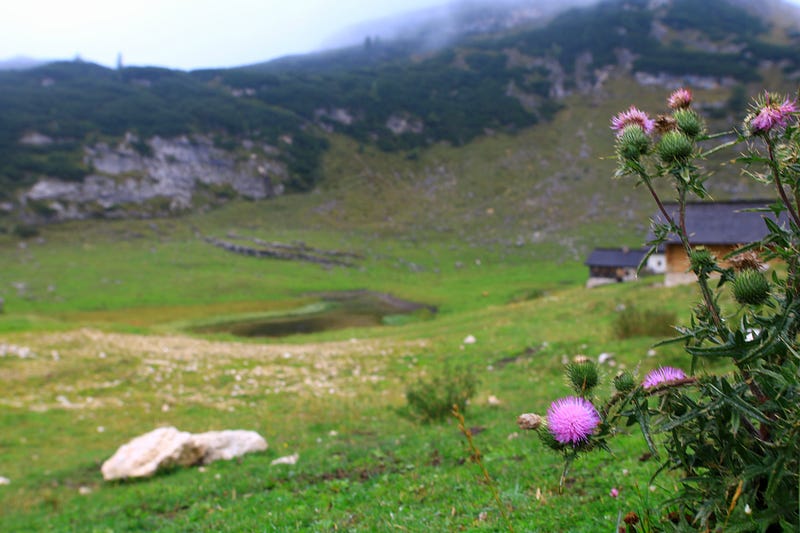
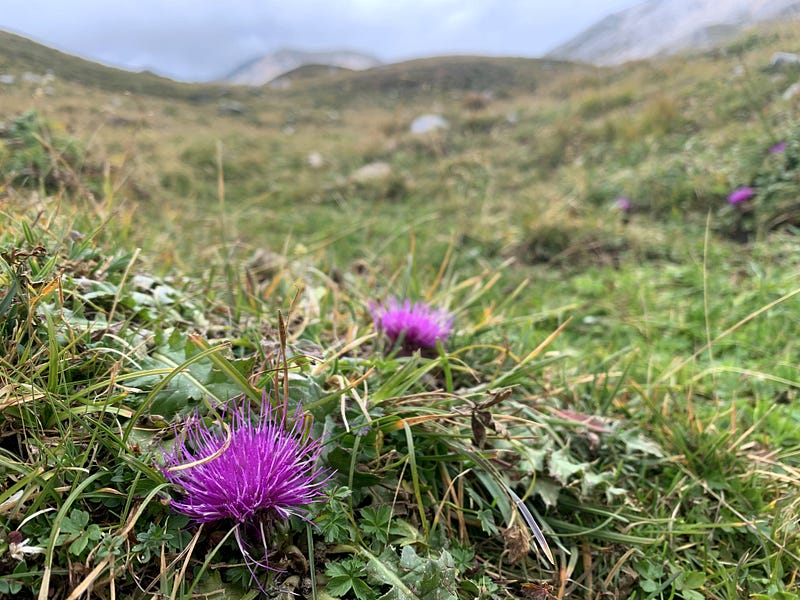
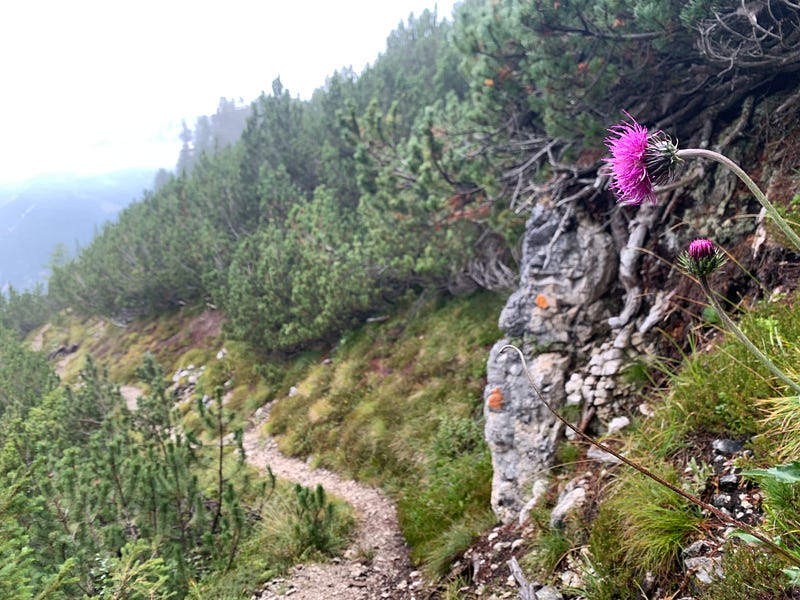
Alpine thistle — Alpendistel (Carduus defloratus)
Another one of those plants you don’t want to get stuck on or walk in while barefoot. The spikes aren’t harmful but surely not pleasant when stuck in your clothes or skin.
This flower is commonly known as the alpine sow-thistle or alpine blue-sow-thistle and is native to upland and mountainous parts of Europe
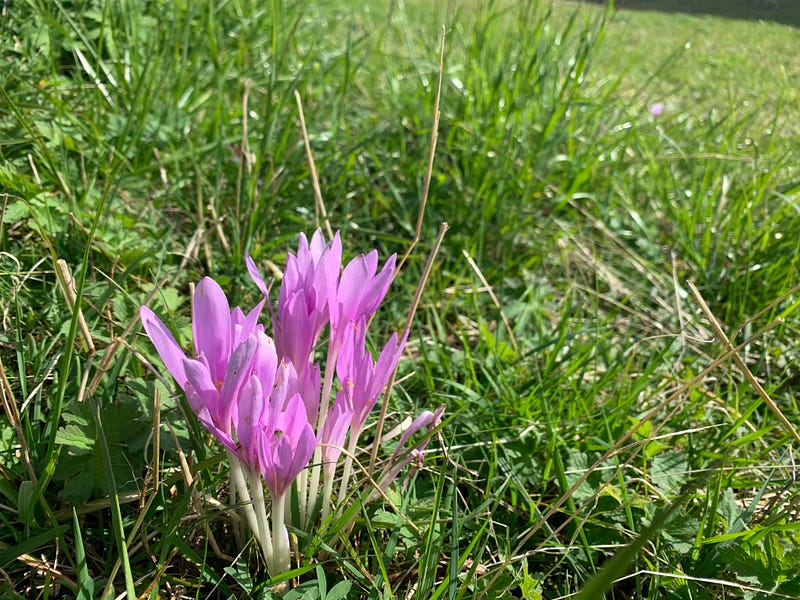
Autumn crocus — Herbstzeitlose (Colchicum autumnale)
This toxic autumn-blooming flowering plant resembles the true crocuses but is a member of the plant family Colchicaceae. It’s a herbaceous perennials plants with leaves growing up to 25cm in length.
I found a few bundles of these autumn crocuses as we were descending from our hike above the tree line. In fact, the meadow was covered in these blooming beauties.
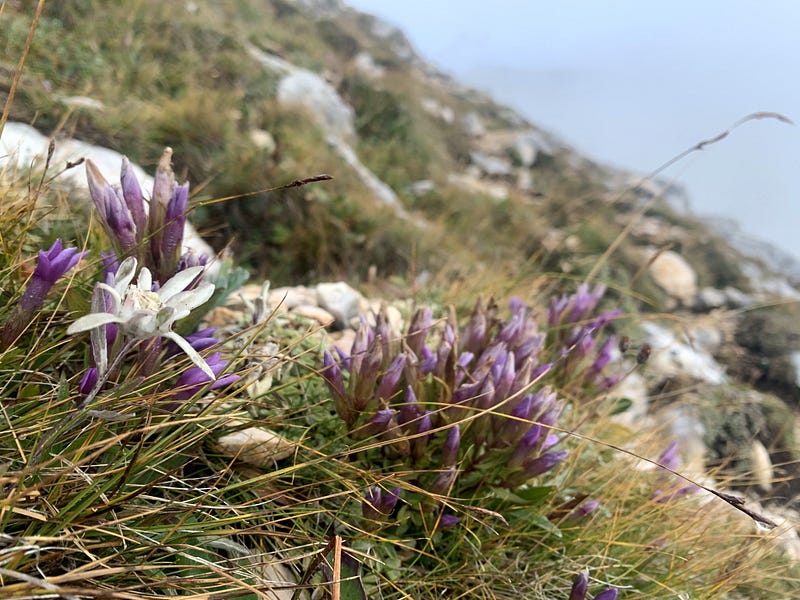
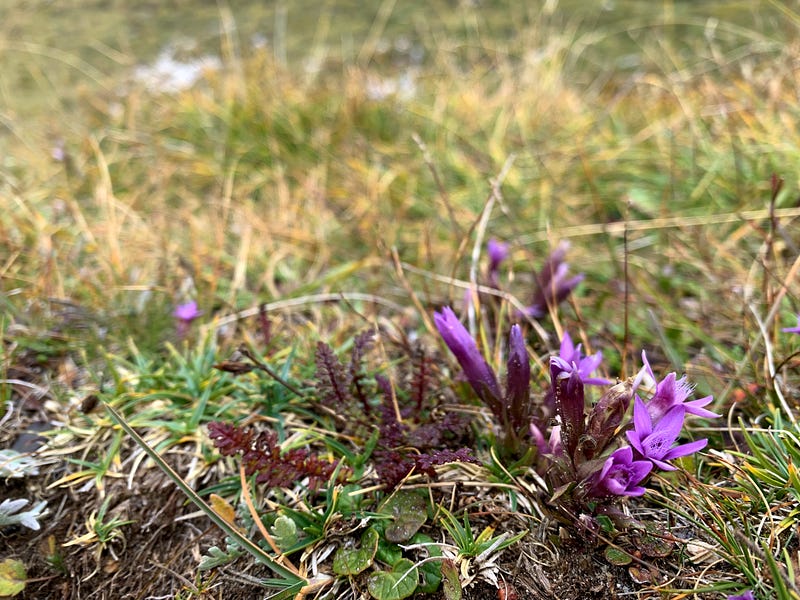
Gentianella — Rauer Kranzenzian (Gentianella aspera)
We are now getting into my selection of blooming gentian flowers. The name of gentian and the sight of a strikingly blue shining alpine-gentian will always remind me of my grandfather whose favorite flower it was.
This gentian in fact isn’t blue and I didn’t even find an English name for it. The gentianella has its habitat in the German-speaking regions of the Alps. The plant can reach between 5 to 30 centimeters and mainly grows in altitudes between 700 up to 2500 meters (2300–8200 ft) above sea level.
Oh, and don’t miss the intruder in the picture below. It’s a famous one I’ll come back later to.
Spring gentian — Frühlingsenzian (Gentiana verna)
The spring gentian is one of the smallest members in the Gentianaceae family but the one with the largest distribution. You can find the only few-centimeters tall gentian throughout Eurasia, from Ireland up to Russia. But it has also spread to the High Atlas of Marroco and even in Turkey, Iran, and Iraq.
The spring gentian tends to thrive on dry meadows in chalky soil.
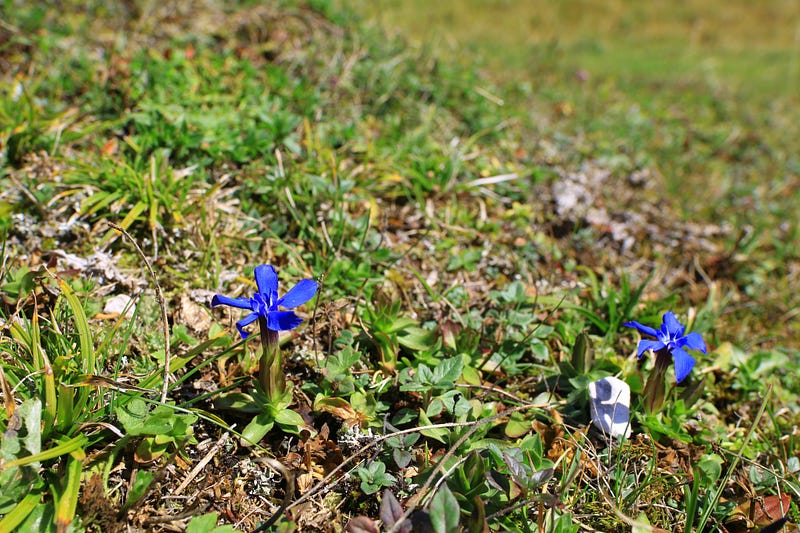
Fringed gentian — Gewöhnliche Fransenenzian (Gentianopsis ciliata)
This herbaceous wildflower is a biennial about 1–3' tall. The fringed gentian is blooming from August until November and prefers chalky or loamy soil.
This one is a little larger than the other gentians we found on our hikes.
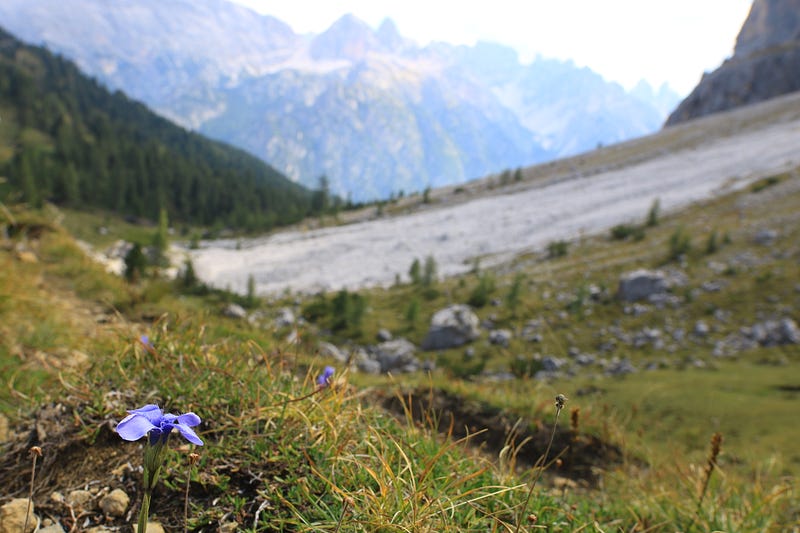
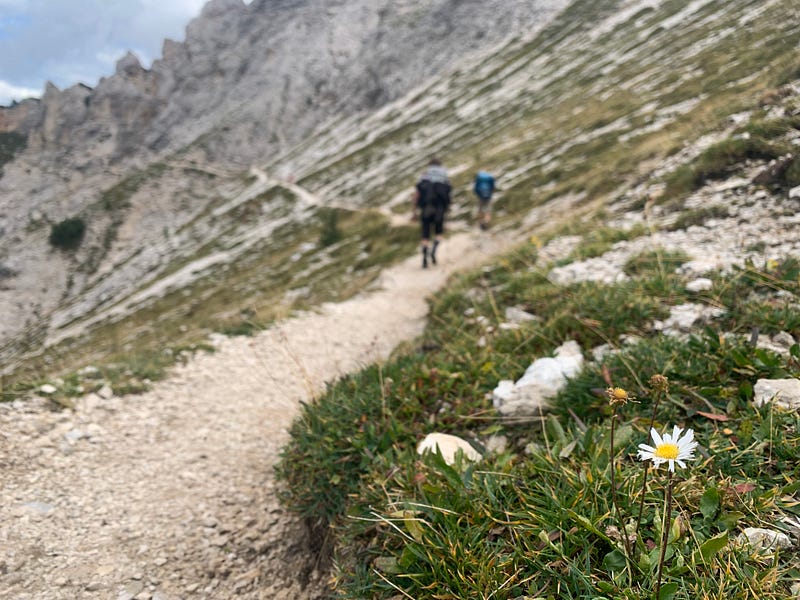
Highest-growing daisy on earth
Not sure how this ordinary plant made it up on my list but it must have to do with the location and stunning surrounding scenery. I almost tripped over this daisy just as we were starting a tricky crossing in the high-alpine terrain.
The common daisy used to be spread across Europe only but has widened its habitat over the years into most temperate regions including the Americas and Australasia. It prefers field-like environments but seemingly doesn’t mind mountainous terrain either.
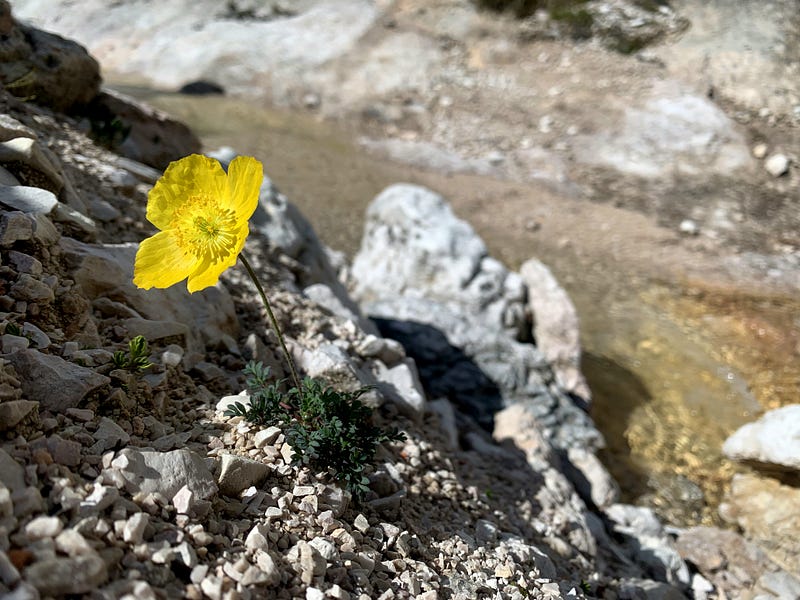
Alpine poppy — Alpen-Mohn (Papaver alpinum)
Papaver alpinum, the Alpine poppy or dwarf poppy, is a poppy found in the Alps. This species includes several sub-species, four of which are found in Austria.
All alpine poppy sub-species have a strong taproot and make a good rockery plant. To help secure the plant, the root hairs are angled upwards.
Edelweiss — Alpen-Edelweiss (Leontopodium alpinum)
Well and here’s the queen of the mountain flowers. The edelweiss. It is a plant of symbolic importance many hikers and mountain climbers have as a badge somewhere on their gear. The edelweiss signifies true love and sacrifice but is also the symbol of the German mountain troops representing endurance and resilience.
Leontopodium nivale, commonly called edelweiss is a mountain flower belonging to the daisy or sunflower family Asteraceae. The plant prefers rocky limestone places at about 1,800–3,000 meters (5,900–9,800 ft) altitude. It is non-toxic and has been used in traditional medicine as a remedy against abdominal and respiratory diseases.
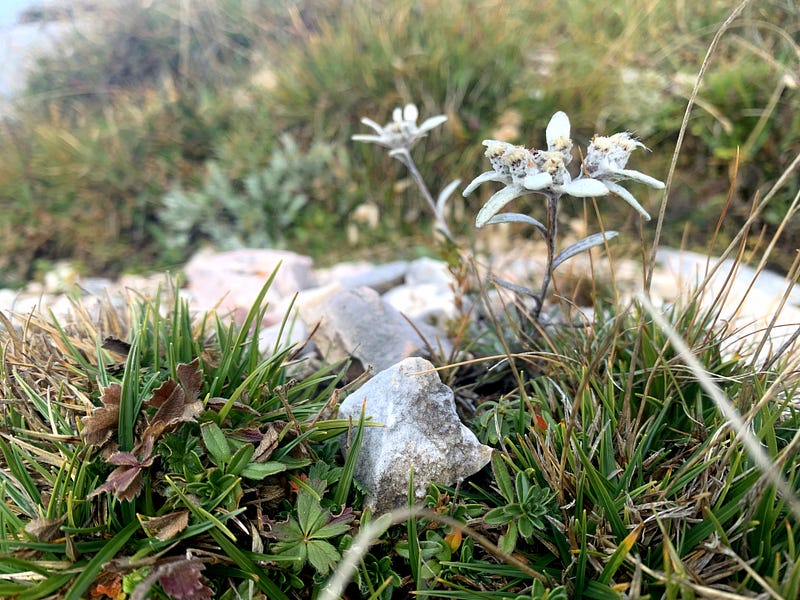
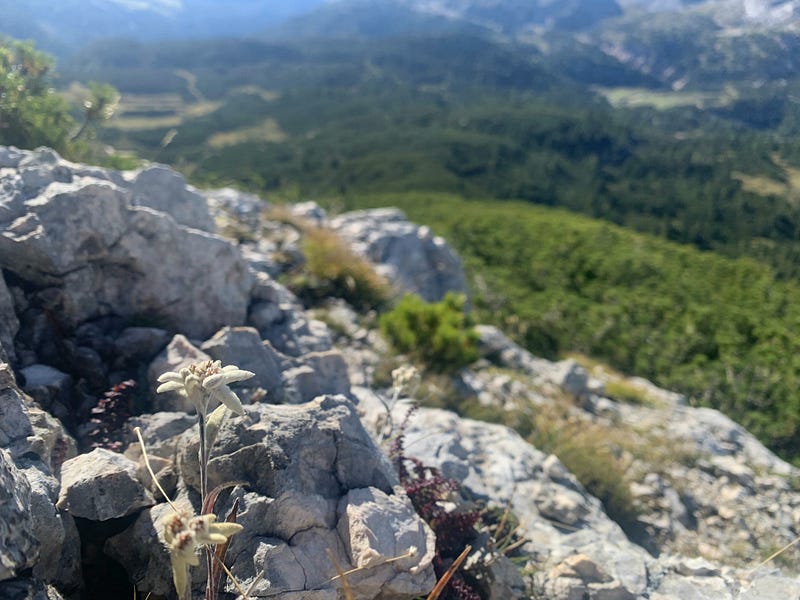
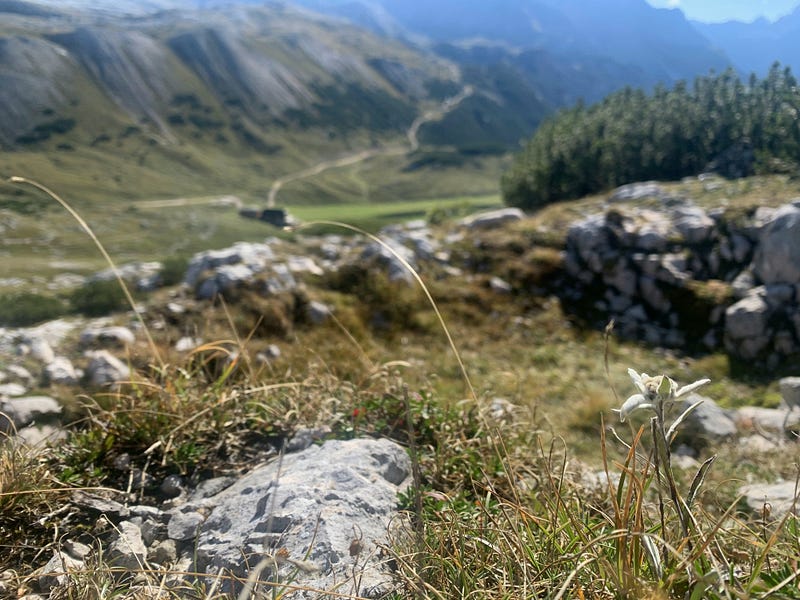
Due to uprising tourism and the symbolic background, the edelweiss had been widely collected and faced an endangered status. Today it is protected in almost all the regions of the Alps and you’ll face a fine when picking a flower.
Which is why I collected a few photographs for you instead. To keep this flower for later generations to marvel at as well and protect its habitat in the mountains.
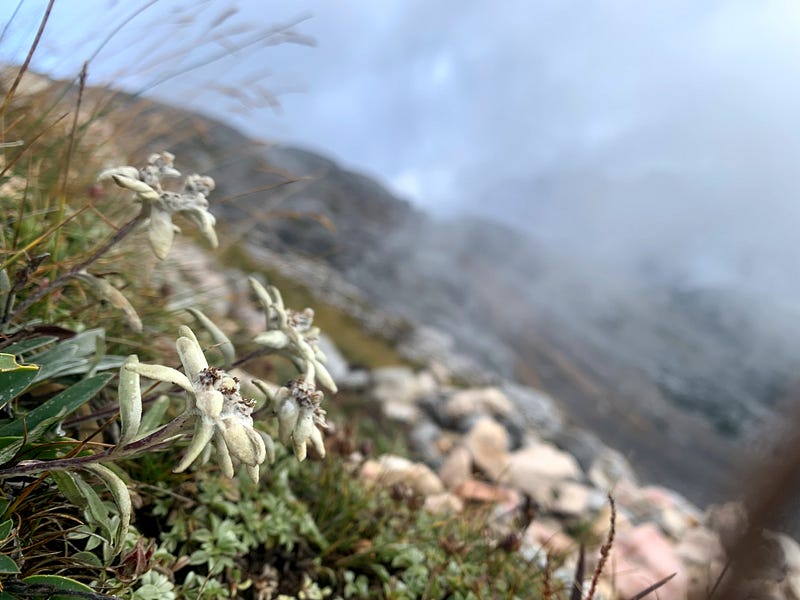
And with these last remaining edelweiss flowers, I’m closing this article. I hope you enjoyed walking through the garden of the Dolomites, a colorful patch of blooming flowers high up in alpine terrain.
These survivors not only grow but bloom in the toughest of the toughest locations and lift any hiker's mood when shining on a gray day.
“Like wildflowers you must allow yourself to grow in all the places people thought you never would.” — Lorde
More about the fascinating mountains:
Join my email list here if you would like to read more travel essays or sign up for the Medium membership to receive unlimited access to my and other writers’ stories out here (I will receive a commission fee in return).