
Blogging is Not Dead — Don’t Give Up On Blogging
How Over-Panicking is Telling the Wrong Story
Another day, another inaccuracy to address in the world.
Word on the internet is that blogging is dead. Or dying. That’s the sensationalist narrative.
“Don’t start a personal blog,” they say, “Traditional blogging is dead,” decries people like Evan Kelly. These complaints are mirrored all across different social media hubs.
Except that’s not true. Blogging isn’t dead. It never will be, and we’ll address why. It is still relevant today in 2024, was in 2023… These are just the latest panic-induced doomsday predictions in the social media workers sphere.
Now, everyone’s afraid. Everyone is twitchy. We all place so many hopes on all those fancy new concepts; entrepreneurialism, influencers, etc. Being a “social media worker” represent an enticing lifestyle that promises appealing rewards. The promises of financial prosperity away from the wage slavery of the corporate world, for some the dreams of endless travelling, some of us are looking to cauterise old “my parents didn’t pay enough attention to me as a child” type of wounds… The list is endless.
And it’s a such a fickle thing. Just like building a business is a grit your teeth affair, to reach success in this type of world requires genuine effort, that wow, exceptional factor, and a bit of luck on top of it from the gods of algorithm. All so we can strike a chord with the legions of users perusing the internet. And most people lack the self-awareness to understand why they’re not making it as big as they dream.
But those dreams still live on, so we struggle endlessly in the constant grind and oversaturation of the Western, digital world. We spend hours and weeks and month and dedicate our whole lives to making it work. So when something goes a teensy bit wrong, people panic. Because the fickleness of that life feels like a threat, tugging at the hopes we place on it and toying with those dreams.
Which is pretty much what’s happening with blogging. Personal blogs definitely used to be a lot bigger than they are now, and ever since mom-preneurs and other hobbyists essentially turned their personal blogs into businesses, the competition has gotten tough and tougher. It’s getting way more difficult to stick out from the crowd, when it was already difficult to anyway.
So when something like a little algorithm change happens, and people don’t see the same results anymore (i.e, ranking on Google), all hell breaks loose. The same thing happened, by the way, when Medium tweaked its distribution system, and writers who had been making a living on Medium bitched and complained endlessly, and threatened to leave the platform for good, like somehow their outrage for outrage’s sake is relevant.
But the name of the game here is to adapt. And that’s what no one seems to realise. People don’t like change at all. They don’t like things being shaken, and can’t understand that things do change, and it doesn’t have to mean it’s the end of the world! It doesn’t mean your whole world is threatened, it doesn’t mean you need to be outraged like it’s a national sport and your favourite team is winning. There is no need to panic, because all of those fears are completely insubstantial.
Yeah, Google may have rolled in a few new updates on how your blog is getting discovered. So what? It means learn how it works, and adapt. Yes, Medium may have changed how earnings are distributed, but there are plenty of users still making a very decent full time living on the platform anyway.
That all may seem obvious, but most people aren’t pausing and taking the time to think their reactions through. Acting like it’s the end of the world whenever something new pops up is ridiculous and leads nowhere. Quit acting like it. Quit rolling out doomsday predictions like you’re actually dying. Because it’s not the case, and people need to open their eyes and see that; see that the structures they’re sitting on are actually incredibly solid, and aren’t going anywhere.
Which brings us to blogging, which is definitely not going anywhere, and isn’t the least bit dead.
WordPress Vs Everybody
People may preach that platforms like Medium or Substack are safer than WordPress, but that’s not particularly true.
For starters, people think they can avoid the volatility of algorithm updates by ditching blogs, which primarily and heavily rely on SEO for discoverability.
The obvious flaw in this logic is that not only do platforms like Medium or Substack also can rely on SEO, but they also rely on their own internal algorithm on top of that.
Which, from personal experience, are just as insanely strict and fickle, if not more.
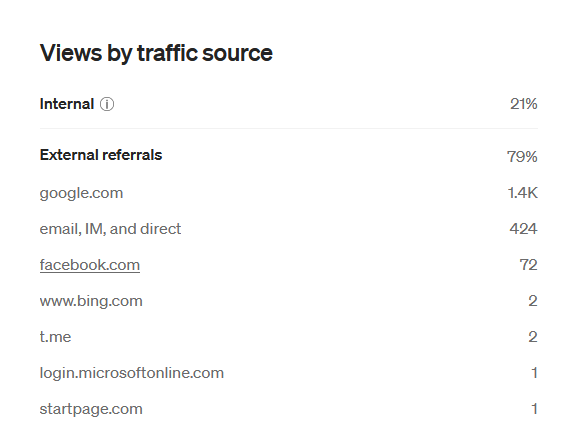
Medium‘s internal distribution system will typically not distribute your articles very much, and that is true for people with thousands upon thousands of views on the platform; the internal distribution percentage is always meagre compared to the external one.
As you can see in the above screenshot, one of my recent stories, tailored to include SEO, has been doing fantastically and is earning me a steady income. Granted, on its own, it’s not a lot of money at all. But compound it with other articles and suddenly…
And yet, it isn’t relying on Medium’s internal distribution system to get those views, as you can, despite being hosted on this platform. You may think that SEO + Medium’s internal distribution system = double the results, but you’d be inexperienced to think it’s that easy. Both require their own learning curve.
The fact that WordPress self-hosted doesn’t have an internal community (WordPress.com, on the other hand, does) doesn’t actually mean anything, because leveraging Medium’s user base is just as hard as learning and implementing SEO on your own blog.
If you rely strictly on platforms like Medium, then you give up on these other perks. Medium is can be a seriously reductive place — and hey, I’m right here, writing here too. But its perks are few and far between.
Yes, there’s almost automatic monetisation, and it’s an easier way to make money. Yes, there’s supposedly a large audience (to which you will never be showcased anyway because the distribution is pretty poor), and yes, despite the severe lack of customisation, it works right ouf of the box.
But in the end, you’re tied to the rules and limitations of the platform, of which there are many.
The lack of distribution being one of them; what is the point of writing if all you hear is crickets at the end of it, and even if you follow all the rules and guidelines on the website?
The earnings being a close second. 1k views won’t necessarily earn you all that much, and without some platform specific features, such as the boost, you’ll have to write several solid, well-crafted and substantial articles a month to earn anything decent. You can’t just shirk the hardwork WordPress requires, throw shit at the wall on Medium and hope it’ll stick, because it won’t.
In the end, and simply put, Medium should be one tool in your arsenal. Invest in it, because you’ll definitely get results. But to say you should favour it over blogging is ridiculous. Because so will you get results if invest in blogging.
Don’t do preferential treatment for any one platform, whether Medium, or Substack, or whatever else. Do both. Do all three. Do everything: be everywhere.
WordPress’ Incredible advantage
On the other hand, a self-hosted WordPress blog is your own personal, private space. And it is far, far safer because it’s open-source.
WordPress is the most steady and solid investment you can make for yourself, whether you have sole propriotorship, a huge-scale business, a side hustle, a hobby, a non-monetised passion… Whatever it is, there’s a place for it to exist on WordPress.
The mainstream world sincerely underestimates this, but WordPress being open-source and self-hosted is a serious bonus. It means you’re using the infrastructure to build your site, which then belongs entirely and truly to you. That’s especially true if you host Wordpress on your own server instead of with the range of available hosting services.
Why is blogging not dead? Because unlike with Medium, your content on WordPress is truly, 100% yours. Your site is 100% in your hands and nobody can take that away. You don’t need to accomodate censorship, publication prerequisites or guidelines; you can do whatever you want.
Yes, WordPress has a steep learning curve. You’ll be spending some time learning how to handle the infrastructure, beautifying your website, and tweaking a bunch of requirements to be compliant before you’re ready to launch. But so what? Every single platform require a learning curve and a period of adaptation; everywhere you go, you learn to play the game on that platform.
Once you have actually learned how to use WordPress, and have harnessed all the possibilities this open-source powertool offers you, you’ll be able to get much more out of your venture/business/whatever it is, than you would by sticking to spaces like Medium or other social media platforms.
There is no censorship possible on a site you truly own. No rules to follow apart from the ones that give you success. And success can mean anything and take any form.
Medium gives you a specific platform with specific features. But only WordPress lets you take that to the next level. Some blogging platforms such as Ghost or Wix give much more freedom and options than Medium, but again are limited in their own way. WordPress is by far the most flexible platform there is, and can accomodate all of your needs. Spaces like Medium, or Ghost, or Substack, work fine if you have more limited, or simpler needs. Otherwise, you need a blog. You need a website.
Do you want to monetise your blog in various ways? You can place ads, have premium content, ask for donations, set up consultations, sell courses… You decide on the longevity of your blog, because no one is ever going to delete it for you, and WordPress being open source, you don’t risk the platform disappearing overnight. Do you want to customise your site’s layout, appearance, aesthetic? You can. Do you want to create your own community, and have the flexibility to manage and moderate users and comments? You can, too.
WordPress expands your blogging, writing, whatever it is, capabilities way more than Medium ever could. A blog expands those capabilities way more.
Because of it, the appeal for it remains; blogging won’t lose popularity, even as its structure changes, because there will always be someone ready to share something in blog form, build a website around their brand, or overall do the work it takes to get there.
Consider that while the ocean follows its own rules, while you’re at the helm of your own ship, you can brave any storms. With the ocean being an allegory for the internet the ever-shifting world of people’s attention and fickle interest beyond that, while your ship is your own website.
SEO works
Personally, it took me some time to get results, but once things picked up, they did, and remained super stable all throughout, despite not publishing new content for long periods of time. And yes, that’s on a WordPress blog.
No one’s denying SEO is difficult to wrap your head around, and then to implement. Not only it’s difficult as a concept, but it also means bending your creative process to what others are typing and searching, which is a blasphemy. And it tells you that, if you don’t learn to do these things, you’ll never get found out. Super depressing.
But you will be learning SEO anyway, no matter what platform you’re on. Because some platforms such as Substack don’t even have an internal algorithm to recommend you to poeple (on the most part).
Search engines are the number one way of discovering things, apart from some obscure Facebook communities and groups, or through digital word of mouth. And that’s across all platforms.
And in the end, it will get you results. I started out with zero views, on a brand new blog with zero domain authority, and now get consistent, daily traffic on most of my posts, all on their own. It’s definitely not in the thousands, and I’m still growing my blog, but it happened, and it did so very unexpectedly. And the more I learn about SEO, the better it gets.
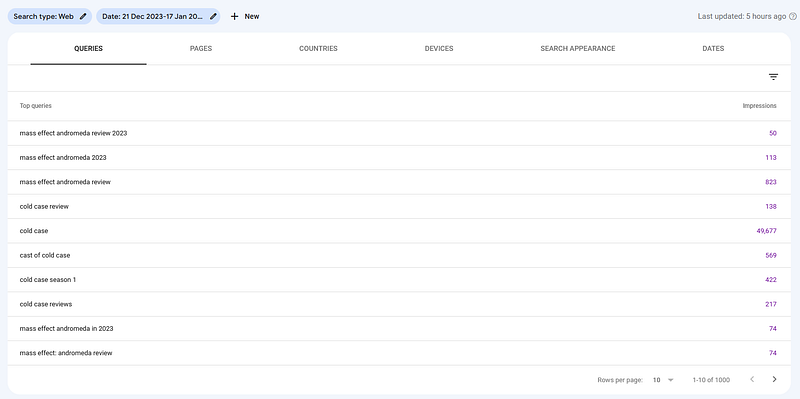
This one blog of mine is focused on writing reviews and essays of different fictional mediums; movies, books, series… Results popped up almost immediately after I began promoting my blog (for free), and when I wrote content that only ever so slightly aligned with user search queries.
So, it does work, and if someone like me who detests these things can make it work, so can you.
Beyond SEO and every other fickle factor
I said before that SEO works. But we need to take a step back, too. People are so attached to the idea of making that cash and getting that lifestyle that they’re getting completely blinded.
It’s not just about ditching whatever tool you even remotely suspect won’t bring you instant results anymore, all because you panicked and got twitchy. If your venture, whatever it is, is solid enough to stand the “tests of time”, then surely it can stand a little algorithm change.
Some things, like developing a loyal userbase and followship, are “forever”, in the sense that at least they’re not reliant strictly on external factors. They’re reliant on you, and how well you do in your venture.
On Medium, you will only ever be known as an umpteenth Medium user. On your own site, you will be known as YOU. You will be known as the proud site owner that managed to rank high on Google. You will have a unique space, voice, and be uniquely recognised.
While the rules change and adapt and transform all the time, a website is the constant. It’s the stable thing that remains unmoving and undaunted through all of it, and all you need is to adapt to circumstances to make sure your blog keeps on riding those waves.
Is starting a blog worth it?
“R.I.P WordPress”? More like long live WordPress.
Is it worth starting a blog today? Is blogging still worth it? Yes. Because blogging remains the best medium of self-expression that exists in the world, and the only way blogs will ever die, is if something better replaces it. But nothing quite beats your own piece digital piece of “real estate.”
So, no, blogging isn’t going anywhere. And nothing is replacing it or supplanting it.
It’s one of those pivotal aspects of our lives that no matter what overhauls it goes through, it will never entirely die out or go out of trend. Blogging absolutely has a future, even if it doesn’t look the same way it did ten years ago (and remember, just because things change and shift doesn’t mean you need to panic!)
So go ahead, start a blog in 2024. Learn about what you need to make it work and apply it in practice. It’ll be as tough as growing a YouTube channel, and as demanding as starting a business.
But it’ll be worth it.
Hello to all my new followers.
Author, D. Denise Dianaty, Chrystal Brotherson, Corey Richards, John M. Mettes, Shraddha Shrivastava, Tony Thomas, faithehosea, Amiralichishtiamiralichishti, Richard Bailey, Donatella Del Bianco, Jerileewei, Anna Soldenhoff, Ayoade Emmanuel, Dr., Ruth Onmedium, KTK, Damola Nelson, Karen McQuillan Smith, Marlo Martin, TR von Monarchs, gab1930s, Timothy Kincaid, Taha Usmani, Venkat Pragada: Engaging Minds, Empowering Ideas, Zach Foster, Katrina, Rajesh Poovathum kadavil, Chris McCumskey, Sofiullah Chowdhury, Kelly Corinne Elliott, Enescu Alexandru Jean, Peter's Dreams and Scarlett Mathew
Don’t forget to subscribe by email directly if you’d like to continue reading my content, and thank you again for following me.


