
Blog Post Ideas You Should Take a Pass On
Some article ideas work, others flop, why?

I don’t know about you, but when I write a blog, it all starts with the idea.
It could be anything that triggers it, a passage in a book, a realisation I have on a walk, some sort of ‘Aha!’ moment, but after it happens, I need to ‘figure out where it lives.’
☀️ This is where the ideal blog post lives:
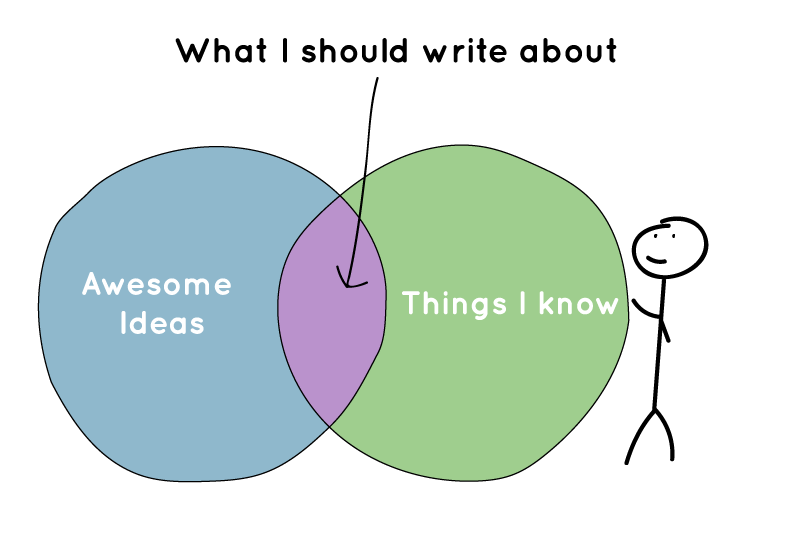
There’s no shortage of exciting and valuable topics; I just have to make sure I know enough about them so I can pass that value onto you, take a bow, and be on my merry way.
But the reality is a little different.
⛅ This is the reality of blog post ideas:
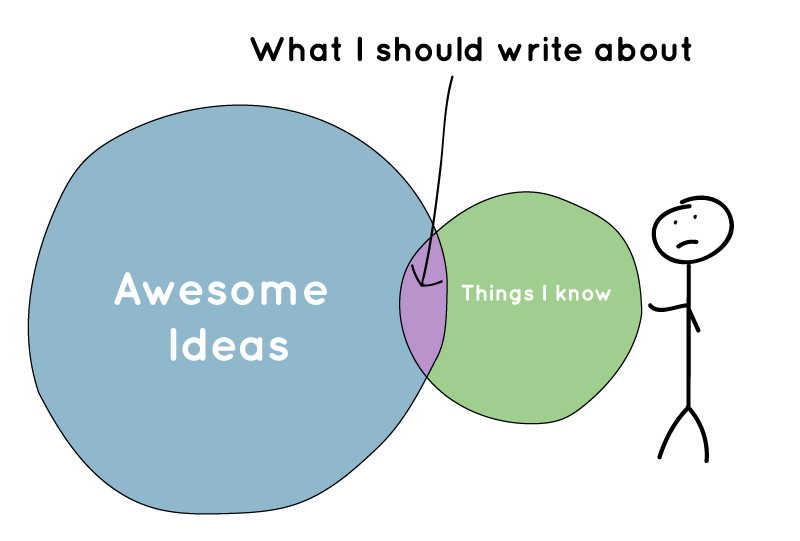
Chances are if I came up with a fantastic idea for an article, it’s because I’m learning about the topic for the first time — that puts me in a very weak position to talk about it.
Now, I don’t have to live with the fact that I can’t talk about it — any good idea takes time to formulate and perfect.
And to get that idea into a position of value for the reader, I have to take control of the reality — I need to expand the ‘Things I Know’ bubble.
The Right Way
Expanding the ‘Things I know’ bubble is very simple, right? It’s all about learning, and there’s really only two ways you can do it.
👍 The two powerups to enhance what I know:
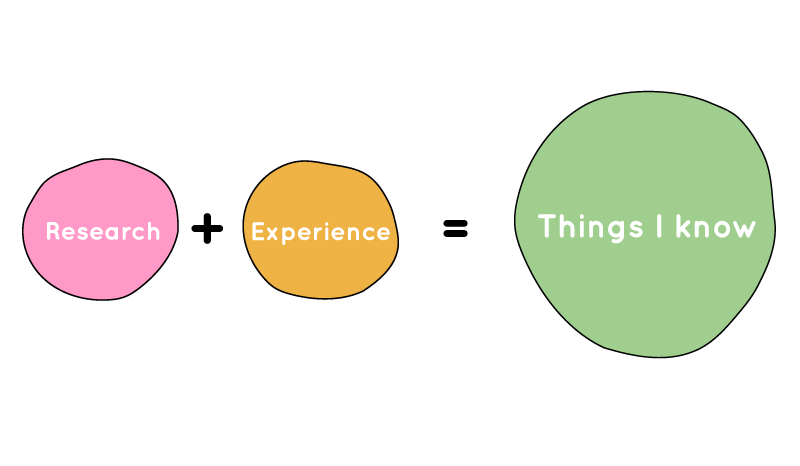
Research is something I can spend hours, days, or weeks on — and it’s very effective.
- Articles
- News stories
- Podcasts
- Books
- Interviews
The list goes on and the most enticing part, it’s relatively easy to do. I can do it sitting at my desk, in a cafe, on the go, the possibilities are endless.
Experiences, on the other hand, that’s where the ‘Things I know’ bubble really expands.
My scrappy drawing above should have the ‘experience’ bubble bigger than the ‘research’ one — but an equal effort in both is essential.
Writing about the learnings from experience comes so naturally and from a place of genuine understanding that you can’t help but write it well.
Add in some research and facts, other people’s experiences too — and I’m back to the ideal scenario.
Now, if I stay here, it’s perfect.
I’m writing about the awesome ideas that I know a lot about — I’ve got a rock-solid foundation.
But…
The problems start to pop up when the lines get fuzzy.
The Grey Way
I’m not perfect, and sometimes I get cocky, the little ego monster on my shoulder says “Hey, of course, you totally know about that!”
🌧️ The ego edit to ‘enhance what I know’:
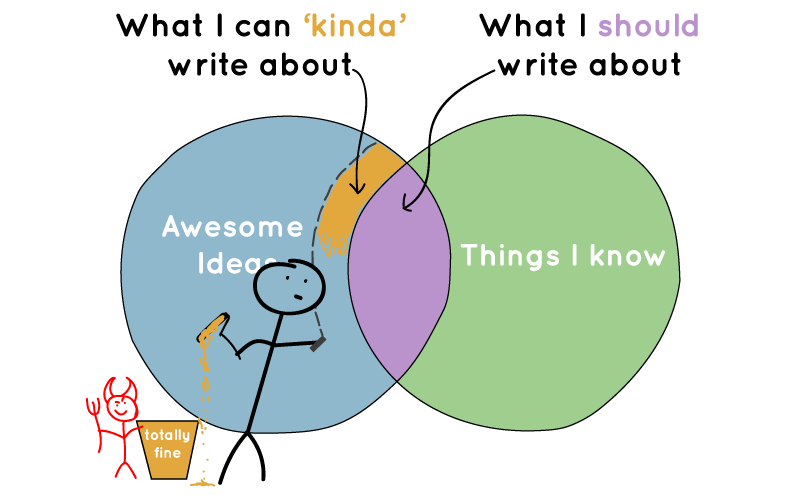
It’s either ego, laziness, or frustration, but sometimes I write about something where I know the themes, I know the lead sentences, but I don’t really know the subject.
I can finish it, someone can read and get value out of it, but is it an excellent article?
Nope.
And if I’m not writing great articles (by my standards), why am I writing?
I remind myself: Never give in to the ego edit.
Spend hours on research, get after some experiences, never expand the bubble with ego — it’s a slippery slope.
Content creators of all kinds that convince themselves they know more than they do can rapidly fall into the grey area, but then it’s not so grey anymore.
It can get worse.
The Wrong Way
Aka. The Red Zone — I see this every day and question if I’ve ever gone there myself. It’s a place where the lines are blurred, and you’re talking nonsense.
⛈️ The lie to ‘enhance what I know’:
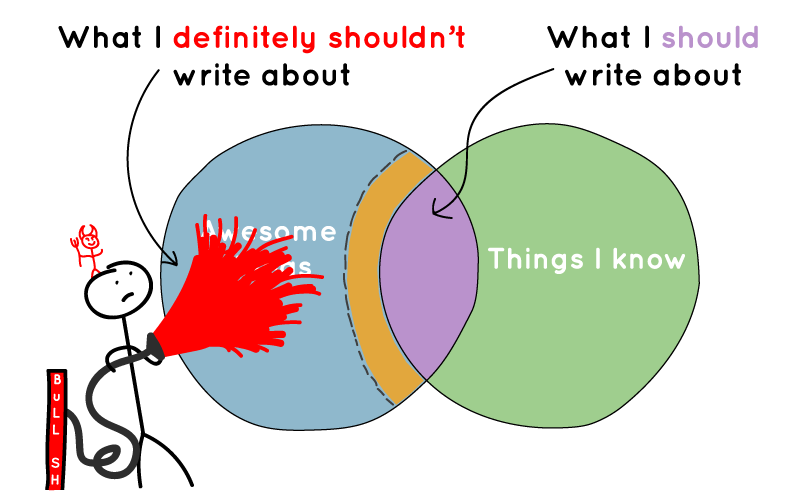
At this point, I’m pretending to be knowledgable on the subject, and I’m failing at it. I’m not an ethical writer; I’m contributing to the noise.
Hell, I’m not even interested in this, I just thought of a great concept that’s really for someone else to talk about.
These headlines or ideas, they’re enticing, but it’s not something myself or anyone should delve into because beyond clickbait and rambling in circles, I just can’t provide the value to the reader or viewer.
And what happens after that?
Well, the worst thing.
The audience loses trust.
It’s one thing to have a random person read my half-baked ill-thought-out post; it’s another thing to have someone who follows me become disappointed in what I choose to talk about.
Ultimately they don’t only become disappointed in the content, they become disappointed in me — and as any self-respecting content creator, I don’t want to go there, and neither should you.
The Lessons
The easiest, most enjoyable, and most valuable articles I write are at the intersection of my awesome ideas and things I have heavily researched and had experience in.
I’ll usually get to this point in many dimensions of life by accident, but I can seek out knowledge and experiences to expand the circle of what I know just by following my interests.
Once that circle expands, I need to be careful not to push the line.
If something is difficult to write about to the extent that I have more questions than answers, I’m likely pushing the boundaries.
And if I think of a cool idea that would ‘get a lot of attention’ and that’s becoming the reason to write — I’ll slap myself in the face and run in the other direction.
Doing these things lets me sift through the ideas that I should take and roll with and the ideas that I should take a pass on.
Taking a pass in this way has vastly improved my work, and I’m encouraging everyone to think about it like this as well.
Your best work comes from experience and knowledge, not solely an intriguing idea — so go ahead and get after it! 💪
Best of luck,
Sah