
What Can The Queen’s Gambit Teach Us About COVID-19?
A show set in the 1960s surprisingly has lessons that are applicable to our current reality
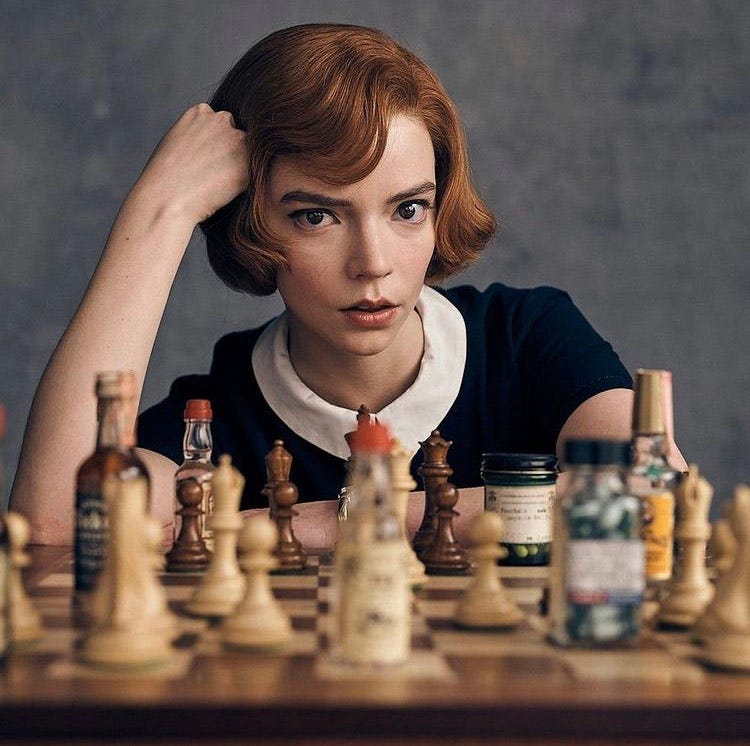
Recently, I binge-watched the new Cold War-era period drama The Queen’s Gambit. I initially thought it would be a form of escapism — the protagonist, chess prodigy Beth Harmon, shook hands with her opponents and sat across from them sans mask. She often flew across the world, unafraid of sitting in such close proximity to others. Her perfectly curated outfits were a far cry from the sweats that have become my quarantine uniform. However, I couldn’t truly escape, because in that TV show I found so many lessons that were applicable to our current reality.
Beth Harmon was fiercely independent and often turned to drugs, rather than her friends, when she was in emotional distress. She was also convinced that she needed drugs to play chess well; their mind-altering properties allowed her to better visualize the chessboard. Her reliance on drugs caused her to lose one of the biggest chess matches of her career; she got drunk the night before her match against the reigning world champion (Soviet Vasily Borgov), causing her to oversleep. When she finally showed up to the match, she was too hungover to play well. Not only did her drug use prevent her from beating the Soviets, so did her Americanism. As her friend Benny explained, the reason that Americans were inferior to the Soviets was because of their rugged individualism. At the level of chess that Beth plays, half the game is occasionally played on one day, and then adjourned to be finished the following day. Benny explains that the Soviets are superior at chess because, “they play together as a team, especially during adjournments. They help each other out. Us Americans, we work alone because we’re all such individualists. We don’t like to let anyone help us.”
In Beth’s final match against Borgov, she refrains from using drugs, and to her surprise, finds that she is able to visualize the chessboard without their help. She also ditches her American mentality and embraces the Soviet one. During the adjournment, rather than strategizing alone, she takes her friends’ advice. With their help and support, she successfully defeats Borgov the next day. Although her CIA escort asks her to tell the media about how being in Russia made her realize how happy she is to be an American, she avoids that line of conversation. Instead, she tells the media about Mr. Shaibel, the man who first taught her to play chess.
Everything about this ending seemed like an allegory for the way America is losing its fight against COVID-19. America has the highest number of infections and deaths of any country in the world. When controlling for population size, America is still in the top 10. Why? Our rugged individualism and reliance on drugs. There is a positive correlation between COVID-related deaths per capita and countries’ individualism scores. This correlation holds even when controlling for differing levels of testing in other countries. And, it is easy to see the US on the far right of that graph, high in both individualism and deaths. However, the US is not a monolith; certain areas in the US are more individualistic than others. Researchers have found that, even within the US, higher local levels of individualism are associated with reduced compliance with state lockdown orders by 41% and pandemic-related fundraising by 48%. Another study found that 40% of people who choose not to wear a mask do so because it is “their right as an American to not wear a mask”. Some people are unable to safely socially distance because we lack a robust social safety net; they have to go to work to put food on the table. This rugged individualism, our unwillingness to slightly inconvenience ourselves for the greater societal good, is impairing our ability to respond to the pandemic.
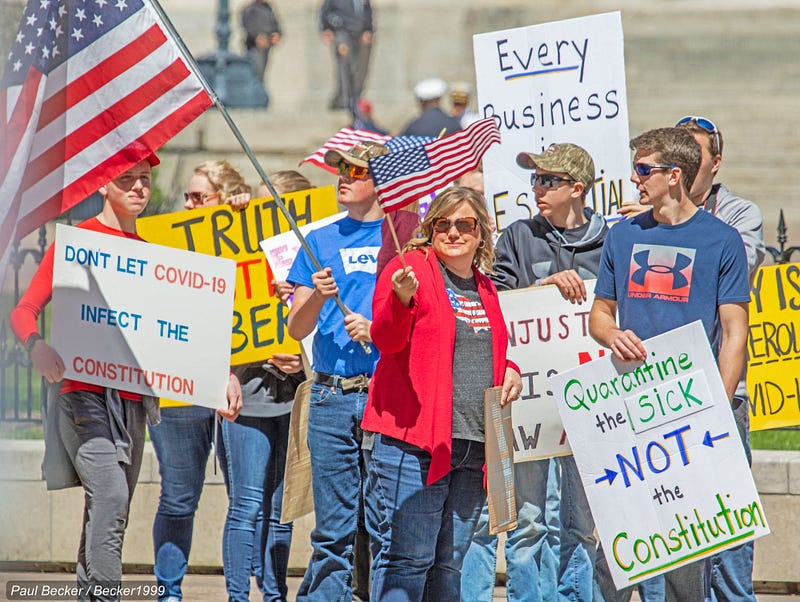
Instead of relying on each other to stay safe, we are instead putting all our faith in drugs. Our refusal to socially distance has unfairly overburdened our healthcare workers. Donald Trump told his supporters not to be afraid of Covid-19 because we now have drugs that can cure it. Speaking about monoclonal antibodies produced by Regeneron, he said “I got incredible treatment at Walter Reed Medical Center, with incredible doctors, and this one medicine, in particular, was unbelievable. You are going to get the same medicine, and you are going to get it free, and soon. The medicine is made by a number of companies it’s totally safe, but it is powerful against this disease.” Although monoclonal antibodies have been approved for emergency use, Regeneron expects to only have enough for 300,000 patients by the end of January 2021. These doses won’t be nearly enough for the million-plus new COVID cases that the US has every week. In general, Trump’s policy for controlling the pandemic has put a heavy focus on Operation Warp speed (the name given to the vaccine development plan) and little focus on promoting social distancing and mask-wearing. In fact, many of Trump’s actions specifically discourage social distancing and mask-wearing, such as his crowded, maskless campaign rallies and White House events.
Our current problem with drugs is different from Beth’s problem: Beth’s drugs were actively harming her, whereas our drugs are beneficial but in short supply. Although two vaccines recently got emergency use approval, it will take months for everyone to be vaccinated; Dr. Fauci believes that America won’t achieve herd immunity until the Fall of 2021. However, just as Beth found that she could visualize the board without drugs, maybe we will discover that we can get this pandemic under control before the vaccine roll-out is complete. Many of us are currently on adjournment; we are on a break from going into the office and going into school as we normally do. Rather than using drugs to get us through, let’s learn some lessons from other countries, and rely on and help each other. And, like Beth, we may finally win in our fight against Covid-19.


