
Blockchain Network Communication with The OSI and TCP/IP Models 📊🌍📶
Understanding the Frameworks that Power the Internet and Blockchain Connectivity
In communication, the OSI (Open Systems Interconnection) and TCP/IP (Transmission Control Protocol/Internet Protocol) models stand as pillars for understanding how data is transmitted across networks, including the internet. These models, each with its unique structure and layers, provide a standardized approach for facilitating interconnectivity and ensuring reliable data exchange. This exploration looks into the intricacies of both models, highlighting their relevance and drawing parallels to the emerging technology of blockchain, thereby illuminating the foundational principles that underpin modern network communication.
Blockchain technology, a groundbreaking innovation best known for powering cryptocurrencies like Bitcoin and Ethereum, is a complex and multifaceted system. Its architecture can be best understood by breaking it down into specific layers, each serving a unique function and playing a crucial role in the overall operation and security of the blockchain network.
Exploring the Layers
The TCP/IP and OSI models are foundational frameworks in the field of network communication, defining how data is transmitted over the internet and other networks. Although these models are not directly related to blockchain in their original contexts, we can draw some analogies and see how certain layers of these models conceptually align with the layers in blockchain technology.
OSI Model and Blockchain:
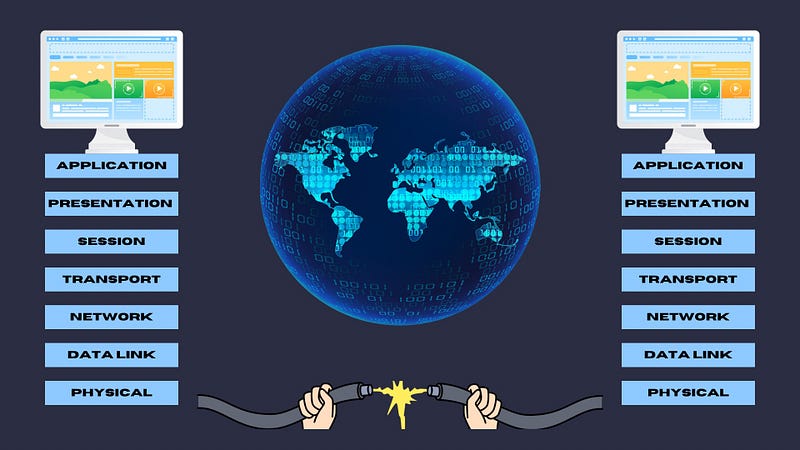
The OSI model has 7 layers:
- Physical Layer: In blockchain, this could be analogous to the hardware (computers, servers, etc.) that nodes in the network run on.
- Data Link Layer: This layer could relate to the direct connections between nodes in a blockchain network, ensuring data transfer within the same network.
- Network Layer: This is similar to the protocol layer in blockchain, which includes the IP addresses of nodes and routing of data. In blockchain, this could be seen as the part of the network that deals with data transmission and propagation of transactions and blocks.
- Transport Layer: In the context of blockchain, this could be likened to the consensus mechanisms that ensure transactions are correctly ordered and confirmed, similar to how TCP ensures data packet order and integrity.
- Session Layer: This could be viewed as the establishment of connections between blockchain nodes, similar to how sessions are managed in traditional networks.
- Presentation Layer: In blockchain, this could be analogous to the encryption and decryption mechanisms that ensure data privacy and integrity.
- Application Layer: This is directly related to the blockchain applications, such as smart contracts and decentralized apps (DApps), which users interact with.
TCP/IP Model and Blockchain:
The TCP/IP model is more streamlined with 4 layers:
- Link Layer: Similar to the OSI’s Physical and Data Link layers, in blockchain, this could represent the physical infrastructure and the basic network connectivity between nodes.
- Internet Layer: This parallels the Network Layer in OSI, where in blockchain it would involve the protocol for data packet routing between nodes across the network.
- Transport Layer: Like in the OSI model, this could be seen as related to the consensus layer in blockchain, ensuring reliable communication.
- Application Layer: This directly corresponds to the end-user blockchain applications, such as cryptocurrencies, smart contracts, and DApps.
Blockchain Layers
Blockchain technology can be conceptually understood in layers, similar to how traditional network models like OSI and TCP/IP are structured. However, the specific layers in a blockchain can vary depending on the context and the specific blockchain architecture. A common way to break down the blockchain technology stack into layers is as follows:
1. Infrastructure Layer (Layer 0):
This foundational layer includes the physical hardware and network connections that make up the blockchain’s backbone. It consists of the computers, servers, and networking equipment that host the blockchain nodes and ensure the network’s connectivity and resilience.
2. Data Layer (Layer 1):
This layer is responsible for the core blockchain data structure and includes the blocks, transactions, and the cryptographic elements (like hashes and digital signatures) that secure and verify the data. The data layer defines how data is stored, organized, and linked together in the blockchain.
3. Network Layer (Layer 2):
The network layer handles the communication protocols that allow nodes within the blockchain network to share and synchronize data (blocks and transactions). This layer ensures that every node has a consistent view of the blockchain ledger.
4. Consensus Layer (Layer 3):
This critical layer defines the consensus algorithm used by the network to agree on the validity of transactions and blocks. Common consensus mechanisms include Proof of Work (PoW), Proof of Stake (PoS), and many others. The consensus layer is key to the decentralized and trustless nature of blockchain.
5. Incentive Layer (Layer 4):
The incentive layer is often intertwined with the consensus layer and includes the system of rewards and penalties that motivate participants to act in the network’s best interest. For cryptocurrencies like Bitcoin, this layer includes the mining rewards and transaction fees.
6. Contract Layer (Layer 5):
This layer hosts the logic and code for smart contracts, which are self-executing contracts with the terms directly written into code. Smart contracts automate, facilitate, verify, or enforce the negotiation and performance of a contract, allowing for complex decentralized applications.
7. Application Layer (Layer 6):
The topmost layer is where decentralized applications (DApps) built on the blockchain operate. This layer interfaces with end-users and can span a wide range of applications, from financial services and games to supply chain management and identity verification.
It’s worth noting that not all blockchains have all these layers distinctly or might implement several of these functionalities within a single layer. Additionally, there are ongoing developments and innovations in blockchain technology, such as Layer 2 scaling solutions (like Lightning Network for Bitcoin and Rollups for Ethereum), which aim to improve transaction throughput and efficiency without changing the base layer (Layer 1) of the blockchain.
Note: This article suggests a discussion or exploration of how blockchain network communication can be understood, framed, or compared within the context of the OSI and TCP/IP models, which are foundational to network communications. It involves examining how blockchain’s decentralized networking and data exchange protocols align with or diverge from the structured layers and communication principles outlined in the OSI and TCP/IP models.
If you enjoyed this don’t forget to give a clap, share with your peers, and leave your thoughts in the comments. Let’s search the future of computing together!