
Blockchain 101: A Beginners Guide
Nearly everyone knows about Bitcoin, a form of digital currency that caught headlines in 2017 when its prices skyrocketed:
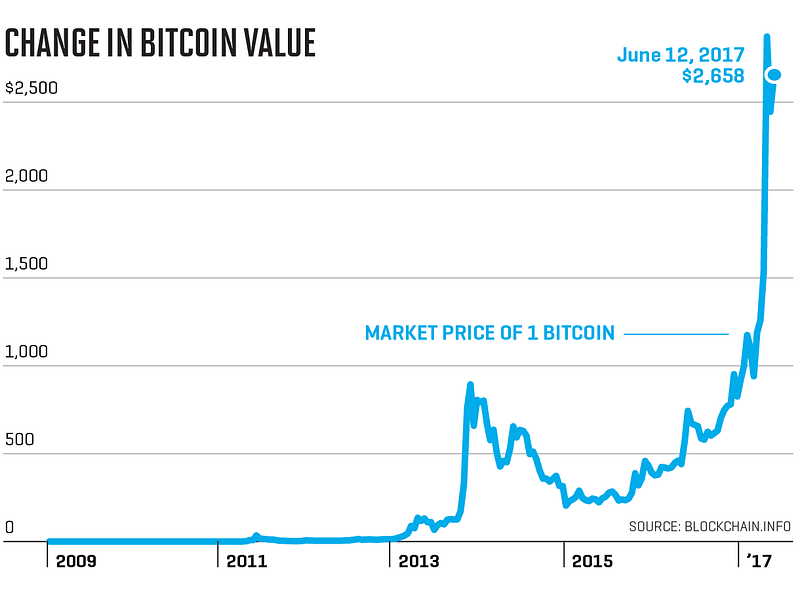
Suddenly, everyone wanted a piece of this new technology, motivated by stories of early adopters who purchased Bitcoin when it was less than $1 per coin, and then found themselves millionaires when it rose to nearly $20,000.
It was a modern day gold rush, but this time the gold was digital.
These days, the value of Bitcoin is no longer surging so drastically, but the technology it is built on, blockchain, is another form of digital gold.
As Bitcoin grows more visible in the public sphere, there has never been a better time for engineers and entrepreneurs to explore blockchain, the technology that makes Bitcoin possible.
To appreciate just what makes blockchain valuable, you need to first understand how it works:
What is a blockchain?
Well, lets first answer:
What is a block?
A block stores data.

So then, what is a blockchain?
A blockchain is made of individual blocks of data that are connected together using a signature.

How does this work with Bitcoin?
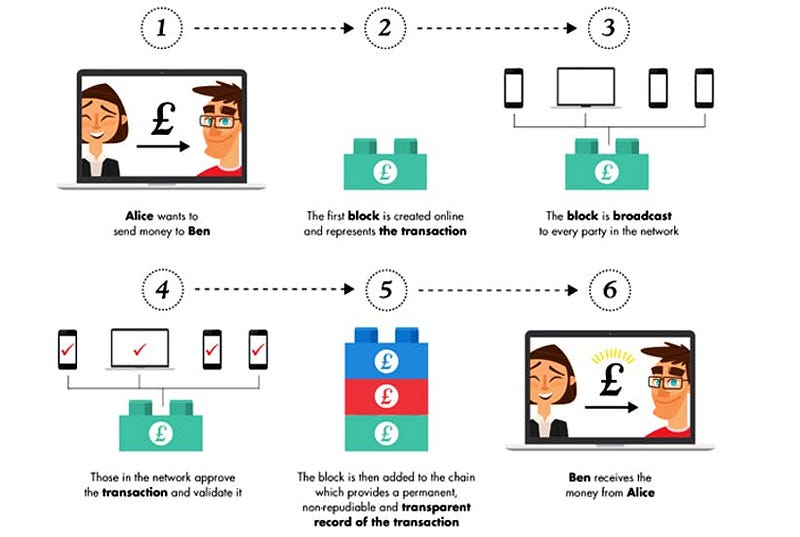
Every block has data inside it and each block carries a unique digital signature (think fingerprint).

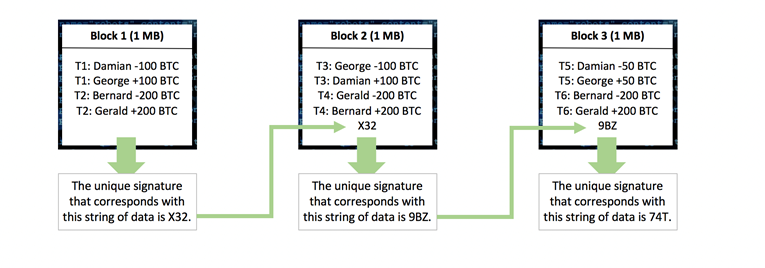
Because these blocks are chained together using a signature (which the fingerprint then gets forwarded to the next block and so on), the data stored in each block is unalterable.
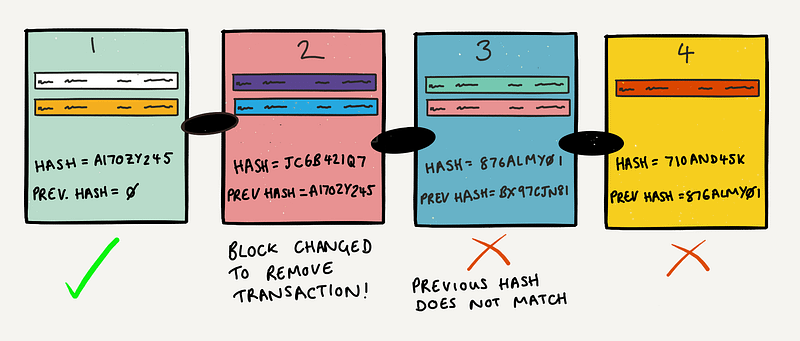
For instance, if you wanted to go back in a previous block and change even a decimal or a 0, because they are all chained together, the block then breaks.
In a Bitcoin Blockchain, each block contains data from multiple transactions (like an address book or ledger).
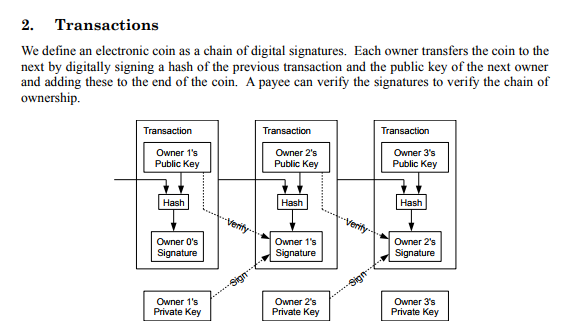
How are blocks connected?
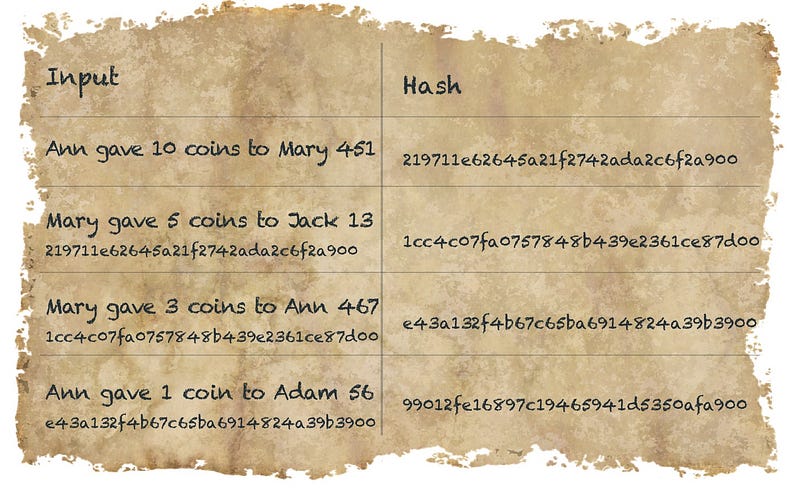
Each block has a digital signature (like a fingerprint) that corresponds to the data within the block.
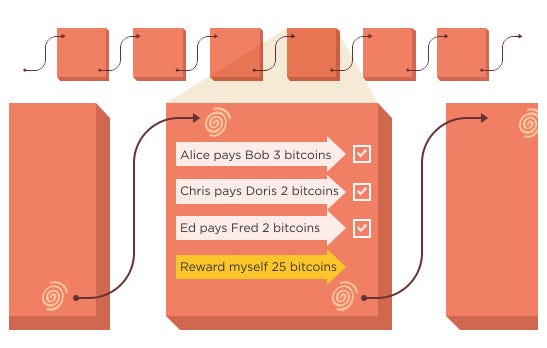
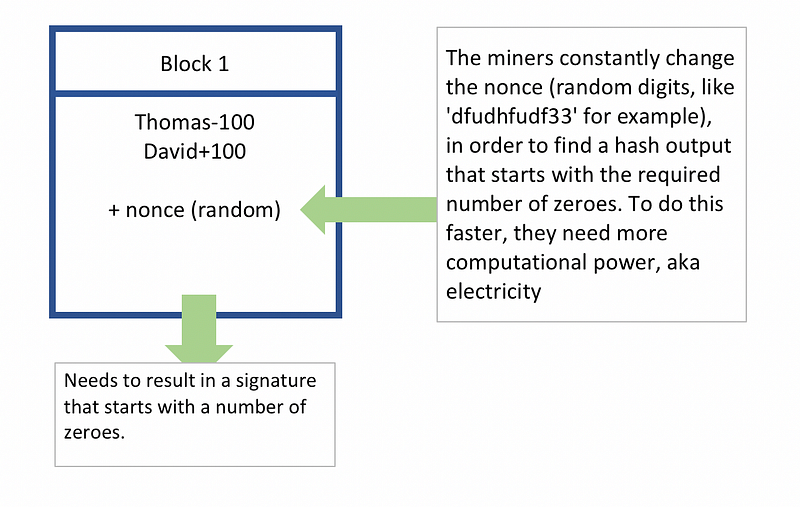
The data itself is made up of 3 components: the transaction data, the signature of the previous block, and a random set of digits, called a nonce.
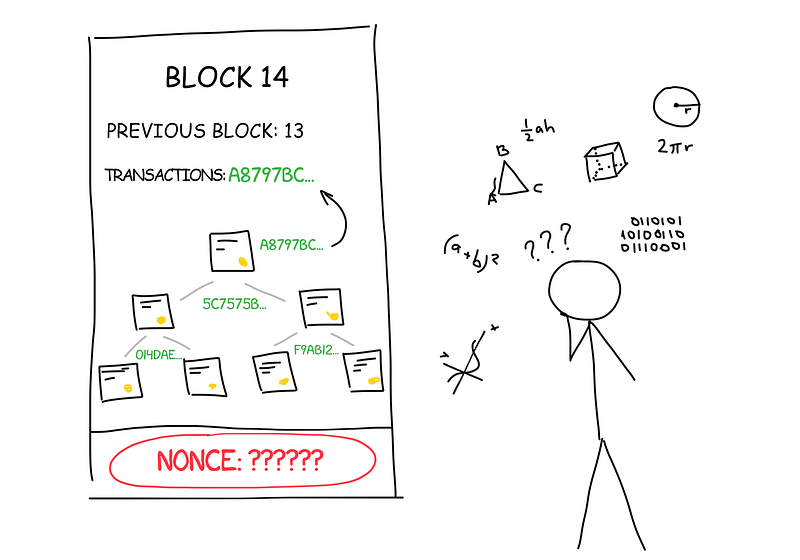
The signature is then generated for each block using a hash function, a complex formula that converts this data into a single, unique output.
Blockchain as secure as Fort Knox
So what does this mean for a hacker? If someone were to alter a transaction in a block, the generated signature (the hacker fingerprint) would no longer match the signature (original fingerprint) in the next block, and the connection would break.
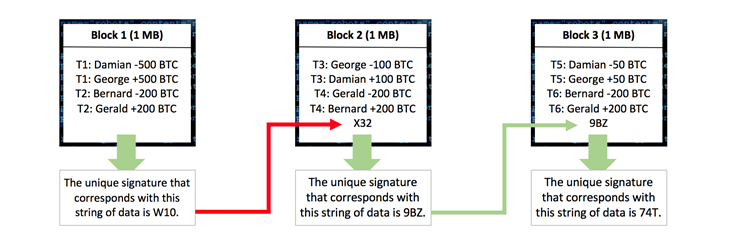
To combat this, the hacker would need to repeatedly generate a new nonce until they created a signature that matched with the next block.
However, because the values generated by a hash function are unique, this new signature would cause the connection to the next block to break.
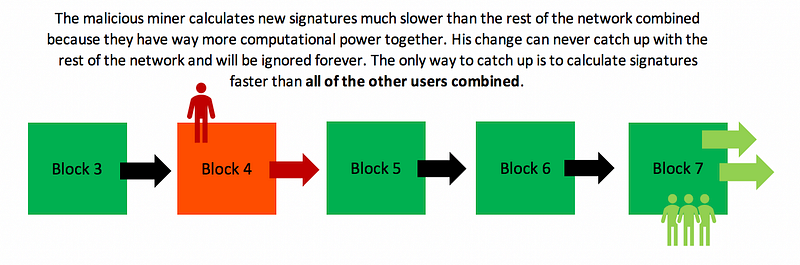
If one transaction in a blockchain is altered, every subsequent block in the chain needs to be updated.
Hackers must calculate the signatures, testing random numbers until the correct solution is found, and then beat out the length of the original chain.
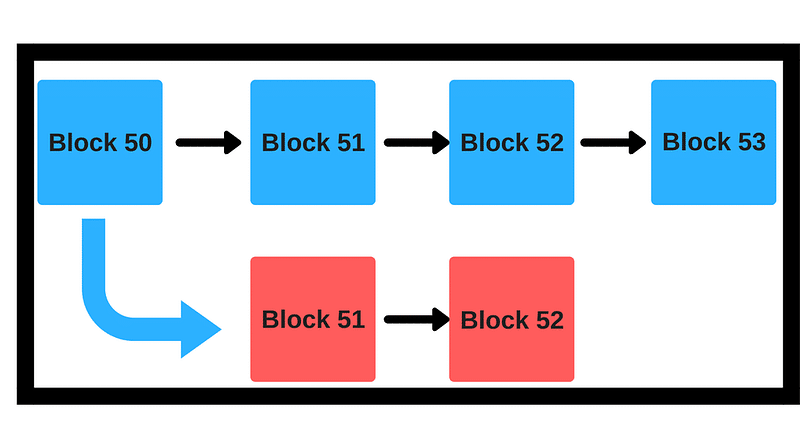
Why does this make the data unchangeable?
To make a change within the blockchain, hackers would have to recalculate all the blocks faster than the rest of the system is updated.
The blockchain is ruled by the majority: It identifies the correct record based on what the majority of users identify as truth.
This means that, in order to alter the chain, hackers would need to have more computational power than the millions of users mining Bitcoin at any given time.
“In Blockchain, the longer chain always wins. “
Since the majority of computational power is used to generate the longest version of the chain, the system assumes this chain is correct. Any changes a hacker might make to a block are immediately rejected by the system.
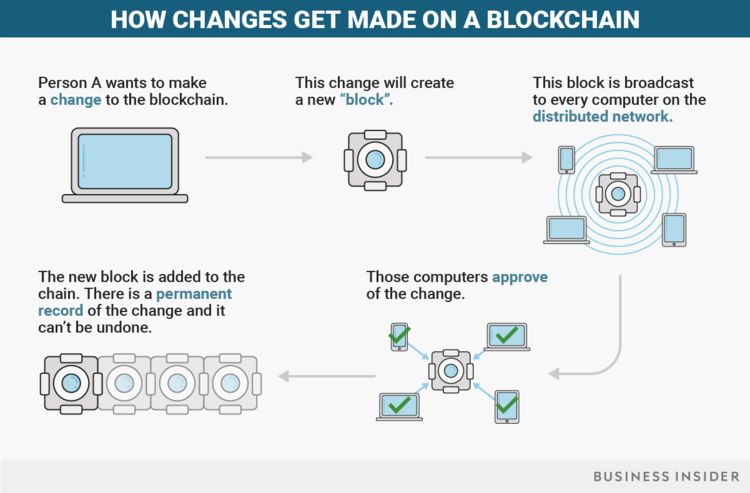
The future of blockchain
Bitcoin is not the only cryptocurrency out there, and a number of new blockchain-based currencies have developed in recent years.
One cryptocurrency, Monero, makes transactions private and difficult to trace, a direct contrast from Bitcoin, where all transactions and balances are recorded in a public ledger.
Blockchains have uses far beyond cryptocurrency, however. They may provide a secure way to store other confidential data, such as medical records, tax forms, or other identifying information.
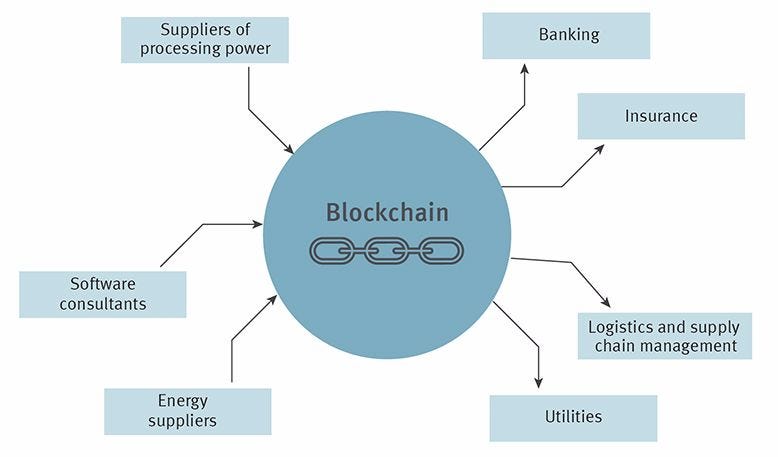
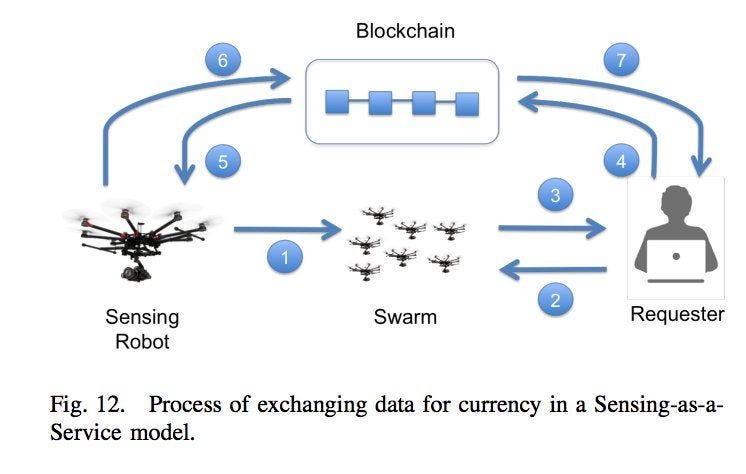
Blockchains are still in the early stages of transforming technology. Their possible applications go far beyond the uses we’ve imagined for them so far. They may be able to disrupt information management in fields as diverse as healthcare, communication, and finance. While other fields such as autonomous vehicles and IoT may benefit from the application immediately.
Although we are in the infancy for blockchain, one thing is for sure, it is a technology that won’t be ignored as security and technology continue to evolve.