
Blacks Demand that Biden Get Serious about Ending White Supremacy and White Racism
And while you’re at it, pay us what you owe us.
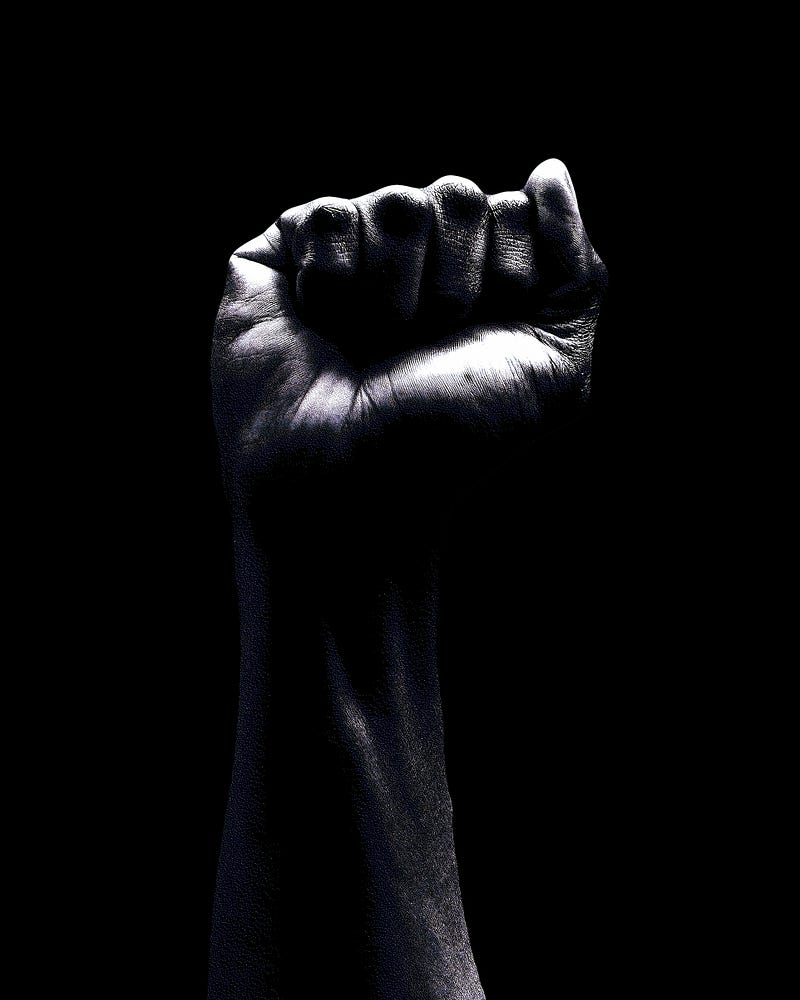
He whipped, but seemed to take no pleasure in it. He was called by the slaves a good overseer.
— Frederick Douglass, Narrative of the Life of Frederick Douglass, May 1, 1845
Over 400 legislators, political activists, civil rights leaders, musicians, and actors have demanded that President Joe Biden not merely offer more heartfelt and sincere speeches, but that he provide actual, tangible support for a variety of Congressional bills now languishing in Congress and which are aimed at “leveling the playing field” for black people.
Those proposed (and long-deferred) measures address the dreaded diversity, equity, and inclusion (DEI) efforts to make America own up to its hoary past, and finally begin to administer the long overdue reparative justice to its most maligned “minority” population — black Americans.
These folk are urging Biden to use his formidable constitutional powers and authority to issue executive orders to force, yes, finally force, white people to do right by black people.
The demand came in the form of a letter to the president. Interestingly, this is the third letter that these selfsame activists and lawmakers have sent to the White House this year — and it is only the middle of April.
Some of the luminaries who signed on to this most recent letter include NAACP President Derrick Johnson, civil rights attorney Ben Crump, National Action Network President Al Sharpton, stylist Law Roach, music executive Willie “Prophet” Stiggers, actress Erika Alexander and talk show host Tavis Smiley, in addition to congressmen and women, including but not limited to: Barbara Lee, (D-CA); Sheila Jackson Lee, (D-TX); Cori Bush, (D-MO), and Jamaal Bowman, (D-NY).
This third letter comes after several months of unsuccessful attempts to get Biden to sit down with these people and endorse these bills and their demands and proposals, because “the state of our Union depends upon” them.
Marcus Anthony Hunter is a UCLA professor of sociology and African American studies. He described the letter as an accountability measure put together after months of work behind closed doors in Washington, D.C., and throughout the country.
The White House, however, has assumed a rather defensive posture to this latest entreaty from activists and congressional members. Indeed, White House spokesperson Rodericka Applewhaite told ABC News in a statement that,
President Biden is actively delivering for Black Americans by executing his Day One commitment to advance racial equity and support for underserved communities. Since taking office, the president’s agenda has secured record-low Black unemployment, a 60% increase in Black net worth since the pandemic, achieved the fastest creation rate of Black-owned small businesses in over 25 years, and expanded access to home ownership and protections against housing discrimination.
But the letter notes and emphasizes that,
As we face another election year, this conversation regarding urgent executive action on reparations is not just about policy — it is about the people of the United States of America, the fate of our democracy, national unity and national security.
We call upon you to meet with the Congressional members and advocates, as soon as possible, to tackle and attend to the unfinished work of advancing comprehensive equity through executive orders and actions.
The First Two Letters
Back in February, on President’s Day in fact, this same set of lawmakers, activists, and civil rights leaders sent two separate letters to the White House urging the Biden administration to do more work, as opposed to just patting itself on the back, on racial equity; that is, on ending and finally making amends for America’s terror-filled history and its ongoing tradition, custom, and practice of white supremacy and its operative tool, white racism.
A number of Congressional co-signers to all three letters have worked diligently in both the House and the Senate to bring attention to the list of wide-ranging bills focused on racial equity and reparative justice. Congressman Bowman, for example, told ABC that,
Each of the pieces of legislation laid out would be a step towards repairing the harms of America’s original sin and centuries of discrimination, redlining and institutionalized oppression. We must be honest with ourselves and tell the truth about our history and how it impacts our communities today, so that together we can build a better future.
(My only quibble with Representative Bowman’s statement here is that slavery was not this nation-state’s “original sin.” The outright theft of Indigenous Peoples’ land and the damn-near total genocide of them was and remains America’s “original sin.” However, the kidnapping, forced transport, and enslavement of Africans and African Americans as chattel cattle, clocks in at a veryclose second place.)
Professor Hunter has also chimed in with, “I would say behind the scenes, there have been some people who are open to the conversation about it, which is why I think about how the president can be a conversation starter so that we can actually see where people are.”
Curiously, throughout Biden’s tenure in office, lawmakers and restorative justice advocates have had meaningful conversations with at least some Republican staffers in both chambers of Congress, according to Hunter. GOP officeholders themselves have, amazingly, uncharacteristically, been asking for more information on the pending bills.
Still, as noted, some Democratic Congresspersons have been hard at work on these issues. In 2023, for example, Representative Bush drafted and introduced a historical 23-page resolution that called for the exploration of post-Jim Crow discrimination, among other things.
And there is Representative Lee. She has reintroduced a bill calling for the creation of a South African-styled United States Commission on Truth, Racial Healing and Transformation. Lee would have the US take a comprehensive look at not just the 246 “official” years when enslavement of black people was “legal” in this nation-state. She would also examine the immediate and continuing after-effects of slavery, white supremacy, and white racism’s structural, systemic, and institutional manifestations, including white racism’s and white supremacy’s discrimination against all people of color. Representative Lee’s Truth and Reconciliation bill would have us delve deeply into how racism has and continues to impact the American system of criminal justice.
Bush and Lee’s bills track and parallel Representative Jackson Lee’s bill, H.R. 40, which calls for the establishment of a Commission to Study and Develop Reparation Proposals for African Americans. That bill revives and recalls, as it turned out, a not-so-ironclad promise by Union Army generals and Radical Republican leaders made almost immediately after the end of the Civil War.
That “promise”? Formerly enslaved families and individuals would receive “40 acres and a mule” from the very same white slave owners’ plantations on which they had toiled for free. The idea was to help the formerly enslaved black people enter society as not just “free” people but as free and productive citizens.
The assassination of President Lincoln and the ascension to office of his alcoholic, slaveholding white supremacist/white racist vice president, Andrew Johnson, single-handedly also assassinated that solemn promise of land and the means to work it.
H.R. 40 has been introduced in every single legislative session since 1989. It was originally drafted and submitted by the late Michigan Congressman John Conyers. Conyers himself thereafter submitted that bill in every single legislative session until his retirement in 2017.
As noted, after Conyers’ retirement, the bill lay dormant in Congress until it was finally passed out of the House Judiciary Committee in 2021. Since then, however, no side of Congress has allowed a vote on the matter. Jackson Lee told ABC News,
Clearly, we are at a tipping point that requires the reckoning of H.R. 40 to help restore national balance and unity. Tragically, we continue to witness abhorrent attacks in Congress and across the country on diversity, equity and inclusion, rolling back decades of progress to eliminate division and intolerance — shocking efforts that echo back to the darkest periods of our nation’s history.
During his 2023 State of the Union Address, Biden said that Congress must “come together to finish the job on police reform. Do something.”
Biden’s remarks came in the wake of George Floyd’s murder by an openly white racist Minnesota killer-cop who for many years had been supported by the Minneapolis police department.
“Until they do right by George Floyd and Breonna Taylor, nobody else is gonna get anything because that’s how they got into office,” said Professor Hunter.
The professor also said that Biden has not been forthcoming on the issue of reparations, despite the fact that more and more states and cities (California, Illinois, Massachusetts, New York, and North Carolina) have begun to address this matter head-on.
Representative Lee told ABC News, “We’re going to keep pushing the Biden administration to take urgent action on restorative justice and reparations for our communities. As we enter yet another crucial election year, we risk turning back the clock even further on our progress toward truth and racial healing.”
A little more history
The efforts of black leaders to engage in “summit” meetings with America’s chief executive officer have a long and often frustrating history.
Good ole Fred Douglass himself was the very first black man to be invited to the White House in the middle of the Civil War. His task was to encourage President Lincoln to do two things: Free the slaves immediately, and then (or at the same time) allow the newly freed black men to enlist in the Union Army.
Before America’s entry into the First World War, the war to “make the world safe for democracy,” Booker T. Washington, the “Wizard of Tuskegee,” was the source of national consternation (among most white folks) when he was invited to dine with then President Theodore Roosevelt in the heretofore lily-white White House. Neither Washington nor Roosevelt had any apparent agenda for this meeting. They both seemed to want to simply demonstrate that it was okay for black people to be in the White House in roles other than as servants.
I covered Booker T.’s “Guess Who’s Coming To Dinner” moment here:
And then, long before Martin Luther King came up with the idea of a “March on Washington,” labor leader A. Phillip Randolph challenged and pressured Theodore Roosevelt’s cousin, President Franklin Delano Roosevelt, to make serious concessions in federal labor policy…or face a march of thousands of black people through the streets of Washington. That was in 1943, in the middle of the Second World War. Rather than risk the embarrassment of untold numbers of dissatisfied black people demonstrating in D.C., Roosevelt conceded to Randolph’s demands.
And then came “The Big Five” black leaders of the Civil Rights Movement in the early to mid-1960s –including Randolph and King. These men met with both President John Kennedy and then later his successor, President Lyndon Johnson, to demand that they do something about the uncontrolled violence against black people in the South, and to demand unfettered voting rights throughout the country.
Now, in 2024, the call…the demand…is for serious consideration, discussion, and action about getting some reparations not just for slavery but for this nation-state’s entire sordid history of racist discrimination, racist degradation, and racist dehumanization of and against black people beginning from at least August of 1619 up to and including this morning.