
Black Teachers Have Been Helping Instill Black Pride for Years
African American history class is not the only way teachers help black children be proud.
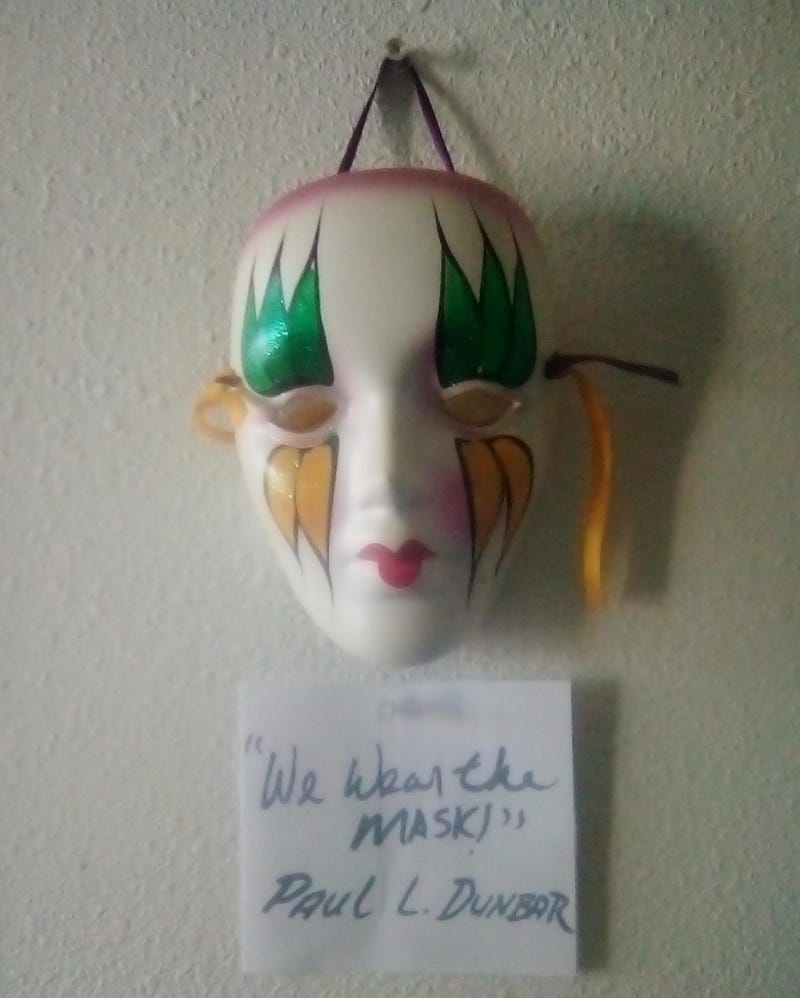
My sixth grade drama teacher was more of a black history teacher to me than any other person I’ve ever known. This is not to knock white teachers, or teachers of another ethnicity in any way form or fashion.
But in keeping with the theme of the Black Like Me publication, this story is merely to highlight and show appreciation for black teachers who don’t necessarily receive the same recognition for the hard work they do.
The teacher I want to share a few words about is probably dead and buried by now, but not in my mind and heart.
This teacher had a way of teaching, so that you were so busy enjoying the knowledge being taken in, you didn’t even realize you were learning.
She was definitely the kind of black teacher that helped instill a sense of pride into every child she encountered, especially black children.
Class Was a Haven
When I was growing up, my life was always in turmoil, and I moved from one place to another. Even though I went to almost just as many schools as I did foster homes, school was still the closest thing to me that was a “constant”, probably because of the uniformity of the school systems.
That meant that being in class was a haven for me; pretty much any class, because I managed to do well in all subjects. How that was possible, given the transitional life I led as a child, I have no idea; I’m just glad that it was.
One important period during my elementary years was my sixth grade year. Back then, that was the year you transitioned from elementary to “Junior High” (now known as “Middle School”).
I’ll never forget that sixth grade year at Menlo Avenue Elementary, when we had a talent and musical presentation for Black History month.
It might have been referred to as “African American” history at that time — I honestly don’t remember.
I do, however, remember that it took us months to get ready for the event; at least it felt like months, but if not, it was definitely weeks.
Black History Program
I can remember rehearsing for the various numbers that I was to be in; a duet, part of a trio, and several group numbers. Besides the one modern dance number I was part of, the other performances involved reciting dramatic poems.
We had to learn and recite “Oh Black and Unknown Bards” by James Weldon Johnson, we had to learn the poem “I Too” by Langston Hughes, and sing it as a group, in addition to learning and singing the black national anthem “Lift Every Voice and Sing.”
All these numbers we performed in the program are still vivid in my mind. I remember the drama teacher, who normally only came once a week, but not when we were getting ready for the program. Her visits increased.
I don’t know if the Black History program was really as big a deal as I remember, or if it was just that important to me, in my ever-changing, turbulent world.
I recall how privileged it felt to get the extra attention from the drama teacher, once rehearsals for the program got underway. It made me feel special, being among the highly favored ones who had been smart enough to sign up for the show.
But unlike some of the other kids, I didn’t sign up just to get out of class for rehearsals, even though we spent at least three or four times a week in the auditorium, working on the show.
A Memorable Black Poem
One particular poem that I remember having to recite in the show is a poem that I have never forgotten the words to, not since I learned it; I mean really learned it.
We Wear the Mask, by Paul Laurence Dunbar is a poem that I’ve never gotten out of my head (at least the first portion of it anyway), all because of how the drama teacher explained the meaning of the words to her students.
It was during one particularly long rehearsal, and the children were getting restless and a bit unruly — something they practically never did with this teacher.
It wasn’t that she was strict, and a force to be reckoned with. It was that she was super sweet, and everyone loved her, AND she was a force to be reckoned with. Normally, no one even thought of trying to pull anything over on her.
Well, on this one occasion, the children nearly forced her out of her typically fun and easy going manner. She scolded us for not taking the poem seriously.
Her tone became more stern and less lighthearted, as she broke down the meaning of the following words.
“We wear the mask that grins and lies,
It hides our cheeks and shades our eyes, —
This debt we pay to human guile;
With torn and bleeding hearts we smile,
And mouth with myriad subtleties.
Why should the world be over-wise,
In counting all our tears and sighs?
Nay, let them only see us, while
We wear the mask.”
I remember exactly how I felt, as she helped us appreciate what the poet was saying about the burden of pretending to be something we’re not, to people who neither see us, nor care to see us.
The rest of the children settled down and became just as attentive as I was, while our drama teacher helped us appreciate our individual connection to those words.
She made us not only learn to recite the words, but she helped us understand their importance, especially to ourselves as black children.
Important Things Learned
If you might have noticed, all throughout my remembrances, I haven’t once mentioned the name of my former drama teacher. That’s because I can’t remember her name.
It’s funny how I can remember practically everything about her; the way she looked and always smelled so good. Her medium brown skin, reddish blonde curly hair, and the deep dimples that she was always showing off when she smiled, which was often.
She wore a red lipstick that was not real bright, but very noticeable, and she had such a raspy, dramatic voice, that she was obviously born for the theater (the thing she seemed to love most of all).
I can still hear the way she pronounced and enunciated the words to the poems we read. In fact, I’m pretty sure that was the first time I actually learned to use the word “enunciate”.
She would always correct us, but only in the most caring and uplifting way. That was one of the things I remember most about her; she always made us feel proud.
It bothers me that I can’t remember her name, but if you’ve read any of my Hard Knocks stories, you know that I was going through a lot of difficult stuff during my sixth grade year.
In spite of not being able to remember my drama teacher’s name, I am happy I will always be able to recall what a wonderful teacher she was, and how she instilled a sense of pride in me, in addition to all the other ways that she helped me to grow and develop.
Final Reflections
One of the main principle’s I learned to try and live by, had to do with paying attention to the things we say and do in life.
My teacher’s theory was: We should always be able to take pride in our words and our deeds. If there was nothing to be proud of about what we say, or what we do then we must be saying or doing something wrong.
Thank you to all the teachers, young and old, black, white, read, yellow, and pink with purple poka dots! I salute you all and thank you for your service to the youth of America — and the rest of the world; those young minds that are entrusted with our future.
Dear Readers: Would you like to read more informative, valuable, and entertaining Justiss Goode stories? Just click this Directory link: choose from my OVER 160 titles (by category).
Or visit any of my Medium publications:
Black Like Me | Just Like New | Hard Knock | Short Story TIPSTER
Thank you for your: FOLLOWS | APPLAUDS | RESPONSES


