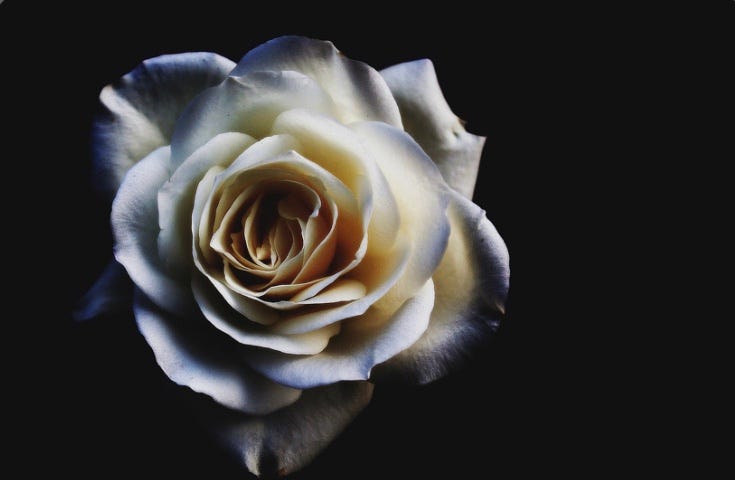
# Summary

The text "Black Rose" is a poetic reflection on the duality of beauty and darkness, intertwining imagery of a black rose and a candle's flame with themes of love, mystery, and the struggle between light and shadow.

# Abstract

"Black Rose" delves into the enigmatic allure of the dark and unknown, inviting readers to ponder the depths of darkness and the fight against shadows. It presents a world where a black rose represents a complex blend of beauty and foreboding, pressed against red lips—a stark contrast that captures the essence of attraction and repulsion. The poem suggests a struggle between an angelic and tempting presence, with shadows dancing on walls until the light of a candle overcomes them. The author, Kira Dawn, uses vivid imagery to evoke a sensory experience of the dark, emphasizing the importance of keeping the 'candle' of clarity and hope, rather than succumbing to the 'underbelly of hell.' The poem culminates in the transformation of the black rose into a symbol of death, leaving the ultimate interpretation to the imagination of the reader.

# Opinions

- The black rose is presented as a symbol of both eternal bliss and the chill of mortality.
- The poem conveys a sense of thrill and danger associated with the temptress figure, juxtaposing her with an angelic counterpart.
- It suggests that the interplay of light and shadow, represented by the candle's flame, is akin to a personal struggle or a fight for the individual's perspective.
- The author appears to advocate for maintaining positivity and clarity ('keeping the candle') over succumbing to darkness and despair.
- The closing lines imply that the full understanding of life and death, symbolized by the black rose, is exclusive to the deceased.