avatarJM Heatherly

Summary

Black pepper, originating from India's Malabar region, has been used for 4000 years and is a key spice in global trade, with diverse culinary and medicinal applications.

Abstract

The article titled "Black Pepper, a Spark of Global Trade" under the "Spice Collection" section, delves into the historical and culinary significance of black pepper. It is derived from the Piper nigrum plant and is celebrated for its earthy, woody, and piney flavors. The spice's versatility extends beyond seasoning savory dishes to enhancing sweet foods, and it possesses anti-inflammatory and antibacterial properties, with roots in Ayurvedic practices. The article also includes a simple recipe for "Peppered Fruit," suggesting the use of freshly ground black pepper on fruits like strawberries or peaches to add a spicy kick.

Opinions

  • The author emphasizes the historical importance of black pepper, noting its role in sparking global trade between Europe and Asia.
  • Black pepper is highly valued for its unique spiciness, which is attributed to the compound piperine, differentiating it from the heat found in chili peppers.
  • The pairing of black pepper with salt is highlighted as a staple in American cuisine, indicating its widespread acceptance and use in everyday seasoning.
  • The author suggests an innovative culinary use for black pepper by recommending it as an addition to fruit, expanding its traditional role in savory dishes.
  • The article implies that black pepper's flavor profile can be manipulated through different preparation methods, resulting in black, green, and white pepper variations.

Spice Collection

Black Pepper, a Spark of Global Trade

Spice of legend
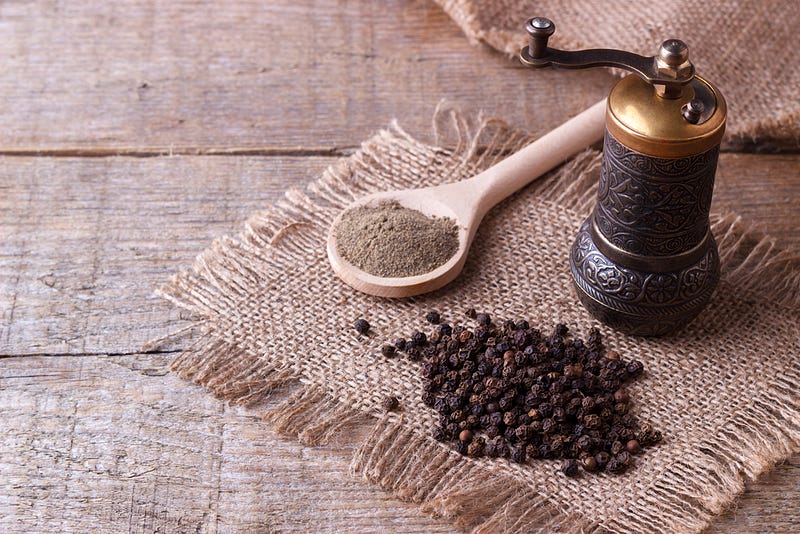
Image by Lana_M via Shutterstock

Black pepper comes from Malabar in India, and people have seasoned their food with it for 4000 years. Like tea, you can prepare the seed of this woody vine in many ways like black, green, and white. First, farmers pick the peppercorns when green, briefly cook, and then dry them.

Find pepper paired with salt in typical American cuisine. Its spiciness comes from the active compound piperine — a distinct flavor from capsaicin in a chili. Europeans first developed a taste for it, becoming the sparks of global trade between Europe and Asia.

Nomenclature: Piper nigrum Tastes: Earthy, woody, piney, brash Uses: Season savory and sweet food, anti-inflammatory, antibacterial, Ayurveda

Recipe: Peppered Fruit (GF/V)

Grind fresh black pepper once or twice over some fruit like strawberries or peaches for a kick.

By JMHeatherly

Food
Cooking
Culture
History
Walkabout
Recommended from ReadMedium