
A SERIES ON THE CONTRIBUTIONS OF AFRICAN AMERICANS
Black History Month — Part 1
A Doctor, An Entrepreneur, An Inventor
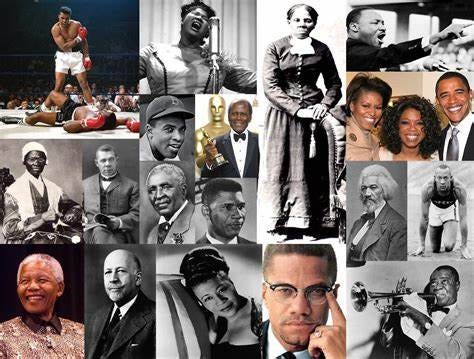
Black History Month is set aside to honor the contributions of African Americans that for years were not recognized in our history books. Part 1 will introduce you to contributions from the fields of medicine, specialized hair care, and inventions that changed our lives.
Dr. Daniel Hale-Williams
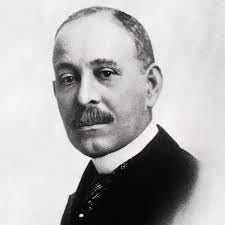
(Born January 18, 1858. He died August 4, 1931)
Dr. Williams graduated from Chicago Medical College in 1883.
Considered to be thoughtful and skilled, his medical practice grew. In 1889 he was appointed to the Illinois State Board of Health.
Dr. Williams worked during an era of racism and discrimination which prohibited African Americans from being admitted to major hospitals and black doctors from employment on hospital staff.
In 1891, Dr. Williams founded the first interracial hospital, Provident Hospital and Training School for Nurses, in Chicago. He founded his hospital in response to the lack of opportunity for African Americans in the medical profession.
In 1893, Dr. Daniel Hale Williams became the first surgeon to perform successful Open-Heart Surgery on a human at Providence Hospital. His patient, James Cornish, survived and was discharged 51 days later. The operation was done without x-rays, antibiotics, or the modern surgical tools of today.
In 1895, Dr. Williams co-founded the National Medical Association for Black medical professionals. This was the alternative to the all-White American Medical Association that did not extend membership to Black doctors.
Dr. William’s accomplishments paved the way for medical history in the field of heart surgery.
Facts are taken from
Madam C.J. Walker
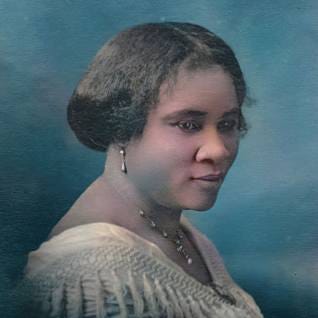
(Born December 1867. She died in 1919)
Madam C.J. Walker was an African American woman who became a self-made millionaire after creating a line of hair care and beauty products geared toward Black hair. (She made the first, Madam Walker’s Wonderful Hair Grower, in 1905.)
Madam C.J. Walker was born Sarah Breedlove to former slaves. As a child, she was raised on a cotton plantation. After slavery, her parents (like many former slaves) were sharecroppers. When freed, most slaves had nowhere to go or money. So, they became victims of the vicious cycle of sharecropping.
Sharecropping was a way for plantation owners to keep slaves on their property once freed. Owners promised to pay the former slaves for continuing to work the land. However, the plantation owners charged the slaves for everything they needed to survive, from broken-down cabins(housing) to food and clothing. Of course, when it was payday, the slaves had to pay their debts to the owners, which was the majority of their earnings. It was nothing more than a system of perpetual but legal slavery.
Sarah’s parents died at a very early age, and she and her sister moved to Vicksburg, Mississippi, and became washerwomen and domestic servants. She married early but not successfully. She eventually took her daughter and moved to St. Louis.
In her thirties, Sarah’s hair began to fall out. She had worked many years as a sales agent for a woman that created hair care products. She started experimenting with her formulas and eventually found one that worked.
In 1906, Sarah married C.J. Walker, a newspaper salesman. She dropped Sarah and added Madam to her name. She started her business as mail order and door-to-door (direct sales). She encouraged a generation of women to feel proud of their natural hair and achieve financial success by becoming sales agents for her products.
She donated large amounts of her money to African American organizations and encouraged employees to do the same. She was an activist against social injustice. In 1917 Madam C.J Walker went to the White House to urge President Wilson to make lynching a federal crime.
Madam C.J. Walker died at the early age of 51. She directed that two-thirds of her estate’s future profits go to charitable organizations.
A headquarters building that she planned opened after her death. Her daughter made sure that the project was completed in Indianapolis, Indiana. It provided office space for African American doctors, lawyers, and other professionals that could not rent space in buildings owned by Whites.
The story of C.J. Walker is that of hardship, poverty, and the determination to create a life by lifting herself up. She is truly an inspiration to women everywhere.
A Netflix series based on her life, Self Made, premiered in March 2020.
Facts are taken from:
Women’s History To Teach Year-Round
Garrett Morgan
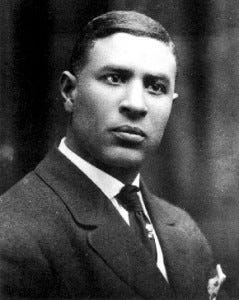
(Born March 4, 1877. He died in 1963)
Garrett was born into a large family. He was the child of freed slaves, who like many others, were forced into sharecropping. His education began in a one-room, all Black schoolhouse. Garrett was fortunate years later to move to Cincinnati, Ohio, and later to Cleveland, where he was further educated and attended integrated schools.
In the early 1900’s Morgan worked as a handyman and landed a job fixing sewing machines. However, he noticed severe flaws in the mechanics of the devices and designed a belt that improved the workflow in the clothing industry. His patented invention led him to open his own sewing machine repair shop and clothing manufacturing business.
Morgan received a patent in 1912 for his Breathing Device. On July 25, 1916, Garrett was called upon to help with a natural gas explosion in a waterworks tunnel four miles off Cleveland’s shoreline and 120 feet below Lake Erie’s surface. Many men were trapped and would die of smoke inhalation.
Garrett was asked to put his Safety Hood, a Breathing Apparatus, and the first version of a gas mask to the test. Although many men died before he could get to them, he saved the lives of many that day. He did not receive the accolades he should have at that time. However, he was later recognized for his life-saving invention.
Fire departments in more than 500 cities bought his invention. He also secured contracts with the US Navy and US Army. His safety hood was used during WW1 to protect against German gas warfare.
Garrett is commonly known for his invention of the three-point traffic light. In 1922 he became very interested in the traffic light which only had green for go and red for stop. As you can imagine, there were many accidents with this system. Cars were still sharing the roads with horses and horse-drawn carriages. Adding “yellow” to the traffic signal added a layer of caution and safety that we benefit from today.
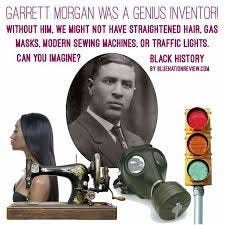
Garrett Morgan is credited with inventing items that have saved thousands of lives and added to public safety. He nicknamed himself the Black Edison (a reference to Thomas Edison, who invented the lightbulb.
Facts are taken from The Hustle Company
I hope you have enjoyed this information on the contributions of famous Black Americans and that you have learned something new. I welcome your comments.


