
BLACK HISTORY MONTH
Black History Month: A Tribute to Black Scientists in Technology
Honoring their Contributions to the Advancement of Science and Technology
This post is written in honor of Black History Month and to pay tribute to the legendary scientists who have made significant contributions to the technology sector. Throughout history, black scientists have overcome obstacles and challenges to make advancements in the fields of science and technology. This post will highlight some of the most influential and influential black scientists, as well as the groundbreaking work they have accomplished.
Disclaimer: This post was curated through Wikipedia and various sources. The main purpose of this post is to pay tribute to the legends who have changed the technology sector. The presented information is a tribute to their impact on the world and is not intended to be exhaustive.
Mark Dean
who co-invented the IBM personal computer and holds three of the original nine PC patents.
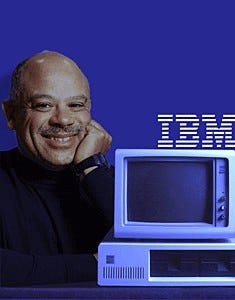
Dr. Mark Dean invented and engineered computer systems for ease of use.
Dean was born in Jefferson City, Tennessee, in 1957. He was a rare African American athlete who was also a straight-A student. He earned his electrical engineering degree from the University of Tennessee.
Dean received his master’s degree in electrical engineering from Florida Atlantic University and his Ph.D. from Stanford University, both totally supported by IBM.
Dean joined IBM after graduating. He invented the IBM PS/2 Models 70 and 80 and the Color Graphics Adapter, which changed the company’s history.
Dean and fellow engineer Dennis Moeller invented the Industry Standard Architecture (ISA) bus system in the early 1980s when personal computers (PCs) were becoming popular. This breakthrough allowed disc drives, printers, displays, and modems to interact with each other when put into our PCs’ ISA slots, revolutionizing PC use. Dean led the IBM design team to the color PC display after this development.
Dean achieved another data processing breakthrough in 1999. His IBM team built the first gigahertz chip. Computer processors ran at kilohertz or megahertz (at one million) before. The gigahertz allowed computers to calculate one billion times per second. This game-changing technology enabled quicker data processing than ever before.
Katherine Johnson
a mathematician and NASA scientist who made key contributions to America’s space program, including the calculation of trajectories for the Apollo moon landing mission
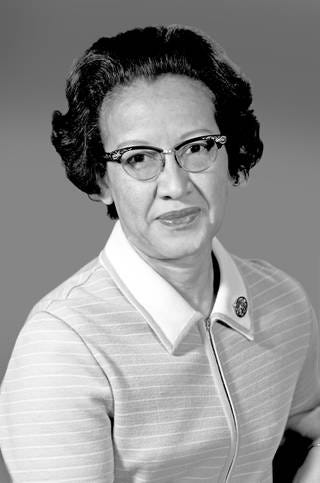
Long before today’s technology was invented, Katherine Johnson was known as a computer. For the US space program, she calculated flight trajectories by hand.
Without the brilliance of a mind like Johnson’s, it’s uncertain whether John Glenn would have pioneered space missions, and it’s doubtful Neil Armstrong would have been the first human to step onto the surface of the moon.
Katherine Johnson (born August 26, 1918) was an American mathematician and space scientist. She was born in White Sulphur Springs, West Virginia, and earned a B.S. in mathematics and French from West Virginia State College. In 1951, she joined the West Computers at the National Advisory Committee for Aeronautics, and in 1958, she became the first black female engineer at NASA. During her more than three decades at NASA, she calculated and analyzed the flight paths of many spacecraft, including the 1969 Apollo 11 mission to the Moon. Her work enabled humans to successfully achieve space flight. She passed away on February 24, 2020, in Newport News, Virginia.
Johnson’s work and legacy influence children aspiring to be scientists or to enter the fields of science, technology, engineering, and math (known as STEM).
Percy Julian
A pioneering chemist and researcher who synthesized drugs from natural products, including cortisone, used to treat rheumatoid arthritis.
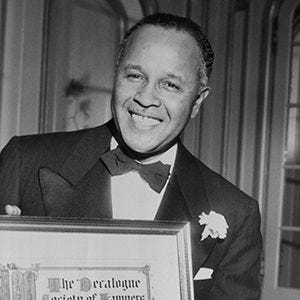
Percy Julian was a trailblazer in the field of chemistry, whose life and work are an inspiration to us all. Even though his race caused him to face many problems, he went on to make important contributions to the field of chemistry and is now considered one of the most important chemists in U.S. history.
Percy Julian was born in 1899 in Montgomery, Alabama, the grandson of former slaves. Despite being unable to attend high school due to segregation, he went on to earn his Ph.D. from the University of Vienna in Austria. He accomplished this despite having to take high school-level classes in the evenings while attending college and facing discrimination in academia.
After obtaining his Ph.D., Julian worked at several academic and corporate institutions where he made significant contributions to the field of chemistry. He synthesized drugs to treat glaucoma and arthritis and invented Aero-Foam, a product used in World War II. In 1973, Julian became the first black chemist to be elected to the National Academy of Sciences.
Percy Julian’s life and achievements were the subjects of a documentary film, “Forgotten Genius,” which aired on PBS’s Nova series. He was inducted into the National Inventors Hall of Fame in 1990, and his synthesis of physostigmine was recognized by the American Chemical Society as one of the top 25 achievements in American chemistry.
Percy Julian’s life and work serve as a testament to the power of determination and perseverance in the face of adversity. He faced numerous obstacles throughout his life, but never let them hold him back. He will forever be remembered as a pioneering chemist and a true inspiration.
Fredrick McKinley Jones
An inventor and engineer who revolutionized the transportation of perishable goods through his invention of the first portable and self-contained refrigeration system.
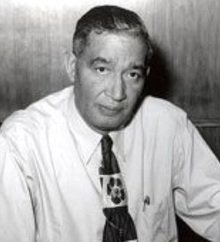

Frederick McKinley Jones was a self-taught mechanic and inventor who revolutionized the film and refrigeration industries. Born in Cincinnati in 1893, he taught himself mechanical and electronic skills while working as a garage mechanic after World War I in France. He went on to work for Joseph Numero in Minneapolis, where he patented a box-office apparatus and created the first method for movie projectors to play back recorded sound, paving the way for “talking pictures.”
In 1937, Jones set his sights on creating vehicle air conditioning, and he soon discovered that truckers transporting perishable goods across the country were in dire need of a solution to keep their cargo from spoiling. He created a small, shockproof, automated truck refrigeration unit that utilized his patented self-starting motor. Together with Numero, he founded a company to commercialize their products, which eventually expanded to include railway, ship, and truck systems. Today, this company, Thermo King, is thriving, and Jones’ innovations have made it possible for Americans to consume a greater variety of foods year-round.
During World War II, Jones designed military camp refrigeration equipment to store blood, and he also created a portable X-ray machine. In total, he was responsible for approximately 60 innovations that have improved our lives and leisure. Frederick McKinley Jones was a true visionary who showed how self-education and hard work can make a difference.
Roy Clay Sr.
A computer scientist and businessman who was a founding member of the computer division at Hewlett-Packard and is credited with helping to develop the first commercial minicomputer, the HP 2116A.
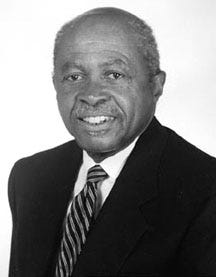
Roy L. Clay, also known as the “Godfather of Silicon Valley,” was a pioneering figure in the field of computer science. With more than 50 years of experience, Clay has left an indelible mark on the industry and made it possible for other African-Americans to succeed in technology.
Born in 1929 in Kinloch, Missouri, Clay had a difficult upbringing but was driven to succeed. In 1951, he became one of the first African-American graduates of St. Louis University with a degree in mathematics. Then, because he was so interested in technology, he moved to Silicon Valley in the late 1950s.
Clay’s first job in computer science was at Lawrence Livermore National Laboratory (LLNL), where he was hired despite discrimination from other companies. Here, he made his first computer program to track the spread of radiation after an atomic bomb went off.
HP soon recognized Clay’s success and offered him the opportunity to launch their computer development firm. Clay was in charge of the innovative 2116A computer team at HP in 1966. He also ran the first HP Research and Development Computer Group, which made the 2116A software.
After leaving HP, Clay founded ROD-L Electronics, where he led the development of electrical safety testing equipment, including Hipots — dielectric resist testers — that protect PCs against electrical surges.
However, Clay’s most impactful initiative was creating programs to help more African-Americans enter Silicon Valley. In 1973, he was the first African-American to be elected to the Palo Alto City Council. There, he fought for the equality and acceptance of everyone.
Roy L. Clay will forever be remembered as a black technology pioneer and a computer science expert. His work has made a lasting difference in the industry and given new opportunities to people in the future.
Would you like to support my work? Consider becoming a Medium member for $5 per month. As a member, you’ll have unlimited access to all the great stories on Medium and if you use my referral link, I’ll receive a small commission.