
Black Girl Free: Unleashing the Wild
When my daughter was six, she liked to twerk.
I would watch these movements: her hands perched on her knees, back slightly arched as she moved her growing little body in ways that were natural to her. I was never compelled to stop her. I watched in amazement at the confidence she wielded as her hair, big and wild, swayed in concert with the rest of her.
Before she could fully enjoy the soulfulness of her performance, her father would interject with a stern, “STOP.” At this, she is immediately exiled from her instinctive nature of dancing.
I saw the alarm clearly on her face. It read: I did something wrong. I quickly reassured her she hadn’t to which her father, again, interjected with, “No twerking.” He did not offer a sensible reason why this should be the case. So, again, I assured her, “You did nothing wrong.”
Though we did not yet see it, her sense of self was clipped, albeit slightly. The initiation into self-satisfaction and self-awareness waned, albeit slightly. What she was expressing was not a come-hither sway of her hips for the male gaze but a tapping into her wild-ish nature as a girl child who was new to the idea of self-expression.
I was introduced to the idea that young girls are often boxed into spaces for the sake of adequacy by Dr. Clarissa Pinkola Estes in her book Women Who Run With Wolves in a chapter titled “Finding One’s Pack: Belonging as Blessing.”
Girl children who display a strong instinctive nature often experience significant suffering early in life. From the time they are babies they are taken captive, domesticated, told they are wrongheaded and improper. Their wild-ish natures show up early. They are curious, artful, and have gentle eccentricities of various sorts, ones that, if developed, will constitute the basis for their creativity for the rest of their lives. Considering that the creative life is the soul’s food and water, this basic development is excruciatingly critical.
While this is true of girls as a whole, it is especially true for the black girl. There is a seeming mentality that moves young, free black girls from school-to-strip club.When I probed my daughter’s father about his unwillingness to allow her to express herself, he tiptoed around the truth of what he believed: girls who dance — twerking in this instance — are portrayed in a negative light.
The Urban Dictionary, a resource blindly used by many people for defining popular terms, defines twerking as “rhythmic gyrating of the lower fleshy extremities in a lascivious manner with the intent to elicit sexual arousal or laughter in ones intended audience.” With a definition like that I, too, would advise my daughter against twerking. But that definition is laced with fallacies. Twerking has existed for centuries and is closely related to the Afro-diasporic history of dance as communion and celebration; therefore, against popular belief, I welcome twerking in all its forms.
It has since been decided, by societal views that hinge greatly on white supremacy, that the expression of black girls is often one full of sexual advances. Watching my daughter dance brought me great joy because once upon a time I was a young black girl who loved to express through dance.
I was fifteen when I took my first dance class. The resounding aim from my mother was to get me into something that would transform me from a shy girl into one who expressed freely; dance did that for me.
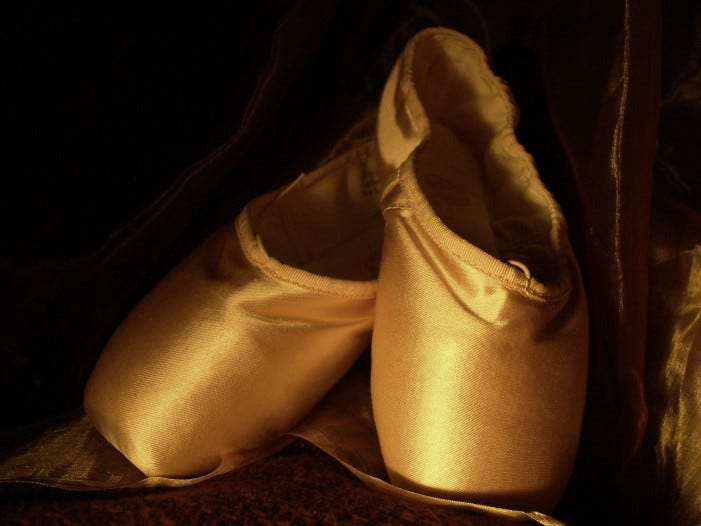
It was a freedom I had never touched: my feet wrapped in ballet flats, my body enveloped in a leotard, and the sensual sound of jazz all around me. I imagined that I danced high and unafraid. Dance had allowed me the space to be what we now call “black girl free.” It unleashed the wild nature in me that I never knew I wanted or needed.
But, with my ever growing breasts and backside, I was often placed in the back line to keep my jiggle from turning the ballet and jazz dance routines into something suggestive. Suggestive was the word used by someone I revered. When I found out the meaning of the word I recoiled and subsequently quit. It took years for me to feel safe enough to return.
I do not want that for my child, or any other black girl. Our nature, the wild horse that cannot be tamed, is our souls voice asking for adventure.
When Langston Hughes questioned the outcome of a dream deferred, I understood clearly what he meant. But here, I ask:
what happens if we allow a young black girl to embrace her wild nature?
Who does she then become?