avatarJulia A. Keirns

Free AI web copilot to create summaries, insights and extended knowledge, download it at here

1979

Abstract

le deer and a few roadrunners. I still can’t catch a photo of a roadrunner. They are simply too fast. This deer was waiting for us to drive past, and we were waiting for her to cross. It was a standstill for a few minutes until Rich eased forward, and she finally backed away.</p><p id="10d7">Mule deer, javelina, prong-horned antelope, and scaled quail are among the most common species seen in this area. They said work is in progress to restore the bighorn sheep, which were almost totally eliminated from Texas by the 1850s. Several sheep have been transplanted over the years and then never seen again. Between 1995 and 2000, 58 sheep were transplanted into Black Gap, and some of them have now been seen in Big Bend National Park.</p><p id="50c6">We did not see a single other car the entire drive down to the river and back. It is definitely not a popular area. These are the best areas I love to find and drive through and explore. No one but us and nature.</p><figure id="27aa"><img src="https://cdn-images-1.readmedium.com/v2/resize:fit:800/1*6xHbSgareEDJxQLiBa46SA.jpeg"><figcaption>Texas Road 2627. Photo copyright Julia A. Keirns.</figcaption></figure><p id="975c">The vegetation is greener here, not as brown as Amistad was. We saw green cactus, reddish cactus, purple cactus, and yellow grass.</p><figure id="9827"><img src="https://cdn-images-1.readmedium.com/v2/resize:fit:800/1*YWDgSDkA63zTJNpX7qpayA.jpeg"><figcaption></figcaption></figure><figure id="c0ae"><img src="https://cdn-images-1.readmedium.com/v2/resize:fit:800/1*v5RkNBFWVLnuotUN7K_7WA.jpeg"><figcaption>Photo copyright Julia A. Keirns.</figcaption></figure><p id="c17e">Without knowing the history, I began to understand why the area is called Black Gap. The rocks and the inside of the mountains are black. The further we drove on the road, the more black we saw. Black mountains and black rocks.</p><figure id="362c"><img src="https://cdn-images-1.readmedium.com/v2/resize:fit:800/1*1TWlrwETByMJE

Options

diPLfvRGg.jpeg"><figcaption>Parking area. Photo copyright Julia A. Keirns.</figcaption></figure><p id="3df4">There are several paved pull-offs along the road to stop and get out and take pictures or watch for wildlife through binoculars. I keep forgetting the binoculars. I left them back at the motorhome. You can bet they will be in the car tomorrow.</p><figure id="2387"><img src="https://cdn-images-1.readmedium.com/v2/resize:fit:800/1*WISpFuqzxThwWhwGuSSrJw.jpeg"><figcaption>Abandoned La Linda Bridge across the Rio Grande. Photo copyright Julia A. Keirns.</figcaption></figure><p id="6f49">At the end of the road across Heath Canyon is the abandoned La Linda Bridge over the Rio Grande below to what used to be a bustling mining town in Mexico. You can see the abandoned buildings and cement block homes of the La Linda Ghost town from the American side.</p><figure id="8ad9"><img src="https://cdn-images-1.readmedium.com/v2/resize:fit:800/1*ftGKy7hfOH3t8X-_1leKPg.jpeg"><figcaption>Ghost town of La Linda, Mexico. Photo copyright Julia A. Keirns.</figcaption></figure><p id="8d0a">I would love to have the opportunity to go over there and walk around that ghost town. Too bad I can’t. But I am so glad we were able to get this close to the Rio Grande border, just the two of us, with no one else around. It was fun and exciting to see and take pictures of. I highly recommend driving this road if you ever get the chance.</p><figure id="d81b"><img src="https://cdn-images-1.readmedium.com/v2/resize:fit:800/1*Kwj3V3iTuOksWMXgwsbBlg.jpeg"><figcaption>Rio Grande River at Heath Canyon. Photo copyright Julia A. Keirns.</figcaption></figure><p id="7a88">Be sure to follow me or subscribe to get an email whenever I publish an article. We travel a lot and see a lot. I publish articles at different publications, so if you just follow the publication you might miss one of our excursions.</p><p id="7219">Thanks for reading and joining me on this journey.</p></article></body>

Black Gap Wildlife Management Area

Big Bend National Park — Texas
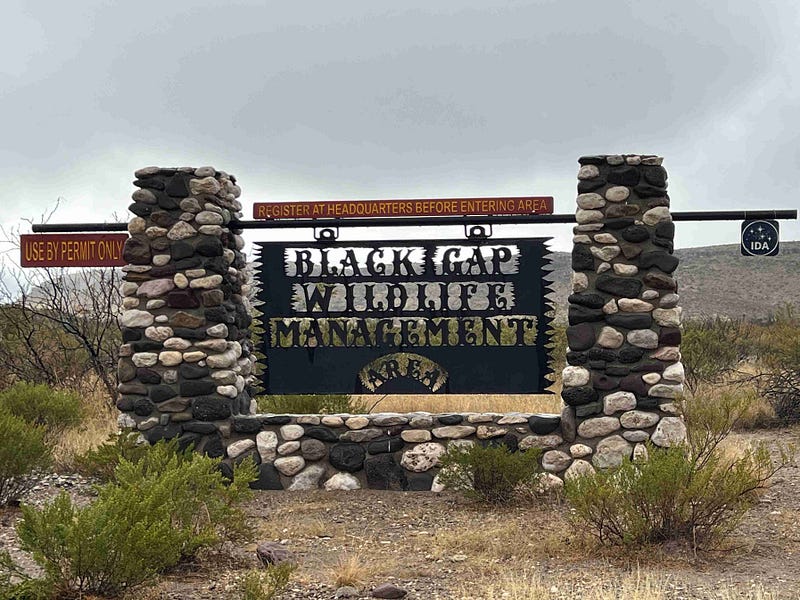
Black Gap Wildlife Management Area sign. Photo copyright Julia A. Keirns.

Just outside the north entrance to Big Bend National Park is Texas Road 2627. Turn right on this road, and about 7 miles down is the entrance to the Black Gap Wildlife Management Area. We are camping on Road 2627. From our campgrounds, this road travels 22 miles and dead ends at the Rio Grande River.

I am excited to tell you about this drive and show you some pictures. This is a beautiful drive that I am sure a lot of people forego because they want to actually see inside Big Bend National Park. I am glad we are here for a whole month and have plenty of time to see it all. These are the journeys that mean the most to us.
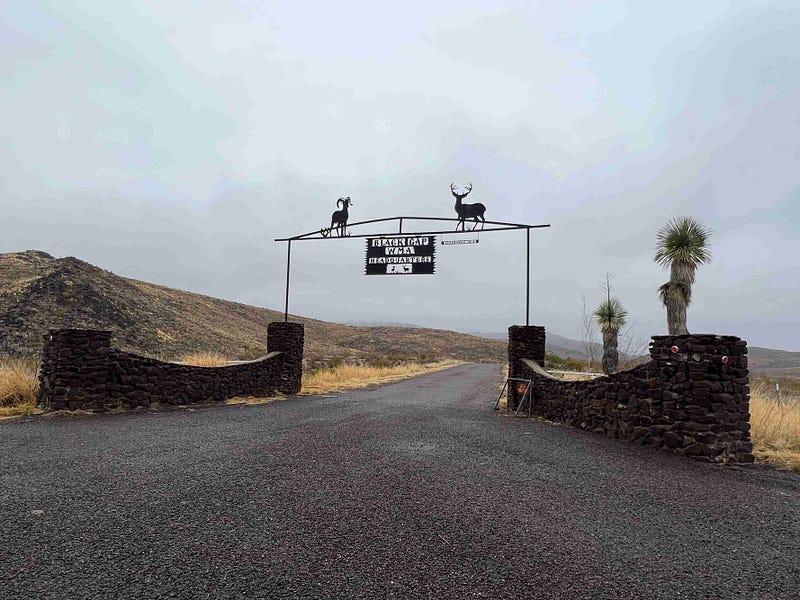
Black Gap Wildlife Management Area Headquarters. Photo copyright Julia A. Keirns.

Road 2627 follows along the border edge of Big Bend National Park and is managed by the Game and Fish Commission of Texas. It encompasses approximately 103,000 acres of undeveloped land owned by the people of Texas. There are limited access roads to a few primitive campsites. Be sure to stop by the park ranger headquarters office if you plan to hike or camp and register your presence. Since we were just driving through, we did not stop and register.
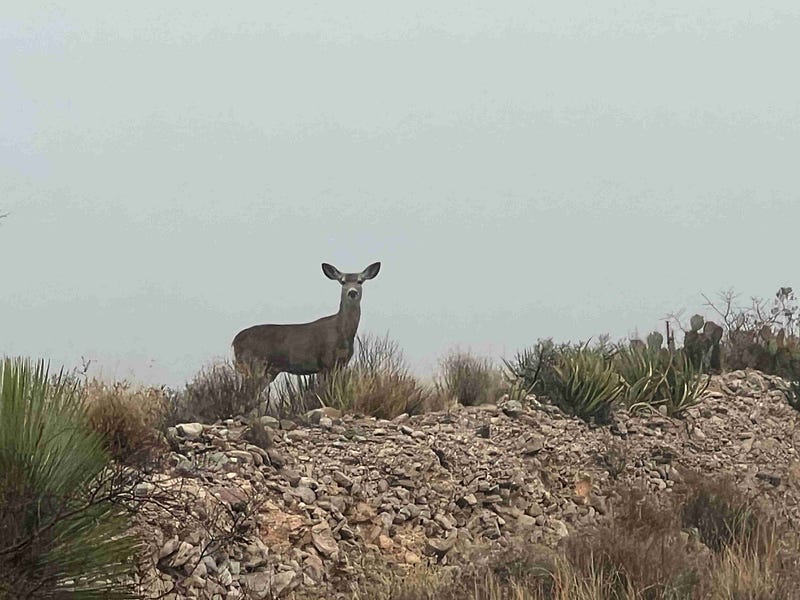
Black-tailed mule deer. Photo copyright Julia A. Keirns.

The views are beautiful, and we were lucky enough to see several mule deer and a few roadrunners. I still can’t catch a photo of a roadrunner. They are simply too fast. This deer was waiting for us to drive past, and we were waiting for her to cross. It was a standstill for a few minutes until Rich eased forward, and she finally backed away.

Mule deer, javelina, prong-horned antelope, and scaled quail are among the most common species seen in this area. They said work is in progress to restore the bighorn sheep, which were almost totally eliminated from Texas by the 1850s. Several sheep have been transplanted over the years and then never seen again. Between 1995 and 2000, 58 sheep were transplanted into Black Gap, and some of them have now been seen in Big Bend National Park.

We did not see a single other car the entire drive down to the river and back. It is definitely not a popular area. These are the best areas I love to find and drive through and explore. No one but us and nature.
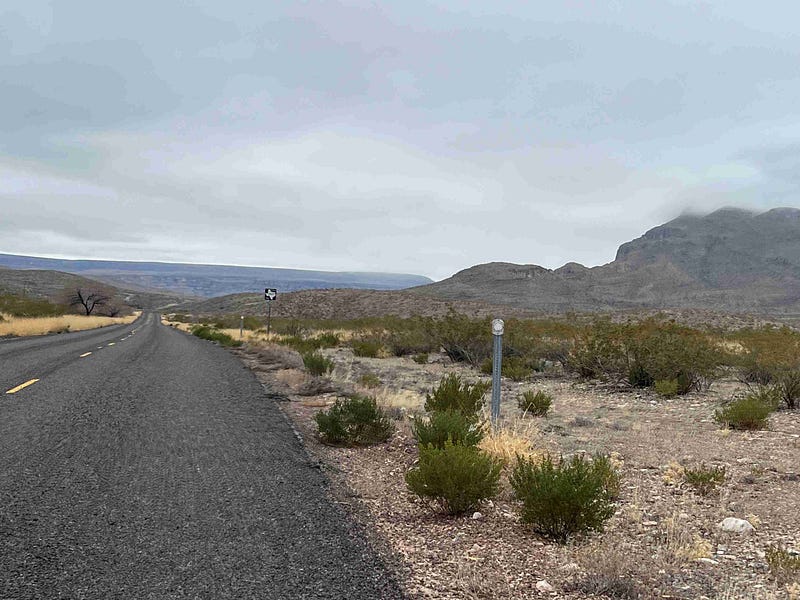
Texas Road 2627. Photo copyright Julia A. Keirns.

The vegetation is greener here, not as brown as Amistad was. We saw green cactus, reddish cactus, purple cactus, and yellow grass.
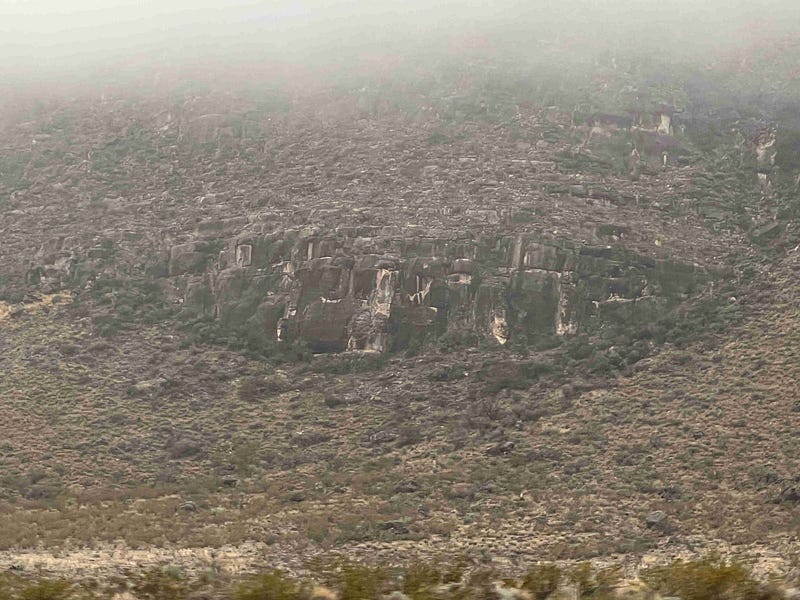
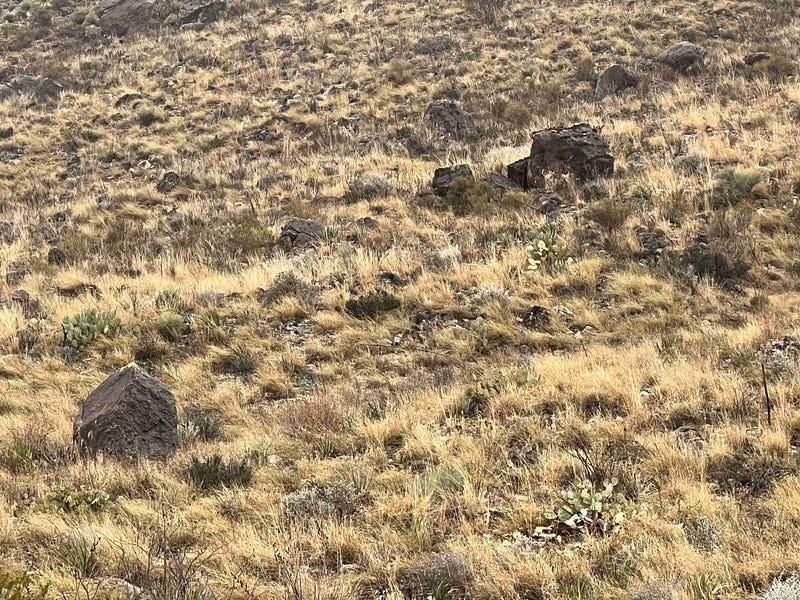
Photo copyright Julia A. Keirns.

Without knowing the history, I began to understand why the area is called Black Gap. The rocks and the inside of the mountains are black. The further we drove on the road, the more black we saw. Black mountains and black rocks.
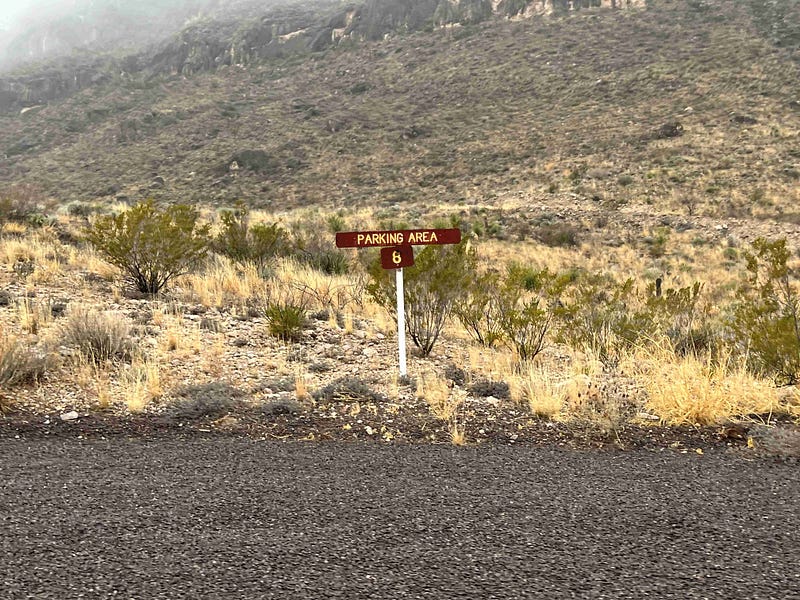
Parking area. Photo copyright Julia A. Keirns.

There are several paved pull-offs along the road to stop and get out and take pictures or watch for wildlife through binoculars. I keep forgetting the binoculars. I left them back at the motorhome. You can bet they will be in the car tomorrow.
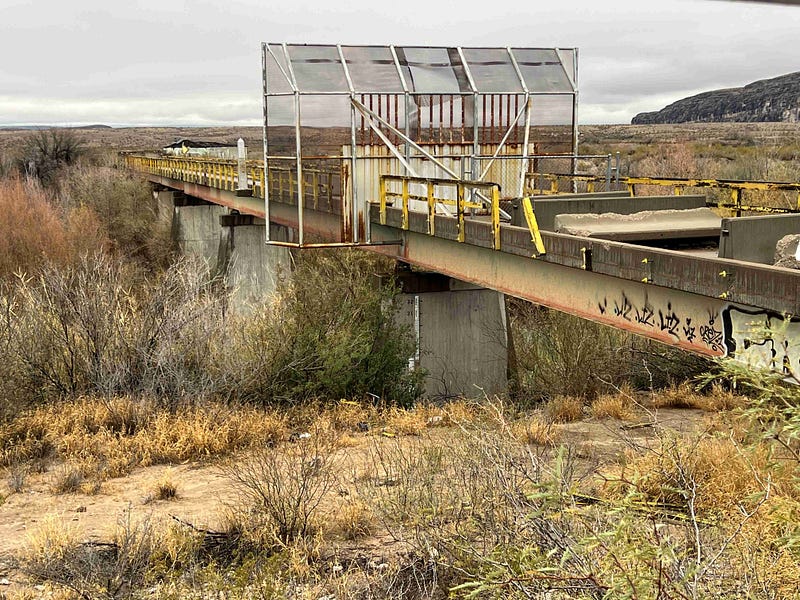
Abandoned La Linda Bridge across the Rio Grande. Photo copyright Julia A. Keirns.

At the end of the road across Heath Canyon is the abandoned La Linda Bridge over the Rio Grande below to what used to be a bustling mining town in Mexico. You can see the abandoned buildings and cement block homes of the La Linda Ghost town from the American side.
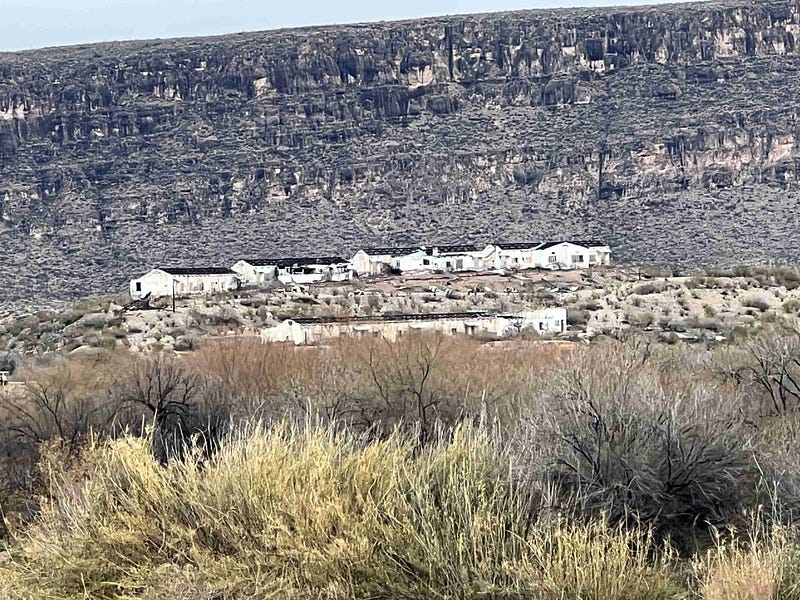
Ghost town of La Linda, Mexico. Photo copyright Julia A. Keirns.

I would love to have the opportunity to go over there and walk around that ghost town. Too bad I can’t. But I am so glad we were able to get this close to the Rio Grande border, just the two of us, with no one else around. It was fun and exciting to see and take pictures of. I highly recommend driving this road if you ever get the chance.
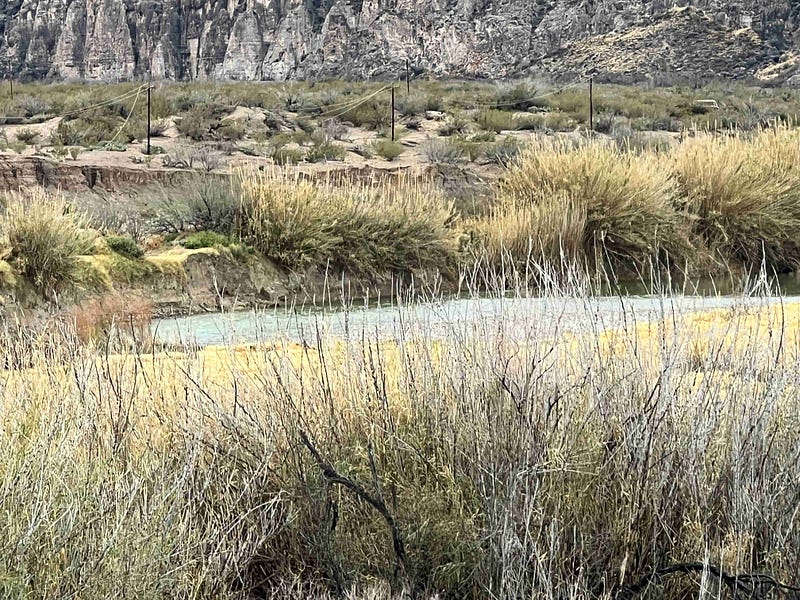
Rio Grande River at Heath Canyon. Photo copyright Julia A. Keirns.

Be sure to follow me or subscribe to get an email whenever I publish an article. We travel a lot and see a lot. I publish articles at different publications, so if you just follow the publication you might miss one of our excursions.

Thanks for reading and joining me on this journey.

Weeds And Wildflowers
Nature
Travel
Texas
Wildlife
Recommended from ReadMedium