
Bitcoin: The Emperor’s New Clothes
Bitcoin was an interesting proof of concept, but little more. It is useless as a currency.
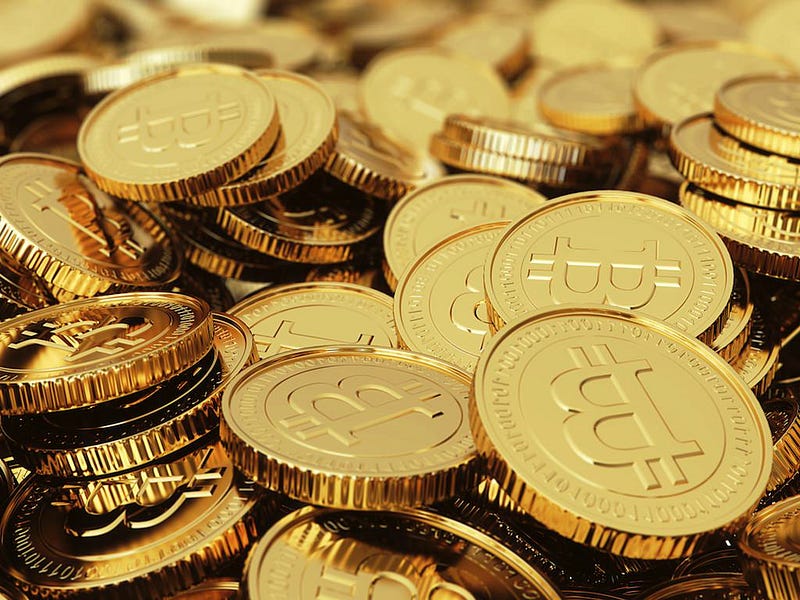
Yesterday, someone cited bitcoin to dollar rate, as though that somehow justified its existence. It was somewhere around $400 if I recall correctly. As I write, $381.41. If I look again, it will have changed.
Bitcoin started at a low of 1,309 bitcoins to the dollar. December 2009 it had slumped to 1,630 bitcoins to the dollar. November 2013 bitcoin reached a high of $1,242.
What was special about 2013?
Banking crisis in Cyprus, banks closed their doors, EU stole money from accounts in excess of 100,000 euros, credit system was shut down, a trial run for Greece two year later, panic set in. Bitcoin offered a quick and dirty means to transfer money out of euros, out of Cyprus.
And herein lies the problem, Bitcoin has become a commodity for speculators and spivs. It lacks utility as a currency. It is too volatile, and nowhere accepts bitcoin. Can I buy a loaf of bread? No. Marie Antoinette lost her head when the peasants could not buy bread.
Bitcoin is often compared with gold. The comparison is false, a better comparison would be with fool’s gold.
Gold is real, it has utility.
Gold has value because it is easily convertible to dollars. It is not the other way around, dollar has value because it is convertible to gold.
Ever tried carrying around an ingot of gold, scraping off a few slivers to buy a loaf of bread?
Gold has utility. It is used in jewellery, used in electronics.
Gold is immutable, a sack of grain deteriorates.
A currency that deteriorates (note: not the same as inflation), prevents hoarding.
Medieval kings would recall the currency, issue new coins, you received less than you handed in. This was to discourage hoarding. Dead currency is of use to no one, it is not being put to work in the economy.
Those working on bitcoin, all have a vested interested, backed by vulture capitalists, work for parasitical start ups that seek to make money out of bitcoin. This is not the mindset for working in the collaborative commons.
Contributors may contribute garbage to Wikipedia, but at least they do so without expecting any pecuniary reward.
The Bitcoin mindset it also that of religious zealots. Excommunication for heresy. What next, public beheadings, hack and theft of bitcoins, annihilation in the artificial Bitcoin world?
Gold has utility, is immutable. Bitcoin is neither. What happens when the network shuts down?
The parasitical add on are not trustworthy. Many have proved to be scams.
One of the big mistakes with bitcoin was not to maintain parity with the dollar or euro, or maybe a basket of things we value, acreage of old growth forests, extent of marine reserves, carbon in the atmosphere.
Any currency depends entirety upon societal acceptance.
On a remote Pacific Island are large stone rings with holes through the middle called yaps. Some lie at the bottom of the sea. Everyone knows their value, who owns them. The stones never move, only the ownership changes, the accounting is maintained orally.
Bitcoin is coherent noise.
Bitcoin was meant to be egalitarian. It is anything but. The early adopters were able to mint millions (mine in the Bitcoin jargon). Now it requires powerful, energy hungry computers. Far from being egalitarian, bitcoin is heavily skewed to favour the wealthy.
Added to all these problems, there are now technical problems with the blockchain and the developers are involved in internecine warfare.
Had anyone known Lehman Brothers was about to implode, they would have withdrawn their investment.
With Bitcoin imploding, time to dump bitcoins whilst they still have some residual value, transfer to faircoin, where there is governance.
Bitcoin was an interesting proof of concept, but little more. It is useless as a currency. The best that can be said of bitcoin is that it functions as a quick and dirty method to transfer out of a currency, across borders and into another currency. Its hopes of becoming an internet currency have not succeeded.
Faircoin, which can be seen as BitCoin 2.0, attempts to address some of the problems associated with bitcoin.
The blockchain may find uses, as we have seen with Mycelia to track music.


